Via Francigena San Gimignano to Siena: 3-Day Itinerary + What I’d Do Differently
Last Updated on October 1, 2026 by Kimberly
Thinking about walking the Via Francigena from San Gimignano to Siena—but not sure if it’s actually doable solo?
I walked it alone in April: 40+ km over 3 days through the Tuscan countryside, staying in small towns along the way and navigating on my own. This guide is exactly how to do it—where to stay, what to expect, what it costs, and what I would do differently if I did it again.
Long-distance walking is one of my favorite things to do, from the Opal Coast of France all the way to the Via Francigena in Tuscany. I believe it’s a wonderful way to see a place and gain a different perspective, plus a bit of gratitude for how you move through it.
This isn’t a generic itinerary. Every hotel, restaurant, and detour below is somewhere I personally went. No press trips, no secondhand recommendations—just what it’s actually like to walk this route.
Quick Answer: Via Francigena San Gimignano to Siena
Distance: ~40 km
Time: 3 walking days (4 nights)
Difficulty: Moderate (long final day)
Best for: Beginner to intermediate walkers, including solo travelers
Highlights: Tuscan countryside, Monteriggioni, river crossings, Siena arrival
What to read next: 2 Day Siena Itinerary: How to Explore Beyond a Day Trip
What Is the Via Francigena + Map of Your Route
The Via Francigena is one of Europe’s oldest pilgrimage routes, dating back to 990 AD when Archbishop Sigeric of Canterbury documented his journey from Rome to England.
Today, the full route stretches over 1,800 km from Canterbury to Rome—but you don’t need to walk all of it.
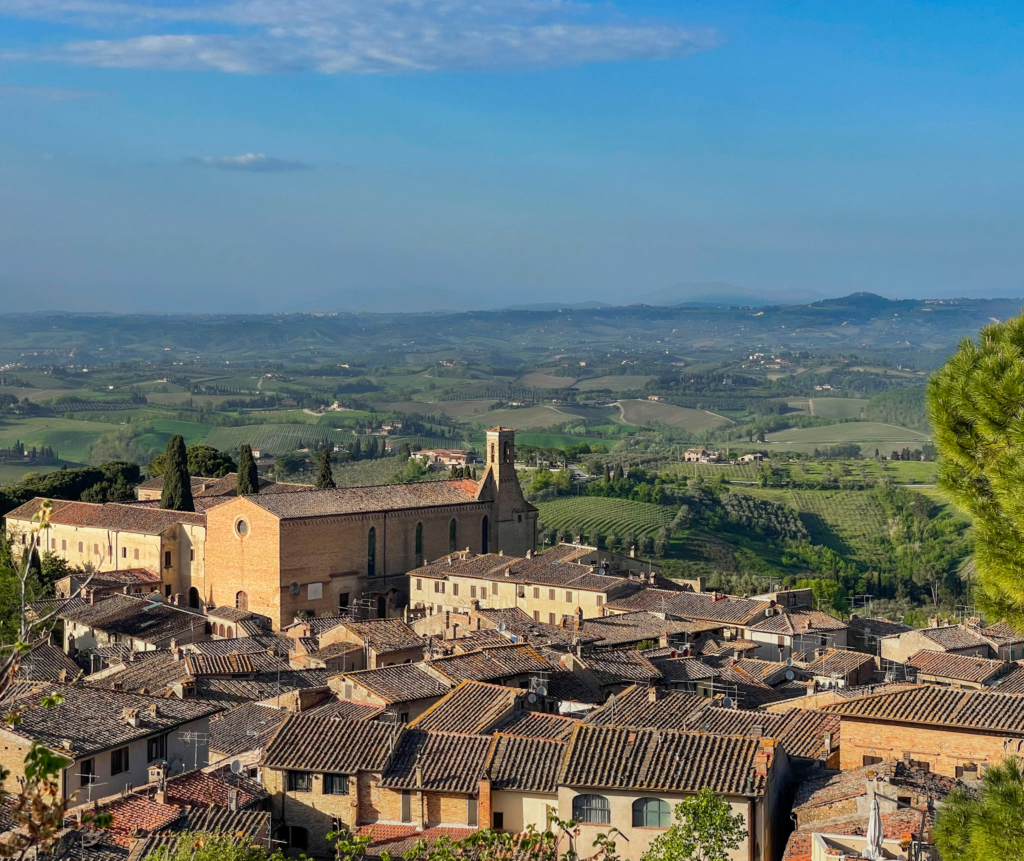
The Tuscany section between San Gimignano and Siena is widely considered one of the most beautiful and beginner-friendly parts of the entire route. You’ll walk through vineyards, olive groves, rolling hills, and medieval towns that feel unchanged for centuries.
If you’re comparing it to the Camino de Santiago, here’s the honest difference:
- The Via Francigena is quieter
- You’ll see fewer people
- It feels more independent and immersive
You’re not walking in a crowd—you’re walking through Tuscany, often alone, often in complete silence.
Below is a Komoot map of the Via Francigena: San Gimignano to Siena route
Looking for A Hotel along the route?
Night 1 — San Gimignano: Hotel La Cisterna
Night 2 — Colle Val d’Elsa: Hotel La Vecchia Cartiera
Night 3 — Monteriggioni: Hotel Il Piccolo Castello
Night 4 — Siena: Hotel Chiusarelli
Why walk from San Gimignano to Siena?
I chose this section because I wanted to experience Tuscany differently.
Not through a tour. Not from a car window. But slowly—on foot—moving through the landscape and actually earning the views.
I also wanted to prove to myself that I could do a multi-day walk solo. If you’re wondering whether you’re “ready” for something like this, you probably are.
This route strikes a rare balance:
- Challenging enough to feel like an achievement
- Accessible enough for a first long-distance walk
And in spring, it’s unreal—wildflowers everywhere, wisteria in bloom, and that soft Tuscan light that makes everything look like a painting.
Planning a trip to Siena and don’t know where to start? I have the perfect posts for that Siena Photo Essay: Why I Keep Coming Back to Siena and Siena 2-Day Itinerary
How to Get to San Gimignano
I was traveling from Vicenza, so my route involved an overnight stop in Florence before heading to the trailhead. Here is exactly how to get to San Gimignano
From Florence by Train and Bus
Take a regional train from Florence Santa Maria Novella to Poggibonsi–San Gimignano station. Purchase tickets in advance on the Trenitalia app — straightforward and worth it. Note that the station is in Poggibonsi, not San Gimignano itself. The two are connected by bus.
You’re going to be waiting outside the train station in the square in front of it! You’ll see various bus stops along the main road. Check the time tables. If you have already purchased your ticket, do not worry!
From Poggibonsi station, take bus line 130 or 133 directly to San Gimignano.
The journey takes about 20 to 25 minutes and drops you near the historic center.
Current timetables are available at at-bus.it. The total cost from Florence for train and bus was around 11.50 euros. Check schedules ahead of time, especially on weekends and public holidays.
If you want my honest opinion, I would buy ahead of time. This way, you are squared away with tickets and don’t have to buy them at the kiosk.
Getting Back from Siena
Siena is well connected to Florence:
Easy connections to major airports
Time: ~1 hour 15 minutes
Transport: Train or bus
The Via Francigena San Gimignano to Siena Route: Stage by Stage
The Via Francigena itinerary from San Gimignano to Siena covers approximately 48 kilometers over three walking days, with one arrival day in San Gimignano beforehand. Here is the breakdown:
- Day 2: San Gimignano to Colle Val d’Elsa — 12 km / +209m / -204m elevation
- Day 3: Colle Val d’Elsa to Monteriggioni — 16 km / +132m / -57m elevation
- Day 4: Monteriggioni to Siena — 20 km / +224m / -245m elevation
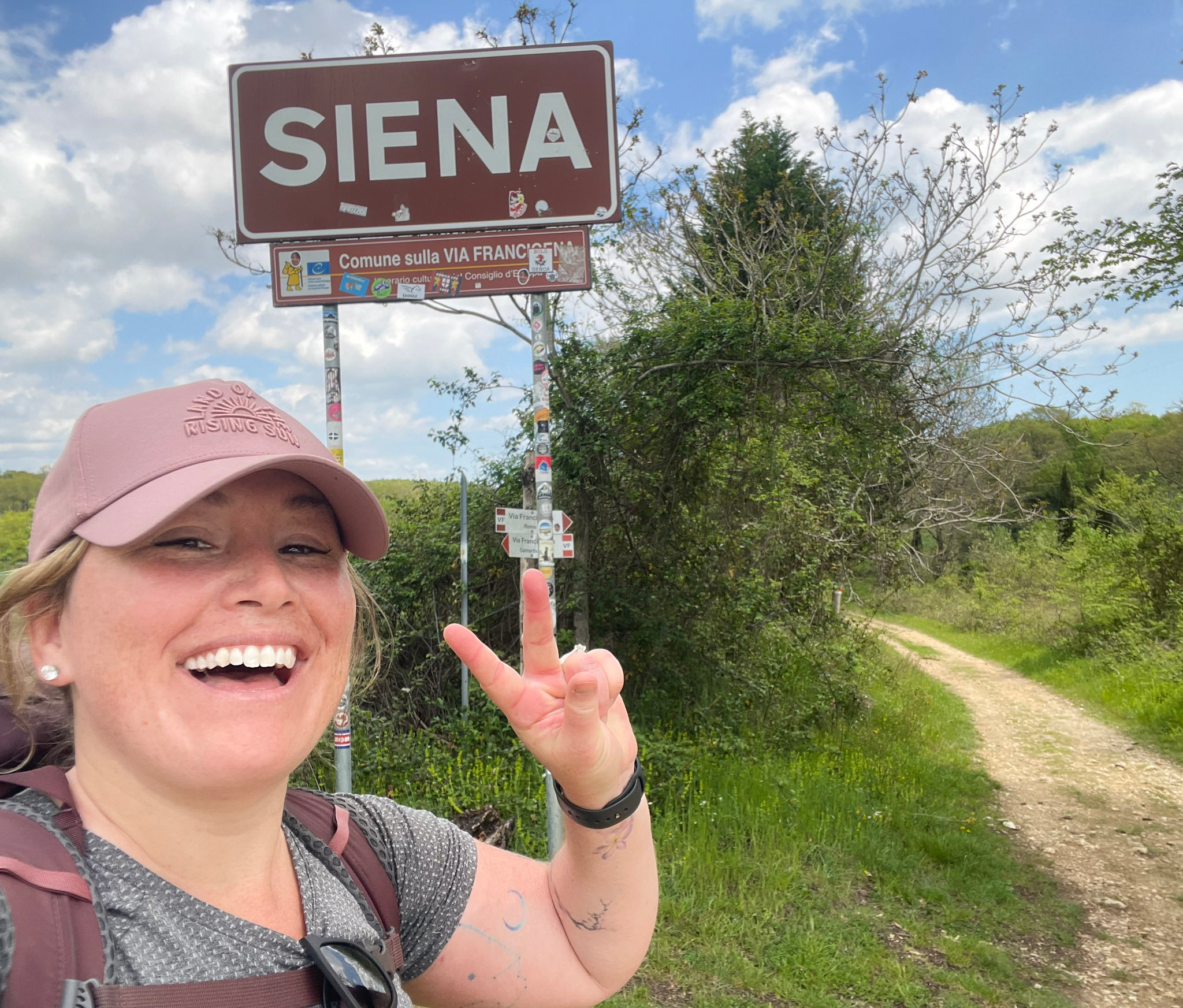
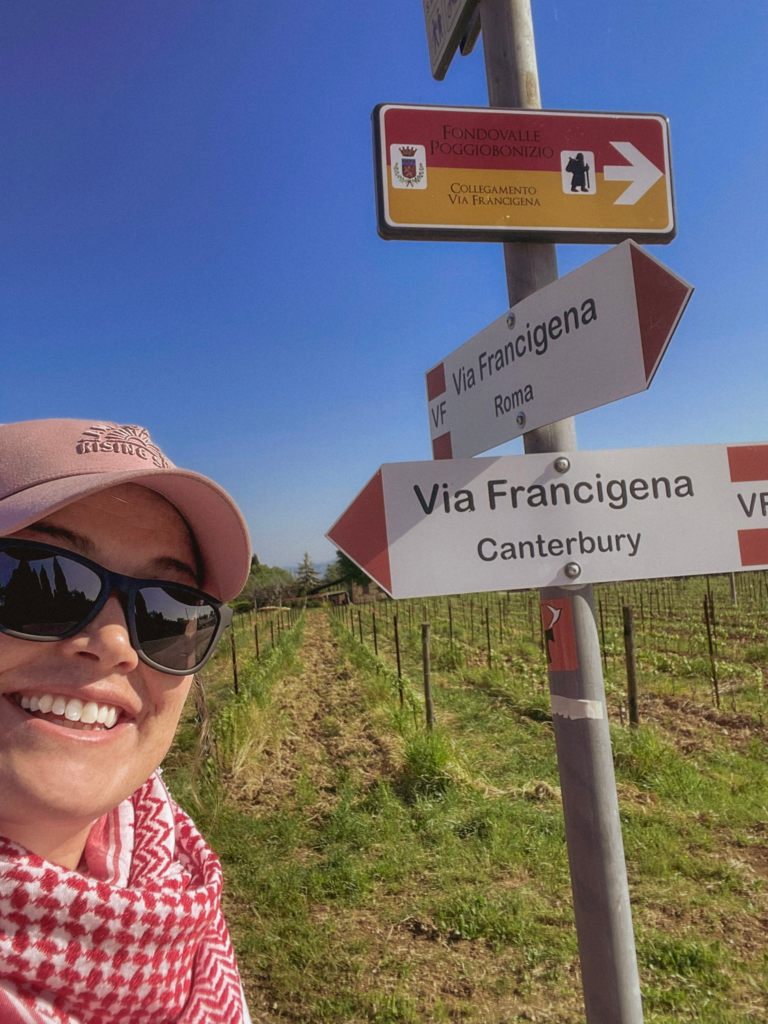
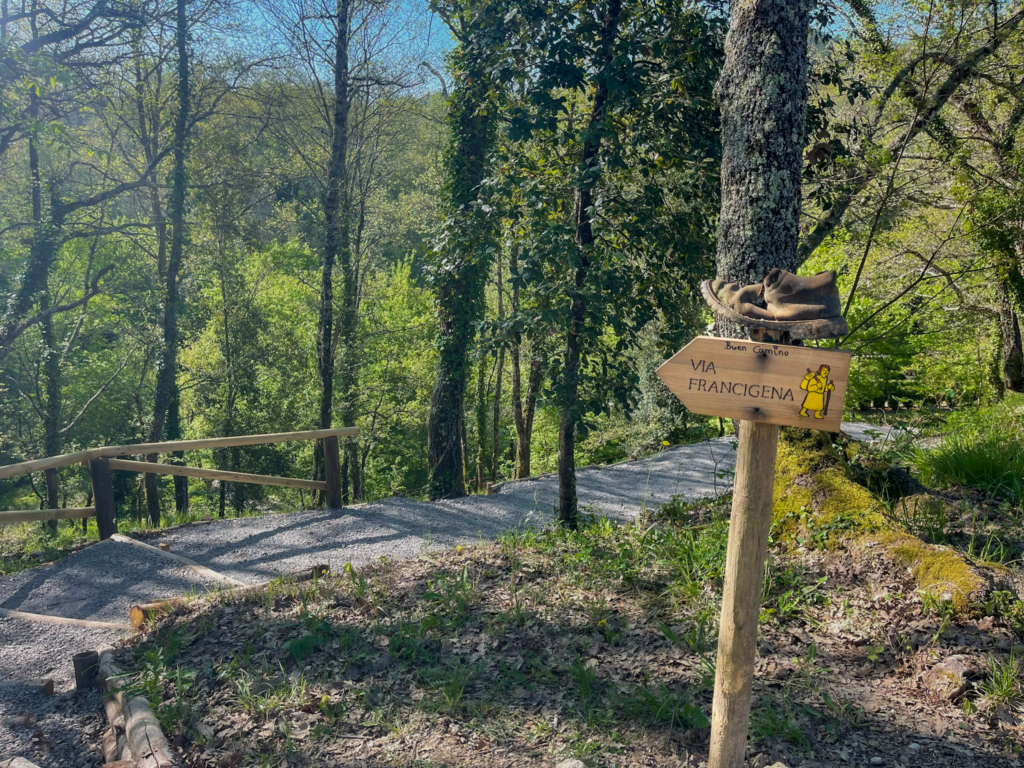
The trails are marked with the classic Via Francigena waymarkers: white stones with red-and-white markings and the letters VF; red-and-white stickers with a black pilgrim figure; and brown signs. Follow the pilgrim figure. Avoid any signs with a car icon.
I walked using the SloWays self-guided package, which included offline GPS navigation via their app, detailed route documentation, and a welcome pack waiting at my first hotel — more on that below.
Wild animals on the Via Francigena
I was a little nervous about this, as many people had told me to expect to encounter boar and shepherding dogs. I did not encounter either, but there were boar tracks in the forest; you could clearly see where many had been digging. The advice I got was to be loud and, if you have trekking poles, use them. Always report findings or issues to your hosts at check-in!
Want the logistics handled?
If you don’t want to plan every detail yourself, a self-guided company like SloWays handles hotels, navigation, and logistics.
It’s what I used, and it made the entire experience significantly easier as a solo traveler
See the SloWays Via Francigena San Gimignano to Siena Package
Day 1: Arriving in San Gimignano — What to Do the Evening Before
I arrived from Florence the afternoon before my first walking day, which I cannot recommend strongly enough.
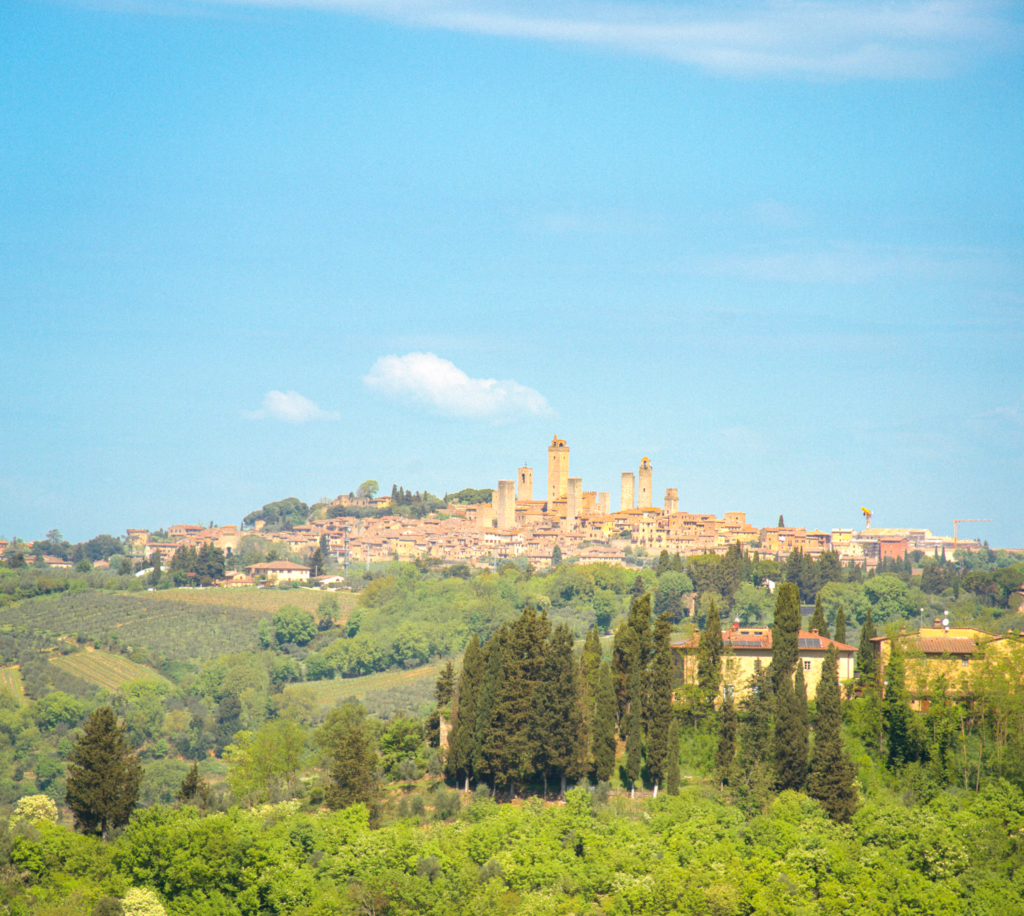
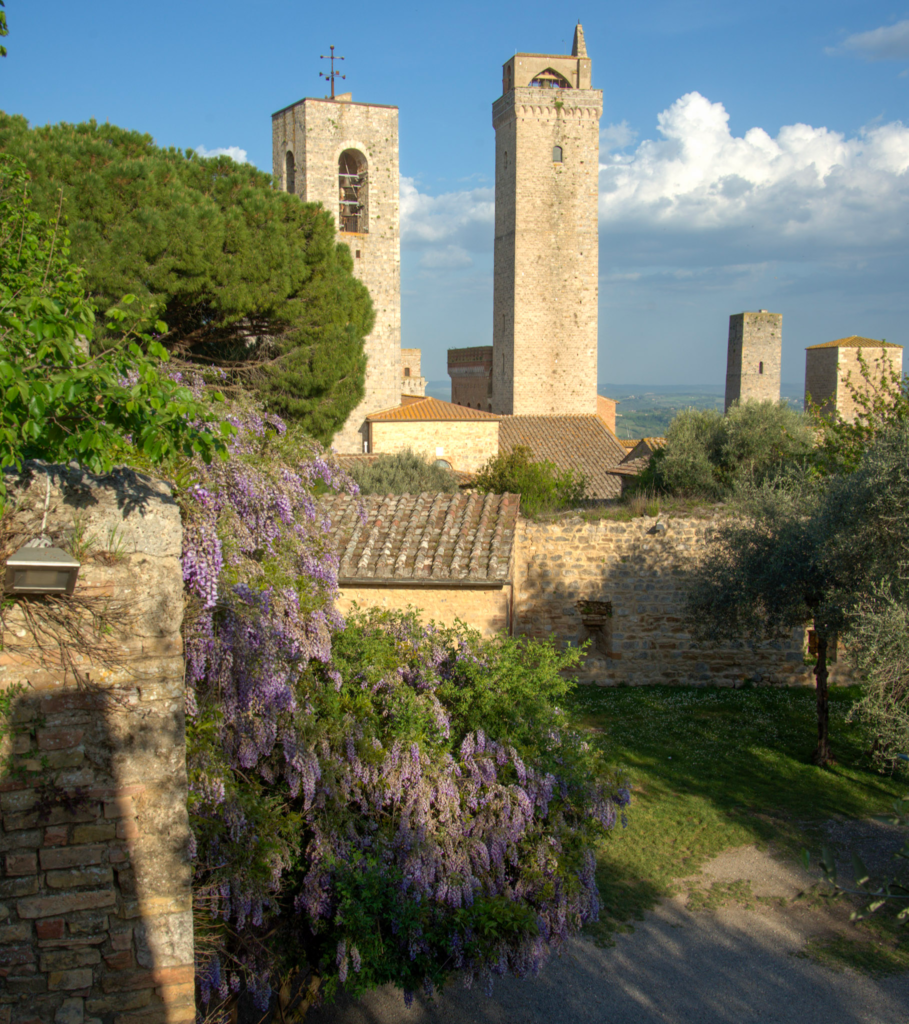
San Gimignano deserves time on its own. The medieval towers rise above the hilltop town like something out of a fairy tale, and once you are inside the walls, you immediately understand why this place has been a UNESCO World Heritage Site since 1990.
Where I Stayed
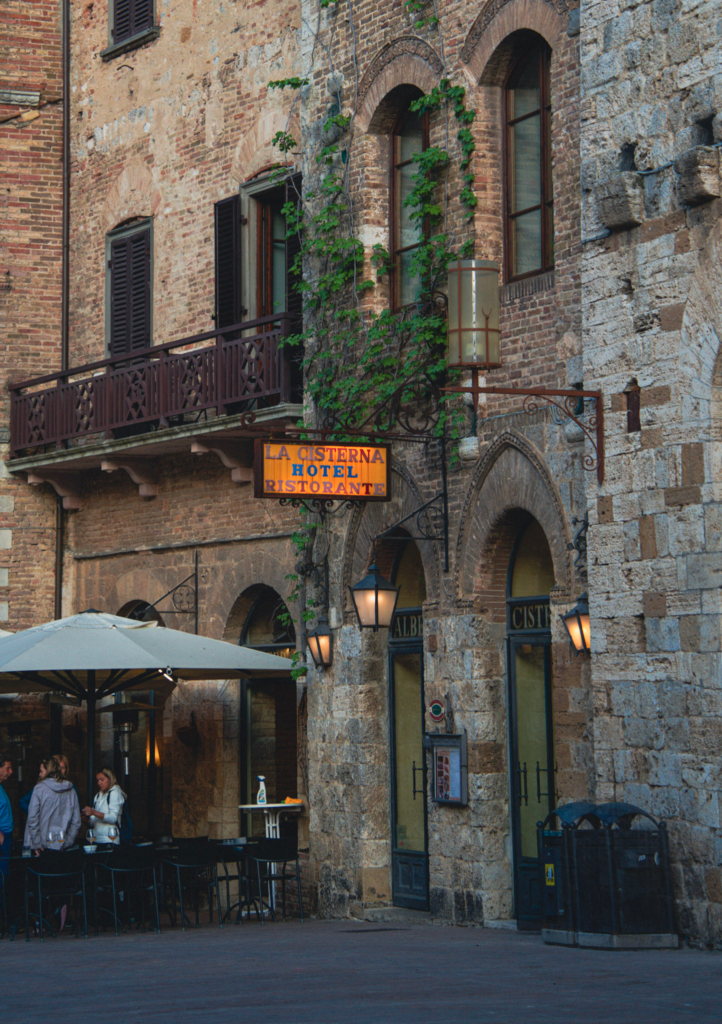
I stayed at Hotel La Cisterna, right on Piazza della Cisterna.
- Central location
- Easy check-in
- SloWays welcome pack waiting at the front desk– this included my Pilgrims Passport Credential
What I Did That Evening
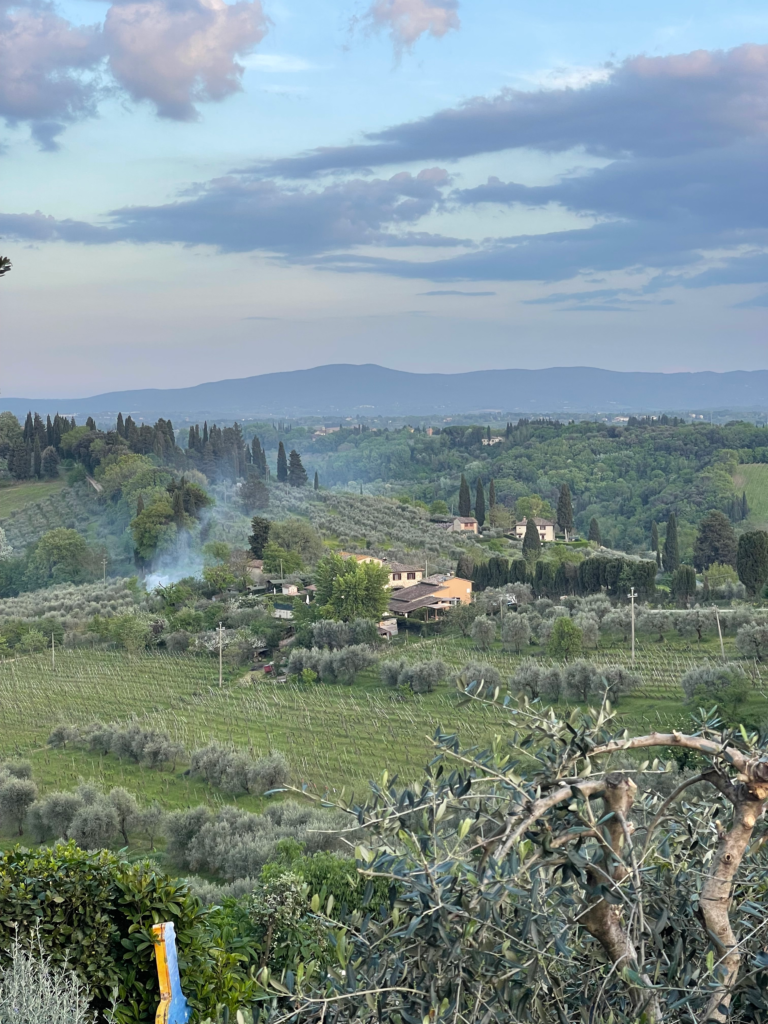
After settling in, I walked to the park at the top of the town, the Rocca di Montestaffoli, the old fortress, and stood there looking out over the Tuscan hills and the towers rising all around me. That view alone is worth arriving a day early. The Wisteria in April is GORGEOUS
For aperitivo, I went to Caffè delle Erbe for a Tuscan Spritz and a small plate of chips, just enough to coat my stomach after a day of travel. The atmosphere is easy, local, and exactly right for watching the town settle into the evening.
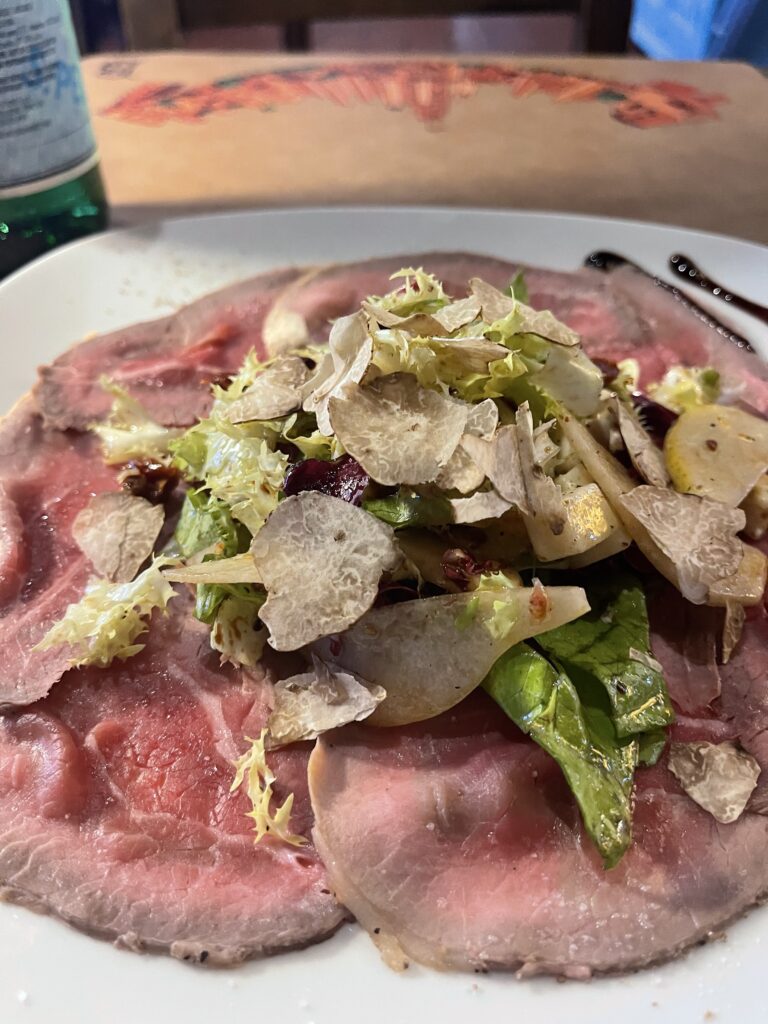
For dinner, I went to Ristorante Bel Soggiorno. I would make a reservation as it fills up. The food was good, the service was wonderful, and the setting was lovely. I started with the Rose Di Roast Beef with truffles and pears, and then had the Cappelacci di Pasta Fresca al Fossa con crema di pistacchio e speck croccante. It was about a $70.00 meal (this is with wine and water)
Day 2: San Gimignano to Colle Val d’Elsa (12 km) — The Fords Nobody Warns You About
This is the shortest stage at 12 km—which, honestly, was a relief given how I was feeling that morning.
The trail leaves San Gimignano and quickly opens into the Tuscan countryside: vineyards, olive groves, rolling hills, and long stretches where you won’t see anyone else.
The elevation (+209m / -204m) feels gentler than it looks on paper. It’s more of an undulating walk than a true climb.
First Stretch: Not the Best, But Worth It
The first couple of miles are along a main road and, frankly, a bit dull.
But—turn around.
The view back toward San Gimignano as you walk away is one of the best of the entire trip. Don’t rush this part.
The electrolytes in my CamelBak kept me going. By the time I reached Colle Val d’Elsa, I had found my rhythm.
The Fords — What You Need to Know Before You Go
This is the part most blogs barely mention—but you need to know about it.
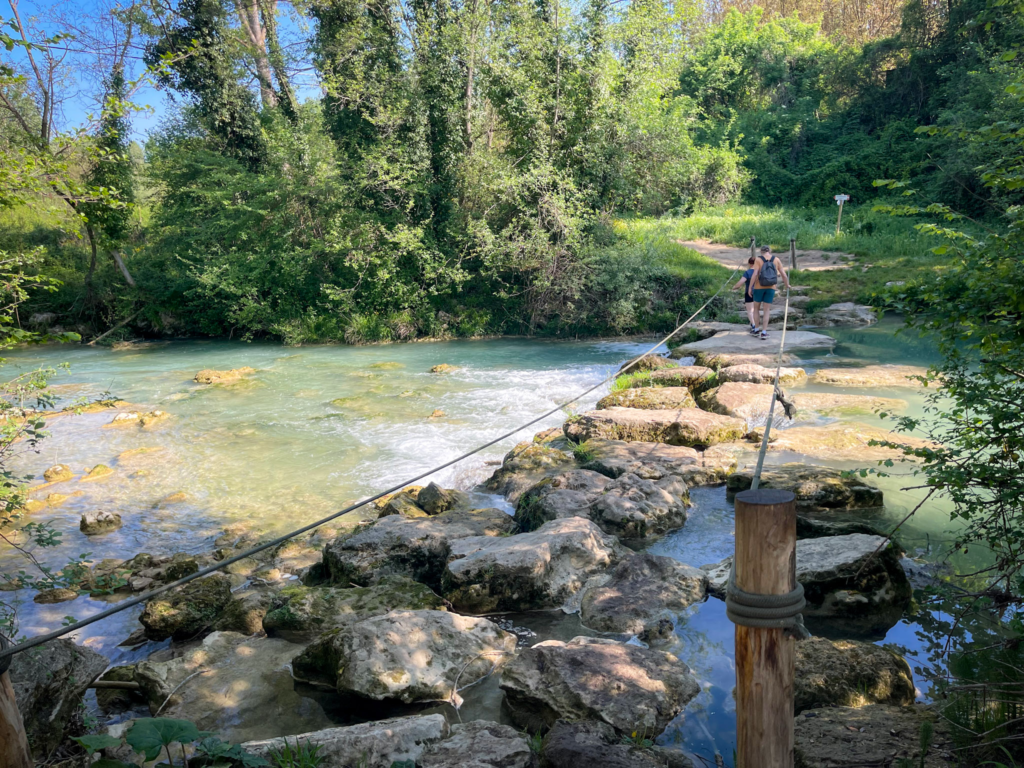
On the route from San Gimignano to Colle Val d’Elsa, you’ll cross three river fords.
In dry conditions, they’re easy.
After rain, especially in spring, the third ford can be genuinely tricky.
What to Expect
- Shallow river crossings with uneven footing
- Slippery rocks and a strong enough current to throw you off balance
- No bridges—you are walking straight through
How to Cross Safely
- Check the weather before your walk—this matters more than anything
- If water levels look high, don’t push it—take the bus alternative
- Take off your boots and cross barefoot (tie them to your pack)
- Walk slowly and deliberately—the riverbed is often more stable than the stones
My Experience
I crossed in decent conditions, and it was manageable—but I could immediately see how it would become difficult after heavy rain.
It’s not dangerous if you’re prepared.
It is uncomfortable if you’re not expecting it.
Colle Val d’Elsa: What to Expect
Colle Val d’Elsa is a Tuscan town of roughly 20,000 people in the province of Siena, built along the Via Francigena since the Middle Ages. It developed on the banks of the Elsa River and was historically powered by that river — paper mills (hence my Hotel La Vecchia Cartiera, a converted paper mill — “cartiera” literally means paper mill) and later the crystal and glass industry it became internationally known for.
The town is famously split into two tiers: Colle Alta, the upper medieval town on the long ridge (which you’ll walk through to get to the hotel itself!), and Colle Bassa, the lower modern town.
The Via Francigena official route actually passes through on a variant (Tappa 32 Variante di Colle Val d’Elsa on the Tuscany Region’s official itinerary) because Colle Val d’Elsa is a side detour; many walkers bypass it and stay at Abbadia a Isola or Gracciano; choosing Colle Val d’Elsa adds a couple of kilometers but gives you the river, the crystal heritage, and a real town with restaurants open at night.
Where to get your Pilgrims Credential Stamped in Colle Val d’Elsa
My recommendation to you is: when you come into the Colle Alta, take a look around, and get your stamp at the Museo San Pietro. They are one of the stamping offices for your Pilgrims Passport and credentials! You can also get it stamped at Hotel La Vecchia Cartiera!
Day 3: Colle Val d’Elsa to Monteriggioni (16 km)
This trail begins with urban walking. I was a little sad about this, but my dismay turned to awe when I started walking along the river, Elsa.
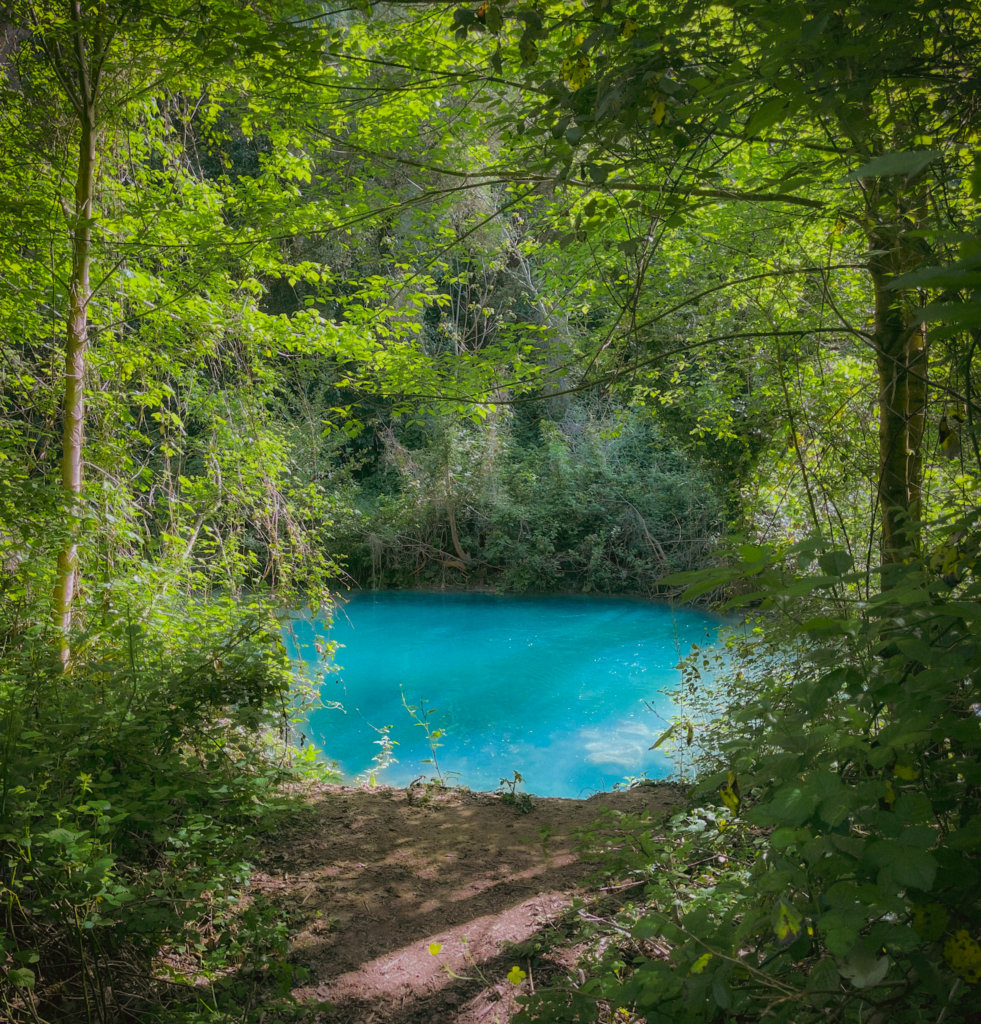
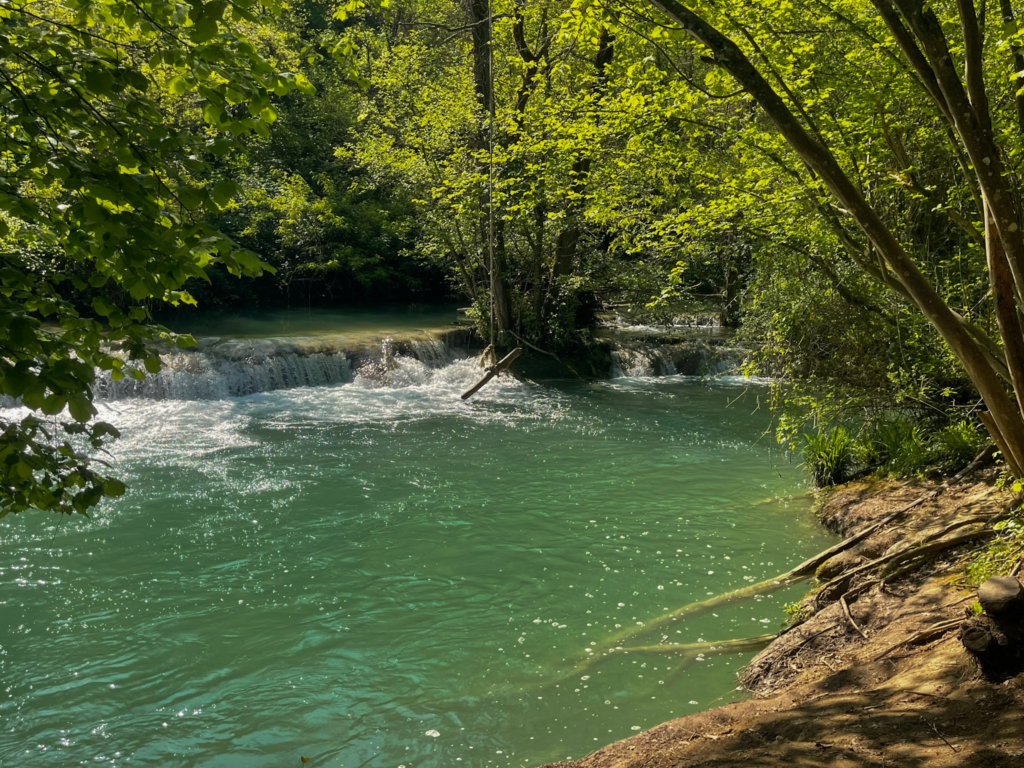
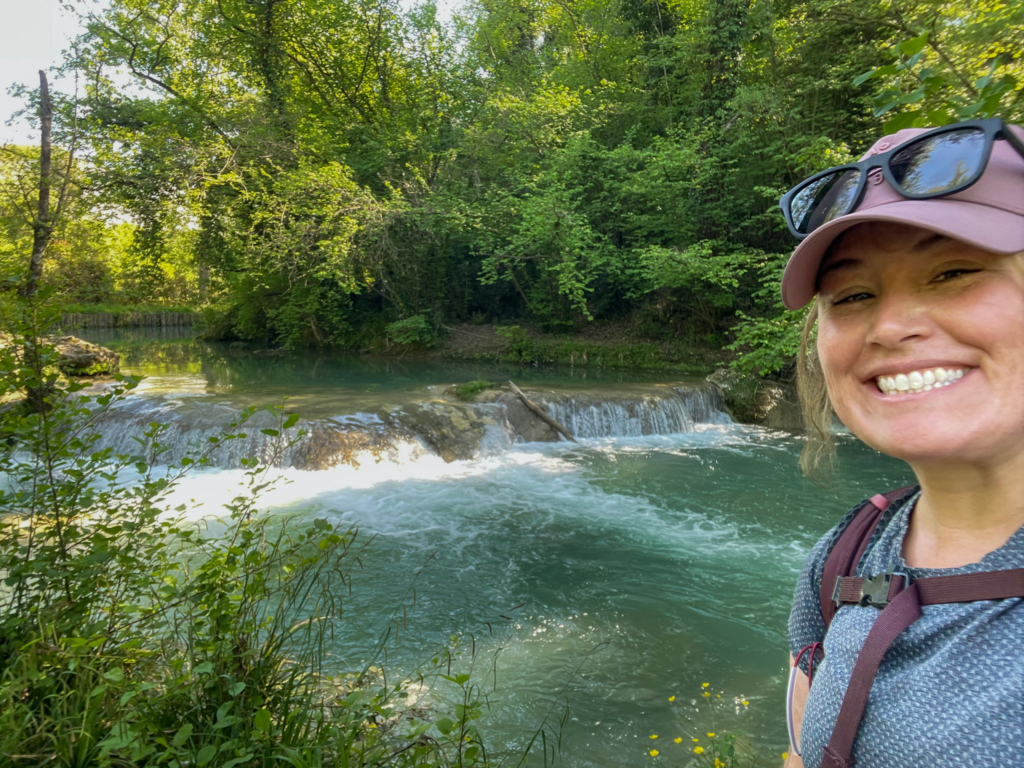
The path follows the Elsa River through the Parco Fluviale dell’Elsa — a stretch of clear water, small waterfalls, lush vegetation, and shaded forest paths that feel completely separate from the rest of the world. The elevation here is the gentlest of the whole route: +132m up and only -57m down. The light filtered through the trees, and I kept stopping just to stand in it.
The water is Gatorade blue, and you’ll have 2 crossings that involve holding onto ropes. My advice to you is to put away all electronics and trekking poles, and to cross carefully. Watch out for others and make sure they’ve crossed before you start!
This was my favorite part of the day, and I wish I had spent more time here because it’s such a reward. There are some long stretches on this particular day that don’t have shade, and it’s hot if you are walking the Via Francigena in the spring or summer
You’ll go through smaller towns and be on a long stretch of vineyard and farmland.
You’ll need to watch out for cyclists and also cars on the gravel roads. One of which was LONG with a steady incline, trust me, this is where wearing a hat and sunscreen really saved me!
Castel Pietraio and Abbey of Abbadia a Isola
Before heading into Monteriggioni, you’ll walk through a lovely village called Strove, which was BEAUTIFUL! Keep your eye out for water fill stations; it’s okay to stop for a fill-up, and there you’ll come across Castel Pietraio.
Along the way, the route passes the quiet Abbey of Abbadia a Isola, one of the ancient stopping points on Sigeric’s original 990 AD journey. It has stood in the middle of this countryside for over a thousand years. There’s an ostello here, and many pilgrims were waiting outside. Take a few minutes to go into the Abbey!
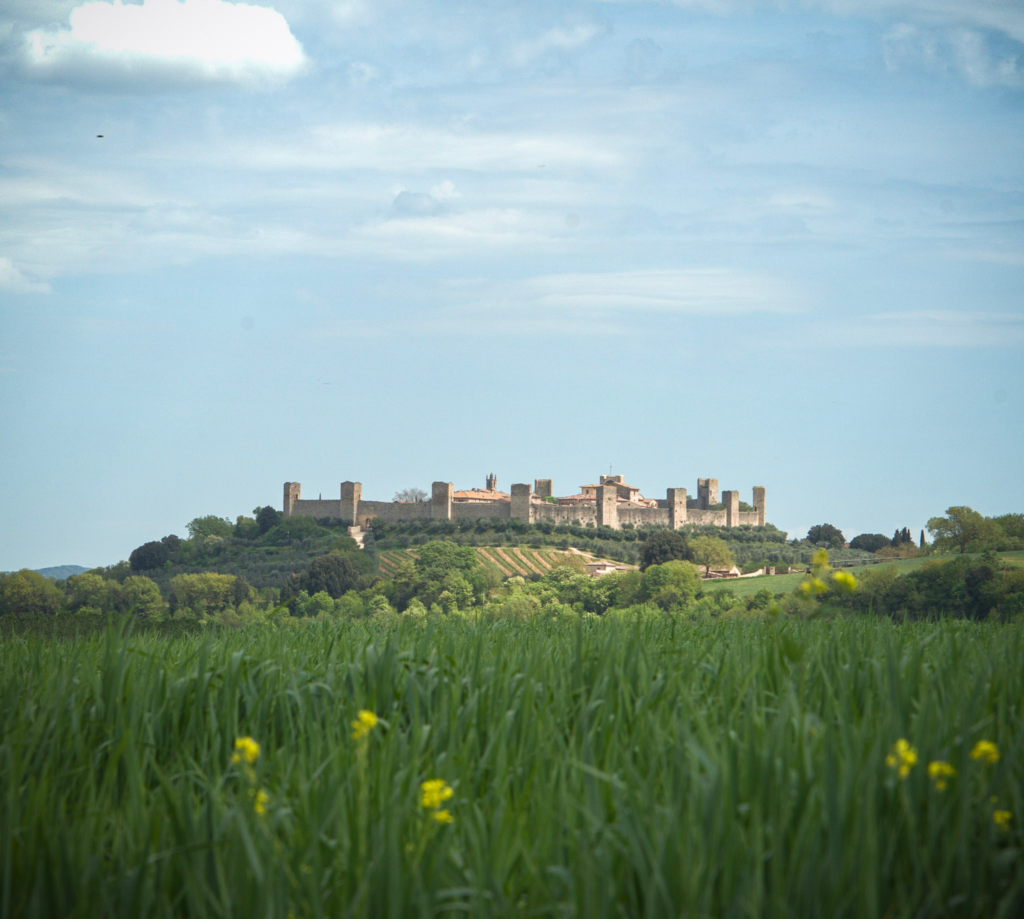
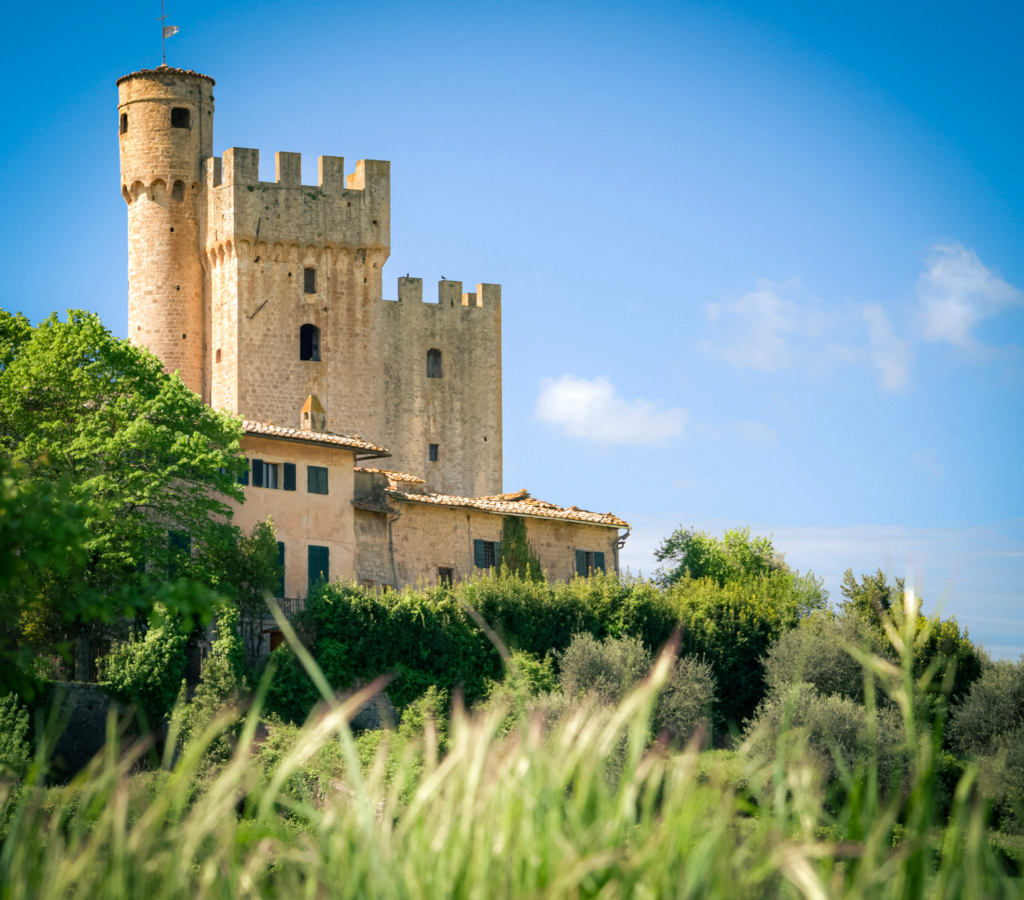
The first view of Monteriggioni stops you in your tracks. The circular ring of intact medieval walls and towers rises from the top of a hill exactly as it did in the 13th century when it was built to defend the Republic of Siena. You approach it on foot, the same way pilgrims have for centuries, and the scale of it hits you slowly. Inside the walls is a quiet medieval square, a handful of restaurants, a small church, and an atmosphere that time appears to have simply not arrived yet.
Important note about Hotel Il Piccolo Castello:
I stayed at Hotel Il Piccolo Castello on Strada Provinciale Colligiana, about 3 km before the village of Monteriggioni. If you have the time and energy when you arrive, walk into Monteriggioni first and then come back to the hotel rather than stopping short. The village is the highlight, and you do not want to miss it. Do not follow the main road to get there; I actually had to cut through a field that is well marked on the hiking maps!
I had dinner included with my half-board at Il Piccolo Castello that evening. I ate well, rested my feet, and went to sleep knowing the hardest day was still ahead. The hotel is actually really nice, and I felt like such a slob staying here! It was so fancy, and there I was in my dirty hiking gear!
Where to get your Pilgrims Passport stamped in Monteriggioni
If you are staying at Piccolo Castello, they didn’t have a stamp for my pilgrim’s passport, so you’ll need to go to the tourist office in Monteriggioni. This helpful page by Visit Tuscany will help you figure out where to get your Passport stamped along the route!
Day 4: Monteriggioni to Siena (20 km) — The Hardest and Most Rewarding Day
Twenty kilometers. The longest stage. I want to be fully honest with you about it.
The morning leaving Monteriggioni, moving through the white gravel roads of the Sienese countryside past the abandoned hamlet of Cerbaia, was the most beautiful walking of the entire trip. The kind of Tuscany you see in photographs, except you are inside it.
Make sure to turn around and look behind you every once in a while! The views are absolutely gorgeous.
Note that if you didn’t get your passport stamped in Monteriggioni, there is a water stop just outside of Monteriggioni, near a B&B called La Casella. They have a table set up where you can get a stamp and fill up on water.
The Hermitage of San Leonardo al Lago on the Via Francigena — Do Not Miss This
About 2 km after Castello della Chiocciola, you walk along an asphalted road and then turn left onto the dirt road called Via del Osteriaccia. After about 600 meters, there is a short optional detour, turn right up a dirt road until you reach the Hermitage of San Leonardo al Lago (Eremo di San Leonardo al Lago). It’s open from 0930am to 1530.
Most people walk straight past. It is the kind of place that exists on ancient pilgrimage routes and nowhere else — tucked into a hillside, completely silent, kept alive by one person who opens the door to strangers. It took twenty minutes, and I thought about it for the rest of the day.
The Pian di Lago Road Section — Be Prepared
Around Pian di Lago, the trail runs for approximately 2.5 miles along a busy road. It is loud, exposed, and unremarkable. Put on a podcast, keep your head up, and know it ends. Please walk on the right side of the road!
Then Siena started to appear on the horizon.
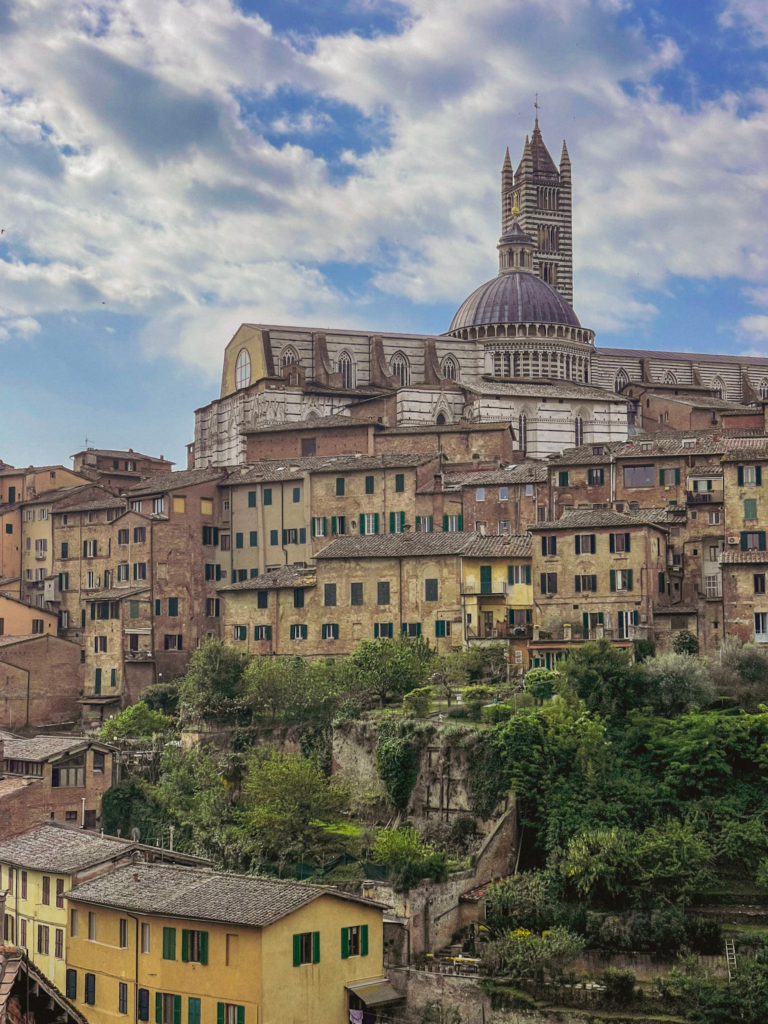
Siena is built on hills. Several of them. When you are approaching on foot after 20 kilometers, with a pack that was perhaps slightly too heavy, and you can already see the city walls and the top of the Duomo above them, those hills are not your friends. My feet were beyond done. I was finished mentally. I kept walking. One foot, then the other.
Pilgrims traditionally enter Siena through Porta Camollia, and I did exactly that. One step, then another, and then I was through the gate, and the street opened up into one of the most beautiful cities in the world.
I stayed at Hotel Chiusarelli on Viale Curtatone — a modern hotel located right down the street from Basilica Cateriniana di San Domenico and close enough to Piazza del Campo that getting there on exhausted legs was still possible.
Arriving in Siena: The Reward
I checked in, took the longest shower of my life, and then went to find St. Catherine.
St. Catherine of Siena is one of the patron saints of Italy and Europe — a 14th-century mystic, Doctor of the Church, and one of the most consequential women in the history of Catholicism. My first stop was the Basilica Cateriniana di San Domenico, where her head is on display in a reliquary — which is exactly as striking as it sounds. The basilica itself is extraordinary, and arriving there on foot, as pilgrims have always done, adds a weight to the visit that you simply do not get when stepping off a tour bus.
How I spent the Night in Siena
Before dinner, I stopped for an aperitivo at Ristorante Pizzeria Costa — relaxed, well-priced, exactly right after a long day on your feet. It has a view of the historic Campo, where the races take place in Siena.
I took it all in, and then I remembered a shop I wanted to visit the last time I was in Siena: Stampe cornici Bianchi, a tiny print shop I had tried to visit on a previous trip but had found closed. It’s here where I stopped to get a few prints!
If you’d like to know what else to do when you get to Siena, I have the perfect 2-day Siena Itinerary you’ll love!
Where I Stayed: Hotels on the Via Francigena San Gimignano to Siena
Here are the exact hotels I stayed at during my Tuscan Via Francigena:
Night 1 — San Gimignano: Hotel La Cisterna
Piazza della Cisterna, 24. Right in the medieval heart of town. Perfect location, lovely terrace, and the ideal place to start this walk. Aperitivo at Caffè delle Erbe, dinner at Ristorante Bel Soggiorno — make a reservation. The rooms are quite comfortable at Hotel La Cisterna, and it’s quiet!
Check rates and availability on Expedia.com
Night 2 — Colle Val d’Elsa: Hotel La Vecchia Cartiera
Via Oberdan, 5-7-9. A converted paper mill with real character. Comfortable and well-located for exploring the town in the evening. No Air Conditioning that I saw, so be prepared for that in the summertime!
Check rates and availability on Expedia.com
Night 3 — Monteriggioni: Hotel Il Piccolo Castello
Strada Provinciale Colligiana, 8. Note: 3 km before the village itself. Plan to walk into Monteriggioni before checking in. Half-board included in the SloWays package. Hotel Il Piccolo Castello is a beautiful place to stay near Monteriggioni!
Check rates and availability on Expedia.com
Night 4 — Siena: Hotel Chiusarelli
Viale Curtatone, 15. Classic Siena hotel, well-positioned for reaching Piazza del Campo. It’s a modern beautiful hotel inside the city walls of Siena!
Check rates and availability on Expedia.com
What to Pack for the Via Francigena
I carried a 36-liter Osprey Kyte backpack. Looking back, I overpacked slightly — I felt every extra gram on the final day into Siena. Here is an honest Via Francigena packing list:
Essentials I was glad I had:
- Electrolyte packets in your hydration pack — genuinely saved me on Day 2
- Well broken-in hiking boots with ankle support
- Quick-dry hiking clothes you can wash by hand overnight
- Lightweight layers for evenings — Tuscany in April is warm during the day and cool at night
- Trekking poles — essential for the descent into Siena and for ford crossings
- A light rain jacket — spring weather changes fast
- Comfortable shoes for evenings in town
- A portable battery pack — the SloWays GPS app drains your phone quickly, even offline
What I would leave behind:
- Extra clothes beyond two or three sets. Wash as you go.
- Anything that feels like “just in case.” You will feel every extra gram on Day 4.
Read more about what I packed for the Via Francigena
How Much Does It Cost?
I took out approximately $250 USD for extra expenses beyond the package. The SloWays Via Francigena self-guided package starts from around 400 euros and includes accommodation with breakfast, half-board dinner in Monteriggioni, the Cicerone guidebook, the SloWays navigation app, a Via Francigena pilgrim passport, luggage tag, and 24-hour phone support. Exact pricing varies by travel dates — check their website for current rates.
Getting to the trailhead from Florence costs about 11.50 euros total for train and bus and takes a good two hours. Getting from Siena back to Florence takes about 1 hour and 15 minutes. The Price for the Regional train to Florence is about 10.20 euros total.
Check rates and timetables on omio.com
If you book the Via Francigena independently through the ostelli network, nightly accommodation costs can drop below 20 euros per person, though availability in Monteriggioni is very limited and fills up early.
Is the Via Francigena Safe for Solo Women?
Yes. Without any hesitation.
The Via Francigena is safe for solo female travelers. The path is well-marked and consistently traveled. I encountered other walkers, locals, and fellow pilgrims every single day. There is a culture around pilgrimage routes that tends to make strangers genuinely kind to each other — I never once felt unsafe or threatened.
This route is also far gentler than mountain hiking. If you have hiked at all, you can do this. The terrain does not compare to something like the Dolomites, which I have also walked/hiked — it is rolling countryside rather than technical mountain. What it requires is willingness, reasonable fitness, and boots that fit.
I walked the first stage the morning after food poisoning. You can walk it on a perfectly healthy day.
Should You Book a Self-Guided Tour or Plan It Yourself?
You can walk the Via Francigena from San Gimignano to Siena entirely independently. The trail is waymarked, and the Cicerone guidebook (Lucca to Rome, Part 3) covers every stage in detail. But I chose the SloWays self-guided package, and I am glad I did.
Logistics in small Tuscan towns are genuinely tricky. Finding accommodation in Monteriggioni independently — a village with a handful of buildings inside medieval walls — is the kind of thing that takes time and local knowledge. The SloWays package handled accommodation, provided the guidebook and pilgrim passport, gave me an offline GPS app with an emergency SOS function that sends your exact coordinates to a 24-hour support line, and left everything waiting for me at check-in. For a solo traveler on a first long-distance walk, that infrastructure is worth its weight in gold.
Find the exact package I walked here: SloWays Via Francigena San Gimignano to Siena
What I Would Do Differently
If I walked this route again — and I think I will — I would try booking it myself and staying in the ostelli, the pilgrim hostels along the Via Francigena. They are inexpensive, social, and deeply connected to the spirit of what this walk actually is. You meet other pilgrims, share meals, and collect stamps in your credential over a communal dinner. It is a completely different texture from 3-star hotels.
The Cicerone guidebook (Lucca to Rome, Part 3) that came in my SloWays welcome pack is the right resource whether you book through a company or go independently. It is detailed and thorough. Some of the accommodation listings are outdated, but the route notes, the history, and the stage information are solid. I would bring it either way.
I would also maybe nix going to Florence and stayed the night in Gambassi Terme. I would still have arrived, but adding an extra day would have been so much better!
One last thing I would tell any woman who is hesitating: pilgrimage means something different to everyone. Some people walk the Via Francigena as a spiritual practice. Some walk it as an athletic challenge. Some walk it to prove something, to process something, or simply because they want to move slowly through a beautiful place and take in what they see. None of those reasons is wrong. Decide what you are walking for, and go.
If you want the logistics handled: SloWays package here. If you want to go deeper into the pilgrim experience, start with the Cicerone guide, look into the ostelli network, and give yourself more time than you think you need.
FAQs About Walking Via Francigena San Gimignano to Siena
Three days of walking: 12 km, 16 km, and 20 km. Add one arrival day in San Gimignano and one night in Siena at the end, and you are looking at a five-day trip total. The route covers approximately 48 kilometers.
Yes. This is one of the most beginner-friendly multi-day walks in Italy. The stages are manageable, the path is well-marked, and the terrain is rolling rather than steep. The main thing you need is broken-in boots and a pack you have actually tested before arrival.
Yes. The stage from San Gimignano to Colle Val d’Elsa includes three fords. In dry conditions they are easy. After heavy rain, particularly the third ford, they can be challenging. If it has been raining significantly, take the bus alternative from San Gimignano to Colle Val d’Elsa (line 130) rather than risk wet feet for the next two days.
Yes. I walked it solo and felt safe throughout. The culture around pilgrimage routes is one of the most welcoming I have encountered anywhere. The kindness of other walkers and locals on this trail is one of the things you will remember most.
The credenziale is a document you carry and collect stamps in at churches, hostels, and waypoints. It is a record of your journey and your access to pilgrim infrastructure along the route. It comes included in the SloWays package or can be obtained independently through the Associazione Europea delle Vie Francigene at viefrancigene.org.
April through June and September through October. I walked in mid-April and the spring wildflowers, wisteria, and mild temperatures made it exceptional. Summer months are hot, particularly on exposed road sections, and the Pian di Lago stretch into Siena is unpleasant in heat.
Yes. The trail is waymarked, the Cicerone guide covers this section in detail, and the ostelli can be booked directly. A self-guided package like SloWays handles logistics, provides offline GPS navigation, and includes a 24-hour emergency support line — which many solo travelers find worth the investment on their first walk.
The Via Francigena Tuscany section is far less crowded than any main Camino route. You will have days where you walk for hours and see only a handful of other people. If you want the depth and meaning of a pilgrimage route without the crowds, the Via Francigena is it.
If you book through SloWays, their app includes an SOS function that sends your exact GPS coordinates to a 24-hour emergency line (+39 342 8660607). General Italian emergency numbers are 118 for medical assistance and 112 for police. Always tell your accommodation where you are walking each day, especially if you are solo.
Ready to do what I did? Find the exact self-guided route I walked with SloWays here. It is one of the best things I have done for myself. Full stop.
HOTELS ALONG THE WAY
Night 1 — San Gimignano: Hotel La Cisterna
Night 2 — Colle Val d’Elsa: Hotel La Vecchia Cartiera
Night 3 — Monteriggioni: Hotel Il Piccolo Castello
Night 4 — Siena: Hotel Chiusarelli