
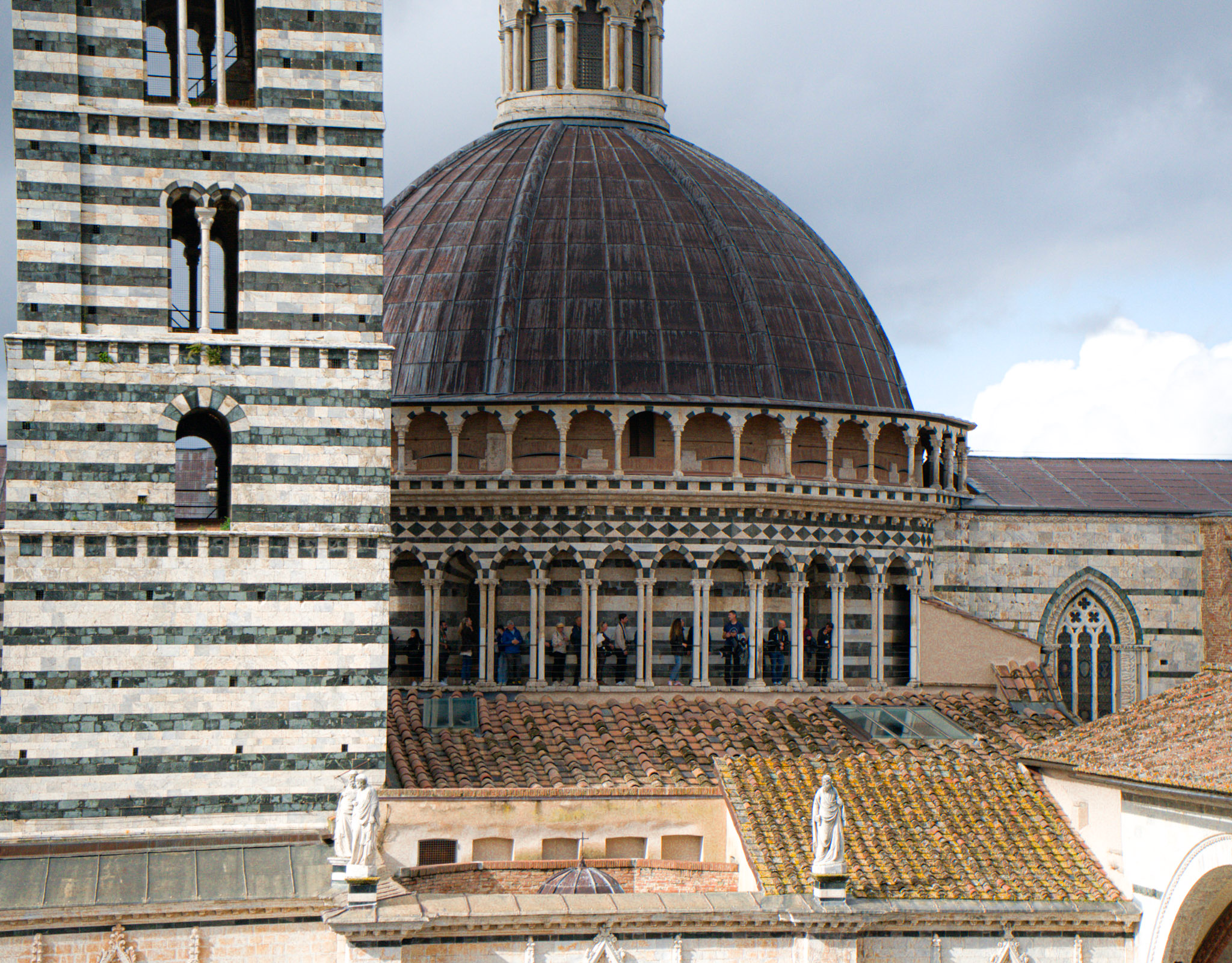
Photo Essay: Why I Keep Going Back to Siena: A Love Letter in Photos
Last Updated on April 28, 2026 by Kimberly
Some cities you visit. Siena is a city you return to.
The first time I came to Siena, I drove in, dropped my bags at an apartment outside the city, and started ticking off sights on a list. Piazza del Campo. The Duomo. A glass of wine in a crowded bar. Then on to San Marino the next day. I thought I had seen it.
The second time, I walked in. I walked in on the Via Francigena, dusty and tired and very much in my body, and the city looked completely different from the road. That was the moment I realized something important about Siena: it does not give itself to you on the first visit. You have to come back, or you just have to give it more than 1 day.
This is a photo essay, not an itinerary. If you want the practical day-by-day — where to stay, what to book, where to eat — that lives in my 2 days in Siena guide. What follows is the version I wish someone had shown me before my first visit. The version that would have told me to slow down, look up, and come back when I had time to actually see it.
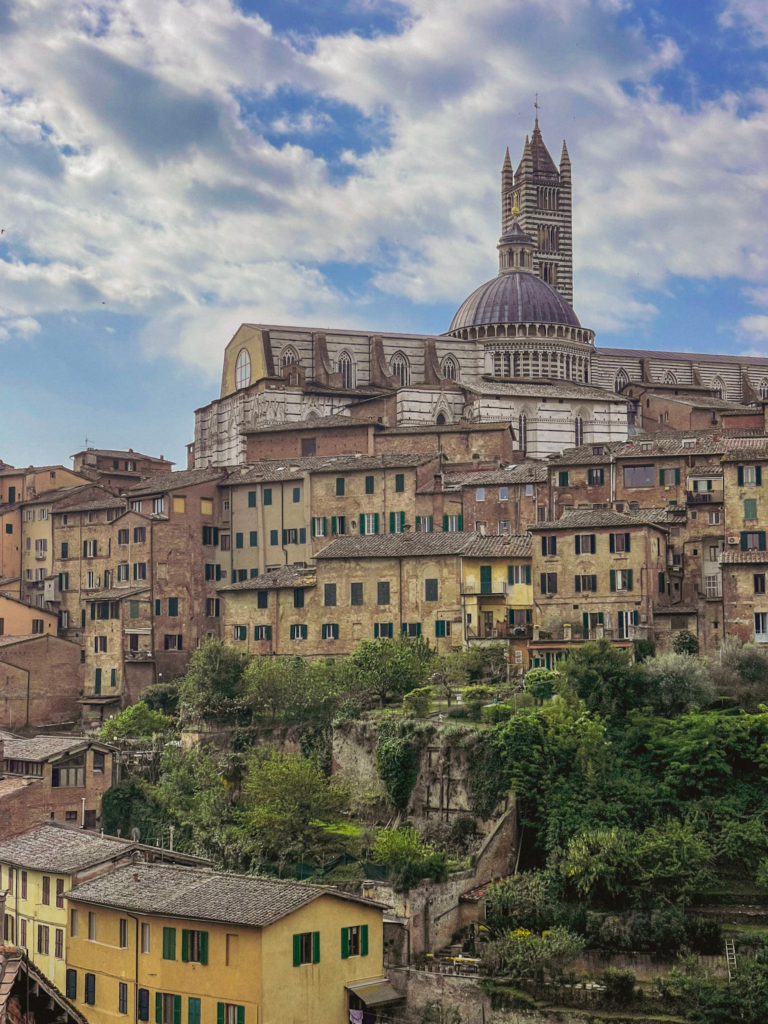
A Siena Photo Essay Begins on the Streets
The thing nobody tells you about Siena is that the city is built on three hills, which means every street is going somewhere — up, down, around a curve you cannot see past. You do not walk in straight lines here. You’re walking in all sorts of directions.
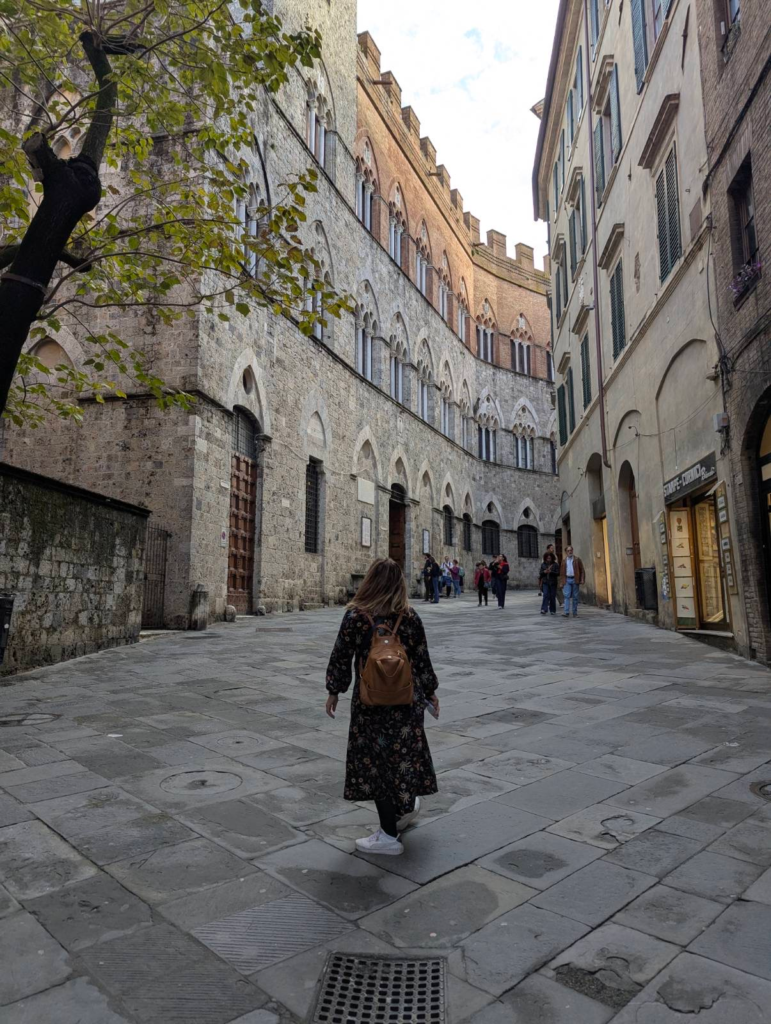
On my first visit, I tried to follow Rick Steves’ walking route through the centro storico. On my second visit, I went on a Walking Tour of Siena, made it structured, and then decided to meander at night instead. I would round a corner because the sun was hitting a wall in a way that made me stop, and I would walk down an alley because I heard a fountain. I would change direction because someone’s laundry was hanging out a third-floor window, and I wanted a closer look. Why does someone else’s laundry make us curious? What is it about laundry hanging from a window in another city that makes us so invested?
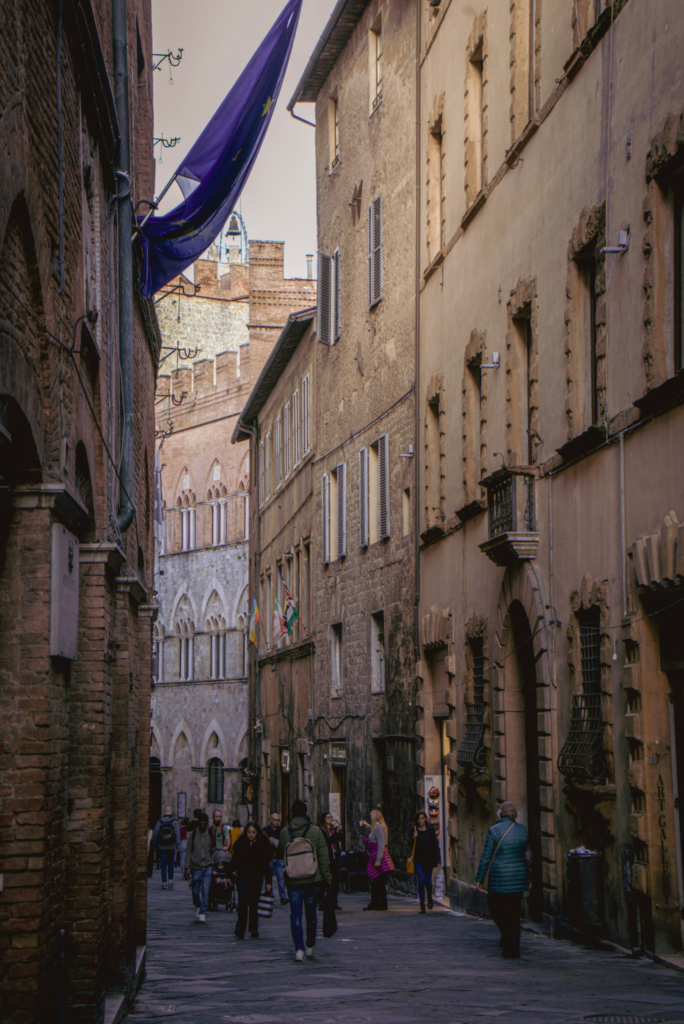
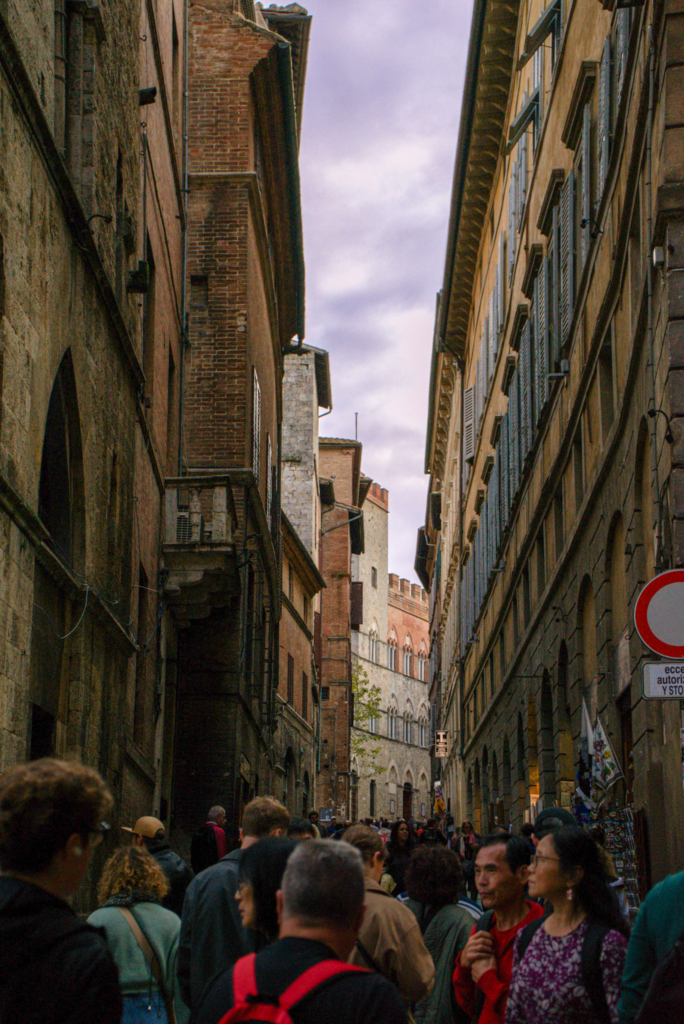
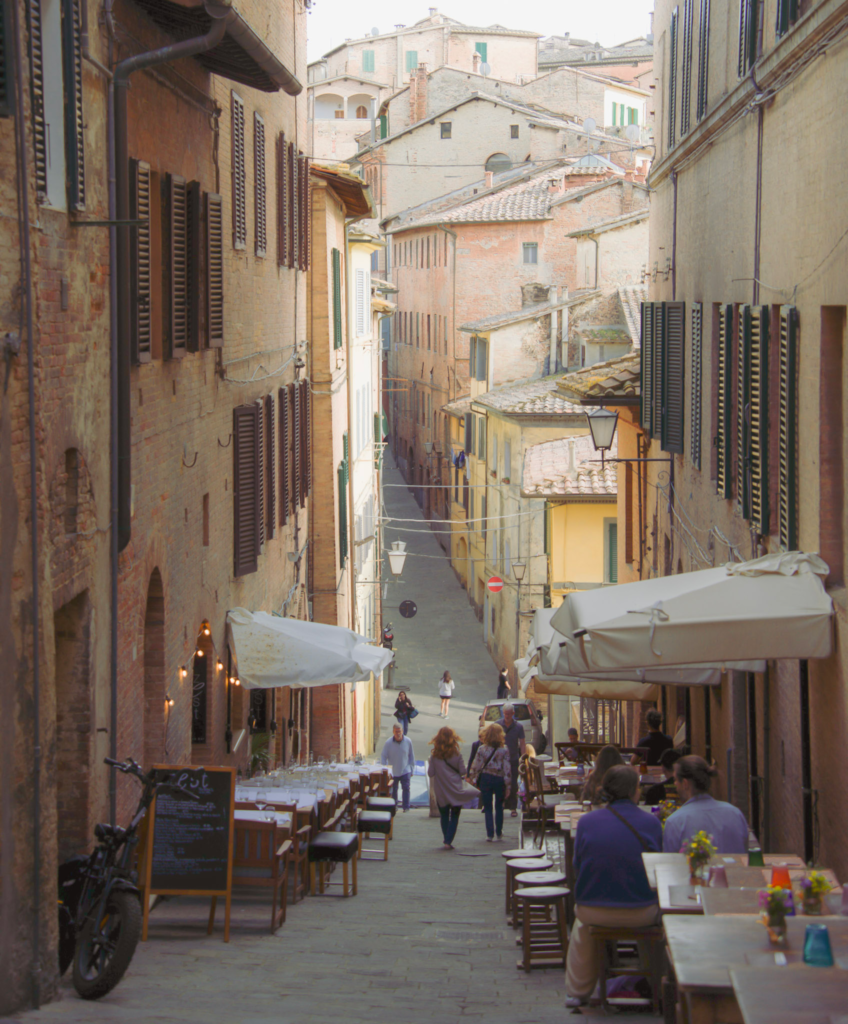
The streets in Siena tell you what kind of moment you are about to have. The wide ones full of tourists are not bad, they just are not where the city actually lives. The skinny ones are where you meet it. Walk thirty seconds off the main route, and you will hear someone playing piano through an open window. Walk a minute off, and you will find a print shop run by an old man who has been there for forty years.
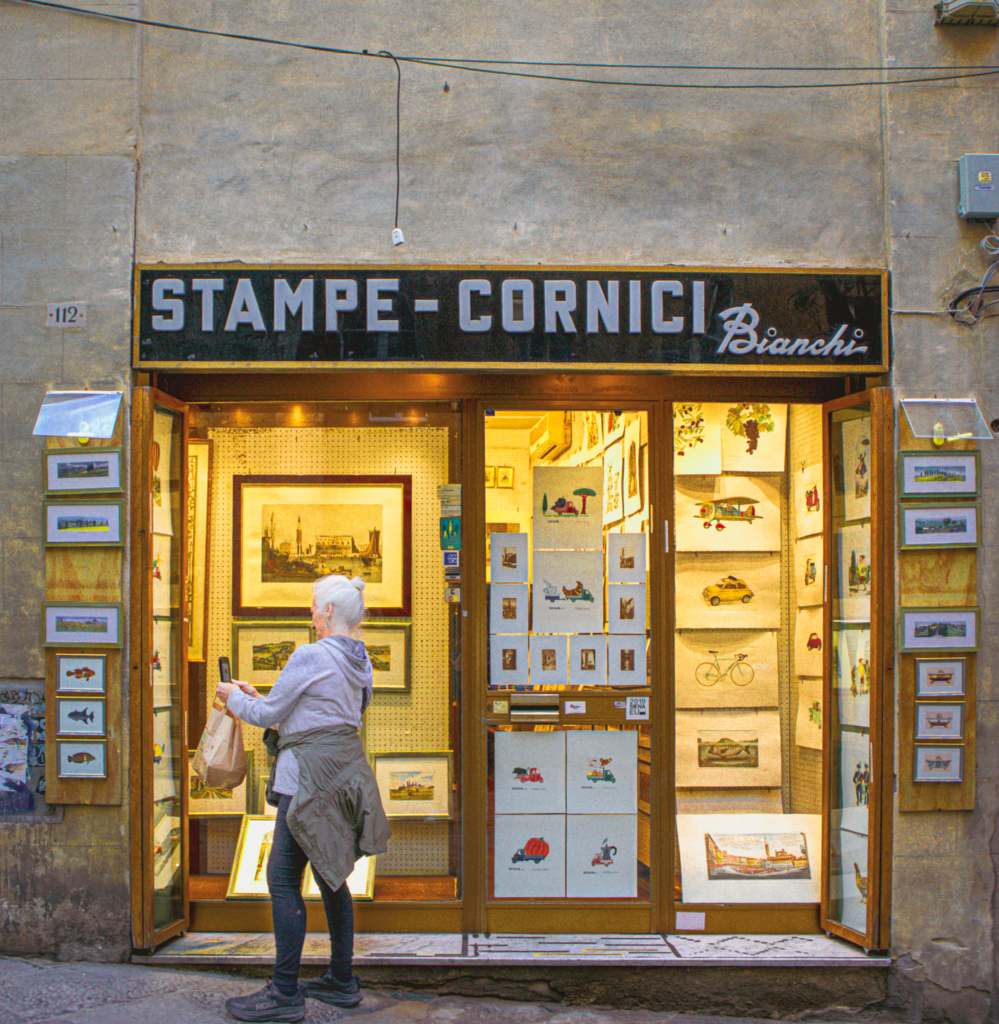
I stopped at this print shop on both visits. Stampe Cornici Bianchi —a small, warmly lit shop full of original prints by local artists, run by a man who genuinely wants to talk to you about each one.
What I Stopped For: The Most Beautiful Spots in Siena Are the Ones You Have to Look Up to See
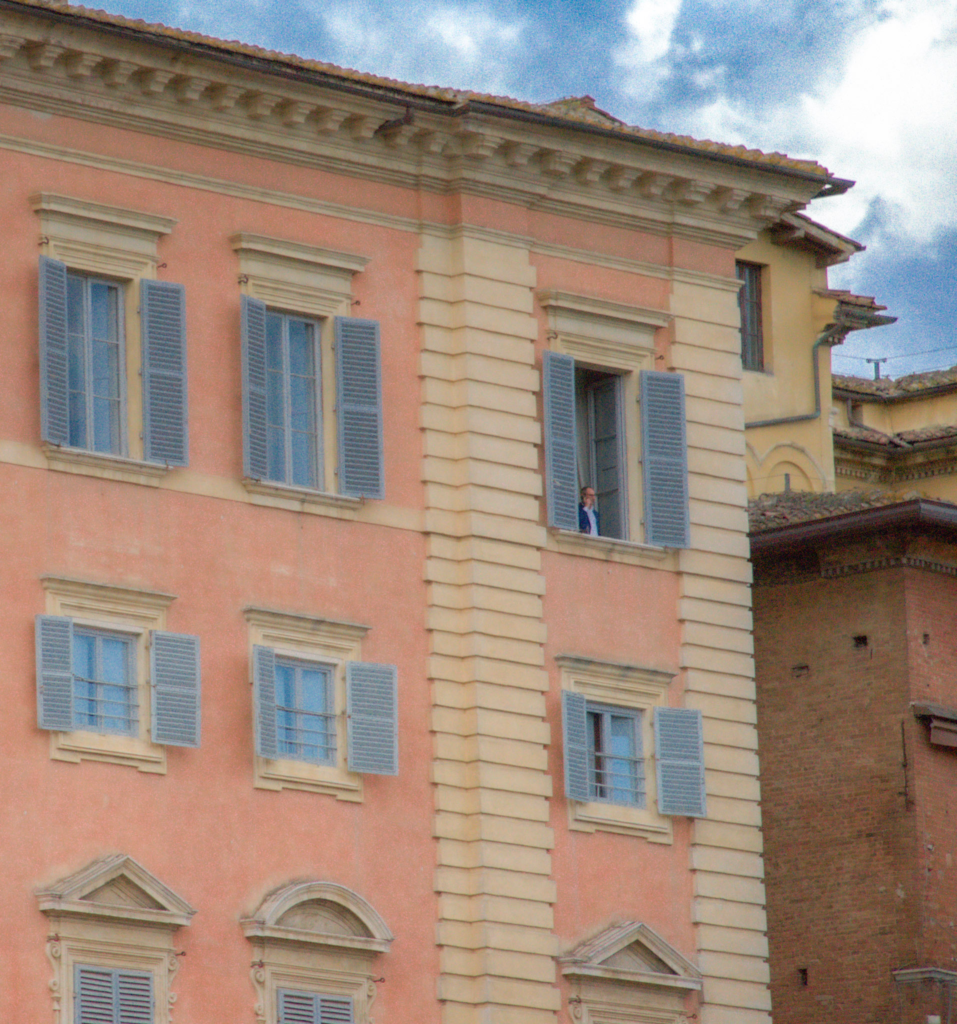
This was on the second visit. I was walking through Piazza del Campo and I looked up — and there he was. A man at a window, watching the square the way Sienese people have watched the square for seven hundred years. Day-trippers do not see this man. They are looking at the tower. The tower is wonderful, but the man is the city.
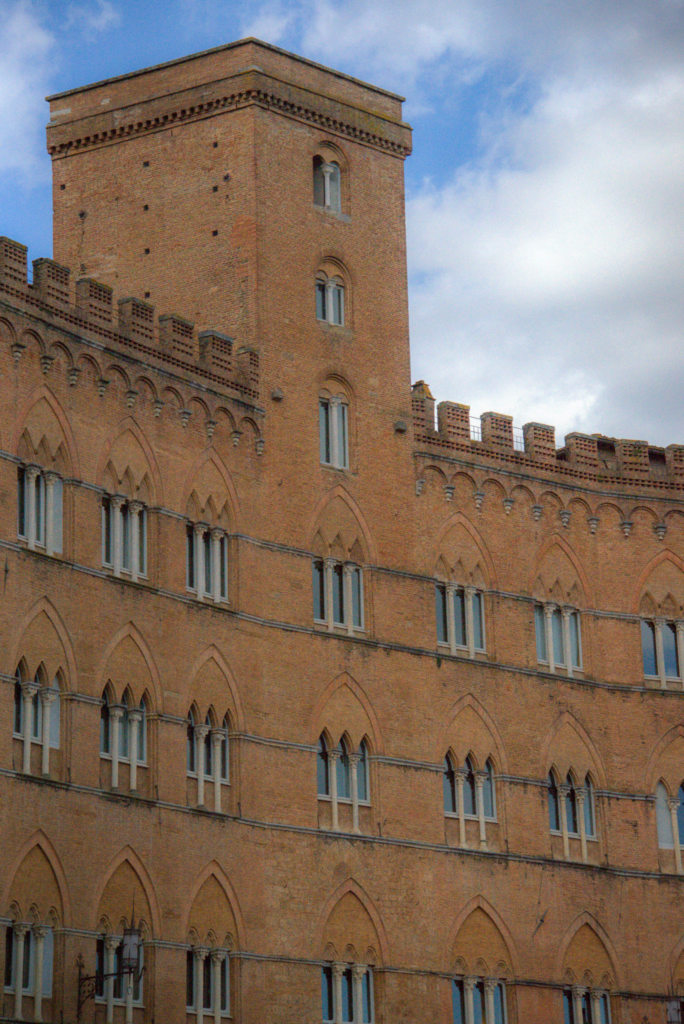
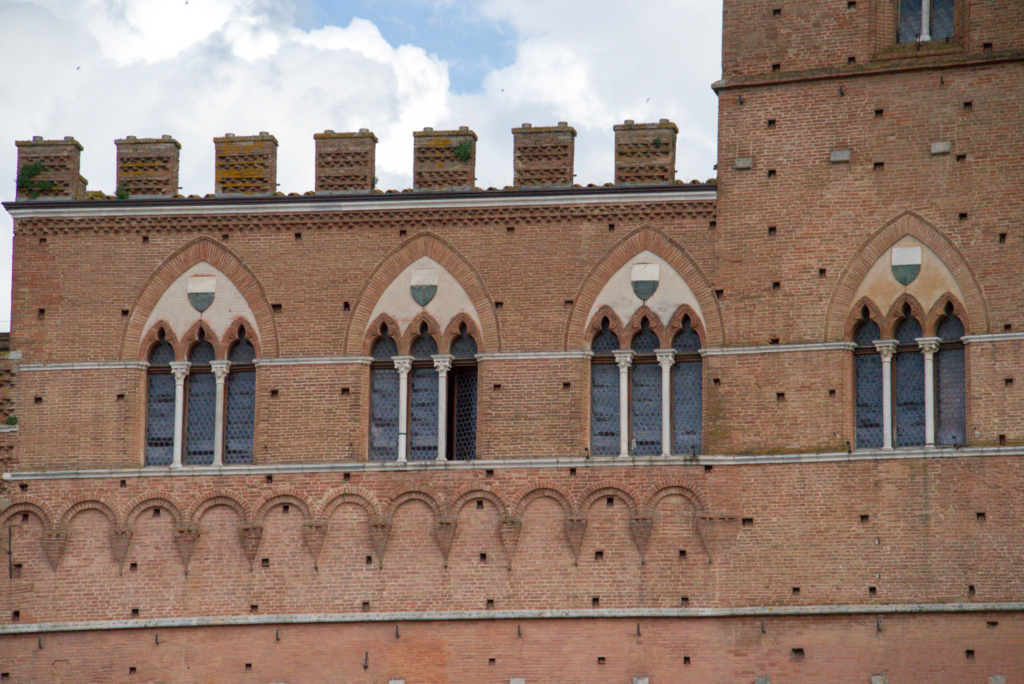
The brick in Siena is not just brick. It is the color the city was named for — terra di Siena, “Sienese earth,” the warm reddish-brown pigment that artists have been mixing with their oils for centuries. Once you know that, you cannot stop noticing it. The brick is the same color as the dust on the Via Francigena and the Duomo’s dome at sunset. The brick is the city’s whole personality compressed into one pigment. I can’t get over the fact that I used to color with this and didn’t even know a city existed like Siena.
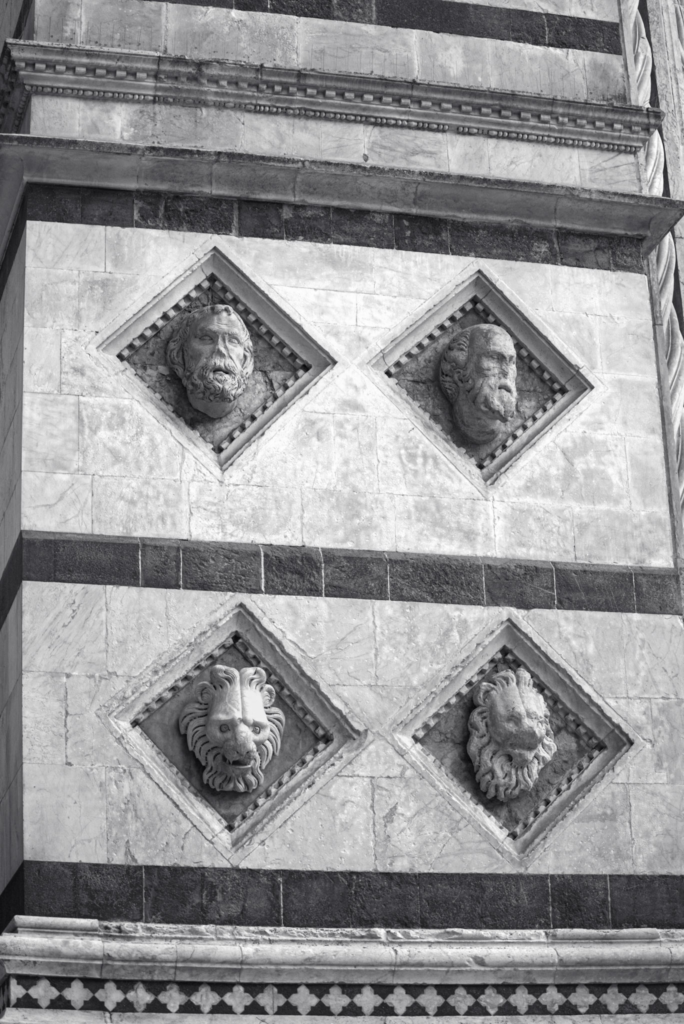
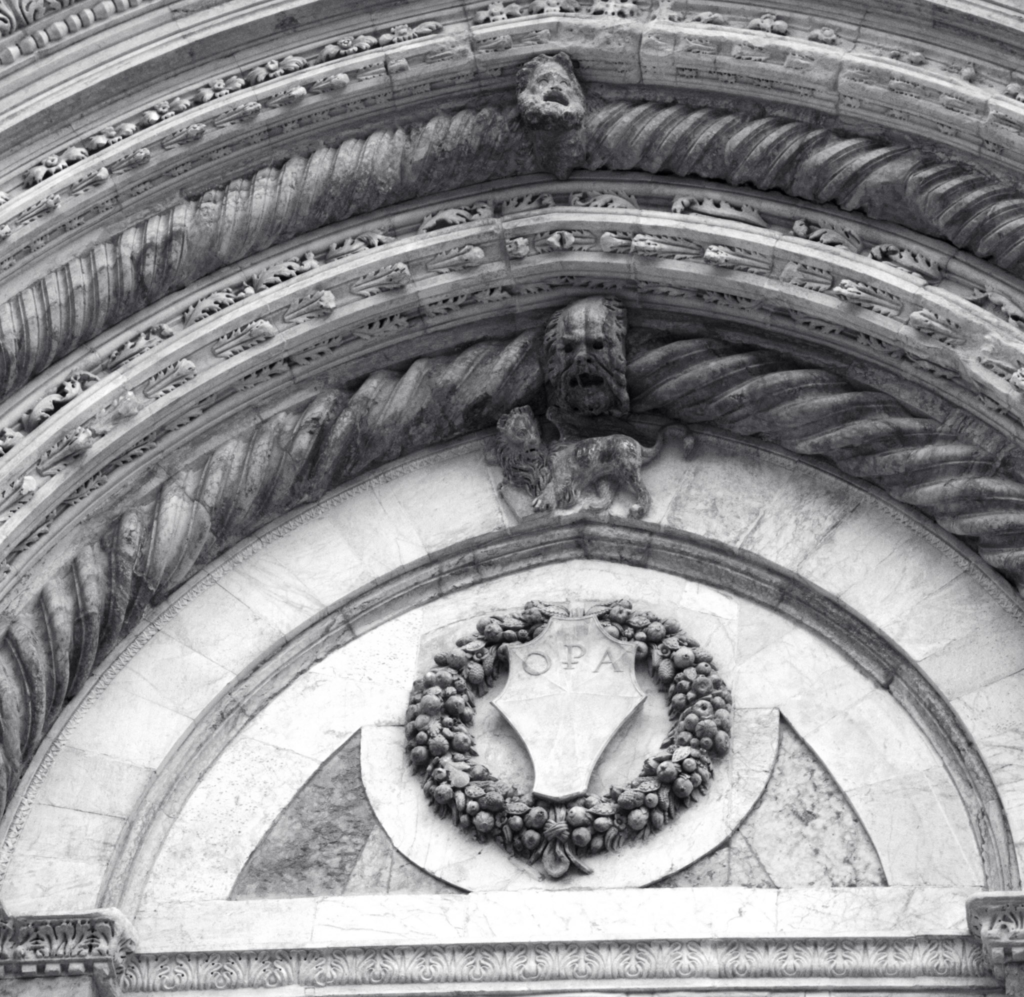
The faces on the cathedral are the part I wish I had photographed on the first visit. They are everywhere — saints, lions, bearded men, animals you cannot quite identify, all of them watching the square from twenty feet up. Most people walk past them on their way inside. Once you see them, you cannot un-see them.
The Duomo, Told Differently
Most posts about Siena give you one photograph of the Duomo and call it done. The Duomo deserves more than that. It deserves the way you actually experience it — first as a glimpse at the top of a staircase, then as a wall of carved marble too big to take in, then as a thousand small moments of detail you missed the first three times.
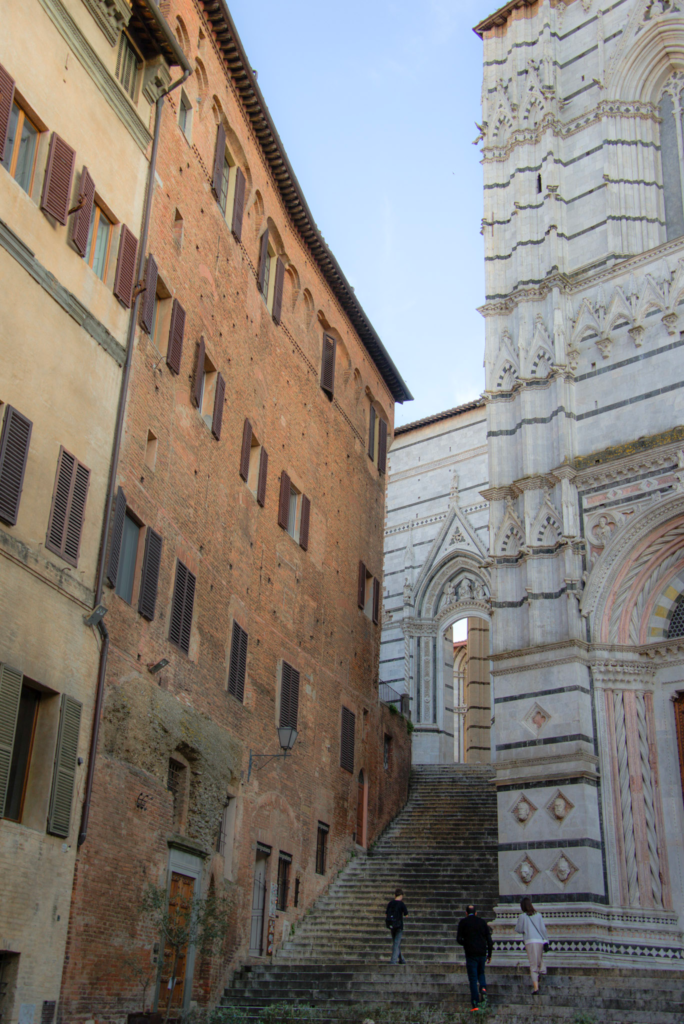
This is how you usually meet the Duomo if you are walking from the Campo — not head-on, but sideways, through a staircase that suddenly reveals it. You climb a few steps and suddenly that striped marble is just there, larger than it has any right to be.
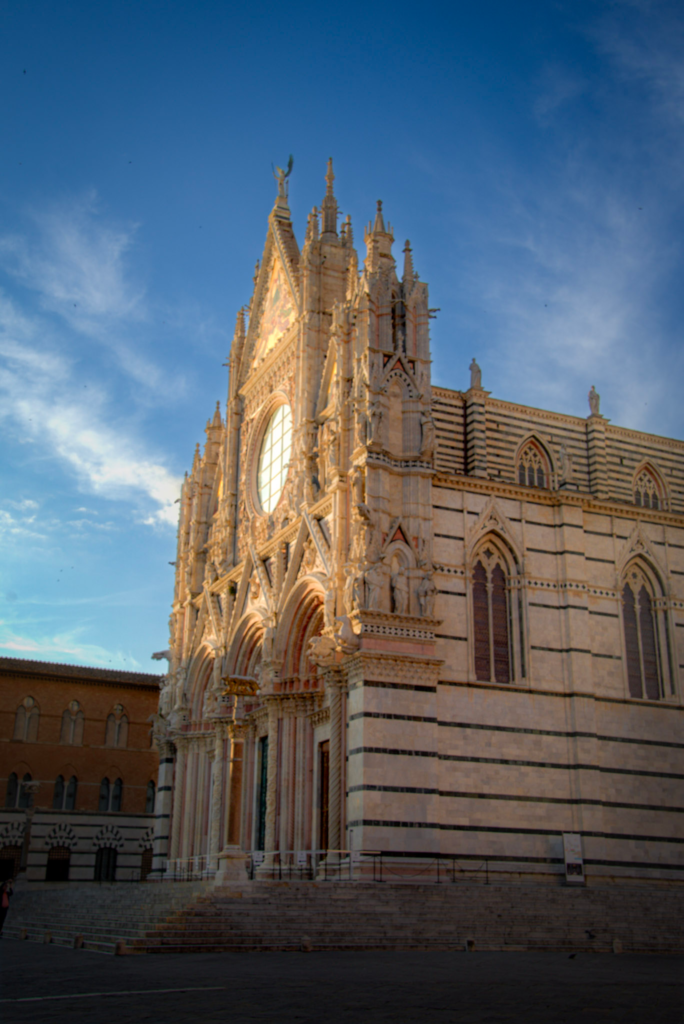
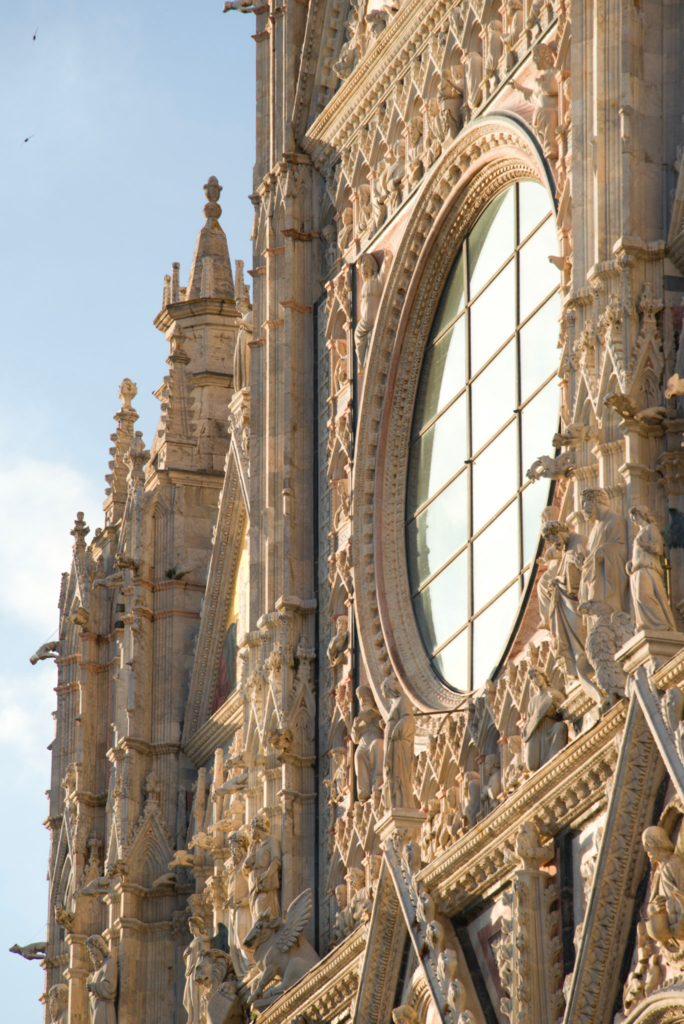
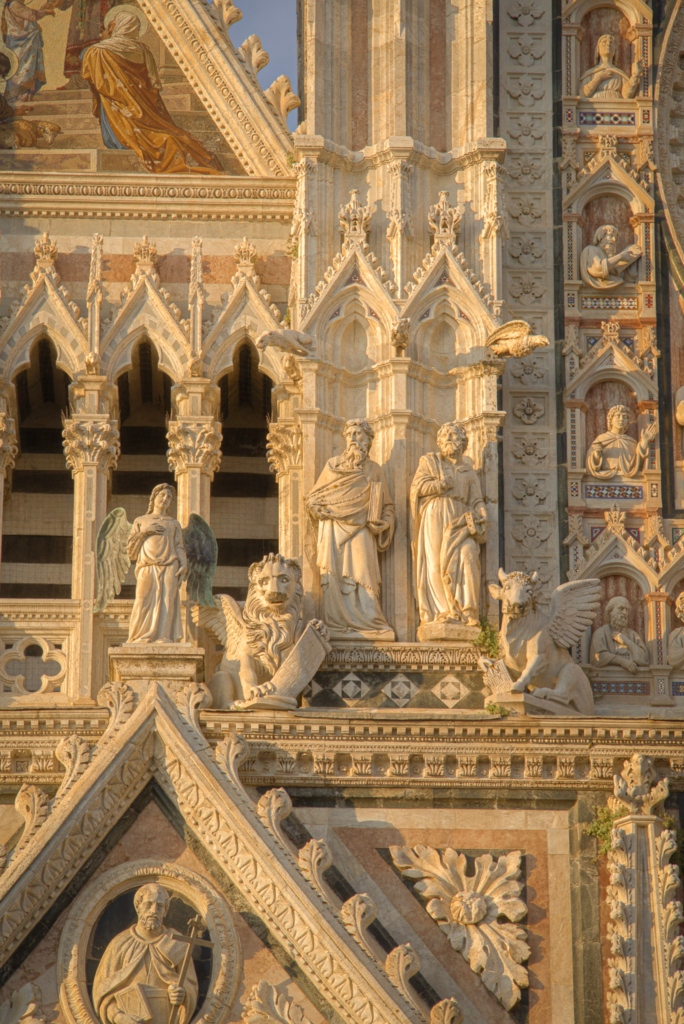
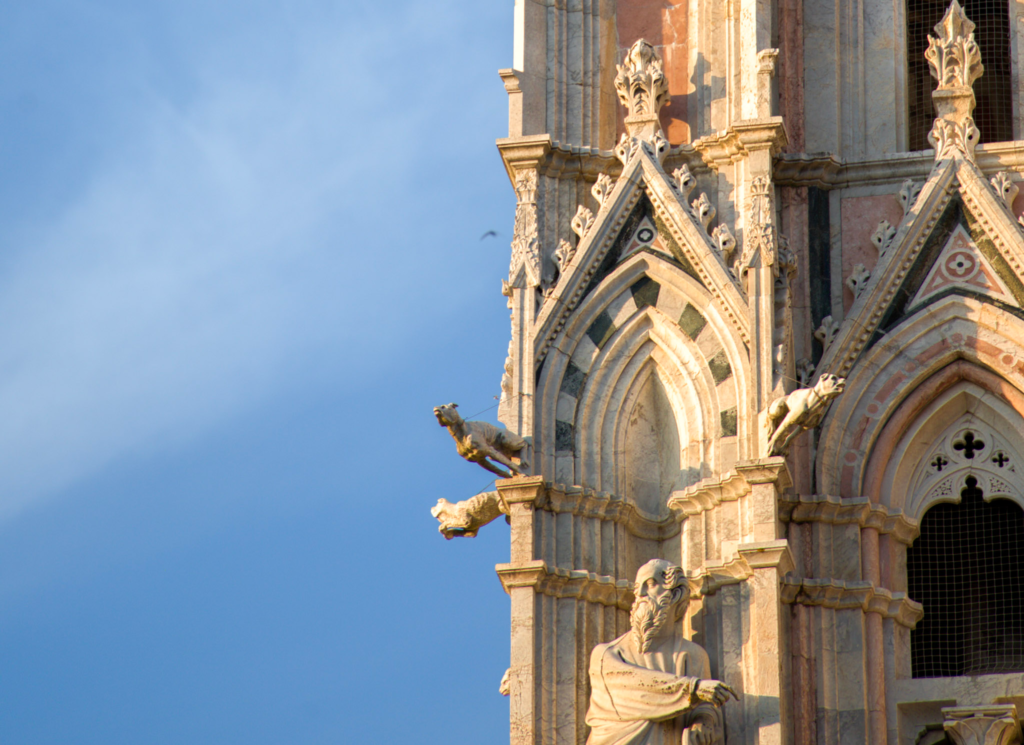
The leaping sheep are my favorite (wtf to leaping sheep?!) I do not know why they are sheep instead of the usual gargoyles, and I do not want to know. I just want to know that the medieval craftsmen who carved them looked at a Gothic cathedral and decided what it really needed was sheep mid-jump. They are still leaping. They have been leaping for six hundred years.
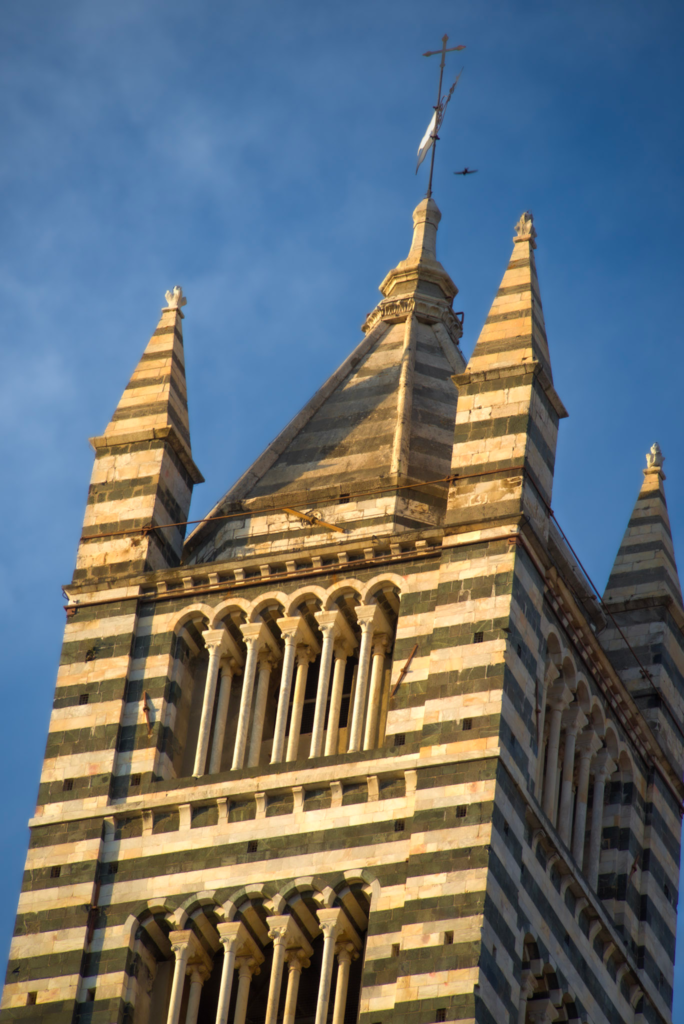
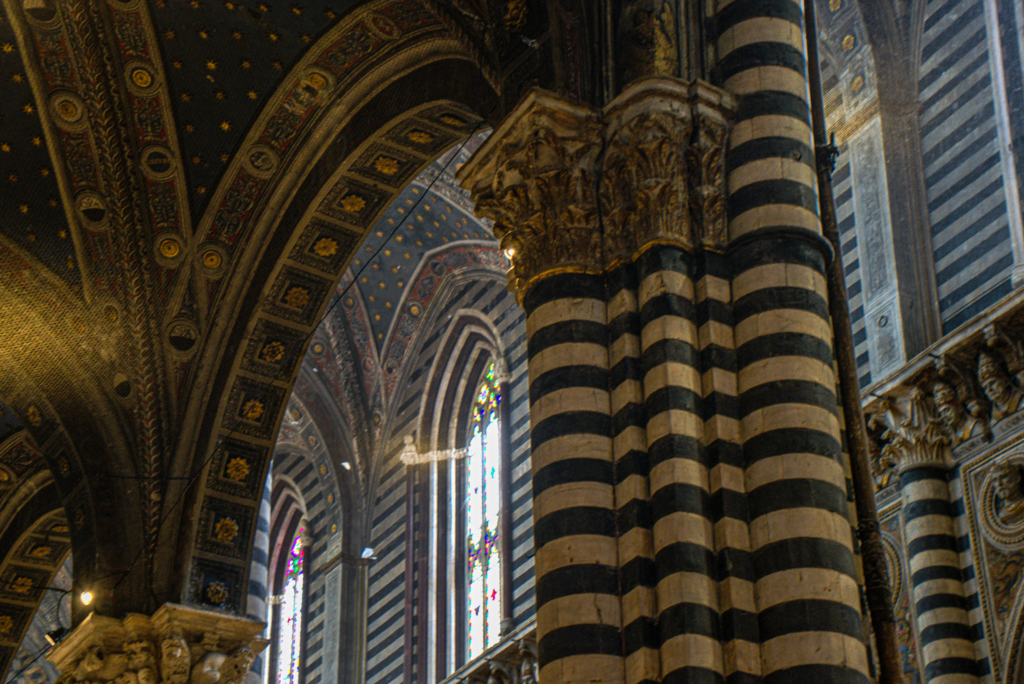
Inside, the columns are the same striped marble as the outside, and the ceiling is full of gold stars on a dark blue ground. It looks like a painted sky. The first time I went in, I thought it was beautiful. The second time, I sat down on a bench and just looked up for a long time.
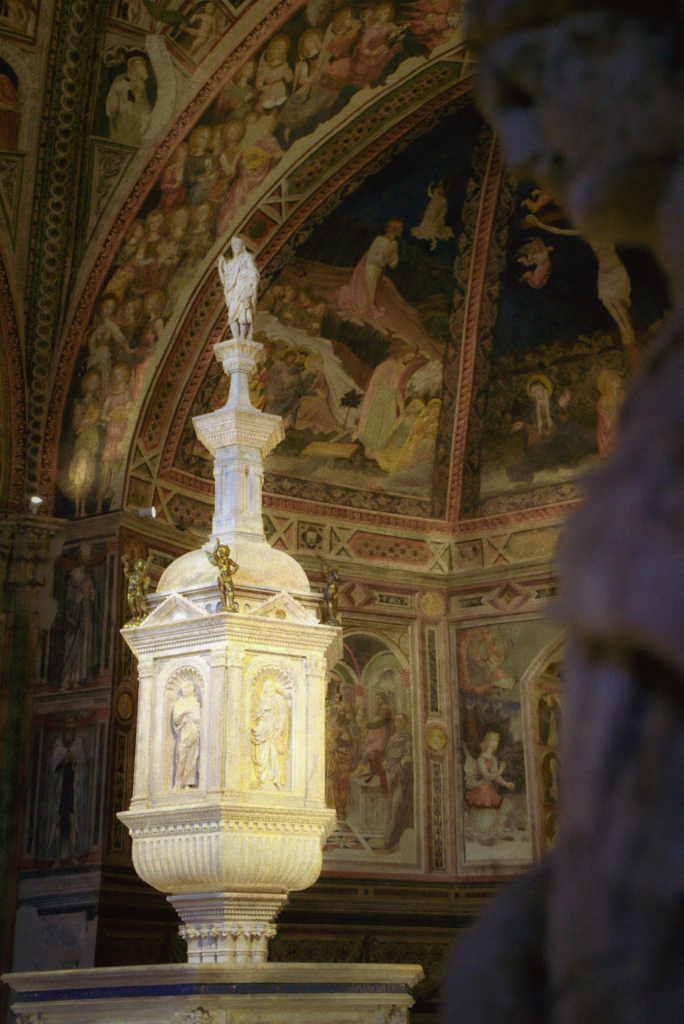
The Baptistery is the room nobody mentions. Most people skip it. They are wrong to. It is small, dim, and absolutely covered in frescoes — and the marble baptismal font in the middle of it is one of the strangest, most beautiful objects I have ever stood in front of in Italy.
A Siena Photo Essay After Dark
The best decision I made on my 1st visit was climbing the Facciatone — the unfinished wall of what the Sienese intended to be the largest cathedral in the world before the Black Death stopped them in 1348. From the top, you see what they were trying to build and what they actually built, side by side.
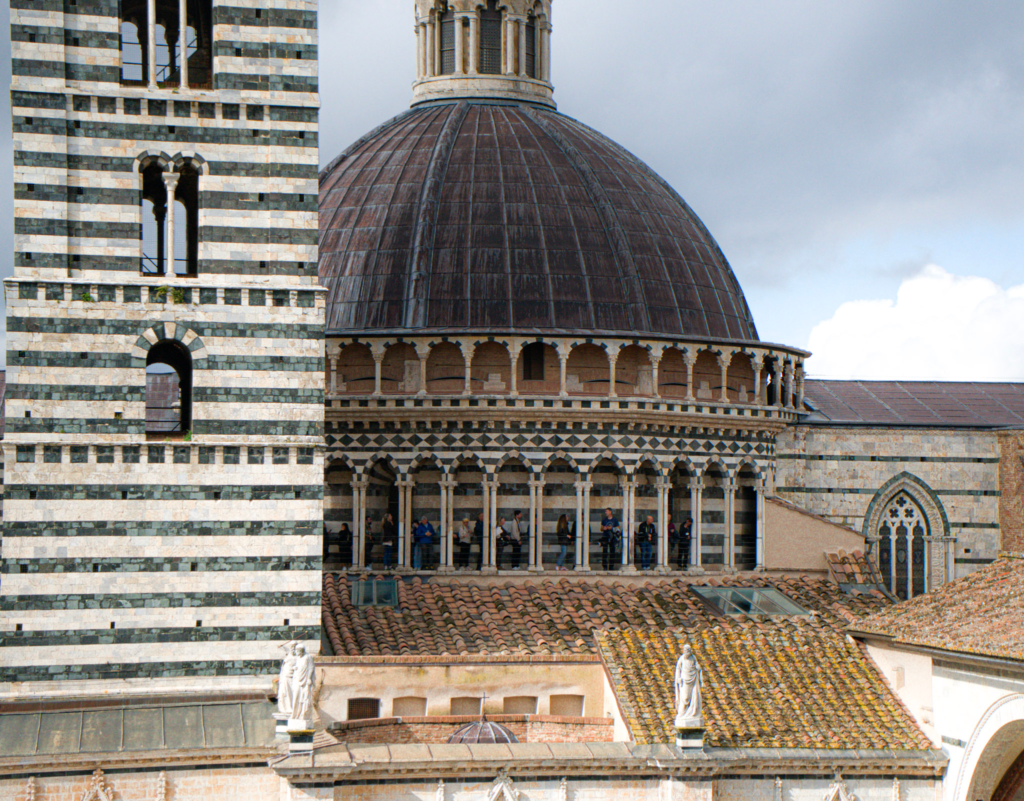
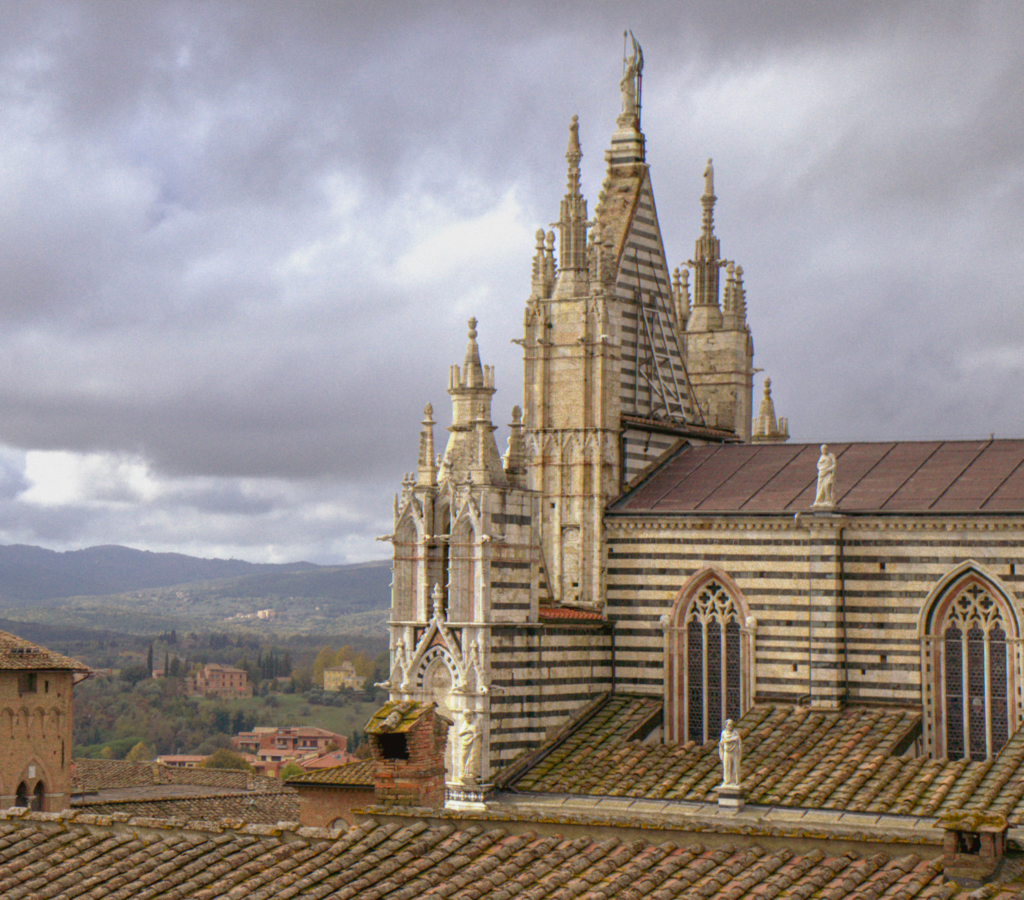
This is what the Sienese saw when they were building the cathedral that almost was. The hills behind the Duomo are the same hills the Via Francigena pilgrims have been walking through for a thousand years. From up here, you can see the whole story at once: the ambition, the stop, the city that kept going anyway.
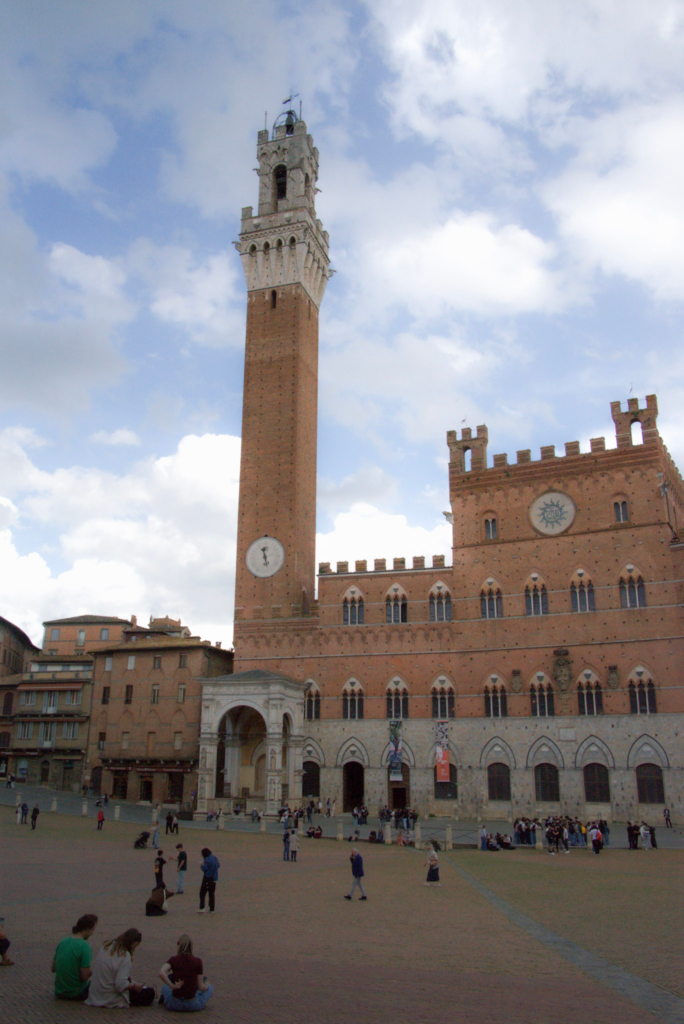
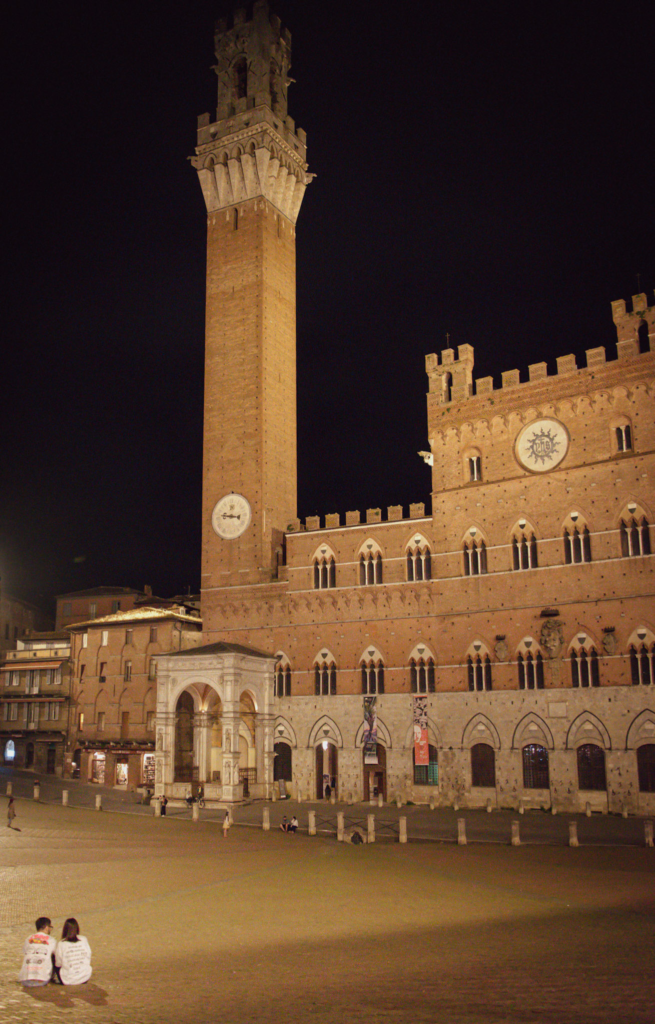
The Campo is one square, two cities. By day it is full of school groups and tour flags and people lying on the bricks like sunbathers. By night, after the day-trippers have caught their last train back to Florence, it empties out almost completely. Two people sit where four hundred were sitting six hours earlier. The bells ring. The light on the Palazzo Pubblico goes from amber to gold. This is when Siena gives itself to you. You have to be there overnight to see it.
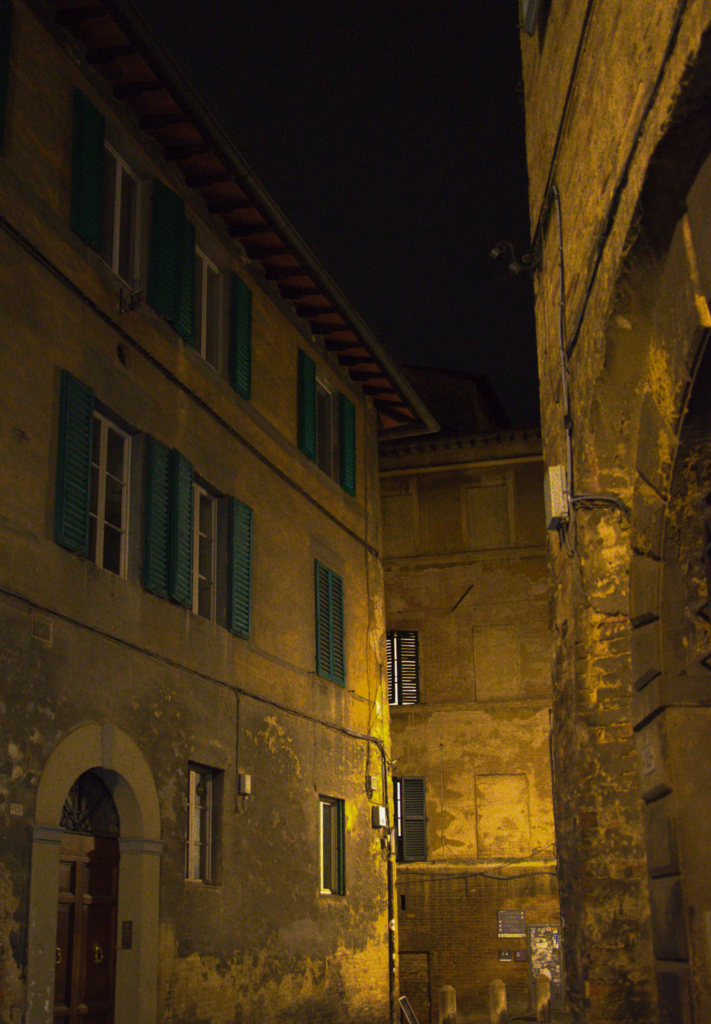
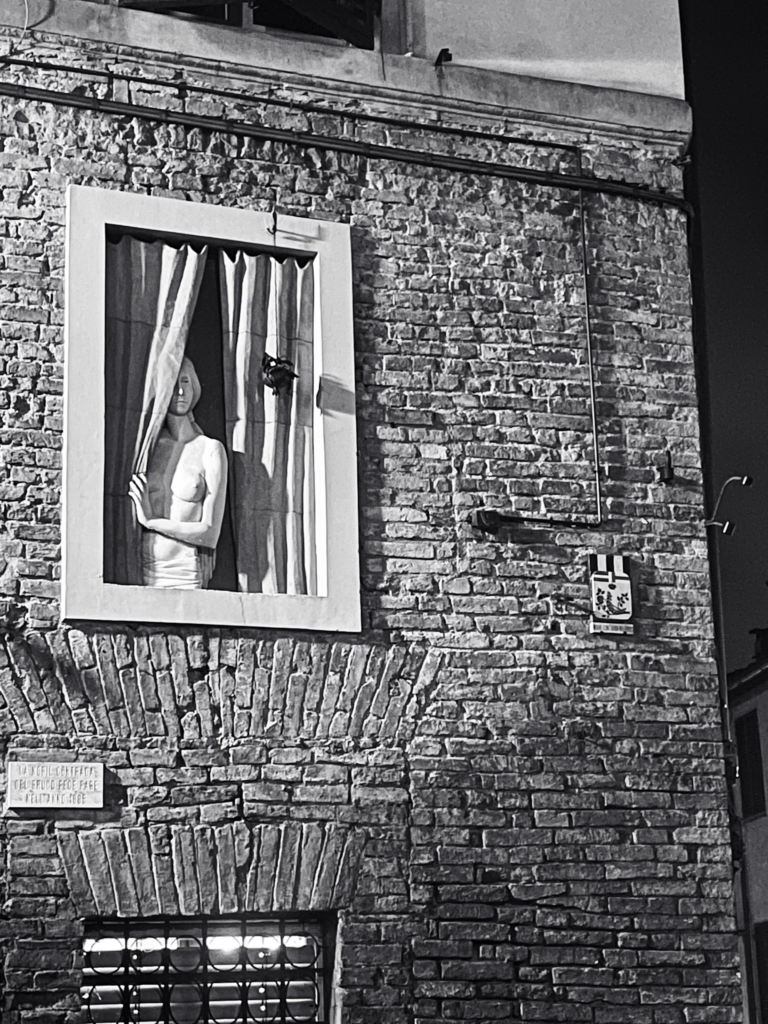
The street art here surprised me. You expect medieval. You get medieval, and then you turn a corner and find a contemporary mural of a woman pulling back a curtain, set into a brick wall under a contrada plaque from 1066. Siena is older than almost any city you have been to, and somehow it is also still being made.
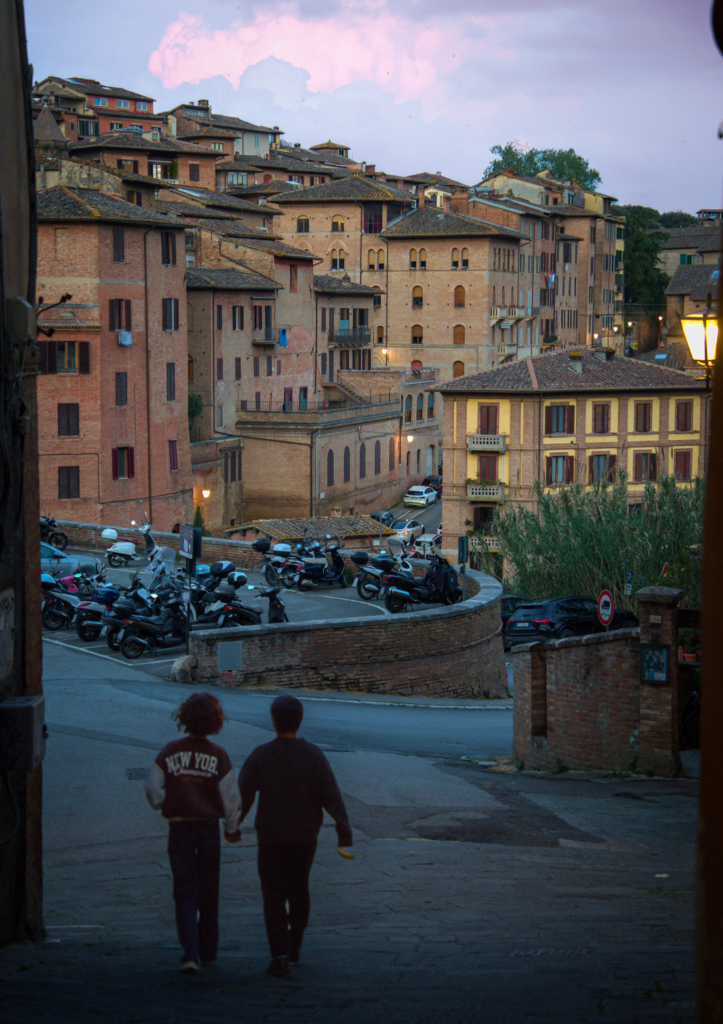
This is the photograph I keep coming back to. The pink-cloud sky. The two of them holding hands, walking down toward the scooters. Someone’s New York jacket on someone in a Tuscan hill town. The day is ending. The city is still here, still doing what it has always done, regardless of who is watching.
I have been to Siena twice, and I know I will go back. But maybe this time for the famous horse races in Siena!
Plan Your Own Trip to Siena
If this essay made you want to go, here are the practical resources I have already written so you do not have to figure it all out yourself:
- The full 2-day Siena itinerary — where to stay, what to book, what to eat, with maps
- Walking the Via Francigena from San Gimignano to Siena — if you want to arrive on foot, the way I did the second time
- What to pack for the Via Francigena in Tuscany — the packing list I wish I had used
Frequently Asked Questions About Visiting Siena
The Facciatone viewpoint, the staircase that reveals the Duomo, Piazza del Campo at dusk and again after dark, the small streets around the Stampe Cornici print shop, and any window in the city when someone happens to be standing in it. The light in Siena rewards patience more than planning.
Late afternoon into dusk. The brick that gives the city its name turns the same color as the pigment when the sun gets low, and the day-trippers are gone by 7 PM in shoulder season. Bring a camera with decent low-light performance — the streets stay photographable well past sunset.
For a quick visit, yes. For seeing the city the way it actually is, no. The dusk and night photographs in this essay are not possible on a day trip from Florence. You need to stay overnight to see the Campo empty out.
Yes. The OPA SI Pass (the combined ticket that gets you the Cathedral, Library, Crypt, Baptistery, Facciatone, and Museum) is well worth it and bookable in advance through GetYourGuide. The Facciatone climb is included and is the best view in the city — most people miss it.
Yes, but it is hilly. The whole centro storico is walkable in real walking shoes. Skip the fashion sneakers — cobblestones and slopes will end your trip early.

