Ütia de Börz Review: Is this Hotel in the Dolomites Worth It?
Last Updated on September 29, 2026 by Kimberly
I have been trying to get a reservation at Utia de Börz in Passo Delle Erbe for the past three years, to no avail. Then one day, while checking specific dates for the end of July, there was an opening. I couldn’t believe it, and it was for the days needed.
I could literally feel the fire from how fast my fingers were typing on the keyboard to get that reservation locked in. I started planning a slow-travel Itinerary for 3 days in Passo Delle Erbe immediately!
If you are planning your Dolomites trip and Utia de Börz has popped up on your radar, let this hotel review be the one that helps you make a booking decision, because as a solo female traveler, this was a perfect place to base myself during four days in the Dolomites (and yes I know my friend Karrie was staying at the hotel as well, but that being said I think solo female travelers will love Utia de Börz)
Keep reading to learn about the Best Hotel in the Dolomites!
Before you move on, please know all opinions are my own. I was not sponsored or paid to stay the night here. This stay was fully funded by me.
Quick Facts about Utia De Borz
Elevation: 2,006m, atop Passo delle Erbe (Würzjoch)
Room: Double Room with Balcony, 2nd floor
Price: ~€150/night including tax and breakfast (1 adult)
How to book: Direct via Booking.com, not always available; check back if sold out
Best for: Sunrise/sunset chasers, Alta Via 2 hikers, Sass de Putia access, solo female travelers, slow travel over crowded hotspots
Not for: Anyone wanting a full-service spa or resort experience
Further Planning: First-Timers Guide to The Dolomites / How to book a Rifugio in the Dolomites / Where to stay Before and after the Alta Via 1 / My favorite Dolomites Hotels for People on a Budget
Getting to Ütia de Börz on Passo Delle Erbe
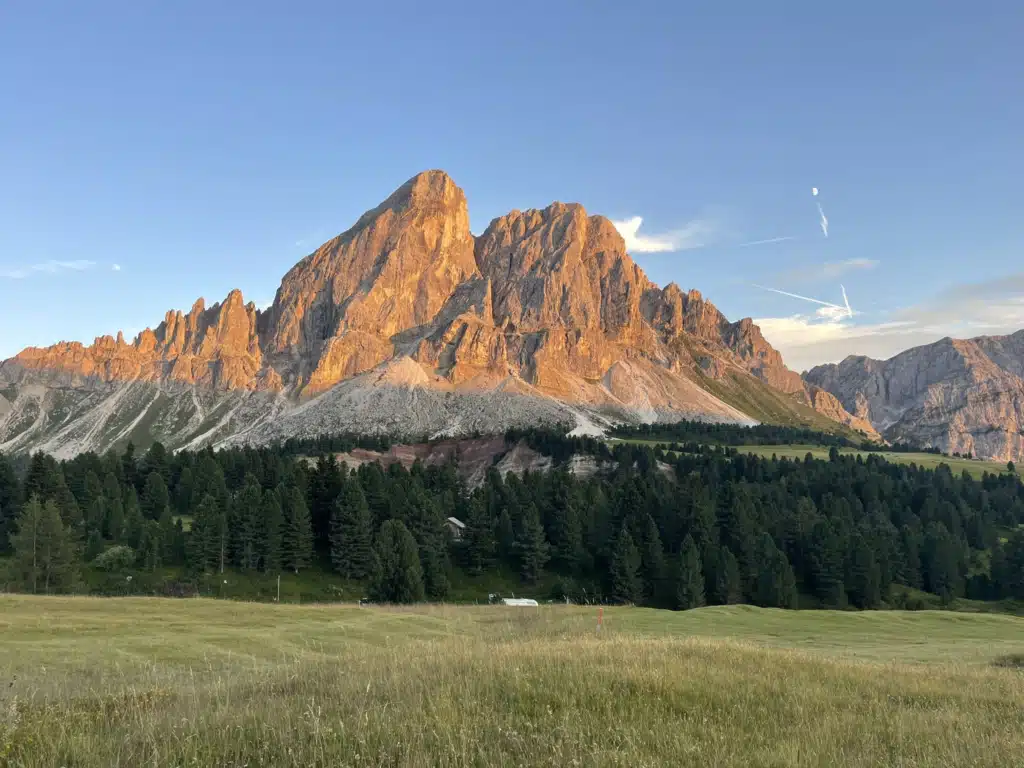
I picked up my rental car (a SEAT Ibiza) at Venice Treviso Airport (TSF). Because I was also spending time in Friuli Venezia on the backend, I wanted to make sure I had a car.
Otherwise, I think you can always rely on public transportation in the Dolomites as a visitor. Although it might not get you the freedom you like, I believe it is possible. You’ll need to download a few apps to make planning seamless, like the Dolomiti Bus and South Tyrol Bus App
Or head to my Dolomites For First Timers Post to learn more about planning your trip.
From the nearest airports:
- Venice Treviso (TSF): roughly 2.5-3 hours via the A27 and A22 motorways to Bressanone, then SS49/SS244 up to Passo delle Erbe. This is the airport I flew into.
- Venice Marco Polo (VCE): similar route and timing to Treviso, roughly 2.5-3 hours, sometimes a touch longer depending on Venice-area traffic getting out to the A27.
- Innsbruck (INN): the shortest drive of the three, roughly 2-2.5 hours, crossing the Brenner Pass into Italy before picking up the same route to Bressanone and up to the pass.
- Verona (VRN): roughly 2-2.5 hours via the A22 motorway straight up to Bressanone, then the same final stretch to the pass. A solid alternative if Venice flights don’t work for your dates.
- Milan (Malpensa, Linate, or Bergamo): the longest of the group, roughly 3.5-4 hours via the A4 and A22 motorways. Doable as a first or last day of a longer trip, but not a quick hop.
These are rough drive-time estimates for planning purposes, always double-check current times on Google Maps before you book, since mountain road conditions and traffic can shift things.
Get Directions to Ütia de Börz
Driving on the Passo Delle Erbe
Just a heads-up: if you are driving the road to Passo Delle Erbe, it is winding, with real curves, and shared with hikers, buses, and farmers moving equipment or livestock. Go slow. Stay alert and don’t rush it. Honk around the curves to notify others coming that you are on the other side.
Summer Routes (roughly May-November- open both directions; chains are required October to April)
- From Val Badia: A22 Motorway, exit Bressanone-Val Pusteria, follow SS49 to San Lorenzo, then SS244 through San Martino in Badia to the final climb.
- From Valle Isarco (3 options): Via Luson, Via Eores/Afers, or Via Funes, all converging on the same final stretch up.
Winter (roughly November-May): Only reachable from the Val Badia route above. The Valle Isarco road closes with the snow.
Before You Drive: Check the arrival and location page for current road conditions and exact turn-by-turn directions; they stay more up to date than I can. They also run a live webcam from the pass if you want to check conditions first.
If you want to know the rules of the road in Italy, read more about Driving in Italy
By Public Transportation:
Doable with a change or two. Bus to San Pietro (Funes) or Bressanone, then transfer toward Passo dell’Erbe/Wurzjoch, or from Brunico/San Lorenzo via Piccolino. Schedules are seasonal, and some lines run summer-only; best to check Sudtirolmobil for the up-to-date information. Download it to your phone for easy access!
There is a train station in Bolzano, and if you want to know more about taking the train in Italy, I have the perfect post about train travel in Italy
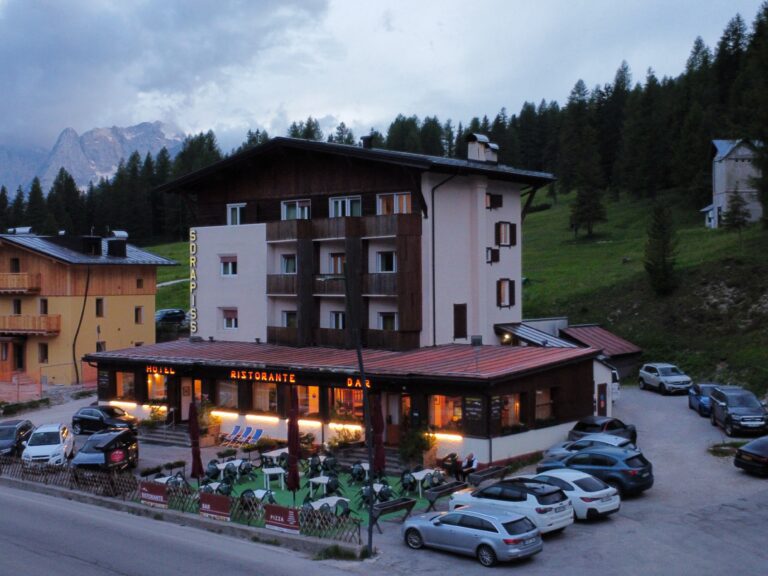
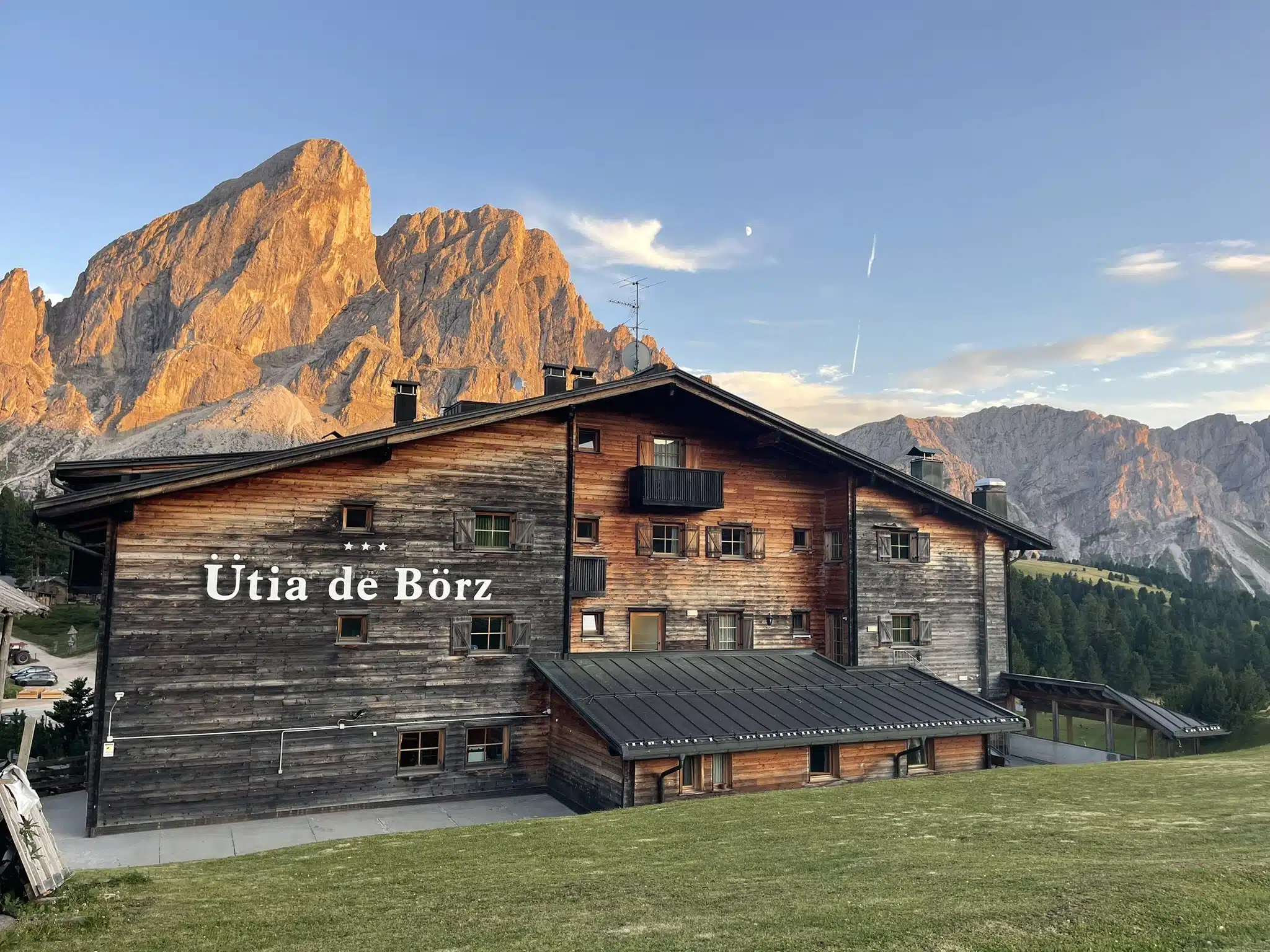
My arrival at Ütia de Börz
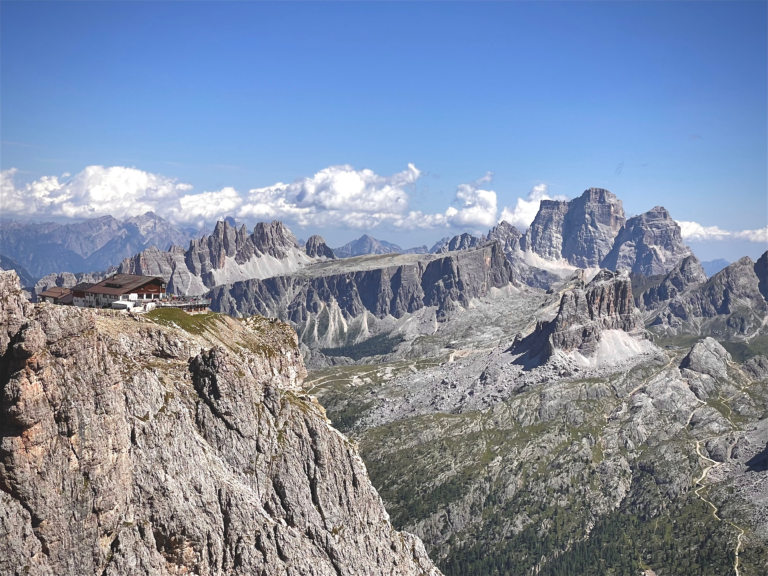
I arrived at Utia de Börz around 5 pm, and this wasn’t my first time seeing this stretch of road. Years earlier, hiking the Alta Via 2 Short, I crossed through this area from Plose on to Forcella Putia, and I looked down to see the hotel sitting there in the distance.
I remember thinking then that I wanted to come back and actually spend time in the area Passo delle Erbe/Wurzjoch properly.
Parking at Ütia de Börz
The parking situation at Utia de Börz is generous, a mix of asphalt and gravel. You’ll see no-parking signs when you arrive, but that’s to deter non-guests.
My Car rental puttered up the hill, and I easily found a parking space. There were quite a few even in July. One thing to remember? Put that e-brake on!
As we gathered our bags and headed to the door, a gentleman who was sharply dressed greeted us with a big “Buongiorno! Welcome Home.” We’d learn soon after this interaction that this was Bel, the manager, and he was fantastic!
Checking into Ütia de Börz
Check-in itself is simple at Utia de Börz : through the double doors and straight back. You can’t miss the desk. The hospitality at check-in was genuinely impressive, down to the small things.
My friend Karrie needed some medication refrigerated, and the staff handled it immediately, no fuss.
My room was on the second floor of Utia de Börz and hers on the first, and there’s an elevator at Utia Di Borz for anyone who needs it. Painless, easy, and warm
The hallways were decorated with a local photographers pictures of various places around the Dolomites. Which I loved. I did not note a signature on the side, but I couldn’t tell you what it was. I will say they have a beautiful picture of Cascate Di Fanes in the stairwell. Thought about stuffing it in my luggage, but you see I do want to come back here.
The Double Room Ütia de Börz
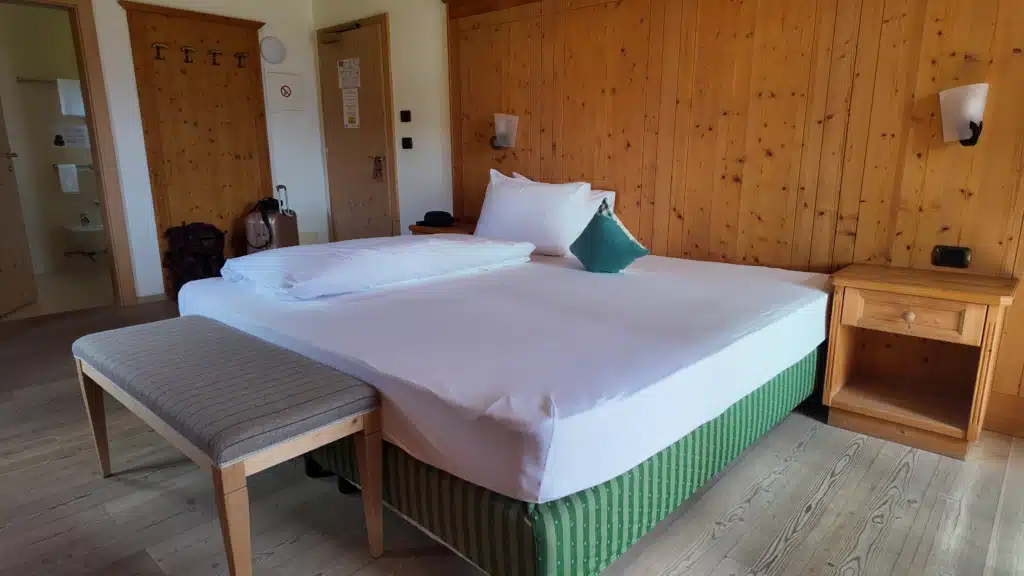
My room was a double on the second floor with a balcony; I had room 211. A spacious corner room; I felt like a queen!
The rooms are decorated in soft pine, which gives many Dolomites mountain properties real character rather than a generic feel. It was simple and clean, and what I call mountain-luxurious.
I had a gorgeous balcony view stretching toward Bressanone, the Günther-Messner High Route, Mount Gabler, and the Odle di Eores. Below the balcony, I could see the back eating area or terrace, with a campfire area and lounge chairs surrounding it.
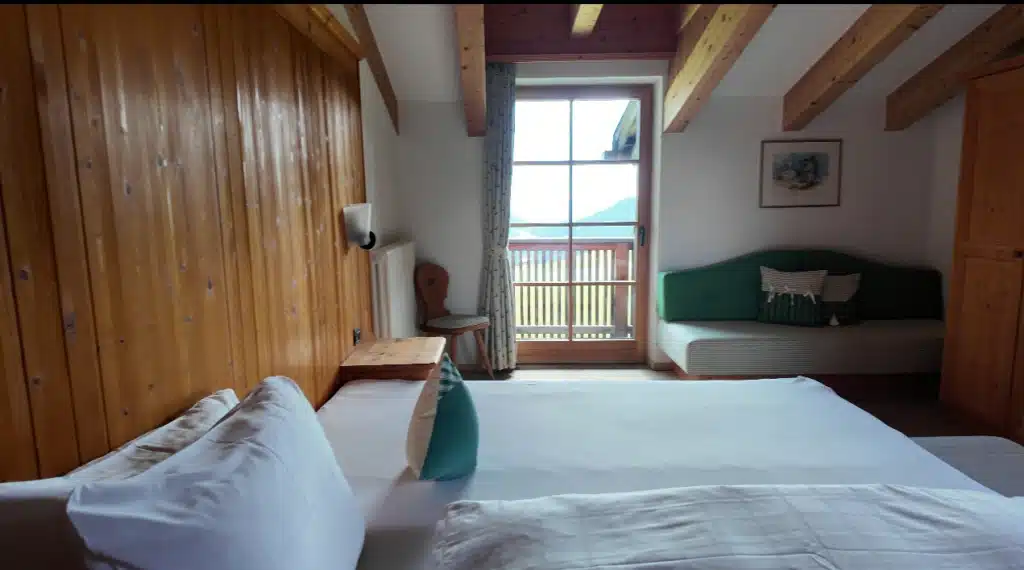
Comfort level
Walking in, the room smelled of alpine wood, and everything about it felt light and airy rather than dark or cramped. I couldn’t hear my neighbors at all, and the temperature was close to perfect, save for a bit of warmth at night, easily fixed by venting the door.
The curtains did their job too, keeping the room dark enough that early sunlight didn’t wake me before I was ready. As I previously mentioned, mine was a corner room, so it ran bigger and more spacious than most. Karrie’s room, one floor below, was a touch smaller but still had its own gorgeous balcony view, hers looking directly out toward Sass de Putia and also toward Bressanone.
The bed in the room was big! I will be honest, though, and say that it was kind of hard and I found myself struggling to fall asleep.
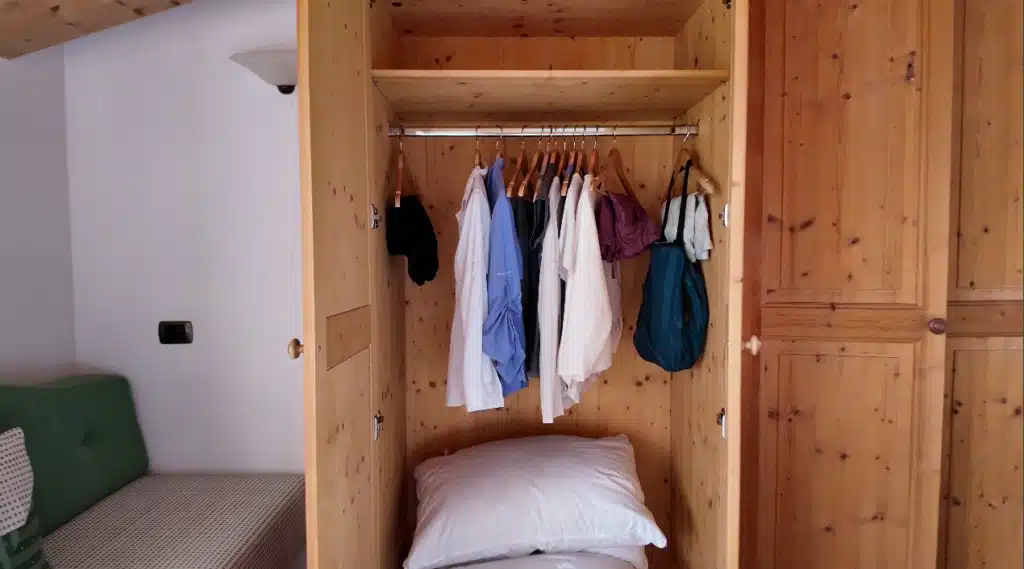
Storage was better than I expected for a mountain hotel: two big wardrobes, one stocked with plenty of hangers, an extra duvet, and pillows, coat hooks by the door, and a chaise lounge by the balcony door and outlets right next to the bed- small things, but they add up.
There was a small desk in the corner if you need to get any work done. On the desk you’ll find more hotel information. They even included a plogging bag you could take on your hikes to help keep the Dolomites beautiful.
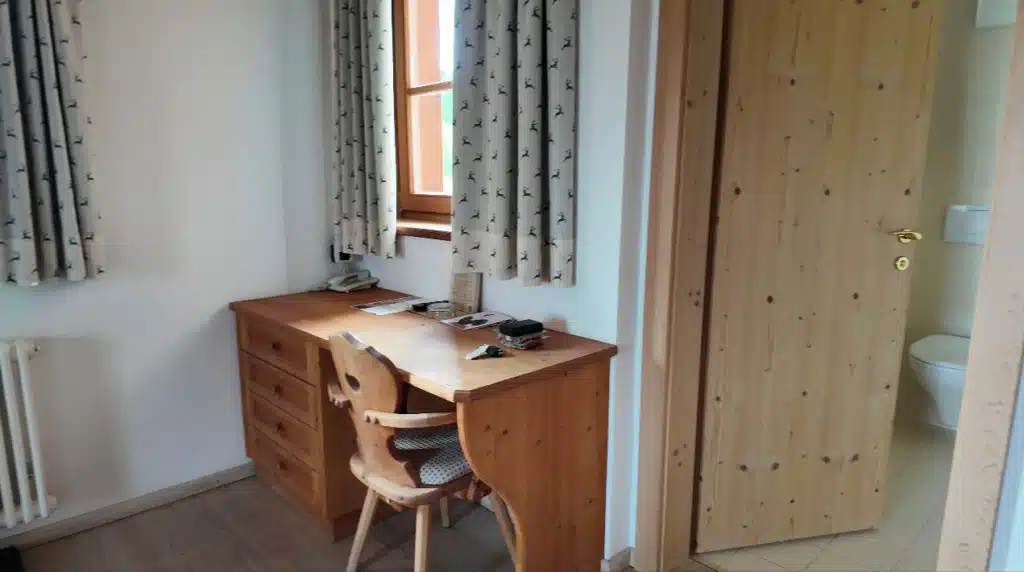
You could simply leave the tag for room service on the door if you wanted your room cleaned. I had no issues here.
Bathroom situation
The bathroom had a towel drying rack and genuinely good-smelling soaps, and the shower space itself felt just right, not cramped the way some mountain accommodations can be. They also provide a hairdryer, so that’s one less thing to pack. Before you assume there was no bidet, there was.
The hotel leans into sustainability; you can request a towel change if needed, but only by leaving your towels in the sink. They have a post about leaning into eco-friendly practices.
Balcony
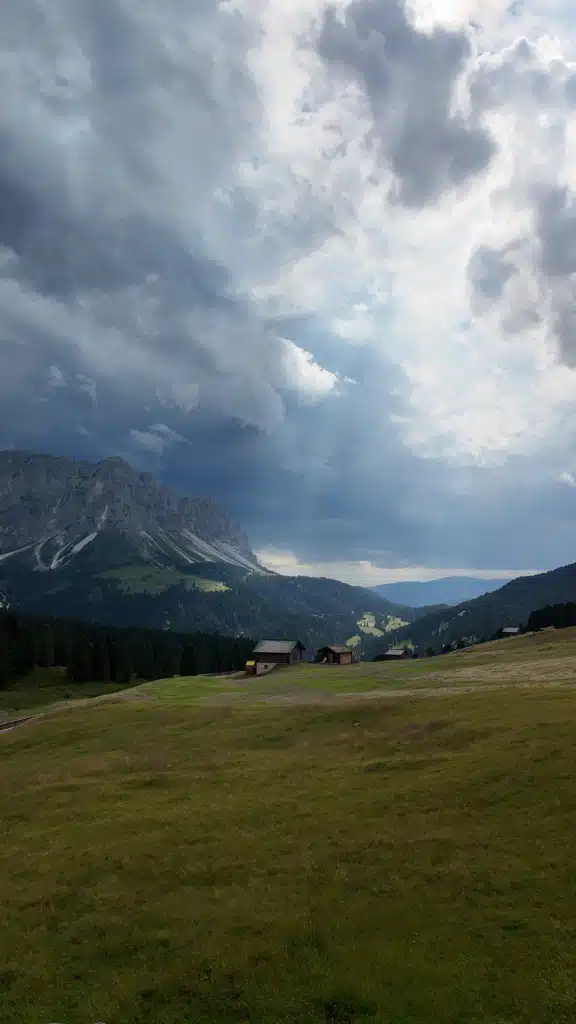 The view from my balcony at Utia Di Borz facing the direction of Bressanone
The balcony itself only fit one chair, but that was exactly enough. Some of my favorite moments of the whole stay were sitting out there in the evening, journaling while the sun went down over the peaks.
Passo delle Erbe sunrises are genuinely beautiful, though with my room facing toward Bressanone and the Odle di Eores, I’d catch it best from just outside rather than directly from my own balcony, as I could see the whole face of the Sass Di Putia
From my observation, I’d go with the first floor, a room facing Bressanone, or, if you can manage it, a front-facing room for WHOLE unobstructed views of Sasso Di Putia.
Lobby and Reception at Utia de Börz

The lobby is worth a slow look too. Not only did they post a weather outlook from 3bMeteo (Which is one of my preferred apps for the Dolomites), but there were flyers for nearby museums, and one that stopped me in my tracks: an initiative to adopt a tree in memory of the Vaia storm, the 2018 windstorm that flattened huge swaths of forest across the Dolomites and Friuli.
If you want the fuller story on that storm’s aftermath, I’ve written about the Aquila Vaia in Asiago and covered sculptor Marco Martalar’s work for Stars and Stripes, both worth a read alongside this hotel review for Utia de Börz
That tree-adoption flyer wasn’t a one-off gesture either. Sustainability and responsible, local tourism are genuinely at the heart of this hotel, not just a line in a mission statement. Which as someone who believes
They also had a card listing taxis, something easily portable in your wallet.
If you are looking for spa treatments, they had flyers for a local who offered them. We did not inquire any further; I am just noting this here for your information.
The Restaurant
The dining room is quiet, with private tables rather than communal seating, and the menu leans into traditional South Tyrolean and Ladin dishes with real range.
Dinner runs 6:30–9:00 pm, lunch 12:00–3:00 pm, and it’s worth reserving a table in advance, especially if you’re not staying the night.
The kitchen sources fresh ingredients from trusted local producers and reinterprets traditional recipes with its own creativity.
One practical note: the menu at Utia de Börzis is coded with allergen letters (gluten, eggs, dairy, nuts, and so on), so if you have dietary restrictions, the staff can walk you through it easily.
The Hotpot Experience
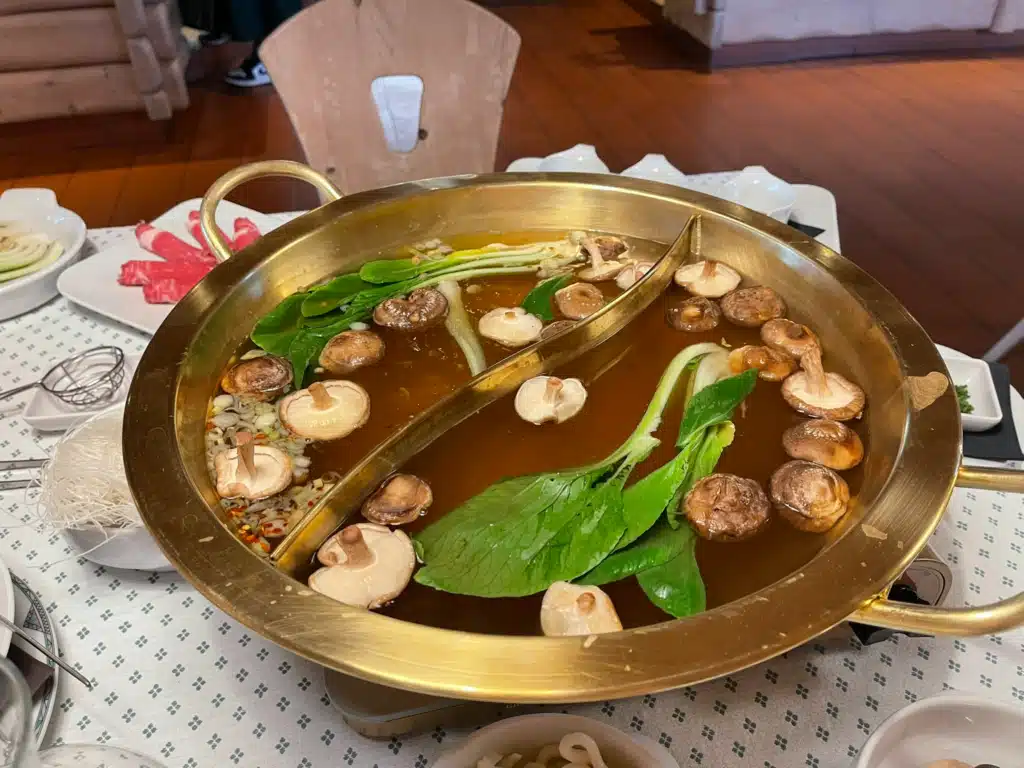
The standout: they serve hotpot. At a hotel above 2,000 meters, a hotpot menu is not what you expect, but it’s there, starting around 30 euros, and you build your own bowl: one meat, one vegetable, one noodle type, served in a split bowl with a meat broth on one side and a vegetable broth on the other.
The Utia de Börz hotpot experience is genuinely its own reason to book. I went with udon noodles, mushrooms, and beef. My friend Karrie chose bok choy, beef, and vermicelli. It’s the kind of detail that makes a review worth writing, because nobody expects it up here.
Beyond Hotpot: The Wider Menu
Beyond what we ordered, the wider menu spans canederli (South Tyrolean dumplings) with sausage, tagliatelle al ragù, Kaiserschmarren, and aged steak, so there’s plenty of range if hotpot or a burger isn’t what you’re after.
Keep in mind that portion sizes are pretty big for dinner, so if you’re hungry, this is perfect.
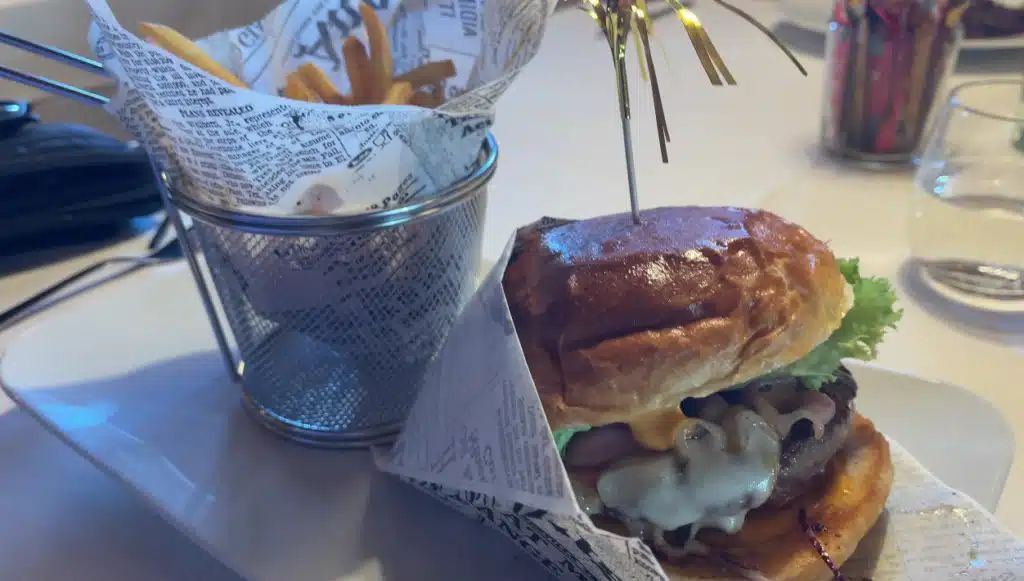
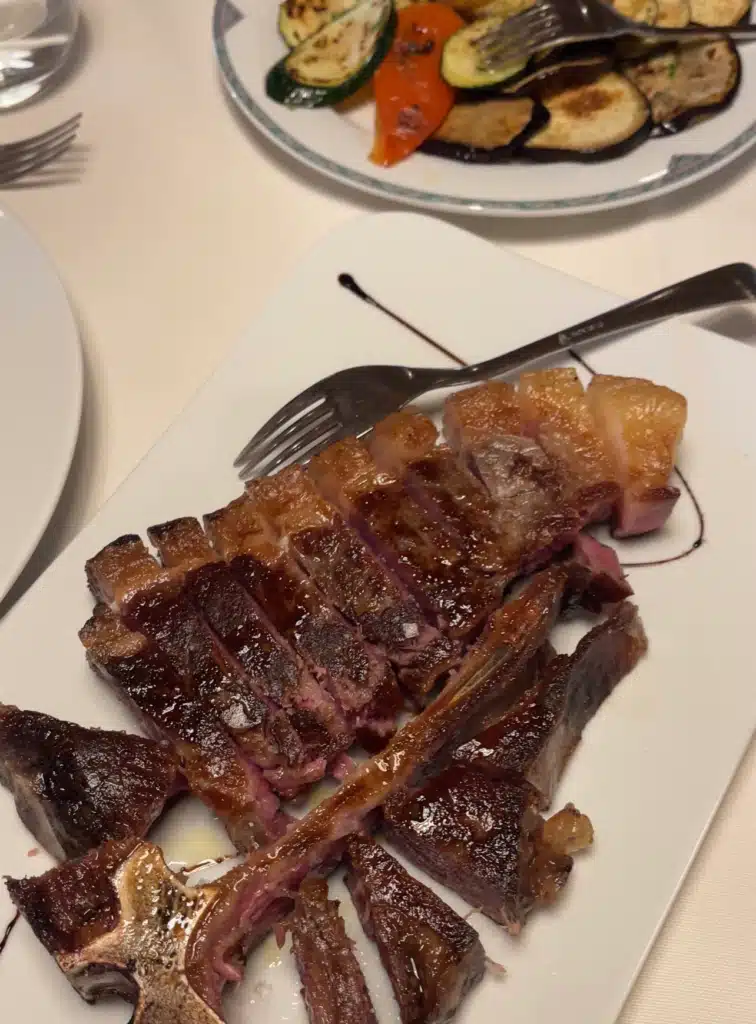
For dinner one other night I had a hamburger, and on another we split a Florentine steak with grilled vegetables and a starter of spinach dumplings. The steak was cooked exactly right, tender and juicy, and the vegetables were grilled well too.
I have zero complaints about the food and the menu.I think this is all taste dependent.
Breakfast
Breakfast runs 7:30–10:00 and goes well beyond a basic buffet spread: pancakes with your choice of chocolate sauce or maple syrup with walnuts, fried or scrambled eggs with ham, bacon, or cheese, a build-your-own omelet, and a Special Benedikt of poached egg with crispy bacon on toasted bread.
Simple, well-executed, and clearly thought through rather than an afterthought.
They do have some of the best cappuccinos in all of the Dolomites; we noted the brand 520 Coffee from South Tyrol. I would crawl back to Utia Di Borz for another Cappucino because they were that good.
Drinks and Extras
I kept things simple on the drinks side, spritz and water, nothing too adventurous with the wine list, though there’s plenty to explore if you want to: by-the-glass options like Chardonnay and Refosco start around €4.50, Prosecco and rosé run about €5-6, and the bottle list ranges from local reds and whites (around €5-6 each) up to a Franciacorta Brut Satèn DOCG at €42.
They have an extensive list of liquors, and I even noted my favorite Grappa Producer from Bassano Del Grappa!
One small detail that stuck with me: the music playing throughout the hotel was genuinely good, not the generic background loop you brace for at mountain hotels.
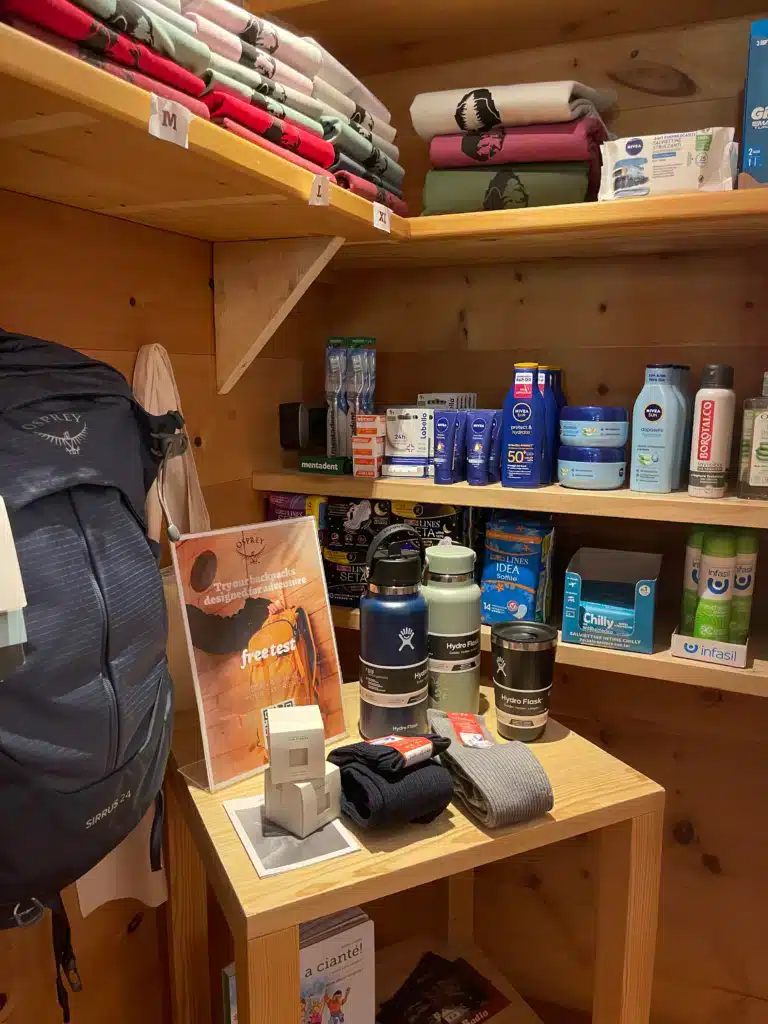
There’s also a small convenience corner near the front, stocked with toothpaste, Hydro Flasks, branded shirts, medications, and snacks, handy if you forgot something or just want a souvenir.
Grab a Hydro Flask or two, and if you need to rent an Osprey hiking pack, I didn’t catch the pricing on any of it, so budget accordingly if you’re browsing (fail)
The lounge, set up around the stove in the breakfast seating room, is open 6:30-10pm, a good spot to sit and relax after dinner rather than heading straight up to your room.
Even better: take a passeggiata on the hillside trail right next to the hotel first.
I’d recommend this without hesitation; you get genuinely beautiful sunset views of the Peitlerkofel, and it’s the easiest way to walk off dinner before settling in for the evening.
Hiking around the Dolomites
This is the real draw of staying here rather than just driving up for the day: the trail network starts right outside the door, and you don’t lose any morning light to a drive.
Honestly, there are so many trails around Utia Di Borz. I’ll list the two we did first, and one I did as part of the Alta Via 2
Hiking to Maurerberghuette
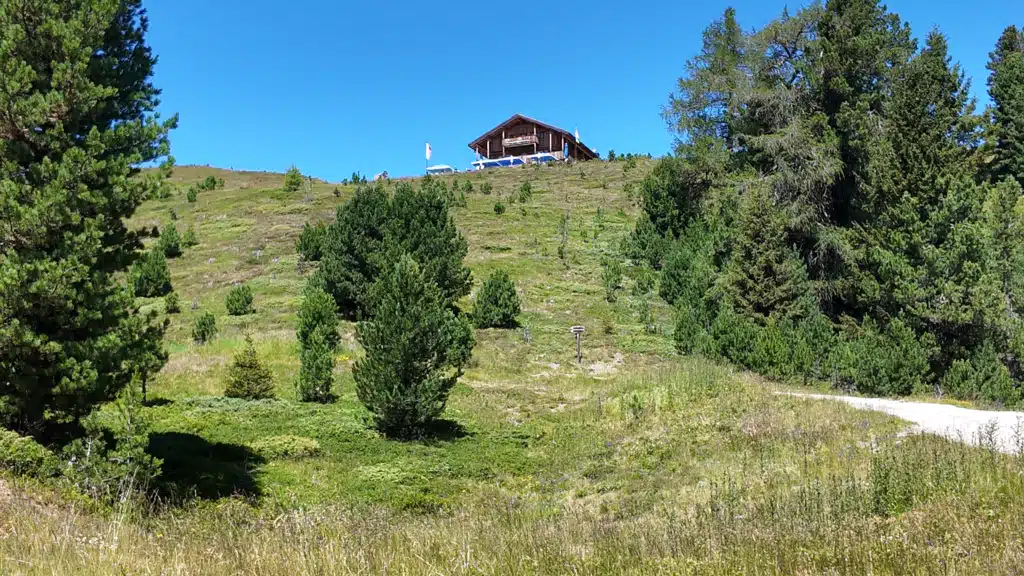


From Utia de Börz, you can hike to Maurerberghütte, a half-day out-and-back (or loop, depending on your route) that was well marked and easy to follow the whole way, with no scrambling or exposure to worry about. You’ll start off behind the hut and follow the signs.
The Sass de Putia Circuit (Peitlerkofel Circuit)
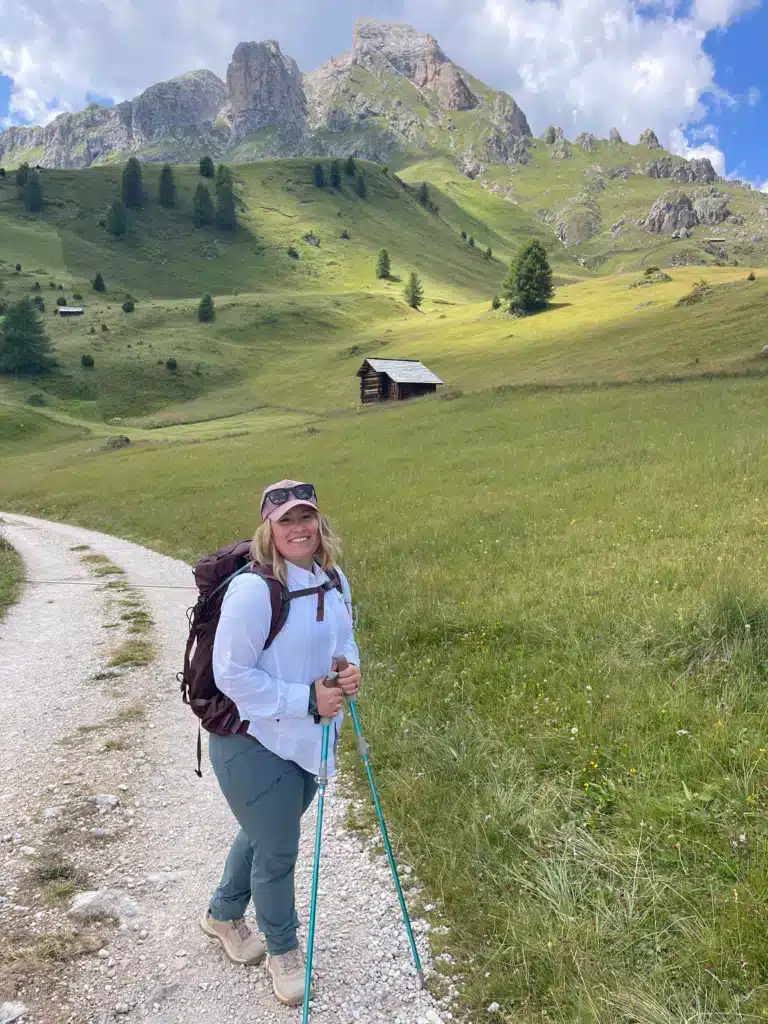
The hotel also sits directly on trail 8A, the main route that leads toward the Sass de Putia loop hike, also known as the Peitlerkofel Circuit or Roda de Pütia. The hike circles the striking limestone massif of Sass de Putia, a 2,875-meter peak, taking you through alpine pastures, spruce forest, rocky saddles, and wide-open meadows with constant Dolomites views.
If you’re doing any stretch of the Alta Via 2, this is also where that route passes through, at the Forcella di Putia saddle above the hotel, which is where I first spotted Utia de Börz years before I ever stayed here.
This is also where you’ll learn about the Hexententanz!
Longiarü to Rifugio Genova Loop
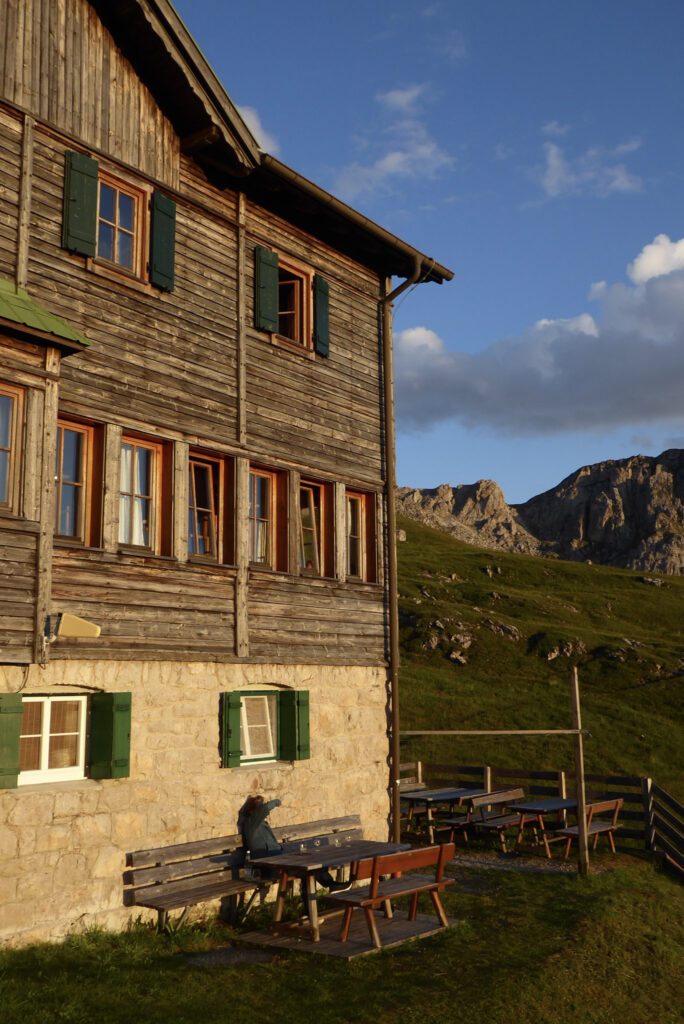
The hotel’s site also lists a Longiarü to Rifugio Genova loop as one of the area’s classic routes: from Longiarü, you hike via Ciampcios Hut to Malga Medalges and Forcella del Furcia, where alpine meadows open up to views of the Odle peaks, then continue on trail 3 to Rifugio Genova before returning on trail 4 through Valle dei Mulini.
It’s a longer day than the Maurerberg out-and-back, but it gives you the full range of what’s reachable from this one base.
Long-Distance Treks Through Passo delle Erbe
If you’re stringing together a longer trek, Passo delle Erbe carries more traffic than you’d expect for how quiet it feels. It’s a variant of the second stage of the Alta Via 2 (the full route runs about 180km from Bressanone to Belluno), connecting Plose Hut to Genova Hut via the Pütia Gorge.
It also sits on the Munich-Venice trek, a roughly 550km, three-to-four-week Alpine route, and on the Dolorama Trail, a 60km, roughly four-day route from Alpe di Luson to Laion, whose second stage crosses the pass from Montemuro Refuge to Genova Refuge.
If any of those are on your list, Utia de Börz makes a genuinely well-placed stopover.
Beyond Hiking: Year-Round Activities
If you’re not purely there to hike, the hotel sits at the center of a much bigger playground: via ferrata routes up Sass de Putia, rock climbing, road cycling and gravel biking, thrilling mountain biking around Ütia de Börz, and wildlife viewing in summer, plus authentic ski touring, silent snowshoeing, Nordic skiing, and sledding and dogsledding around Passo delle Erbe in winter, with epic ski and snowboard slopes at nearby Kronplatz for anyone chasing lift-served terrain. It’s a genuine four-season base, not just a summer hiking stop.
Gear Rentals and Guided Experiences
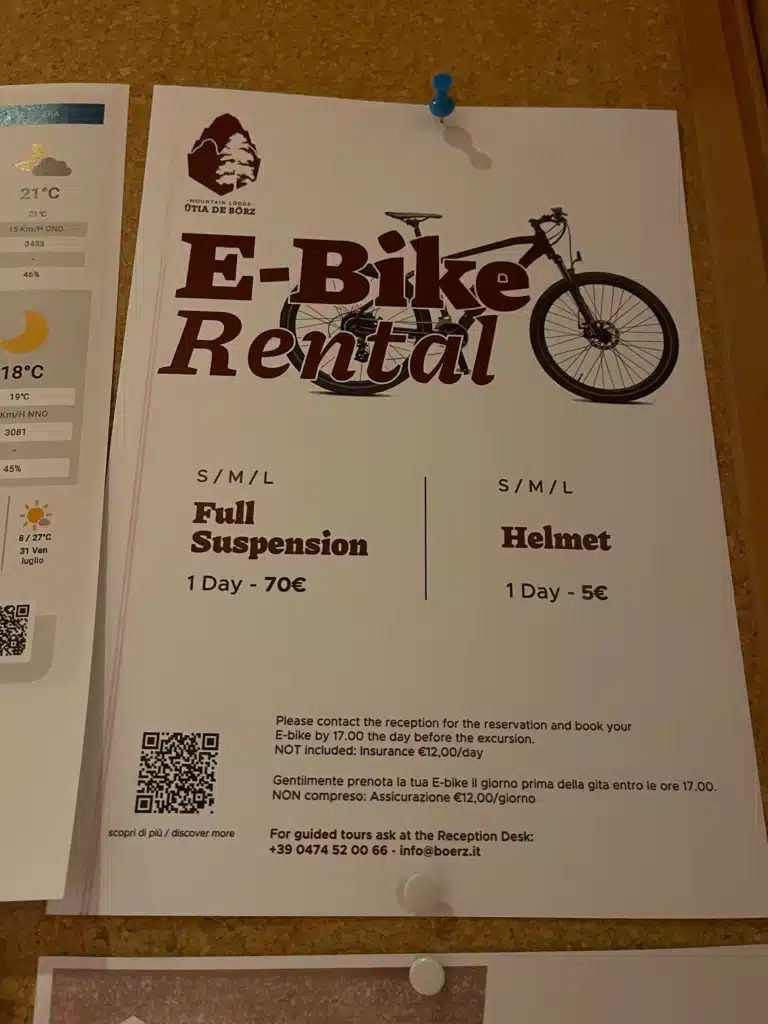
You also don’t need to arrive with all your gear. The hotel rents e-bikes (full suspension, €70/day, helmet €5/day, insurance €12/day not included, book by 5pm the day before your excursion), Osprey backpacks, and via ferrata kits in summer, and snowshoes and sleds in winter, so it’s easy to show up light and rent what you need on site.
If you’d rather bring your own, my Osprey bag is what I hiked with here.
Beyond gear, the hotel also runs a handful of experiences worth building a day around: guided nature excursions at Passo delle Erbe (offered a few dates each summer, typically 2-5 pm), alpine wild herb foraging at the foot of Sas dla Crusc (held nearby at Ütia L’Tama in Badia, mornings around 9-11:30 am), and stargazing sessions under some genuinely dark Dolomites skies (late evening, around 10 pm). Spots are limited, and dates are seasonal, so check current availability before you plan a day around one.
What I Loved
Besides the hospitality of the staff and management
- The balcony view toward Bressanone and the Odle di Eores, no exceptions
- The hotpot dinner, a genuine surprise at this altitude
- How quiet it felt compared to the more commercialized corners of the Dolomites
- Plogging bags in the room, a small but genuinely thoughtful touch for anyone who wants to pick up litter on the trail
What I’d Skip (or Watch Out For)
- No spa in summer. There is a barrel sauna on site, but it’s only offered December through March, so if you’re visiting in warmer months like I was, don’t expect it
- Rooms are basic, plain pine paneling rather than a designed interior
- The bed was on the firmer side, though a good size
None of this is a dealbreaker. It just means you should know what you’re booking. I wouldn’t call Utia de Börz simple, but I know a certain demographic would.
Who Would Love Ütia de Börz:
- Sunrise and sunset chasers who want to be right at the pass, not driving up in the dark
- Solo female travelers looking for a safe, quiet base in the Dolomites
- Anyone who wants the Dolomites without the more commercialized, crowded corners
- First-timers to the Dolomites, with one caveat worth knowing
- Travelers who care about sustainable, responsible, locally-rooted tourism
This hotel is also great for first-time visitors to the Dolomites, but keep in mind it’s about a 50-minute drive to the more popular areas, such as Val di Funes or the larger towns in Val Badia.
You can absolutely build a full trip out of hikes around Passo delle Erbe itself, though, and if you’re tackling the Alta Via 2, this is a smart place to base yourself for that stretch of the route, especially if you’d rather not push all the way up and over Forcella Putia in one go.
This hotel is not right for people expecting a full-service spa and all-inclusive amenities year-round (the barrel sauna is a winter-only add-on). I’d say it’s for the person who wants slow travel in the Dolomites, someone who wants to settle into one area properly and explore the trails beyond the popular, overrun spots.
One clarification worth making: Utia de Börz is a hotel, not a rifugio. You get a private bathroom, a real bed, an elevator, and restaurant service, not a shared bunk room. If you’re comparing hotel vs. rifugio options at Passo delle Erbe, this falls firmly on the hotel side, just with a rustic, alpine feel rather than resort polish.
Ütia de Börz Booking Info: Prices, Getting There, and When to Go
I stayed at Utia de Börz three nights, Tuesday to Friday, in late July, in the Double Room with Balcony (private bathroom with shower, bidet, TV, hairdryer; non-smoking; upper floors reachable by elevator).
Booking directly through Booking.com, my total came out to roughly €150 per night including tax for one adult, with breakfast included in that rate.
Dinner (yes, including that hotpot) is ordered separately at the restaurant.
A few things worth knowing before you book:
- Book early, and keep checking for openings. I tried for three years before a date opened up. Cancellations do happen, so if your dates show unavailable, check back.
- Cancellation policy is strict. Read it carefully. Changes or no-shows are charged the full reservation amount, with no refund on cancellation.
- Address: Strada Börz 26, 39030 San Martino in Badia, Italy. The pass has a paid parking lot directly across from the hotel if you are just dayhiking.
- Charging to your room: If you’re staying the night, most extras, dinner included, can be charged directly to your room and settled at checkout, so you don’t need to carry cash or a card to dinner.
- Traveling with kids: This isn’t a family resort, but it is family-friendly. Children of all ages are welcome, and a crib is available on request. Worth knowing if you’re weighing Ütia de Börz with kids against a more built-out family hotel elsewhere in the Dolomites.
- South Tyrol Guest Pass: Your stay comes with the Südtirol Guest Pass, sent by email or printed at check-in.
- It’s a digital guest card included in the price of your stay, valid from the day you arrive, that lets you ride buses and regional trains throughout South Tyrol without buying separate tickets.
- Guest passes like this also frequently include free or discounted access to local cable cars, chairlifts, and participating museums. It’s a genuine perk if you want to explore beyond the pass without adding driving days, and it’s part of the same sustainability push mentioned earlier: fewer cars on these narrow mountain roads means less traffic and less wear on roads that are already tight for hikers, buses, and farm vehicles to share.
- When to visit Passo delle Erbe: The best times to visit are May, June, and July for wildflowers and long daylight hours, or October for fall color and quieter trails.
- The road up is seasonal and generally open from late May/early June through mid-October depending on snow, so shoulder season (May-June or September-October) means fewer crowds and easier bookings.
- If you’re chasing winter, Passo delle Erbe also turns into a snowshoeing and cross-country skiing base once the road access allows, a different but equally worthwhile season to stay.
- I went the week of July 21-24, right in peak summer, and even then it never felt overcrowded, which says a lot about how under-the-radar this pass still is compared to the more commercialized parts of the Dolomites.
Note: All prices and availability mentioned in this post- room rates, restaurant menu, wine list, and convenience corner- are subject to change seasonally. Always double-check current pricing directly with the hotel or on Booking.com before you plan around it.
Nearby Alternatives in the Dolomites
If Ütia de Börz is booked out for your dates, or you want to build out a longer stay in the area, this fits naturally alongside your 3-Day Passo delle Erbe Itinerary (Coming Soon)
Ütia de Börz is also part of a small family of properties under Sass Dlacia. If it’s fully booked, Camping Sass Dlacia is their year-round basecamp-style campground elsewhere in the Dolomites, at the edge of Fanes-Senes-Braies Nature Park near San Cassiano.
They also run Le Fontanelle Country House, though that one’s a different kind of trip entirely, a countryside stay in the Marche region rather than the mountains.
I think Alta Badia makes a great base as well. I’ve stayed in La Villa and San Cassiano and while these are completely different areas, with a longer driving time to Sass Di Putia and Passo Delle Erbe.
Final Thoughts: Was It Worth Three Years of Trying?
Yes. Without hesitation.
Ütia de Börz gave me exactly what I was hoping for when I first spotted it from the Forcella Putia years ago: a quiet, well-run base at the heart of the Dolomites, surrounded by more trails than one stay could ever cover. The room was a quiet haven, the food genuinely surprised me, the staff made the whole experience feel personal rather than transactional, and the hotel’s commitment to the land it sits on came through in the small details, from the plogging bags to the Vaia tree-adoption flyer in the lobby.
It’s not a resort, and it’s not trying to be one. If that’s what you’re after, look elsewhere. But if you want to slow down, base yourself in one corner of the Dolomites, and actually get to know it, book this the moment a date opens up. I promise it’s worth the wait.
Frequently Asked Questions
Yes. It felt quiet, safe, and well-run the entire stay, with genuinely attentive staff from check-in onward. It’s one of the reasons I’d recommend it as a base for solo travelers in the Dolomites.
It’s not a family resort, but it is family-friendly. Children of all ages are welcome, and a crib is available on request. If you’re specifically looking for kids’ amenities or a pool, this isn’t that kind of property, but as a base for a family hiking trip, it works.
car makes it far easier, but it’s not strictly required. There is a bus stop right outside Ütia de Börz! Public transport is doable with a bus change or two from Chiusa, Bressanone, Brunico, or San Lorenzo, though schedules are seasonal and some routes only run in summer.
Yes, and it becomes a base for snowshoeing, Nordic skiing, ski touring, and sledding, with downhill skiing at nearby Kronplatz. Access in winter is only via the Val Badia route, since the Valle Isarco roads close with snow.