What to Expect When You Stay at Rifugio Lagazuoi (Dolomites Overnight Guide)
Last Updated on August 2, 2026 by Kimberly
Planning on staying the night at Rifugio Lagazuoi? Maybe this beautiful hut that sits at 2,752 meters on the edge of a WWI battlefield is on your Alta Via 1 itinerary, or it’s on your list of the most popular huts in the Dolomites, and you’re not quite sure what to expect. You are definitely in the right place…
I waited three years to stay at this hut and told myself I wouldn’t hike Mount Lagazuoi or go through the WWI galleries until I could do it as an overnight guest, so this one had a lot to live up to.
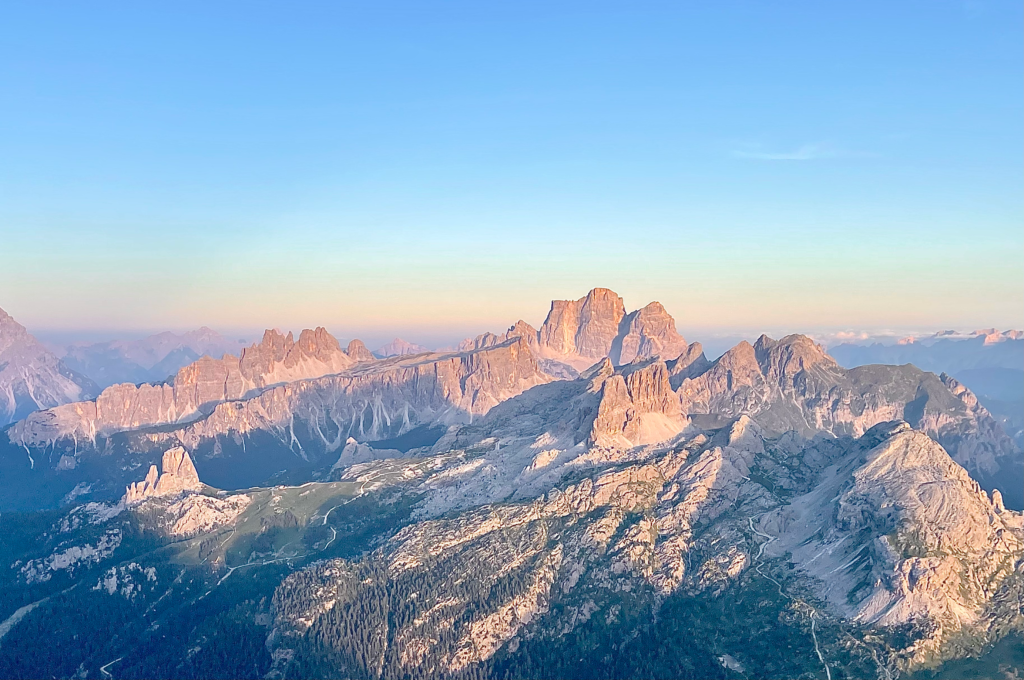
Here’s the truth up front: the rifugio has several multi-bed dorms split between upstairs and downstairs, with the dining area sandwiched in the middle. I firmly believe Rifugio Lagazuoi has one of the best sunset and sunrise views in the entire Dolomites!
Getting there, sleeping there, and eating there all come with their own quirks, so here’s everything I wish I’d known before I went, from parking at the gondola to what actually happens at the summit with the WWI reenactors.
Pssst: If you are looking for an alternative to do just south of the Dolomites, look no further than the Strada Delle 52 Gallerie
Know Before You Go: Prices and Fast Facts
Every price and time you need, sorted by what you’re planning. Tap a category.
Heads up
One-way tickets only. The gondola does not sell round trip, budget for two separate purchases if you’re day-tripping.
2026 season
June 6 to October 18. Cars every 15 min.
Daily hours
First run 9am. Last uphill 4:40pm. Last downhill 5pm.
Save a little
Pay by card for a small discount, or book online ahead to skip the line.
Where Is Rifugio Lagazuoi?
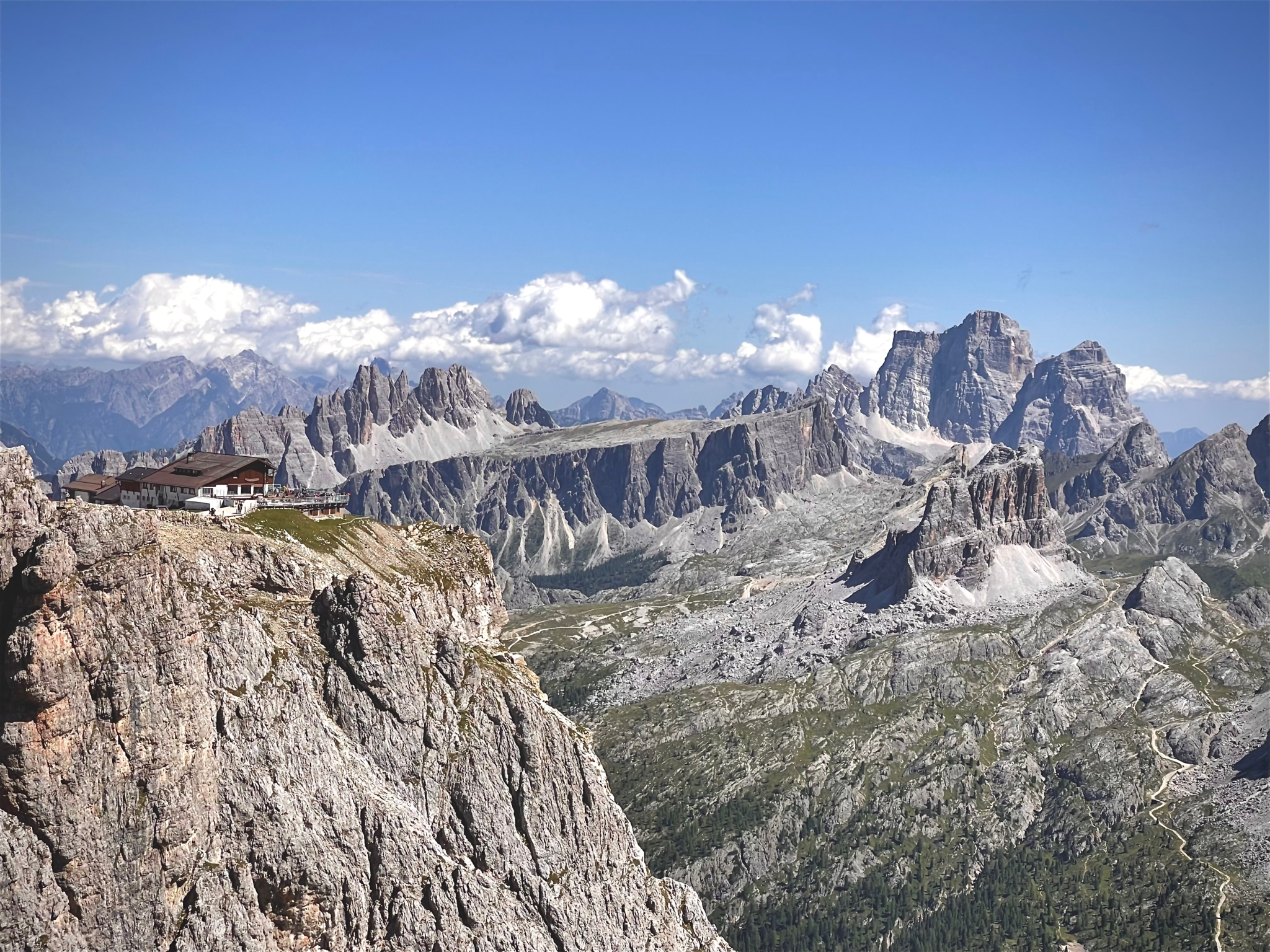
Rifugio Lagazuoi is on the summit of Mt. Lagazuoi above the Falzarego Pass, right on the border between the Cortina d’Ampezzo area and the Alta Badia/Val Badia side of the Dolomites. It’s part of the Alta Via 1 route and sits within easy reach of Cinque Torri, Passo Falzarego, and the Fanes-Sennes-Prags Nature Park.
In a rush? Top 3 picks
Everything below is covered in the guide, but if you just want to book and go, start here.
Stay connected up top
Holafly eSIM
There’s wifi at the rifugio, but not on the drive up or the trail. This is what I use for data across Italy.
Get an eSIMGet yourself there
Rental car (Discover Cars)
Passo Falzarego isn’t easily reachable by public transit. You’ll want your own car for this one.
Compare rental pricesYour feet will thank you
Broken-in hiking shoes
Non-negotiable for the tunnel descent and the trench system. These are the pair I wore.
Shop the shoes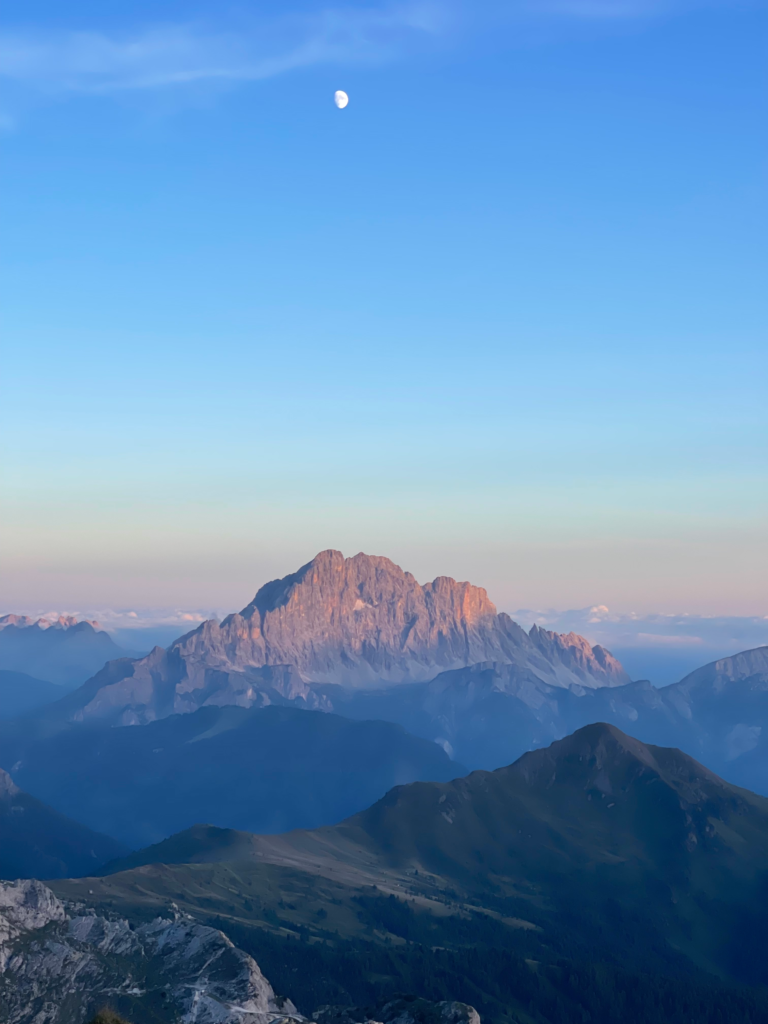
What to Expect at Rifugio Lagazuoi
A stay at Lagazuoi is part mountain hut, part open-air WWI museum. During the day, the summit is busy with day hikers who came up on the gondola for the view and the history, plus via ferrata climbers passing through.
Once the last gondola goes down in the late afternoon, the crowd thins out fast, and by evening it’s mostly just the guests staying the night. That shift, from packed viewpoint to near-empty ridge, is genuinely one of the best parts of sleeping up there.
Expect basic but comfortable mountain hut conditions: shared or semi-private rooms, communal dinner seating, and pay-for showers.
Expect incredible 360-degree views of the Dolomites, including Tofana, Cinque Torri, and the Marmolada on a clear day. And expect the whole experience to be as much about the WWI history embedded in the mountain as it is about the hiking.
How to Get Up: The Gondola from Passo Falzarego
The easiest way up is the Cabinovia Lagazuoi from Passo Falzarego. The ride itself takes only a few minutes, but the elevation gain is dramatic; you’re climbing about 700 meters in one short cable car trip…and yes you can bring your furry friend on the ride up!
For summer 2026, it runs June 6 through October 18, with cars every 15 minutes, first run at 9 am, last uphill run at 4:40 pm, and last downhill run at 5 pm, so don’t cut it close if you’re planning a day trip instead of staying over.
One important thing to know before you buy: the ticket office does not sell round-trip tickets.
You have to purchase single (one-way) tickets, so budget for two separate ticket purchases if you’re doing a there-and-back day, or one if you’re taking the tunnels or a trail down instead.
One important note: You can purchase tickets for the Lagazuoi Cable Car online.
If you’d rather hike up, there are marked trails from Passo Falzarego and Cinque Torri, but they’re serious mountain routes with real elevation gain, not casual walks. YOU GOTTA WERK!
I’d only recommend hiking up if you’re already comfortable with exposed terrain and know your pace, because you don’t want to be racing daylight on a route like that.
Most overnight guests, myself included, take the gondola up and either hike down or take the WWI tunnels, which I’ll get into below.
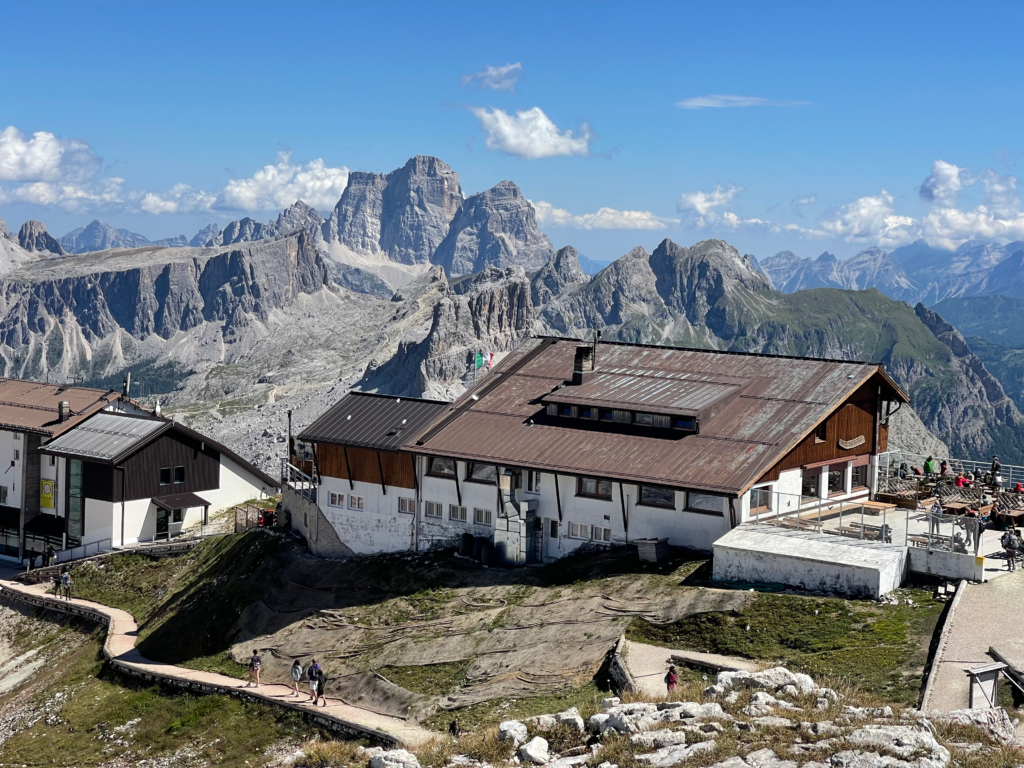
One thing worth knowing: the rifugio isn’t right at the gondola’s top station.
It’s a short walk, about 50 meters, up a metal stairway from where the cable car drops you off. It’s brief, but take it slow if you’re not acclimatized; you’ll feel that elevation in your lungs almost immediately. I felt it and It was no joke.
Parking at the Gondola Base
Perhaps this part is the most frustrating. This is also the detail people ask me about most, and it’s worth planning for.
We drove up from Passo Delle Erbe and, honestly, got to the parking lot at the base of Lagazuoi a little later than planned. My recommendation for anyone looking for a spot: get to Passo Falzarego early so you’re not circling the lot over and over again.
We ended up finding a spot in the back lot near a small hut, but it took some looking since we arrived later than we should have.
As of July 2026, parking here is free, the arms on the lot are up, and there’s no charge to park. That’s always subject to change, so double-check official sources or email the hut directly if you want to confirm before you go, rather than relying on my one visit.
A Few Important Notes On the Gondola
Arrive early if you’re driving yourself, ideally before 9 am in peak season
The lot is roadside along the Passo Falzarego pass, so if it’s full you may end up parking further down and walking up the shoulder of the road
If you’re staying overnight at the rifugio, your car will likely sit in that lot overnight, so take note of exactly where you left it before you head up
Once we parked, we switched from our big travel bags to smaller day bags and brought only what we actually needed for the overnight, leaving the rest in the car.
If you’re coming straight from another stop on your trip, plan for this swap. You don’t want to be lugging a full-size pack up the tunnels or trails. Or ask your next hotel (if it’s nearby if they can store your luggage)
How to Actually Book a Night at Rifugio Lagazuoi
This is the part people underestimate. Rifugio Lagazuoi takes reservations online through their own website, but it books up fast, often MONTHS out, especially for peak summer.
If you’re hiking the Alta Via 1 and counting on Lagazuoi as one of your stops, don’t assume it’ll be available.
If it’s full, you may get rerouted to a different rifugio entirely, which can mean missing the WWI tunnel descent altogether or being sent down a longer alternate route instead.
Check availability weekly if this stop is part of your itinerary and you’re not using sites like Bookatrekking.
When I booked in spring of 2026, I put down a $70 USD deposit online, with the remaining balance payable directly at the hut, in cash or by card. Sauna access and a bed-and-breakfast upgrade are available as optional add-ons for an extra cost.
I stayed in a shared room on the ground floor. My friend Karrie also stayed in the same room with me. There are private rooms on the second floor, but they weren’t available when I booked, so if privacy matters to you, book as far ahead as you possibly can.
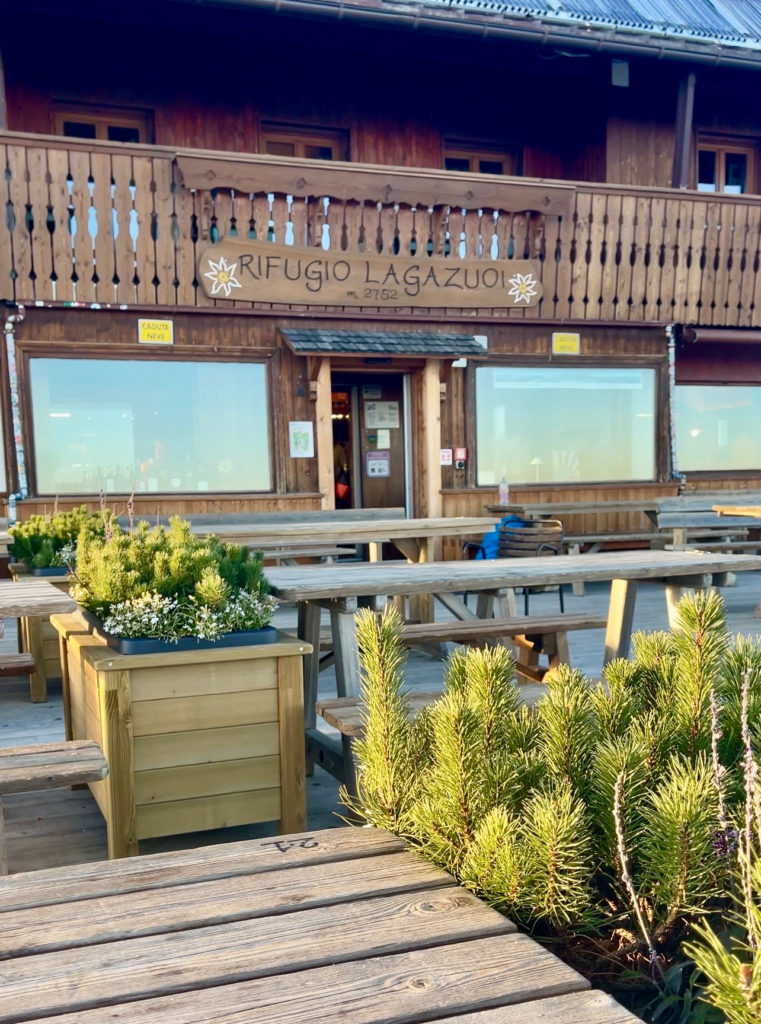 The terrace in that late-day light, right before things quiet down for the night.
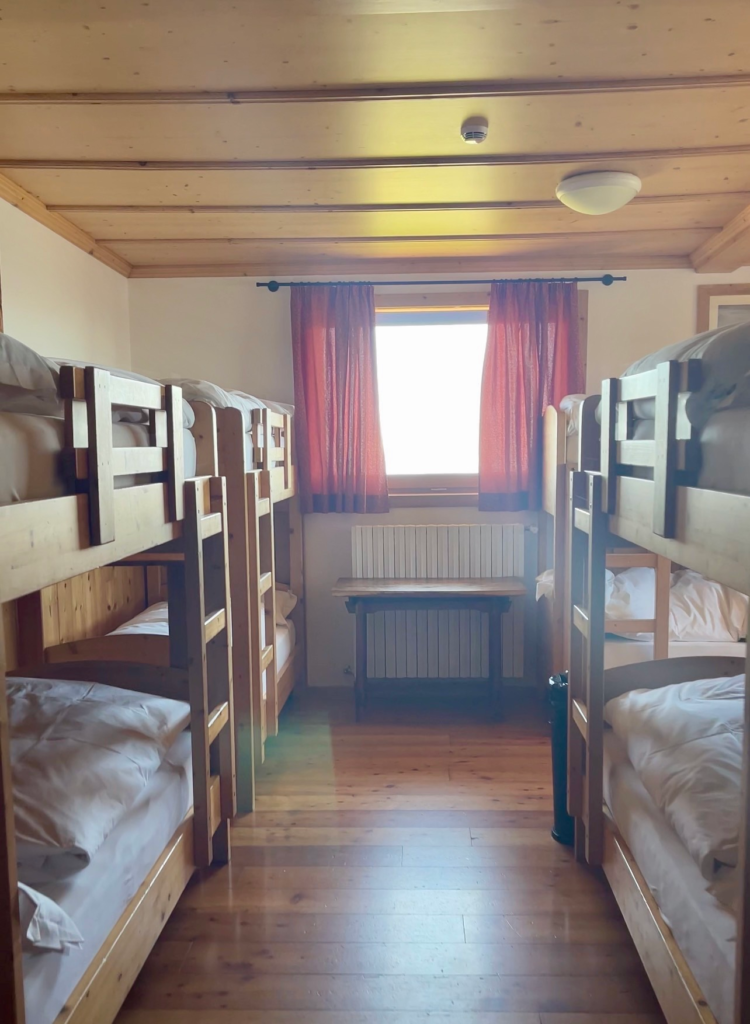 A look inside one of the multi-bed dorms, simple, clean, and exactly what you’d expect from a mountain hut.
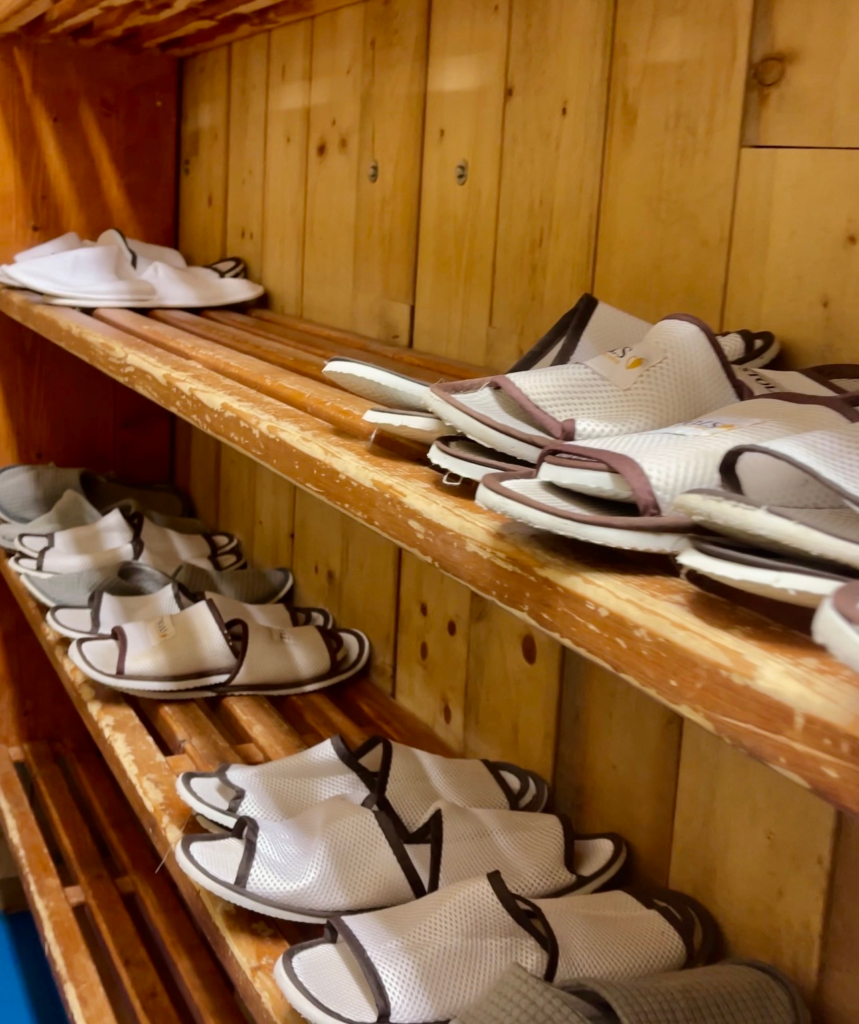 Slippers available for anyone who didn’t pack their own hut shoes.
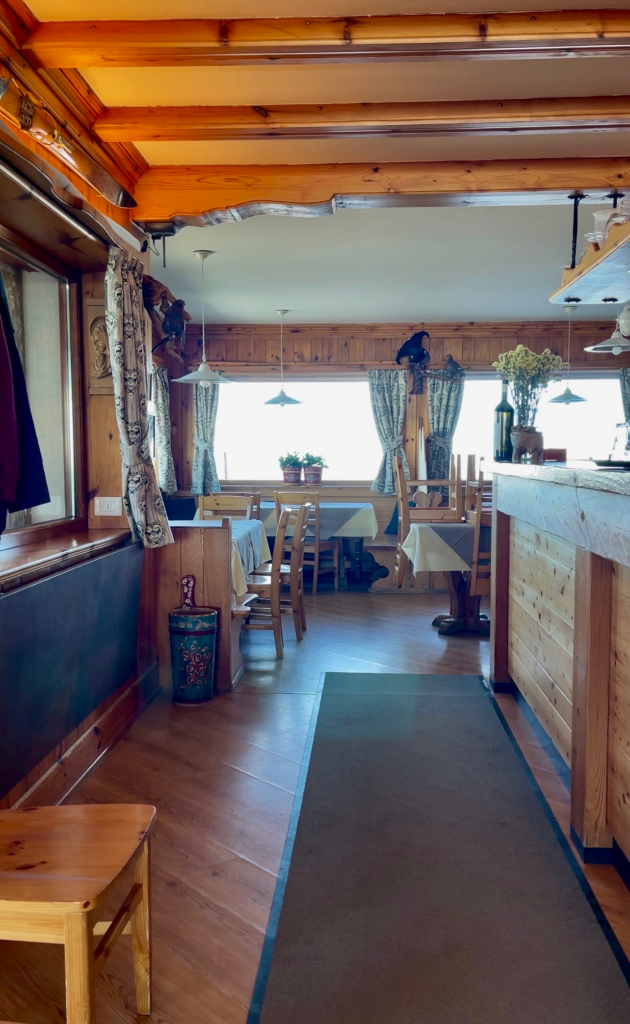 The dining room where communal dinner happens, full of old mountain-lodge character.
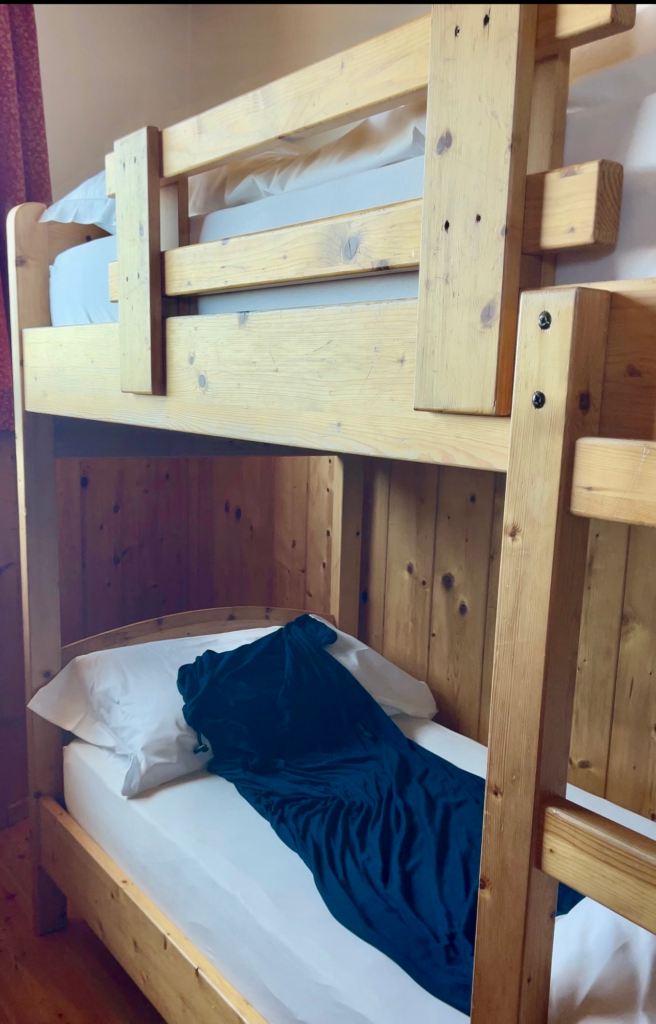 A closer look at the bedding, pillow, pillow cover, and a warm duvet over my own liner.
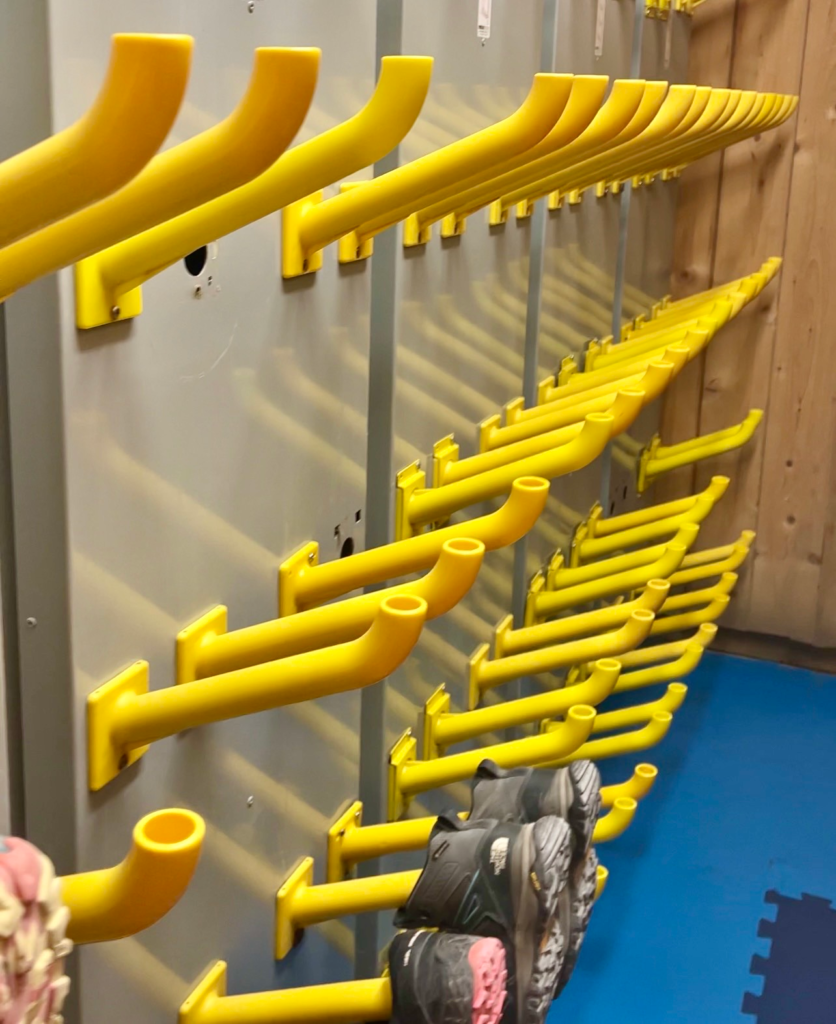 The shoe room everyone uses before heading to their room, boots go here, not on your feet.
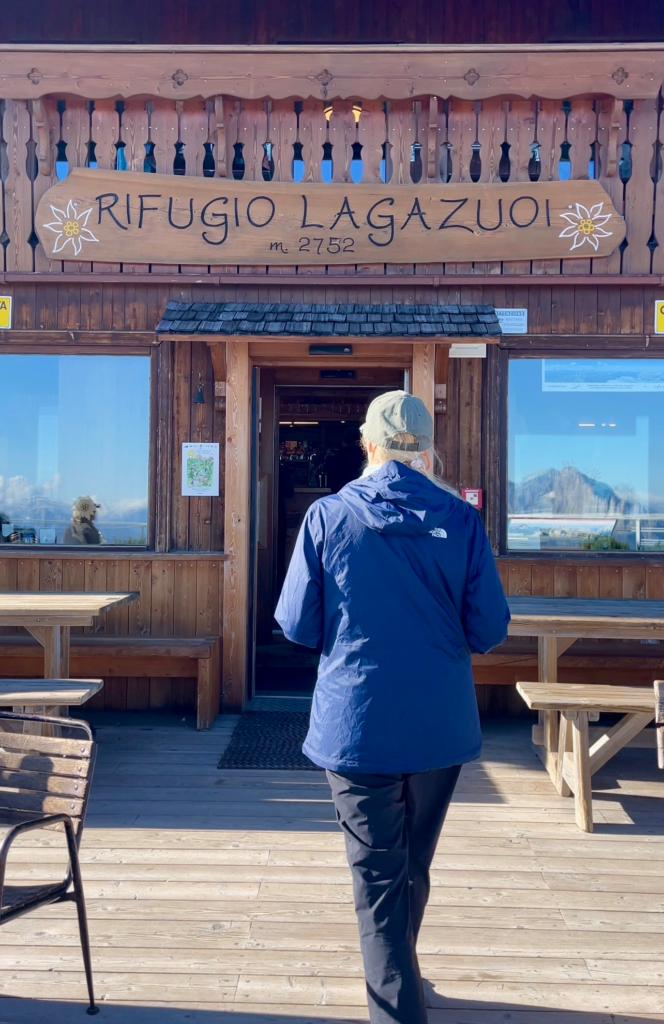 Walking up to the entrance for the first time, I realized three years of waiting had led to this sign.
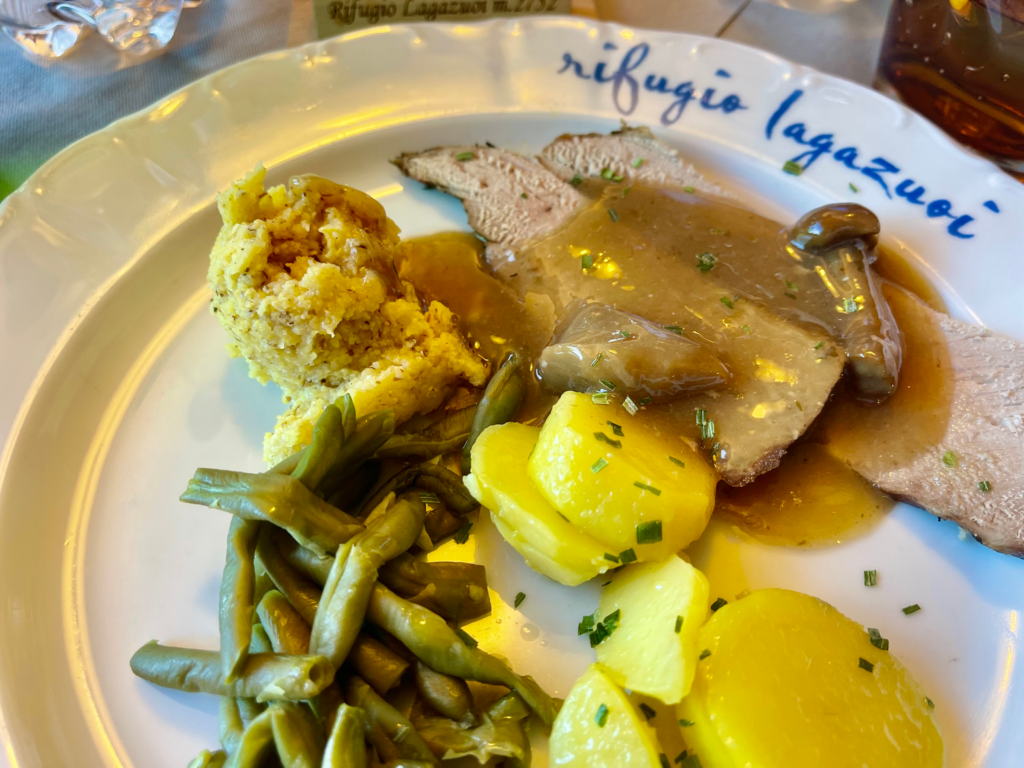 The pork loin with mushroom gravy I mentioned, served on the rifugio’s own branded plate.
Sleeping Arrangements at the Rifugio
I had a shared room on the ground floor, a 12-person bunk room with standard bunk beds, no frills. Private rooms are on the second floor, but they weren’t available when I booked, so if privacy matters to you, book as far in advance as possible.
For reference, the rifugio has five dormitories total: one sleeps 6, three sleep 12 (mine was one of these), and one sleeps 14. Private rooms are on the first floor and were renovated in 2024. Check-in runs from 2:30 to 6:30 pm, and checkout is at 9 am (and trust me when I say they want you to GTFO; they have things to do, like cleaning and getting ready for the next push of people)
Expectation Management
Check out my Dolomites Mountain Huts Guide, but here are A few specific things to expect at a rifugio like this regardless of room type:
- Bring your own sleep sack or liner; most huts require one instead of using their blankets directly against your skin
- Earplugs are worth packing; shared rooms mean you’re sleeping near strangers, and snoring is common
- Don’t expect a shower, or expect to pay extra for one. Water is limited at this altitude, so hot showers at Lagazuoi carry an additional fee
- Lights out is early and enforced, since everyone is typically up before sunrise
- Pets aren’t allowed in the rooms or dormitories
- Credit cards are accepted at Rifugio Lagazuoi; however, they do not accept Amex, so you don’t need to carry your full balance in cash, though I’d still bring some
- As of summer 2026, a dorm bed with breakfast runs around €80/person per night, private rooms range roughly €240-480 depending on room type, and there’s a €1.50 per person local tax on top
- Showers and bathrooms on the ground floor are gender-separated, and you get a shower stall plus a separate bathroom stall if you’d prefer to change privately rather than in front of others. It’s communal, but there’s still a bit of privacy built in
- There’s wifi in the hut, so you’re not fully cut off if you need it
- This is a genuinely family-friendly rifugio; the gondola access makes it doable with kids. We saw a family with six kids up there who had a whole room to themselves
- Beds come with pillows, pillow covers, and a warm duvet, which was a nice layer to have over my sleeping bag liner given how cold it got overnight
Food at the Rifugio
Dinner runs from 6:30 to 7:30 pm and breakfast from 6:30 to 8 am in summer, so plan your day around those windows, as there’s no flexibility in timing at this altitude.
Most guests book half board (dinner included with the room), which runs about €35 per person if you’re adding it separately, and there’s a packed lunch option too if you’re hiking out the next day (one sandwich, an apple, half a liter of water, and an energy bar for €13, order it the evening before).
Once we got up to the rifugio, we grabbed lunch: wiener schnitzel with fries and sparkling water, which ran about $25 USD.
Dinner is a set menu, and the choices rotate, but the night we stayed it was a multi-course meal: pasta as a first course, then pork loin with green beans and potatoes in mushroom gravy for the main, and ice cream topped with frutti di bosco (mixed forest berries) for dessert.
Breakfast the next morning was a buffet: cereal, yogurt, croissants, and they’ll make you scrambled eggs with bacon if you want them.
Coffee was self-serve, a carafe on the table with a small jug of milk, pour your own.
Rifugio meals in the Dolomites are typically set menu, communal seating, hearty mountain fare designed to refuel hikers, think pasta, polenta, and simple protein rather than anything fussy. Bring cash for extras like drinks at the bar.
Curious about what to expect at Mountain huts in the Dolomites?
Check out this detailed blog post I wrote based on 12 stays at mountain huts in the Dolomites.
Sunset Expectations
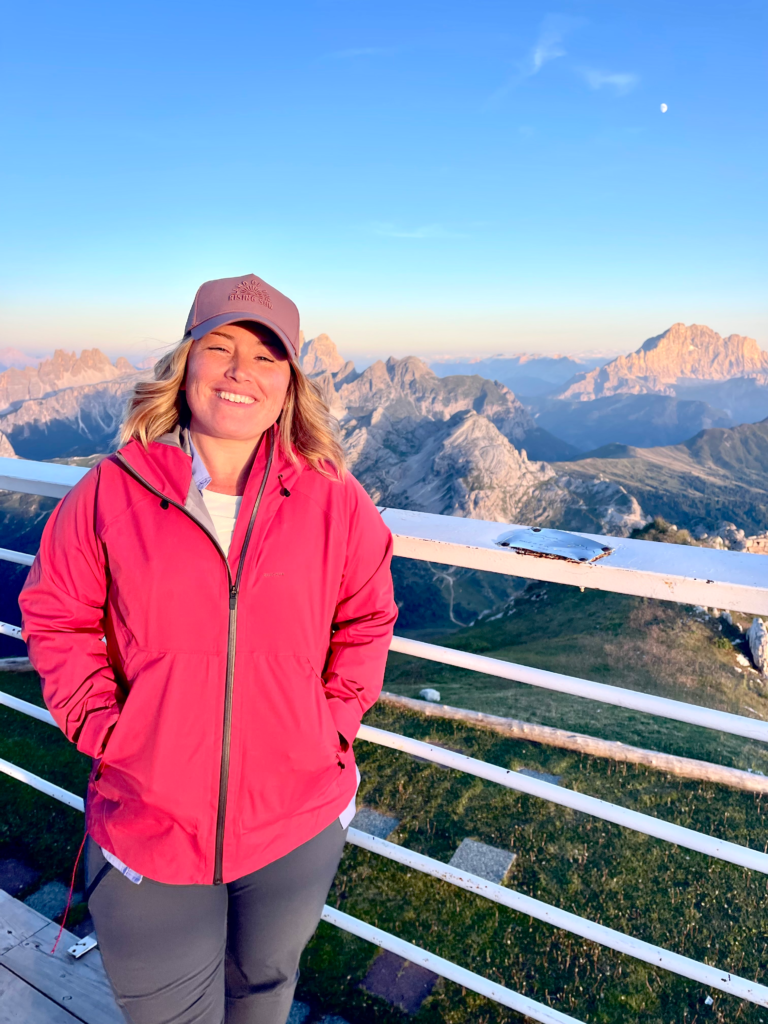
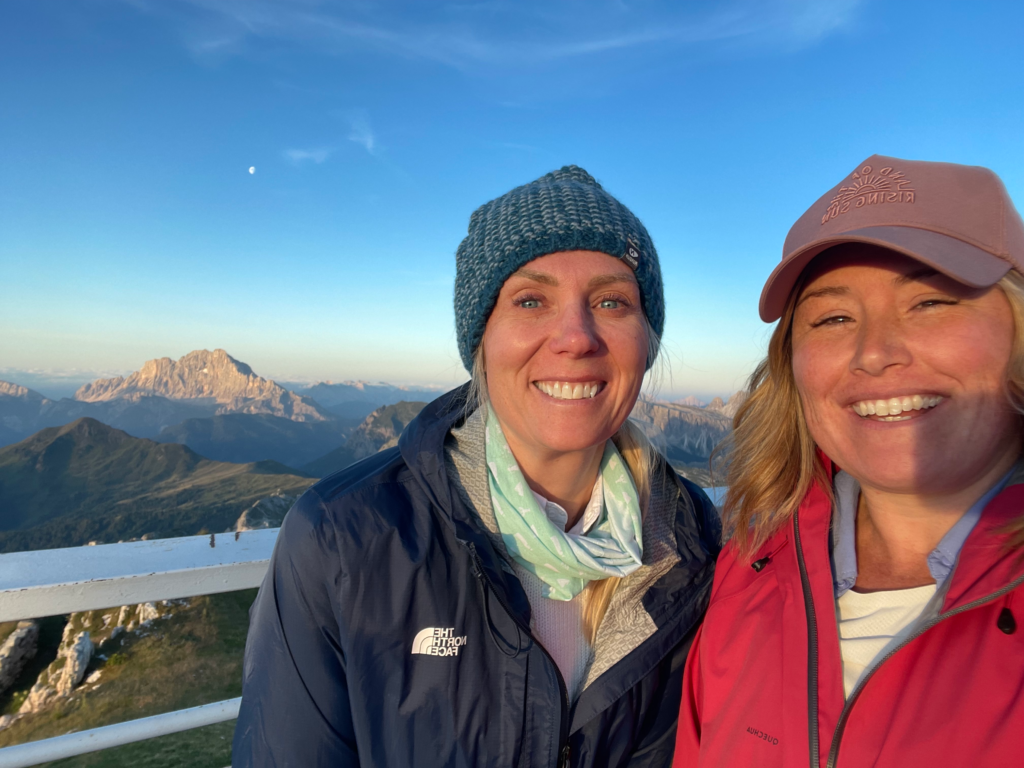
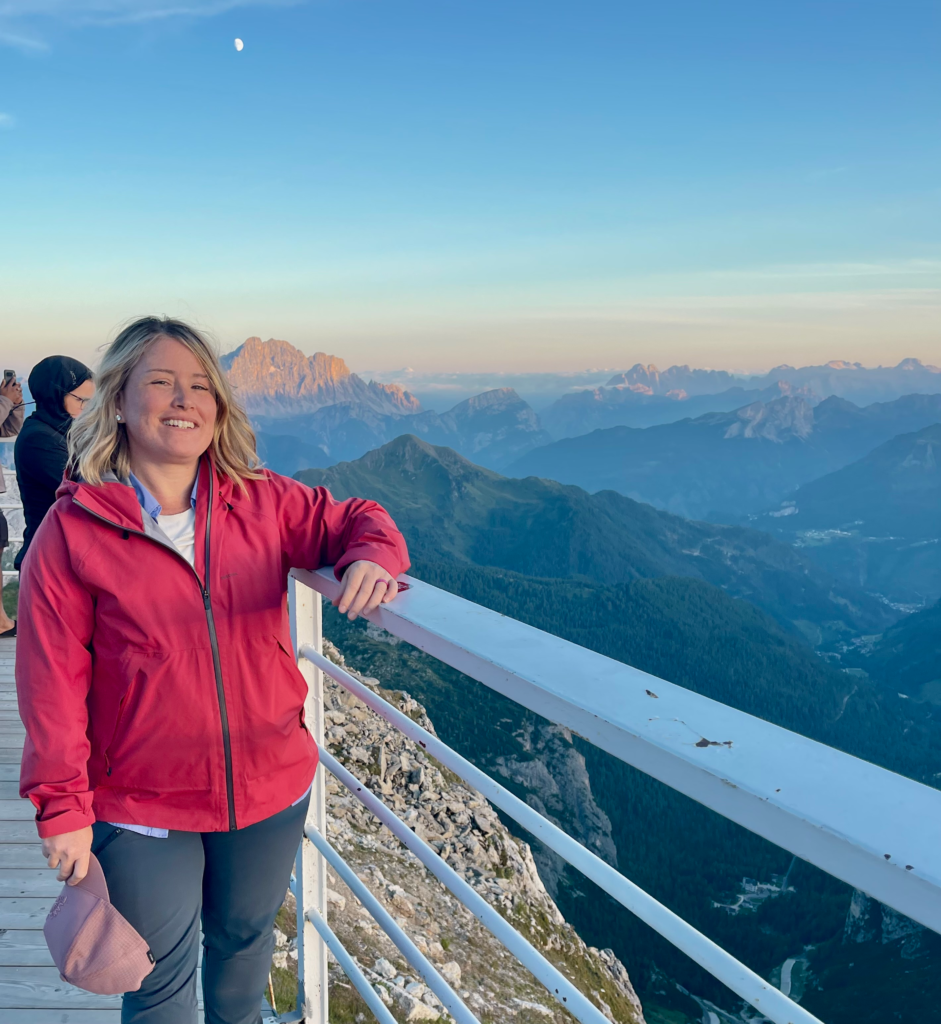
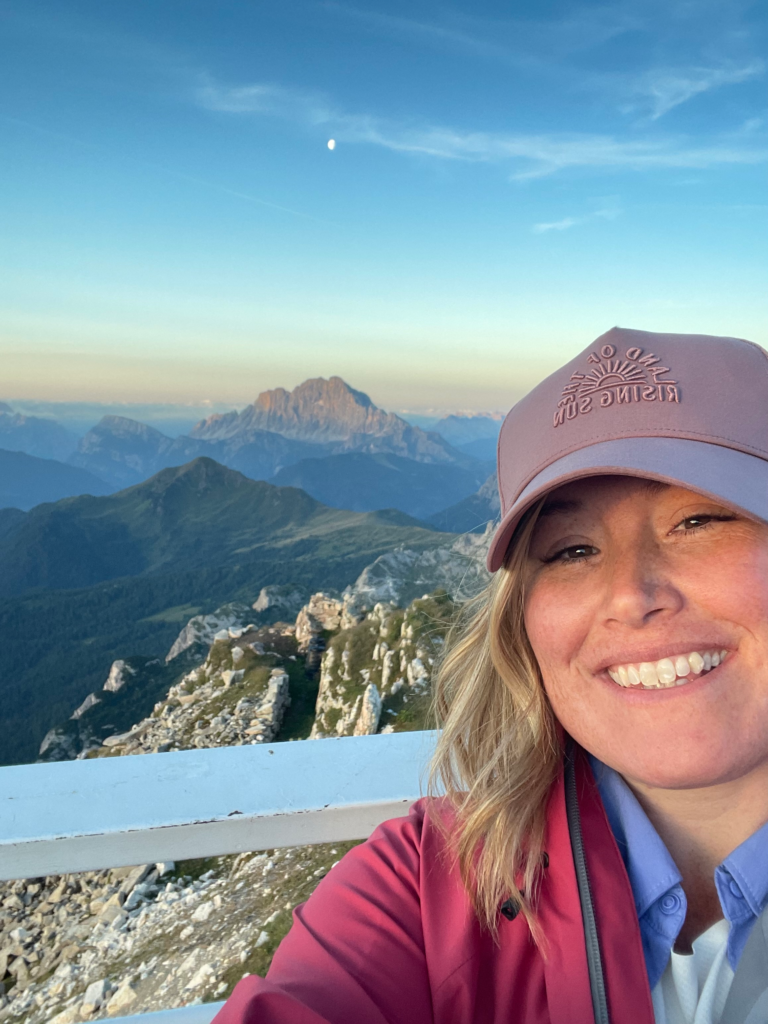
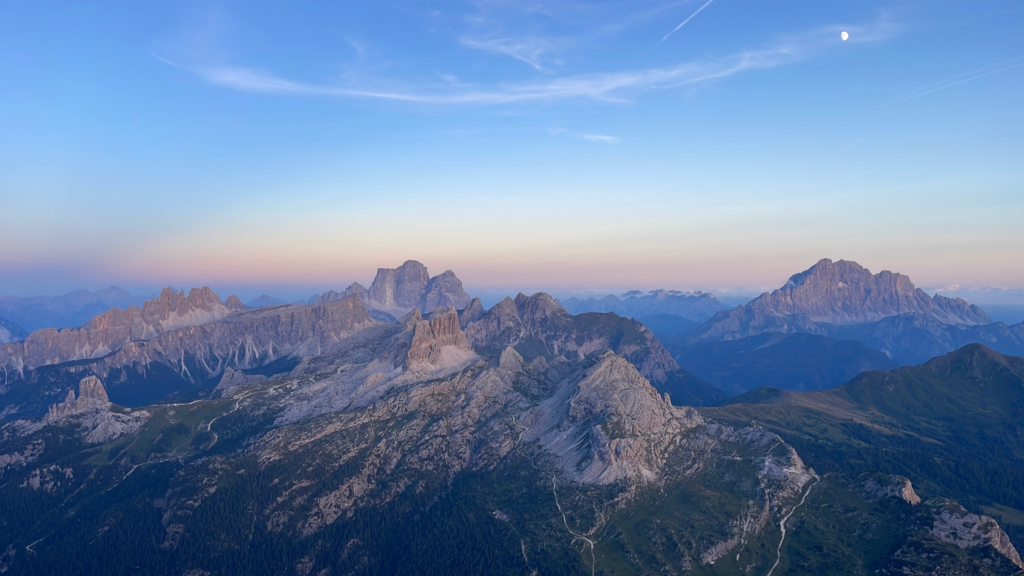
This is the entire reason to stay overnight rather than take a day trip. Once the last gondola down leaves in the late afternoon, the summit empties out almost completely, and you’re left with the ridge, the surrounding peaks, and whoever else is staying the night.
In summer, sunset starts around 8 pm, but there’s no set schedule to follow; just keep an eye on the window and head out when you see it starting to go down. We stayed conscious of the time all evening because we didn’t want to miss it.
Lagazuoi is genuinely known for this; photographers make the trip up specifically to shoot sunset from here.
We were outside for a good 45 minutes watching it, and the gradual change of color was phenomenal. It gets cold once the sun starts dropping, so bundle up; a good pair of gloves is a must to keep your fingers warm.
I regret not bringing my Sony A7II up with me; I was trying to minimize weight for the tunnel descent the next morning and left it in the car, but I wished I’d had it for the shot.
The deck wasn’t crowded at all, mostly just people staying at the hut that night. Some folks headed over to the summit cross to watch from up there instead.
Get up to the viewpoint area early. The light changes fast at this altitude, and you don’t want to be scrambling for a spot once the color really starts.
What to Pack for a Rifugio Lagazuoi Stay
Even in summer, it gets cold at nearly 2,800 meters once the sun drops.
The weather in the Dolomites in July can turn genuinely cold at the summit even during the day.
If you haven’t read my What to Expect When Staying at a Mountain Hut in the Dolomites post, head over there first for the general rundown. Below is what I would pack, and I even included a picture of what I was wearing for inspiration.
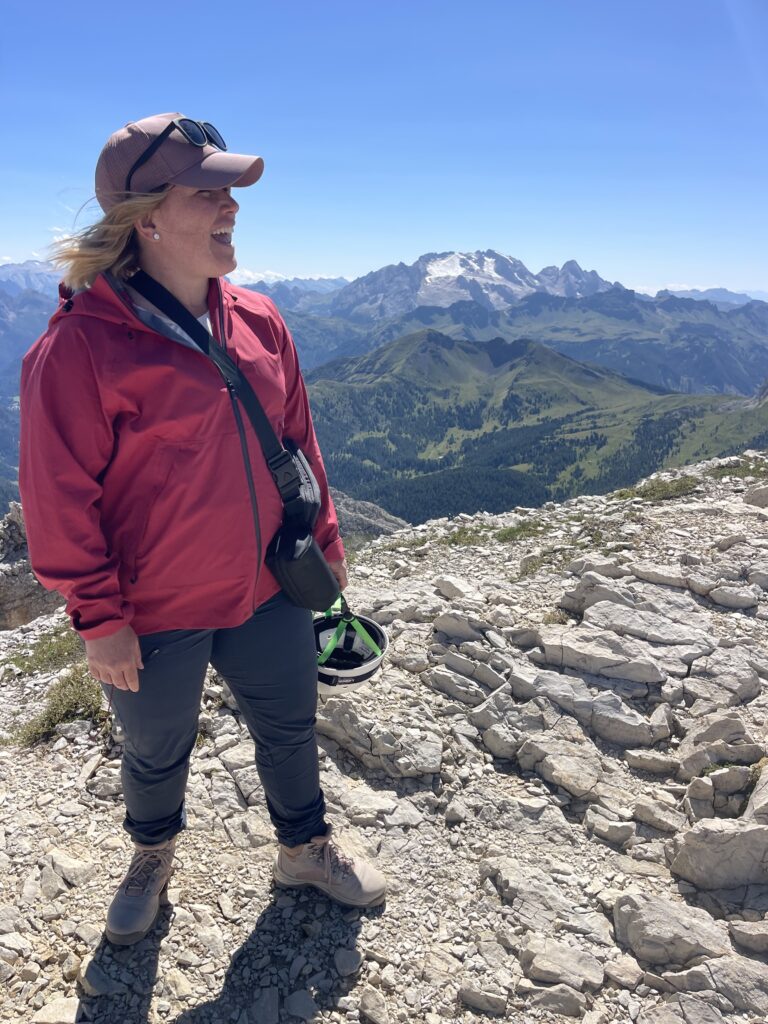
I wish I’d brought gloves and one big sweater because I underestimated just how cold it gets at the summit, even in July.
Looking back, I wish I’d packed a book and a card game. There’s real downtime once dinner wraps up and the light hasn’t fully gone yet, and it would’ve been smart to have something to do besides stare at your phone, especially since there’s wifi in the hut if you need it.
HERE IS WHAT YOU SHOULD PACK FOR AN OVERNIGHT STAY AT RIFUGIO LAGAZUOI
- Layers, including a proper insulated jacket for sunset and sunrise; temperatures drop fast once the sun is gone
- A beanie or a hat to keep your ears warm and out of the sun; I wore my pink hat
- A big sweater or extra warm layer; don’t make my mistake here
- Gloves, even in summer, also super smart to have for the cables in the WWI tunnels
- A headlamp of your own as backup, even though helmets with lights are rentable at the gondola base
- Sleep sack or liner, required at most rifugios
- Cash for meals and drinks, but they do take card at Rifugio Lagazuoi
- Sturdy, broken-in hiking shoes, especially if you’re doing the tunnel descent or any of the trail options
- Trekking poles if you’re hiking any portion rather than taking the gondola both ways
- A refillable water bottle or reservoir; water isn’t unlimited at altitude
- A book or a card game for the downtime between dinner and full dark



Renting Helmets with Headlamps at the Gondola Base
If you’re planning to take the WWI tunnels up or down (highly recommended, more on that below), you’ll want a helmet with an attached headlamp.
We stopped at the rental shack to the right of the Funivia Lagazuoi station before heading up.
I told the woman at the desk that we were staying overnight at the rifugio and wanted to rent a helmet with a headlamp; she quoted us €13.
You’ll need to leave an ID with them as collateral, and they’ll give it back when you return the equipment. The same rental shack also has via ferrata lanyards and trekking poles available if you need either.
Gloves are optional but genuinely worth having; some sections of the tunnels have cold, damp rock walls and metal handrails. I didn’t bring gloves and regretted it a little on the colder stretches.

The WWI Open-Air Museum and Reenactors at the Summit
Rifugio Lagazuoi sits directly atop one of the most significant WWI front lines in the Dolomites. Where Italian and Austro-Hungarian troops fought at extreme altitudes for years.
The summit area has been preserved as an open-air museum, with trenches, tunnel entrances, and gun emplacements you can walk right through.
I arrived via the gondola around 1 pm on a Friday, and the reenactors were already set up on the summit with an info table; plenty of people were stopping to take photos with them.
It turns out you can actually book guided tours with them rather than just walking past; this was part of their “Tour Summer 26” program:
- Touch Experience (30 min): handle authentic WWI relics yourself, cost is a conscious donation
- Short Tour (1h, €10): history of Lagazuoi told from the panoramic terrace, plus an educational video wall covering the Dolomite front
- Medium Tour (1.5h, €15): explore the summit positions, including the FW4 machine gun position
- Long Tour (2h, €20): visit all the ridge positions with a guide. This is including the detailed touch experience and a deeper history of the vertical front
The tour cost includes injury insurance, and appropriate footwear is required to join the tour, so don’t show up in sandals expecting to walk the ridge.
Even without a scheduled reenactment, the preserved trenches and information panels do a lot of the storytelling on their own. Give yourself real time here, as it’s not just a quick photo stop.
The scale of what soldiers endured at this altitude doesn’t fully land until you’ve walked the terrain yourself.
Ascents and Descents: What Your Options Actually Look Like
This is where Lagazuoi gets interesting, because “up” and “down” aren’t just one path. Here’s the full picture, weighted toward what I actually did.
What I did: Gondola up, overnight stay, WWI tunnels down the next morning. You can read about my experience in the Lagazuoi Tunnels.
The Lagazuoi tunnels were dug by Italian soldiers during WWI. It runs from the Martini Ledge up to the fore-summit of Mt. Lagazuoi, undermining the Austrian positions above.
The Italians actually detonated their mine gallery on June 20, 1917.
Today, the fully restored tunnel system runs over 1km inside the mountain, officially rated as easy, and it’s fully cabled.
Even though it’s dark, damp, and only occasionally broken up by windows cut into the rock.
The descent starts about two minutes from the rifugio itself. From the start point, it’s a 10-minute walk to the tunnel entrance.
You’ll be passing through preserved WWI trenches with some steep, exposed ledges along the way, so this isn’t a stroll.
You can read about What to Expect When Hiking Down the Lagazuoi Tunnels (working on this post)
Other options if you want them:
- Gondola both ways, skipping the tunnels entirely, if you just want the summit and the stay without the WWI descent
- Hiking up via marked trail CAI 402/401 from Falzarego Pass instead of the gondola, a 630-meter elevation gain over about 2 hours
- Hiking trails down toward Cinque Torri or back to Passo Falzarego for those who want a longer mountain day
- Via ferrata routes for climbers looking for something more technical than the tunnels
If you only do one of these, I’d push you toward the tunnel descent.
It’s the most unique thing about staying at Lagazuoi. You can’t easily do it as a day-tripper without staying the night, since you’d want the morning light and the empty trail before the day crowds arrive.
You can check out Komoot for trails around Lagazuoi!
Hikes around Rifugio Lagazuoi
Seven official trails to and from the refuge, straight from the mountain’s own trail authority. Filter by difficulty, tap a route for the full breakdown.
Is a Night at Rifugio Lagazuoi Worth It?
If you want a genuine Dolomites highlight, not just a viewpoint you tick off a list, yes. The combination of WWI history, dramatic ridge-line views, and the quiet that only comes after the day-trippers leave makes this one of the more memorable nights I’ve had in the mountains.
Just go in with realistic expectations about the basics: no shower, early lights out, and a real commitment to getting the tunnel descent or hike right the next morning.
Would I go back, and was it worth the three-year wait? In some ways, yes. But I’d built the rifugio up in my head to be more than it actually was.
Honestly, my stays at Rifugio Croda da Lago and Rifugio Scotoni during my Alta Via 1 are still my favorites in the Dolomites; the food and the overall atmosphere at both are hard to beat. That said, I still think Lagazuoi is worth the stay and the money if you want to experience it for yourself, especially for the WWI history and the tunnels.
If I went back, I’d bring my actual camera to get some real shots of the sunset instead of relying on my phone, and I’d bring a tripod if I were going solo.
Let me know your thoughts and if you would do this trail in the Dolomites below!