Solo Hiking in the Dolomites: 20 Safety Tips From Someone Who Hikes Them Alone
Last Updated on November 10, 2026 by Kimberly
Planning a solo hike in the Dolomites and wondering if it’s safe to go alone? It is, if you prepare for the mountains you’re actually walking into. Solo hiking in the Dolomites is one of the most empowering things I’ve done, and it’s also where I’ve learned the most about my own limits.
I’ve hiked these mountains alone for years, from day hikes like Lago di Sorapis and Tre Cime di Lavaredo to multi-day hut-to-hut treks on the Alta Via 1, the Alta Via 2 and the Palaronda Trek in the Pale di San Martino. I’ve been scared on a scree field, hiked out in the dark and turned back when snow was forecast.
Below are the 20 Dolomites hiking tips I actually use for safety, grouped into what to do before you go, what to pack, how to handle the trail and what to do if something goes wrong. If you’re a woman hiking alone for the first time, this is the guide I wish I’d had.
In a Rush?
Where I’d Stay for Solo Hiking in the Dolomites
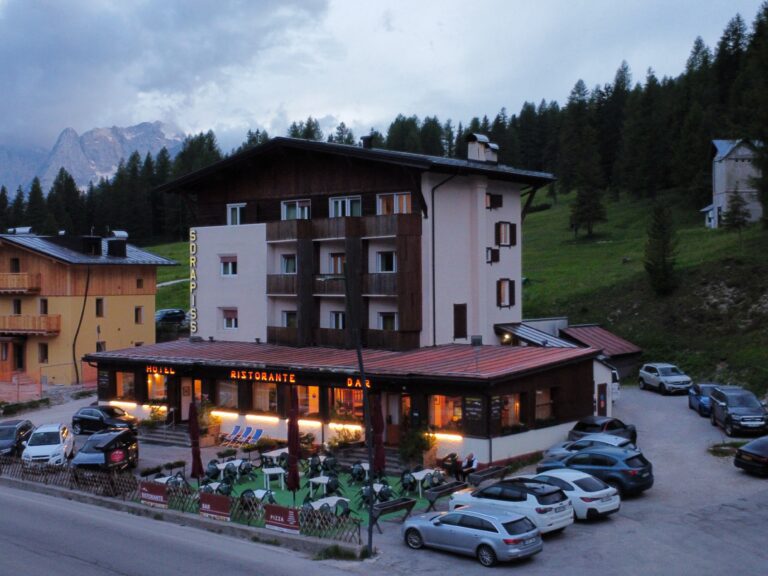
| Passo delle Erbe | Ütia de Börz Check rates and availability |
| By Area | Every hotel I’ve slept in, by base See where to stay in the Dolomites |
Is It Safe to Hike Alone in the Dolomites?
Yes, with preparation. Most problems here don’t come from hiking alone in the Dolomites. They come from underestimating the mountains.
The numbers are a good reality check. In 2025, Italy’s National Alpine and Speleological Rescue Corps (CNSAS) carried out a record 13,037 rescue operations, and 528 people died in the Italian mountains, 13 percent more than the year before. Hiking made up the largest share of rescues, and falls and slips caused nearly half of them.
Summer 2026 in the Dolomites was just as busy. Between June 7 and October 31, the helicopter rescue service Aiut Alpin Dolomites flew 595 missions and helped 602 people, and 24 of them died, most from health emergencies rather than falls. In Trentino, rescue calls held steady at more than 900 between June and September, while deaths dropped from 25 in 2025 to 17. Falls and slips still caused nearly half of those rescues, and in June 2026 a CNSAS spokesperson said many rescues could certainly have been avoided.
That isn’t meant to scare you. This guide to Dolomites hiking safety isn’t about fear. It’s about competence, so you can hike alone with confidence instead of anxiety.
I created this blog post after sitting on itinerary planning with people who wanted more than what social media was telling them about how “easy the trails were,” and for people who wanted more depth in understanding the trails.
What Makes Hiking in the Dolomites Different
- Limestone and dolomite rock, which means sharp edges and loose gravel underfoot
- Exposed terrain, with many trails crossing open ridges and wide scree basins
- Well-marked trails that aren’t forgiving if you leave them
- Fast-changing weather, especially afternoon storms in summer
The Dolomites aren’t remote wilderness in the North American sense. There are rifugi, lifts and a strong rescue network. But it’s still alpine terrain, and prevention is always better than a rescue.
Why the Dolomites Work Well for Solo Female Hikers
- Well-marked trails. The Italian Alpine Club (CAI) maintains a huge network of numbered, painted trails, so it’s hard to get truly lost on a marked route.
- Rifugi along the way. Mountain huts give you places to rest, refill and ask about conditions, which takes away a lot of the isolation of hiking alone.
- A welcoming culture. In my experience, locals and other hikers are respectful and helpful. Being a solo female hiker here hasn’t made me feel uncomfortable or unwelcome.
- Company when you want it. Popular trails are busy in summer, so you’re rarely completely alone. You keep your independence and help isn’t far away.
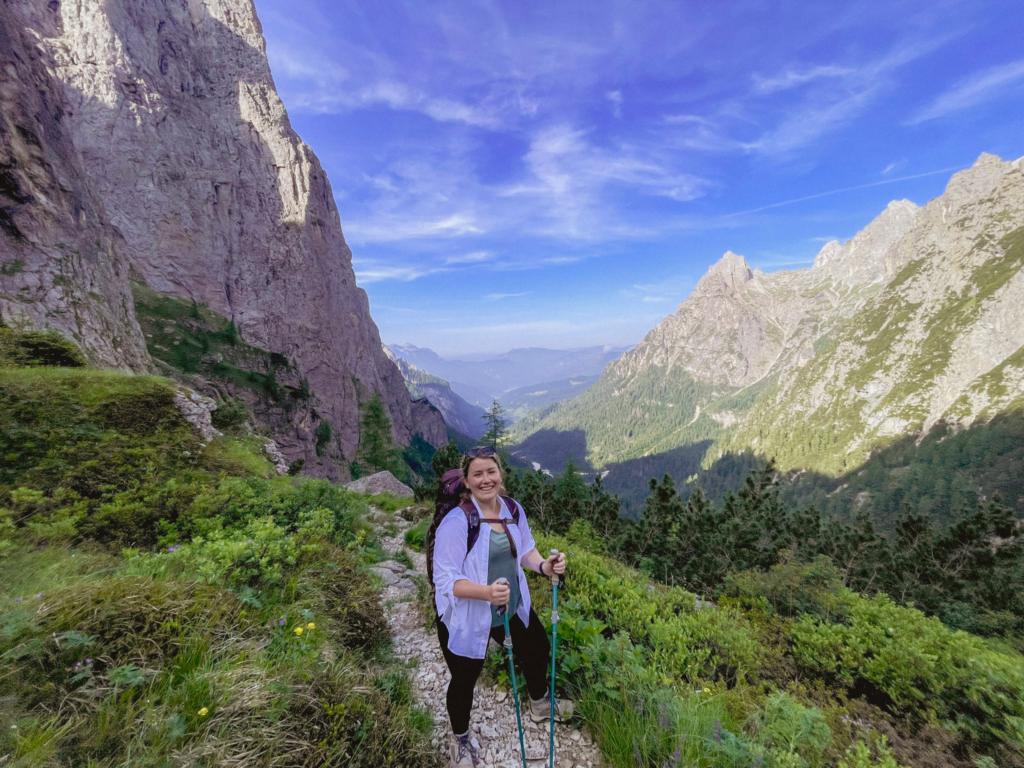
Before You Go: Planning Tips for Solo Hiking in the Dolomites
1. Tell Someone Your Plan
Before you leave your hotel or rifugio, send your route and expected return time to a friend, family member, or your host. Add checkpoints, like the hut you plan to reach by lunch, so someone knows where you should be throughout the day.
For me, sending my husband a quick “I’m okay” from the top of a ridge brings real peace of mind.
2. Know the Trail Difficulty Before You Go
Dolomites trails range from easy forest walks to exposed alpine routes. Use the official CAI difficulty grades, not social media labels:
- T (tourist): easy, clearly marked paths and unpaved roads
- E (hiking): mountain paths over natural ground that need proper footwear and some sense of direction
- EE (expert hikers): exposed or tricky sections where you need to read the terrain and use a map
- EEA (expert hikers with equipment): via ferrata routes that require a harness, lanyard and helmet
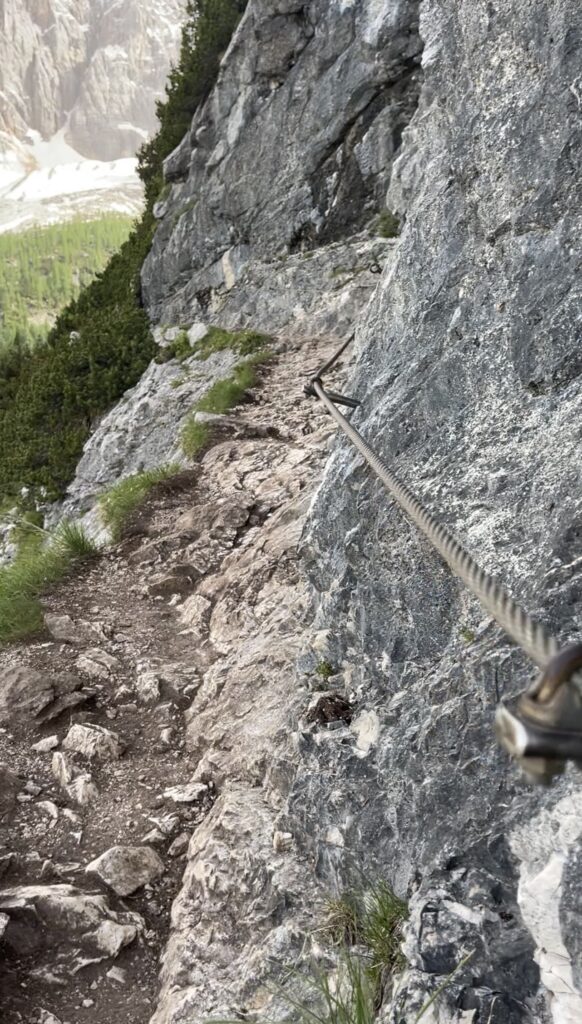
3. Start With Popular Routes if You’re Nervous
There’s zero shame in starting with well-trafficked trails. Lago di Braies, Seceda and Tre Cime di Lavaredo are beautiful and usually have other hikers around. A hike is a hike. My solo guide to Tre Cime di Lavaredo is a good place to start.
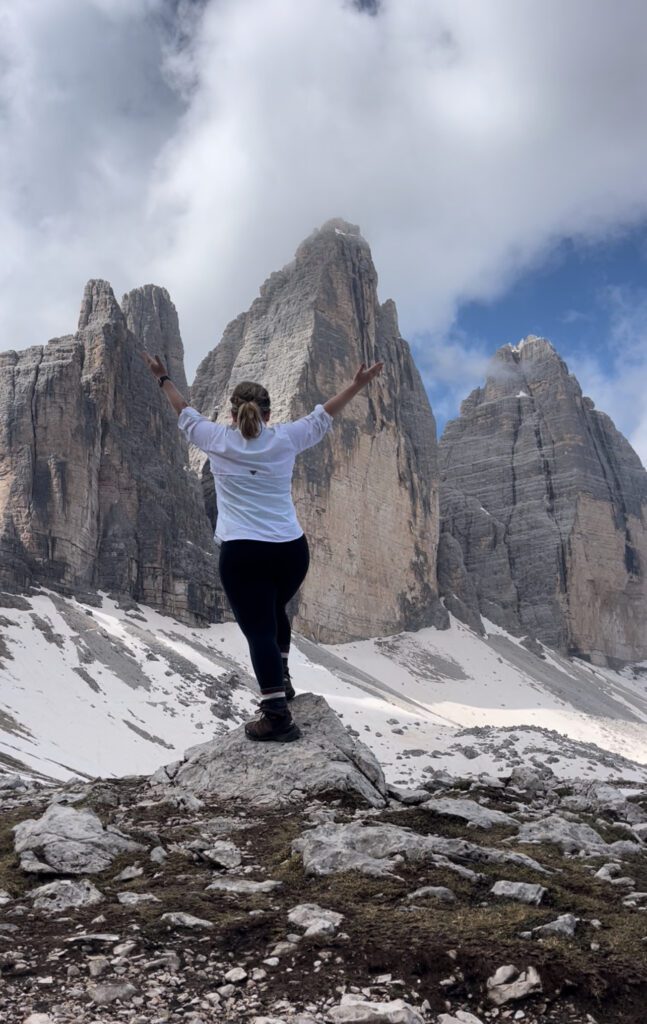
4. Plan Around the Weather
Afternoon thunderstorms are common in the Dolomites, especially from June to August, and hail and wind can roll in fast. So check the forecast every morning, and if it looks unstable, choose a lower trail or a shorter day.
My favorite weather app is 3bmeteo, because it gives forecasts valley by valley, which matters when the weather in Val Gardena can look nothing like Cortina’s. Download it before your trip, along with the other apps I use for hiking in the Dolomites.
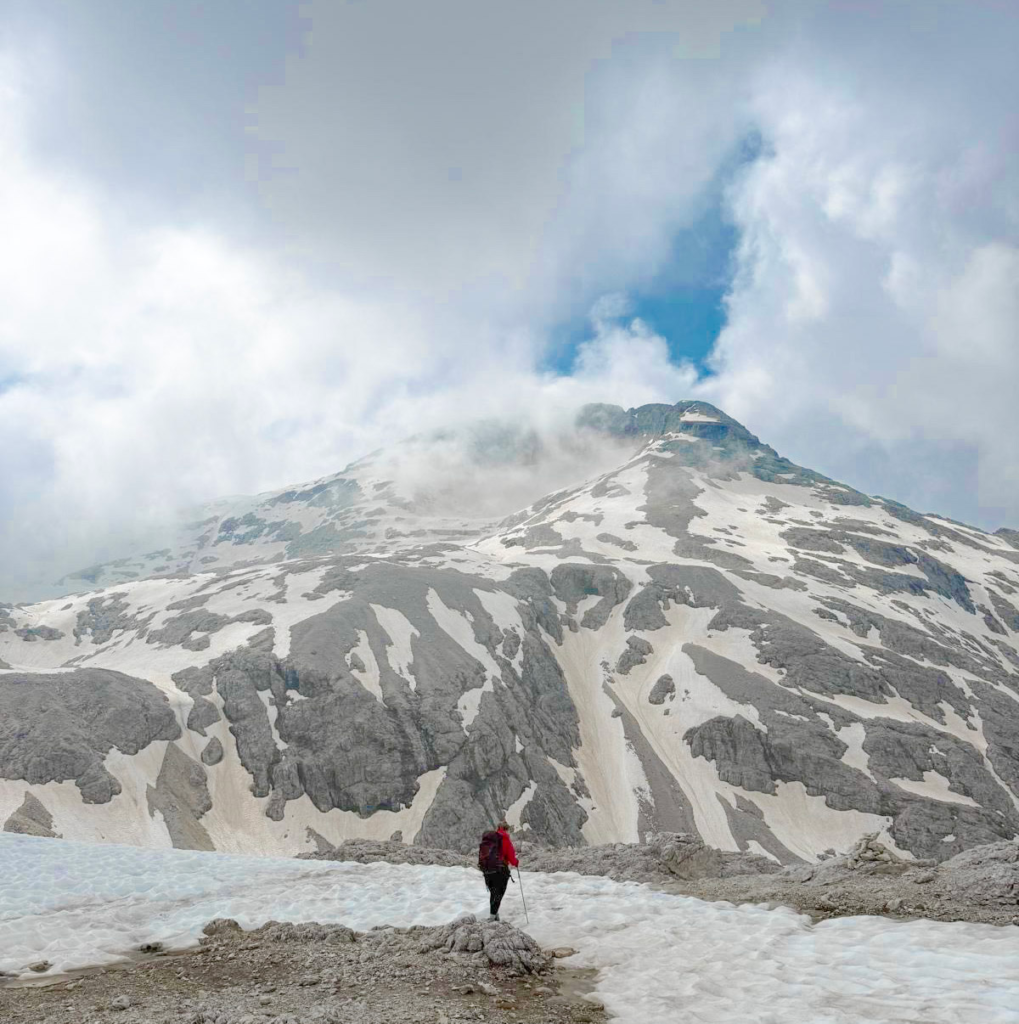
In late spring and early fall, trails are quieter and can still hold snow. That calm is beautiful, but it also means fewer people around if something goes wrong. Check conditions with the tourist office or the rifugio before you go.
5. Check Trail Closures and Rockfall Warnings
Trails close for rockfall, landslides and storm damage. Respect the barriers and signs. They’re there for a reason.
Before you go, search the trail name or number with “closed” (or “chiuso” in Italian) to find recent closures, and read any notices posted at the trailhead. Updates are sometimes put out right on the trail.
In August 2025, a British hiker who walked past closure signs near San Vito di Cadore had to be rescued by helicopter and was billed about €14,000. Rescuers said an EU resident would have paid a few hundred euros, while a non-EU visitor without insurance paid far more.
Kimberly’s Tip
Before every hike, check the trail status with the local tourist office or the nearest rifugio, and ask again at the hut if your plans change mid-day.
6. Book Rifugi Ahead in Summer
In July and August, rifugi fill up early. As a result, booking ahead gives you a guaranteed safe place to land each night, which matters even more when you’re alone. If you’re new to rifugi, start with my picks for the best rifugios in the Dolomites for first-timers. For multi-day treks, I book through Bookatrekking, and my Bookatrekking review explains how it works. For hut-to-hut planning, see where to stay before and after the Alta Via 1.
7. Get Travel Insurance That Covers Mountain Rescue
Rescue isn’t always free in the Italian Alps, and helicopter costs add up fast for visitors from outside the EU. Before you hike, make sure your travel insurance covers hiking and mountain rescue at the altitudes you’ll reach. I’ve used World Nomads. For what it covers, read my World Nomads review.
What to Pack for Solo Hiking in the Dolomites
8. Dress in Layers
Even in summer, ridges can be cold and windy. Pack a lightweight rain shell, an insulating mid-layer, a hat and gloves, plus sunscreen and good sunglasses for the strong alpine sun.
9. Carry More Water Than You Think You Need
My usual hiking days run four to five hours, so I carry a 3-liter hydration reservoir like this CamelBak. Rifugi are great, but they may be closed or farther apart than you expect. Drink water before you start, too. Starting hydrated helps with endurance and keeps your head clear.
10. Pack Real Food
Granola bars alone won’t carry you through a long day at altitude. Instead, pack real energy foods like nuts, wraps and dried fruit, and eat before you feel hungry.
11. Wear Hiking Boots With Grip
On limestone and scree, grip matters more than anything. I rotate between two pairs of boots, including the Salomon X Ultra. Sneakers that feel fine in town can slide on loose gravel.
12. Use Trekking Poles
Poles aren’t just for show. For example, they steady you on descents, take strain off your knees and help on slippery sections. I hike with Mountainsmith trekking poles.
Also in my pack: a headlamp, a small first aid kit with blister care, a whistle and a power bank. For the full list, see my Dolomites hut-to-hut packing list.
On the Trail: Solo Hiking Safety Tips
13. Bring Navigation Backups
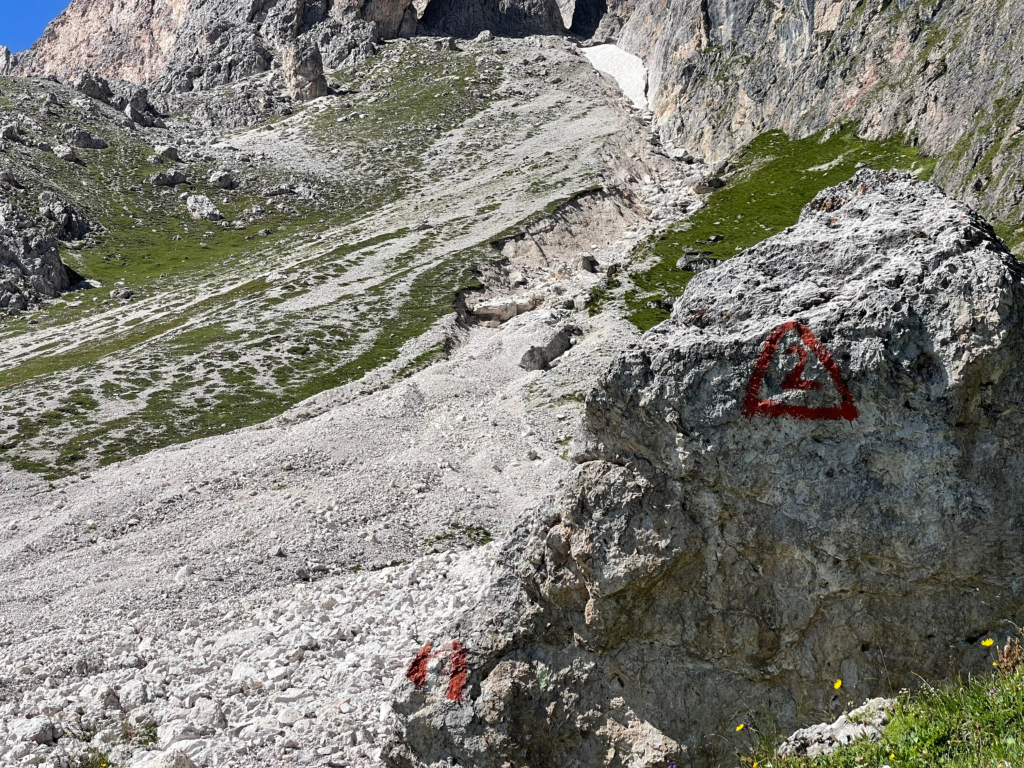
First, download your route offline before you leave. Komoot is one of my favorite apps, and I also carry a paper Tabacco map in a waterproof map case. Cell service drops out in a lot of valleys, so don’t rely on your phone alone. When you do have signal, an eSIM keeps you connected for forecasts and check-in texts. I use Holafly. Follow the red-and-white CAI trail markers, and on the Alta Vie, the numbered triangles. For more, see the hiking apps I use in the Dolomites.
14. Start Early
Starting early isn’t about beating the crowds. It’s about being off exposed terrain before the afternoon weather changes. I aim to be on the trail by 7:30 or 8:00 a.m. and past the high points by early afternoon. In fact, that habit alone avoids a lot of common mountain emergencies.
15. Watch the Time and Finish Before Dark
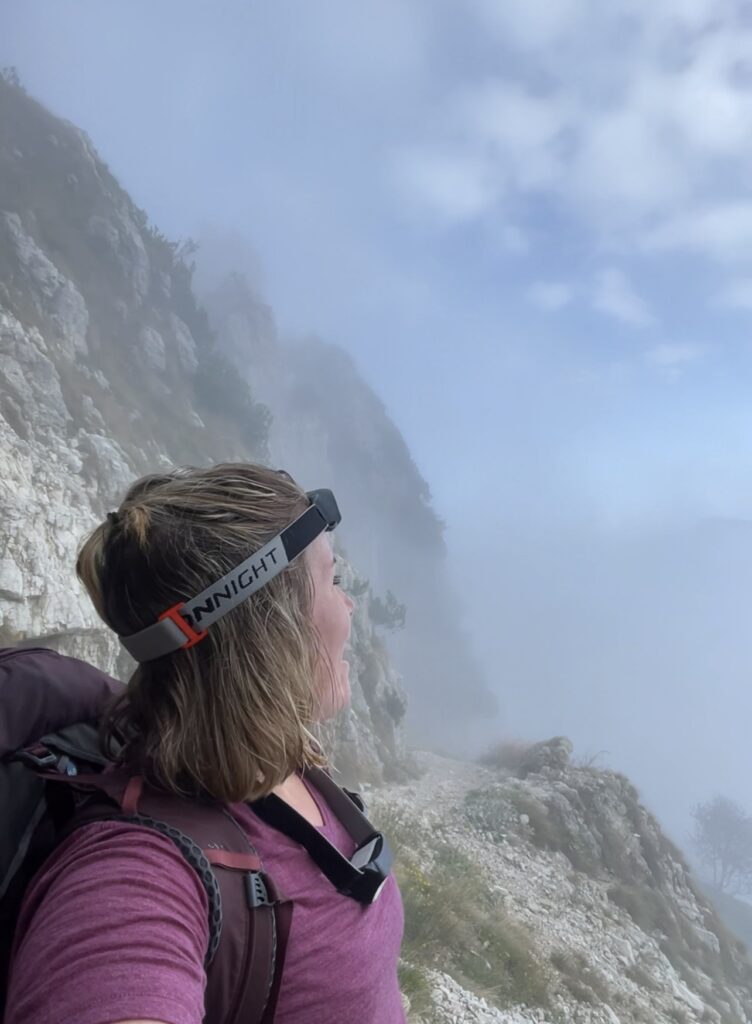
Light fades fast in the mountains, and descending rocky terrain in the dark is high risk, even with a headlamp. That’s why you should set a turnaround time and stick to it, even when the view is begging you to stay.
Kimberly’s Tip
Set an alarm on your phone for your turnaround time. It’s easy to lose track of time at a lake or viewpoint, especially at sunset.
16. Skip Risky Shortcuts and Respect Your Limits
Even if you see someone take an easier-looking way, trust your own plan. Many trails climb above 2,300 meters, and even without altitude sickness you’ll breathe harder and tire faster. If you’re exhausted or conditions get worse, turn around. Pushing your comfort zone is great. Ignoring it is not.
17. Trust Your Gut
Solo travel sharpens your instincts. If someone gives you an off feeling, put distance between you. If the weather turns or a section looks dangerous, stop, find shelter or reroute.
If Something Goes Wrong
18. Know the Emergency Numbers
Call 112, the European emergency number. In Trentino and South Tyrol, 112 is the central number for every kind of emergency, and in Veneto, 118 also reaches medical and mountain rescue. Save both in your phone before you start, and wear bright colors so rescuers can spot you.
19. Download the GeoResQ App
GeoResQ is a free app from the Italian Alpine Club (CAI) and the national mountain rescue corps (CNSAS). It records your route and lets you send an alert to rescuers with your exact position. It’s been free for everyone since July 2023. Download it and create your account before your trip, while you still have good signal, because registration asks for your contact details and an emergency contact.
20. Know When to Hire a Guide
On via ferrata or technical routes, a guide isn’t a luxury. It’s a safety measure, especially if you aren’t used to exposure or rope systems. If you’re deciding between options for a trek, my guide to guided vs. self-guided hiking in the Dolomites walks through the trade-offs.
Planning Your Dolomites Hikes?
Start with these guides from my solo treks.
My Experience Solo Hiking the Dolomites
Ever since I moved to Vicenza and took my first trip to the Dolomites, I knew I wanted to hike as much of this region as I could. My husband is often busy or gone for days at a time, and I realized early on that if I didn’t do these hikes on my own, I’d regret wasting my time here.
I follow so many women who are fearless in their pursuits, and I kept thinking, if they can do it, so can I. So even while battling a tough health journey, I started training. I knew I wanted to hike the Dolomites and eventually take on the Alta Via 1 and 2.
To build my confidence, I started with smaller hikes like the Strada delle 52 Gallerie, Tre Cime di Lavaredo, Lago di Sorapis and Cinque Torri. I overpacked on those early hikes, but I was learning. Little by little, I started to trust my instincts.
You adapt. You figure out what works for you. Maybe it’s a lucky charm, or maybe it’s texting someone when you reach the top of a ridge.
On the Alta Via 2
When I left my hotel in Bressanone (Brixen) to start four days on the Alta Via 2, I was terrified. I was sweating and panicking, and every little thing rattled me. But I knew I had to keep going, so I did. One foot in front of the other.
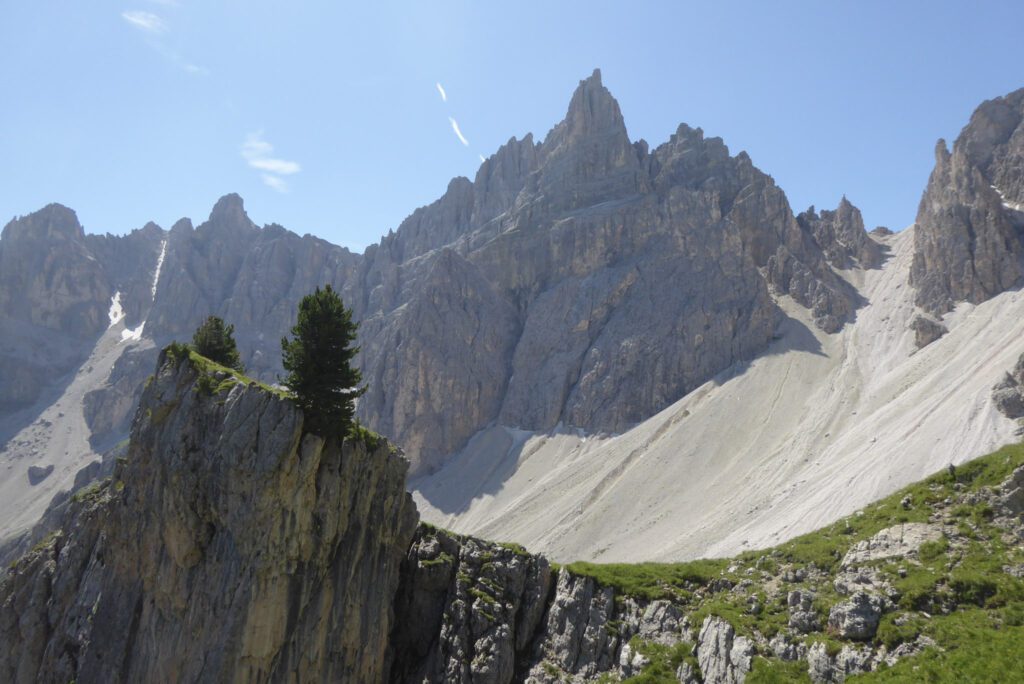
On Day 2, I left Rifugio Genova with two other female hikers. All of us were a bit scared. Partway through the day, I found myself staring across a massive scree field, frozen. It shook me to my core. I stopped, sat on a rock and had this exact conversation with myself:
“It’s all about perspective. Once you get closer, everything takes shape. There’s a trail there. We can do this.” (Inner voice: “…but can we?”)
The other two women eventually hiked ahead of me, but they waited. They waited for me. That moment of shared vulnerability and encouragement has stayed with me.
And I made it.
At Lago di Sorapis: Oops
If you’ve read my Lago di Sorapis hiking guide, you’ll remember I hiked it at sunset. What happens when you get distracted by surreal blue water and a sunset? You lose track of time.
I stayed too long taking photos, and before I knew it, I was hiking back in the dark. Oops. Good thing I packed three headlamps.
Your confidence can waver fast, and you’ll want to rush. Don’t. Rushing leads to mistakes. When your mind starts to spiral, that’s the moment to stop, breathe and take in your surroundings. In the Dolomites, your biggest danger isn’t wild animals. It’s fatigue, darkness and slipping. I wasn’t afraid of bears. I was afraid of losing my footing and not being able to get help.
So if you’re just starting out, here’s my best advice: watch the time, and know your limits.
Solo Hiking in the Dolomites FAQ
Is it safe to hike the Dolomites alone as a woman?
Yes, if you’re prepared. The trails are well marked, the rifugi network is strong and the culture is welcoming. Plan ahead, trust your instincts and start with popular routes.
What’s the best first solo hike in the Dolomites?
Start with busy, well-signed routes like Tre Cime di Lavaredo, Lago di Braies or Seceda. Lago di Sorapis is popular too, but it has cables and narrow ledges, so save it until you’re comfortable with some exposure.
What number do I call for help in the Dolomites?
Call 112, the European emergency number. In Veneto, 118 also reaches medical and mountain rescue. The free GeoResQ app can send rescuers your exact location.
Do I need to speak Italian to hike solo in the Dolomites?
No. English is widely spoken in rifugi and tourist areas, and in South Tyrol you’ll also hear German. Learn a few phrases and keep a translation app on your phone.
When is the best time for solo hiking in the Dolomites?
Late June through early September. Trails are mostly clear of snow, the rifugi are open and more hikers are around, which is good for both safety and company.
Why Solo Hiking in the Dolomites Is Worth It
Solo female hiking in the Dolomites has been one of the most empowering experiences of my life. Since that first scary week on the Alta Via 2, I’ve gone on to hike four days in the Pale di San Martino on the Palaronda Trek, and I still get excited to see more and challenge myself more.
It isn’t just about reaching a destination. It’s about the freedom, the quiet and the confidence you build with every step. Start with manageable trails, prepare well and listen to your intuition. Yes, it’s safe with preparation. Yes, you can do it. And yes, it’s worth it.
More Dolomites Hiking Guides
- Dolomites Hiking and Travel Planning
- What Is the Alta Via 1?
- Alta Via 1 Short Route: A 4-Day Solo Hut-to-Hut Trek
- Alta Via 2 in 4 Days
- Palaronda Trek Itinerary
- Dolomites Mountain Huts: A Rifugio Guide
- Dolomites Hut-to-Hut Packing List
- Solo Hiking Tre Cime di Lavaredo
- How to Hike Lago di Sorapis Solo
- Where to Stay in the Dolomites by Area
Save This Guide for Your Next Dolomites Hike
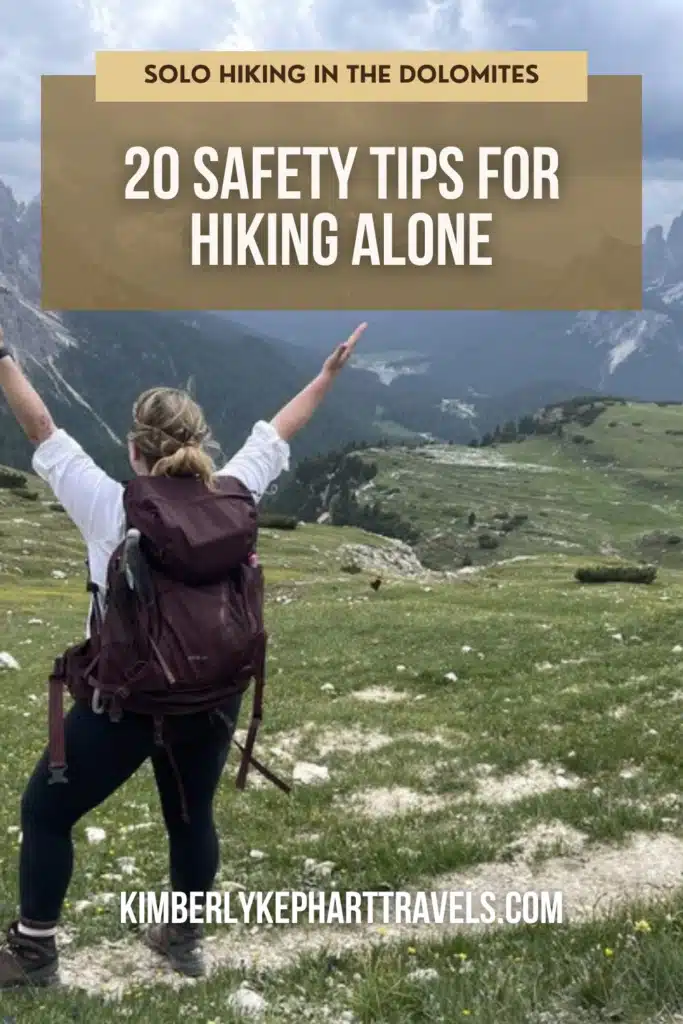
Pin this so you have the safety tips, emergency numbers and packing list handy before your next solo hike.
Research and Sources
- My own solo hikes in the Dolomites, including the Alta Via 1, Alta Via 2, Palaronda Trek, Lago di Sorapis and Tre Cime di Lavaredo
- CNSAS: 2025 Alpine and Speleological Rescue data
- l’Adige: Aiut Alpin Dolomites summer 2026 missions
- Adnkronos via il Fatto Nisseno: Trentino summer 2026 rescues
- il Dolomiti: CNSAS on avoidable rescues, June 2026
- The Local Italy: British hiker hit with €14,000 bill after being rescued in the Dolomites
- Dolomite: Hiking difficulties and the CAI scale
- Autonomous Province of Trento: NUE 112 Single European Emergency Number
- il Dolomiti: GeoResQ becomes free for all hikers