Hut-to-Hut Trek Training: What I Do Before Every Multi-Day Hike
Last Updated on September 9, 2026 by Kimberly
The question I get most often about hut-to-hut trekking isn’t which refuge to book. It’s “am I fit enough?”
I’ve completed six multi-day treks solo across Europe, including four hut-to-hut routes in the Alps and Dolomites: the Alta Via 2 short route, the northern section of Alta Via 1, the Palaronda Trek, the MADE Trek, and most recently the Tour du Vallaisonnay in the French Alps. I’ve also completed two inn-to-inn walking routes: the Côte d’Opale in northern France and the Donegal Way in Ireland.
It is, a little. It’s also trainable, and it does not require a running habit.
After several years of these trips, I’ve learned that hiking one long day is very different from waking up and doing it again the next morning.
So here is a bit of advice for training and preparing for your hut-to-hut treks.
This post pairs well with:
- Italy’s MADE Trek: The Quiet Trek You’ll Fall For
- Four Days on the Via Francigena Toscana: San Gimignano to Siena
- Palaronda Trek Itinerary: A 4-Day Solo Hike Through the Pale di San Martino
- Alta Via 2 Short: 4-day Itinerary
- Alta Via 1 Short: 4 Days on the Northern Section of the Alta Via 1
How Fit do you need to be to do a long-distance trek?
You need to be fit enough to carry your pack for several days in a row. Fit enough that the climbs don’t leave you winded and your ankles don’t turn on you by day three.
That’s it. Any single day on a beginner-friendly route is within reach for most active people. Four to six hours of walking, some climbing, some descent.
Day three is what catches people out. Your legs are tired, yesterday’s descent is still in your quads, and you slept in a bunk room. Training for multi-day hiking isn’t about building up to one enormous hike.
It’s about building a body that recovers overnight, and properly fuelling yourself during the hike.
My Starting Point:
You should know that:
- I am fairly fit; I work out quite a bit (now)
- 40 Years Old
- No known Injuries.
- I try to hike as much as I can ….
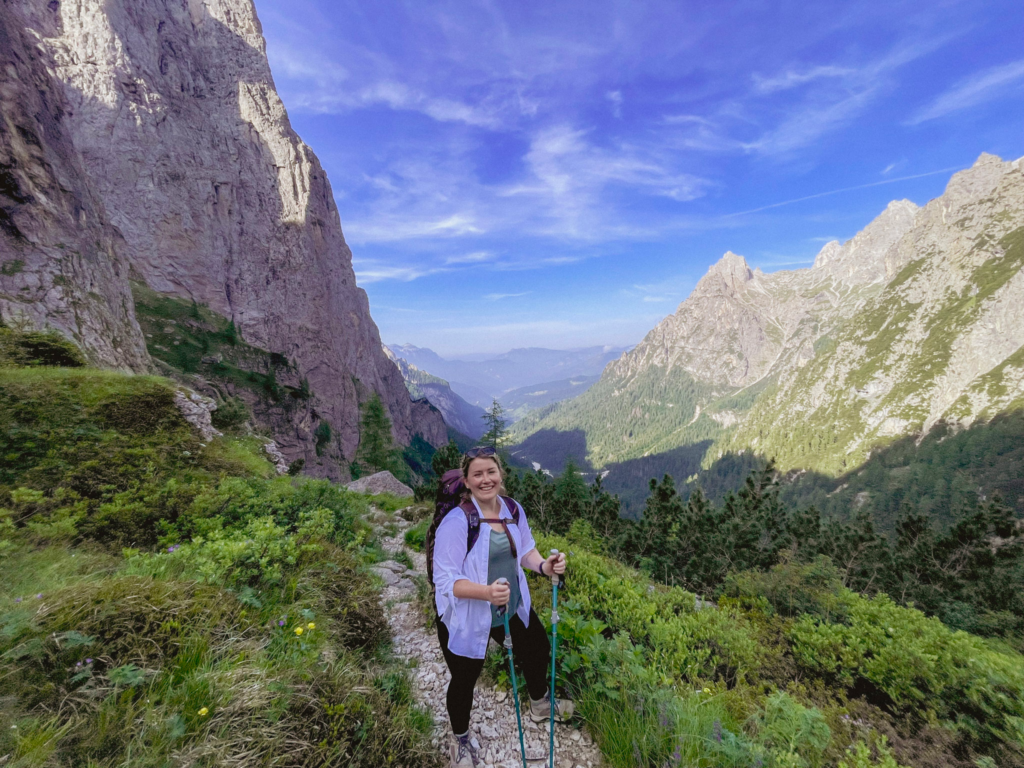
- I live in Belgium, where there are barely any mountains, but I used to live in Italy. I would be out on the trails as much as possible!
- Former fitness instructor who just fell off the wagon. Seriously, after I quit my corporate job, I became a certified fitness instructor through ACE, but that doesn’t mean I know everything!
What I used to do, and why I stopped
For the record, training for my first two long-distance treks was terrible. I was getting iron transfusions in Italy during the summer of 2024 and honestly don’t know how I did the Alta Via 2 short route and the northern half of the Alta Via 1. I knew I wanted to prove to myself that I could.
So my training has slowly evolved. I got tired of the way I felt after hikes.
For years, my training was one thing: walking with weight on or simply going for a hike.
I’d take my Osprey 38L, stuff two 15-pound weights in it, and go. Sometimes I’d wear my husband’s weighted army vest instead and walk in that. On paper, that sounds like solid preparation, and it did help.
The problem showed up afterward. I was getting torn up after hikes. Not during, after. Sore for days, slow to bounce back, and aware that if I’d had to walk another hard day on top of it, I would have struggled.
That’s when I figured out what I was actually training. Walking under load builds tolerance for walking under load. It doesn’t build the strength that protects your knees on a descent, and it doesn’t build the aerobic base that lets you recover overnight and go again.
So I stopped freelancing it and got a program.
Before I started Meg’s (the program I mention later in this blog post), I spent about 10 weeks preparing for the Tour du Vallaisonnay. I started with roughly two weeks of foundational strength and conditioning before moving into an eight-week structured training program.
The balance piece turned out to matter more than I expected, because mountain trails are loose rock, wet roots, and uneven ground for hours, often while you’re tired.
Why Strength Training Became the Foundation of My Hiking Training
I used to think I needed more cardio to become a better climber. I eventually realized strength was the piece missing from my training.
Descending is worse. Every downhill step is your quads absorbing load, and if they aren’t ready, you’ll feel it by the afternoon of day two. Add a pack and the loading goes up again.
I train with Moving Mountains Meg, whose program is strength-led. Her programming runs through Playbook if you want to see how it’s structured. I get absolutely ZERO kickbacks from mentioning this or you clicking on her information. I just want other women to feel the way that I feel, from someone who is a certified PT.
The strength work makes me capable of the climbs. The endurance work makes me capable of doing them five days in a row. Two different jobs, and most hiking training plans collapse them into one.
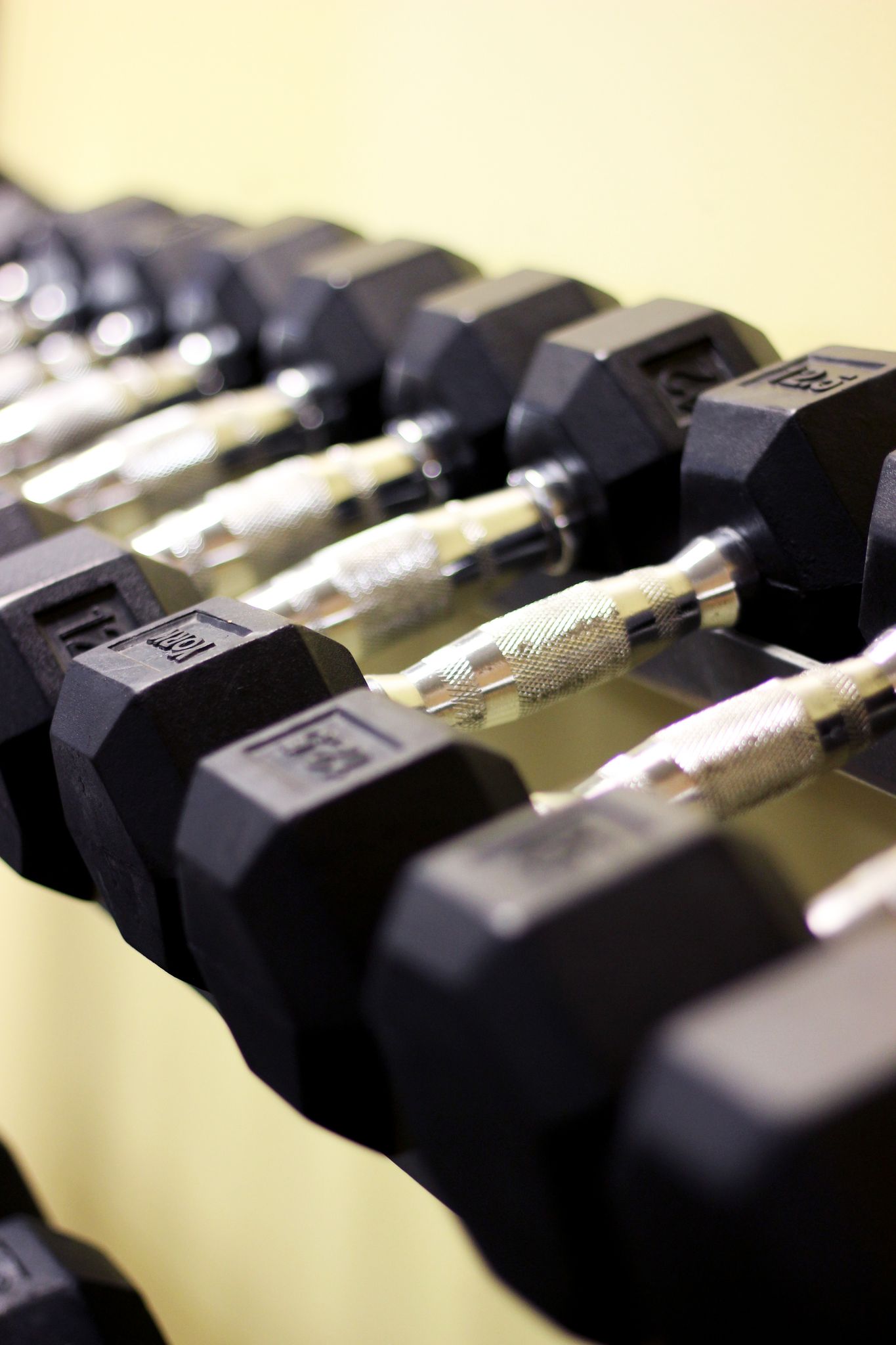
Here’s what a training week actually looked like. Strength on the gym floor, the StairMaster with my pack on, and a lot less running than people expect.
Why VO2 max matters for multi-day hiking
VO2 max is one measure of aerobic fitness, or how effectively your body can use oxygen during exercise. Improving my aerobic capacity was part of the goal, but it wasn’t the only focus of my training.
That matters on a hut-to-hut trek for two reasons. A climb that sits near your ceiling leaves you cooked for the rest of the day. The same climb, further below your ceiling, is just a climb. And a stronger aerobic base means you recover faster overnight, which is the entire game when you’re walking five days in a row.
It helps at altitude too, though not in the way people assume. Being fit doesn’t make you acclimatize faster, and altitude sickness doesn’t care how strong your legs are. Better aerobic fitness makes the work cheaper when there’s less oxygen to go around.
The program also incorporates shorter, harder efforts alongside lower-intensity aerobic work. For me, that meant intervals, incline treadmill sessions, and the StairMaster rather than trying to turn myself into a runner.
My weekly hut-to-hut training plan
Eight weeks, structured like this:
Four strength days. Legs, glutes, core, and the posterior chain work that holds you upright under a pack.
One endurance day. Sprinting, jogging, that kind of thing. I swap in the StairMaster or put the treadmill on an incline and do hills, because that’s closer to what a trek asks of you than flat running.
One outdoor movement day. Moving on real ground.
One recovery day. Built in, not optional.
Notice how much strength there is and how little running. If you come from a cardio background, it will feel like you aren’t training.
As the weeks progressed, the number of repetitions increased, as well as the number of rounds you do.
Example Session
Full Body Strength Day
3 rounds, 10 reps each
| Barbell Thrusters | 3 x 10 |
| Pendlay Row | 3 x 10 |
| Plate Ground to Overhead | 3 x 10 |
| Kettlebell Farmers Carry | 3 rounds |
| Inverted Bar Row | 3 x 10 |
| EZ Bar 21s | 3 rounds |
Hanging Oblique Knee
Train with your pack onThis is the one thing I was already getting right. I bring my pack to the gym. On endurance days, while on the StairMaster or on the treadmill hills. It’s the step people skip and then regret. A loaded pack changes your balance, your breathing, and where the weight sits on your hips and shoulders. Doing your first hours under load on day one of the trek is a bad plan. Start light and add. Use the actual pack you’re taking, not a gym bag, because part of what you’re training is your shoulders and hips getting used to that harness. Mine is an Osprey 38L. Same for boots. Real miles on them before you start, including descents. If you drink better from a bladder, train with the CamelBak too. Hydration is a habit you build, not a decision you make on the trail. Rest days are part of the trainingOne recovery day a week, on purpose. If you’re the type who adds sessions when you get nervous about a trip, take this seriously. Strength only becomes strength when you recover from it. Skipping rest in the final two weeks is how women arrive at the trailhead already tired. Eating for the training, and for the trailTwo things changed when I started training properly. I cut back on how much I was drinking, and I put real effort into protein. Not a plan, just paying attention. I found ways to add more protein to meals I was already eating, rather than overhauling everything. Both of those did more for how I felt after sessions than any extra gym time would have. Where I’m still getting it wrong is on the trail itself. Refuge breakfasts are light, packed lunches are what they are, and I don’t eat enough during the walking day. That’s the piece I’m working on next. If you take one thing from this section, fuel yourself properly while you’re hiking, not just while you’re training. I’m a work in progress on this. Anyone who tells you they’ve got nutrition perfectly sorted is selling something. What I’d do differently: train the downhillsMore descending. That’s my honest answer. I train the climbs well and the endurance well. Downhill is the thing you can’t replicate on a StairMaster, and it’s the thing that hurts. If I were starting over I’d find real hills and walk down them under load, repeatedly, however tedious that sounds. I’d also back off properly in the final week instead of squeezing in extra sessions because the trek is close and I’m anxious. Did it work?Yes, and in a way I could actually feel. The Tour du Vallaisonnay was the first real test of this new training approach. I spent five days hiking hut to hut through Vanoise National Park, moving between Refuge d’Entre le Lac, Refuge de Plaisance, Refuge de la Glière and Col du Palet before returning to Rosuel. The trek still challenged me, particularly on the climbs, but that was the point. I wasn’t training to make the mountains effortless. I wanted my body to be better prepared to handle several days of hiking in a row. How to adjust this for your trekA beginner-friendly Alpine loop with short days and no technical ground is well within reach on this plan. The Tour du Vallaisonnay is exactly that, and it’s the route I point first-timers toward. A harder Alpine route like the Palaronda Trek, with longer days and more elevation, needs more time under load and more descending A long Camino trail like the Via Francigena is a different shape of hard. Less climbing, more consecutive miles. Shift toward time on your feet. If you’re training for a long-distance walk, my friend Jen at Travel Books and Movies wrote up exactly how she trained for the Cotswold Way, including what she’d do differently after walking all 102 miles. Her plan addresses a different problem than mine. She was preparing for consecutive long days on gentler ground, where I was preparing for climbs and descents at altitude. Worth reading both if you’re deciding which one your trek looks more like Hut-to-hut trek training FAQHow long before a trek should I start training? Can I train for hiking without a gym? Do I need to run to train for a hut-to-hut trek? Does walking with a weighted pack count as training? What if I only have four weeks to train for a hut-to-hut trek? How do I train for downhill hiking? Does hiking training change after 40? Final thoughts on hut-to-hut trek trainingIf you’re stuck on whether you’re fit enough, you’re usually closer than you think and training the wrong thing. I spent years walking with weights in my pack and wondering why I felt destroyed afterward. The answer wasn’t more walking. It was strength four days a week, one hard endurance day, real rest, and going downhill on purpose. Ten weeks of that and I walked five days in the Alps without falling apart. You don’t need to be an athlete. You need legs that can climb, quads that can absorb a descent, and an aerobic base that lets you wake up on day three ready to do it again. I’ll continue with this training plan till Summer 2027! Similar Posts
|