
Fête du Citron 2027: A Complete Guide to Menton’s Lemon Festival
Last Updated on September 14, 2026 by Kimberly
Every February, Menton, France trades the gray days of winter for enormous citrus sculptures, colorful parades, and gardens filled with lemons and oranges. This is the Fête du Citron, or Menton Lemon Festival, one of the most distinctive annual events on the French Riviera.
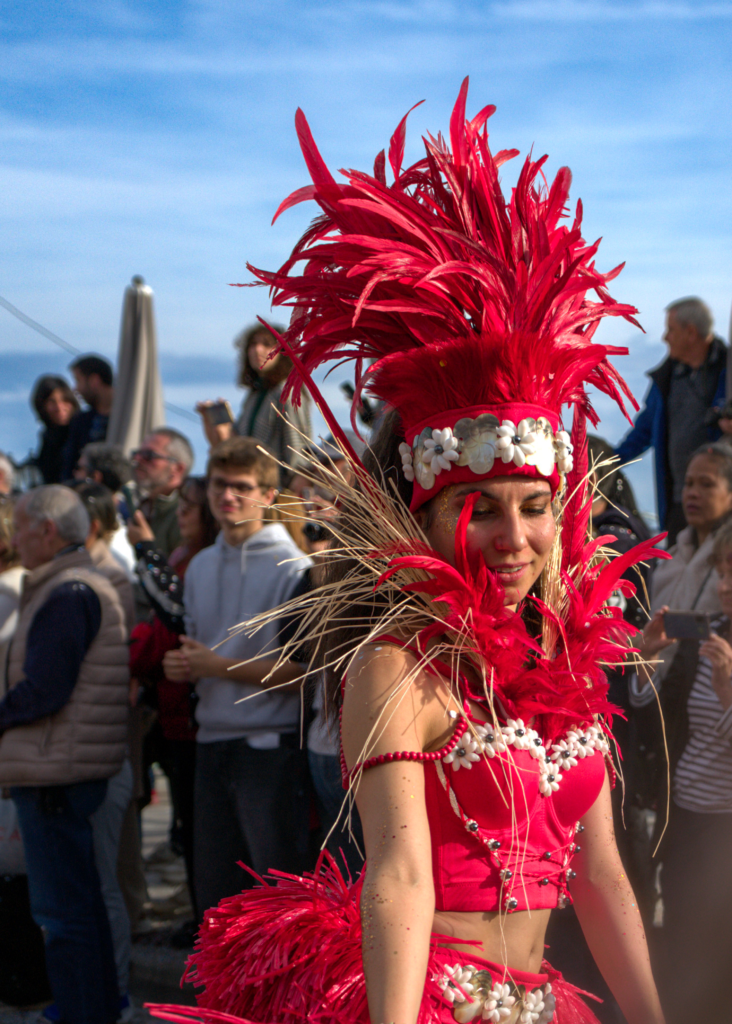
I have attended the Fête du Citron twice, and the scale still surprises me. These are not a few decorative baskets of fruit placed around town. The festival includes towering sculptures inside Jardin Biovès, floats covered in thousands of oranges and lemons, costumed performers, nighttime parades, and fireworks along the Mediterranean.
The 2027 Fête du Citron takes place from February 13 to 28, 2027, with the theme Douce France. This guide explains the 2027 dates, ticket options, parade schedule, transportation, and what I would want to know before planning a visit.
Fête du Citron 2027
| Dates | February 13 to 28, 2027 (93rd edition) |
| Theme | Douce France |
| Day parades | Sundays, February 14, 21 and 28 |
| Night parades | Thursdays, February 18 and 25 |
| Tickets | From 16€ standing, 30€ seated |
| Getting there | Fly into Nice (NCE), then train to Menton |
Check Menton hotels on Booking.com (from €89/night) Compare prices on Hotels.com (from €89/night)
Last updated: September 2026
Quick answer: If this is your first visit, reserve a parade ticket in advance and allow time to see the citrus sculptures in Jardin Biovès separately. The Sunday Golden Fruit Parades are the classic daytime experience, while the Thursday night parades add illuminated floats and fireworks. Stay in Menton if you can; it makes it much easier to experience more than one event.



Fête du Citron 2027 Dates and Schedule
The 93rd Fête du Citron runs from Saturday, February 13 through Sunday, February 28, 2027. The festival is not one continuous parade. It includes ticketed and free events held on different days around Menton.
Citrus Sculpture Exhibition
The exhibition of citrus designs runs from February 13 to 28, 2027, inside Jardin Biovès. This is where you can walk among the monumental sculptures covered in lemons and oranges and see the construction details at your own pace. I love this part, because it gives scale to the floats. It’s amazing how volunteers bring these floats to life with all of these oranges.
Golden Fruit Parades
The daytime Corsos des fruits d’or, or Golden Fruit Parades, take place on:
- Sunday, February 14 at 2:30 p.m.
- Sunday, February 21 at 2:30 p.m.
- Sunday, February 28 at 2:30 p.m.
Each parade is scheduled to run until approximately 4:00 p.m. along the Promenade du Soleil. Reservations are required, and the festival recommends arriving in Menton before 11:00 a.m. on Sunday parade days because of traffic and crowds.

Night Parades
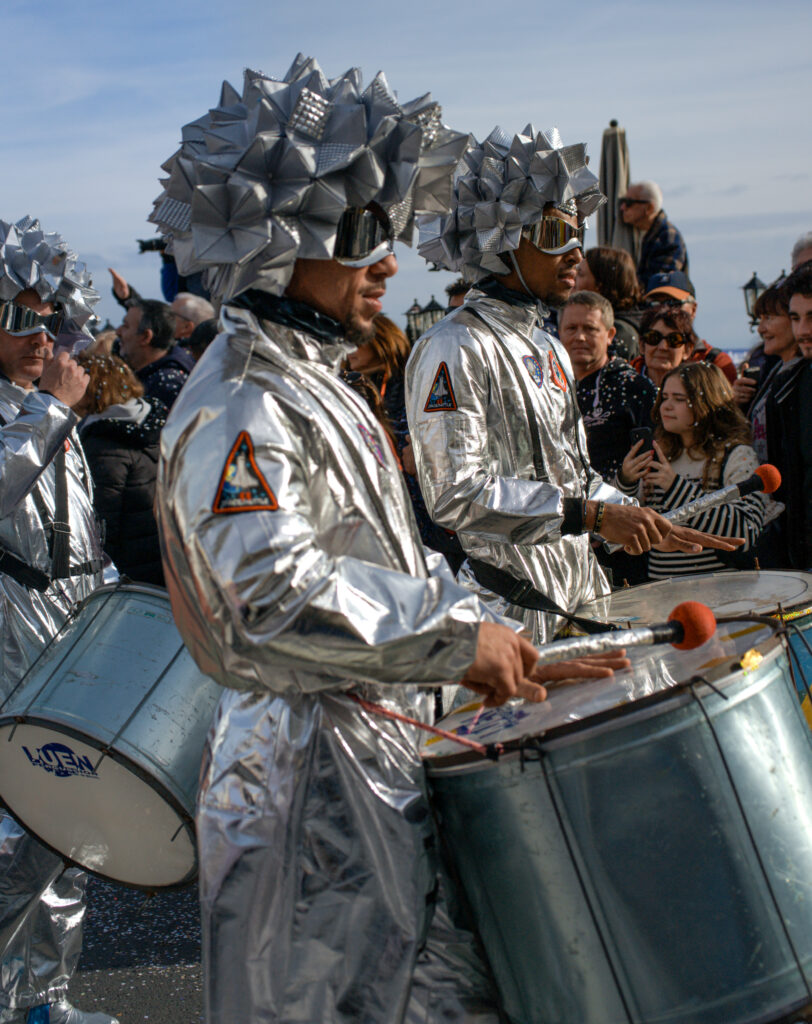
The Corsos nocturnes, or night parades, are scheduled for Thursday, February 18 and Thursday, February 25. The festival recommends arriving in Menton before 6:00 p.m. The night events feel more theatrical than the daytime parades, with illuminated floats, evening performances and fireworks.
Gardens of Light
The citrus sculptures inside Jardin Biovès are illuminated during the Jardins de Lumières on February 16, 19, 23 and 26. The festival also includes the Orchid and Winter Garden Show at the Palais de l’Europe and a free craft market from February 13 to 28.
Where the Fête du Citron Takes Place
Menton sits on the Mediterranean near the Italian border, and the festival spans several central locations rather than being contained in one venue. You can literally walk over to Italy.
The Promenade du Soleil becomes the parade route. Citrus-covered floats and performers move along the seafront with the Mediterranean on one side and Menton behind them.

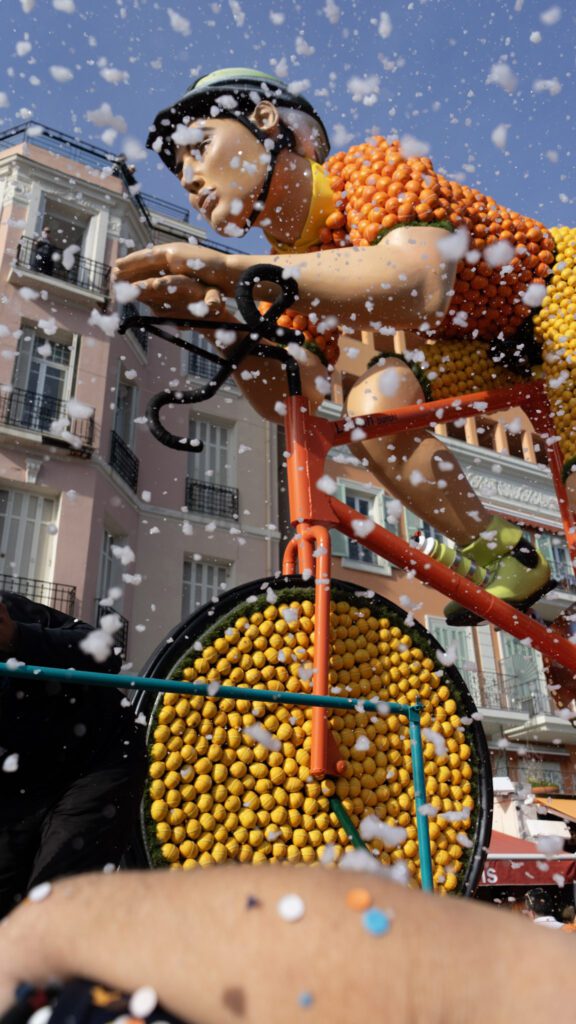


The famous citrus sculptures are displayed in Jardin Biovès, opposite the Palais de l’Europe. Menton train station is less than 200 meters from the main festival area, which makes arriving by train much easier than trying to drive into town on a parade day.
The Palais de l’Europe hosts the Orchid and Winter Garden Show, while stalls and festival decorations extend into the surrounding streets. Even between ticketed events, the celebration appears in cafés, markets and shop windows throughout central Menton.
How Much Are Fête du Citron Tickets in 2027?
Parade tickets for 2027 are priced by where you sit or stand, and the same rates apply to both the Sunday day parades and the Thursday night parades.
| Ticket type | Adult | Reduced |
|---|---|---|
| Seated grandstand | €30 | €14 |
| Standing promenade | €16 | €8 |
Groups of 20 or more pay €25 seated and €14 standing, booked through the festival’s separate group ticketing page rather than the standard online box office.
The reduced rate applies to students and children ages 6–12 with identification. Children younger than six can enter the standing area free, but they still need a ticket. A grandstand seat for a child younger than six costs €15.
Prices vary for the citrus exhibition, Gardens of Light and other attractions. Check the official ticket page for the exact event and date before purchasing.
Tickets are sold through the official Fête du Citron website. If an event sells out, use the festival’s official resale platform rather than an unverified seller.
One easy-to-overlook detail is that you may not be admitted more than 15 minutes after a parade begins. Do not plan to arrive at the entrance at the published start time.
This Post Pairs Well With:
- Where To Stay in Menton: Best Areas + Map
- The Best Tours in Menton, France You Should Absolutely Take
- The Perfect 5-day Menton in February Itinerary
- The Perfect Guide to Menton, France
Which Fête du Citron Ticket Should You Buy?
The best ticket depends on whether you care more about comfort, price, or atmosphere.
Choose a seated grandstand ticket if:
- You do not want to stand through the entire parade.
- You are traveling with children or someone with limited mobility.
- You want an established view instead of competing for space.
- Paying €14 more is worth the added comfort and certainty.
Choose a standing promenade ticket if:
- You want the less expensive option.
- You do not mind arriving early and standing for an extended period.
- You prefer being closer to the energy at street level.
- You are comfortable with a denser crowd and less predictable view.
Standing admission is not automatically the better photography ticket. Your view will depend on when you arrive and where you position yourself. If photographing the floats matters, a reserved seat may be worth the additional cost.
And in my opinion, the best ticket is standing! You get some great photos! The Seated tickets sell out fast, so you’ll want to be on it with tickets when they go on sale!
Day Parade or Night Parade: Which Is Better?
The daytime and nighttime parades share the same seaside setting, but they don’t feel like interchangeable events.
The Golden Fruit Parade is the traditional daytime experience. Natural light makes it easier to see the citrus work, costumes, and performers, and it is generally the better choice for families and photographers who do not want to manage low-light conditions.
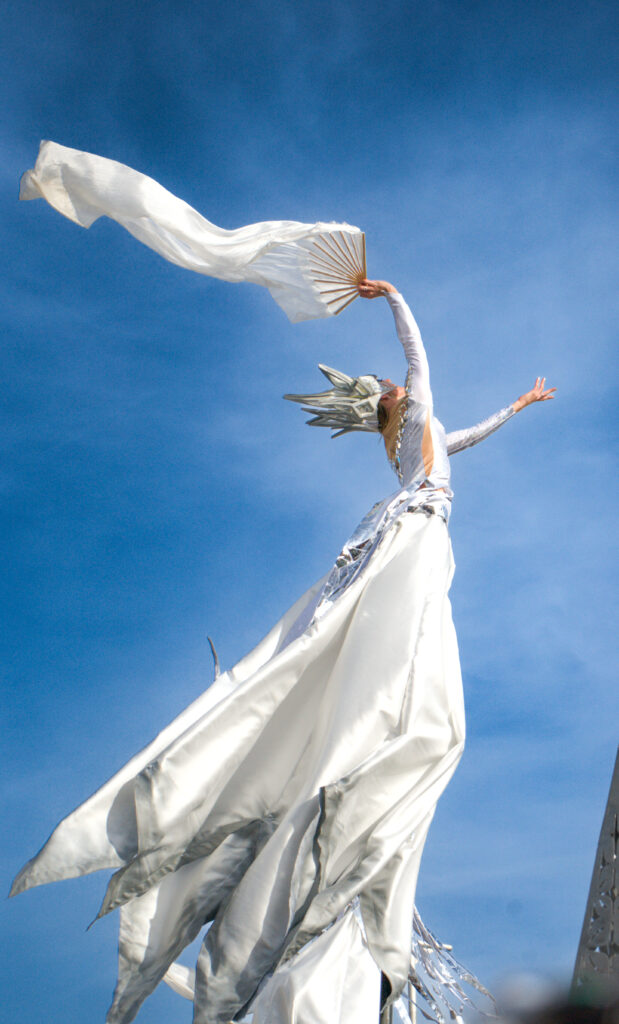
The night parade feels more dramatic. The floats are illuminated, the performances become more theatrical, and the evening ends with fireworks. If you only have time for one parade and want the biggest spectacle, I would choose the night parade.
If your itinerary allows, combine one parade with a separate visit to the sculpture exhibition. Treating the entire festival as a single two-hour event misses much of what makes it special.Book early. Standing areas fill quickly, and last-minute visitors often miss out on the best vantage points.
My Honest Advice After Attending Twice
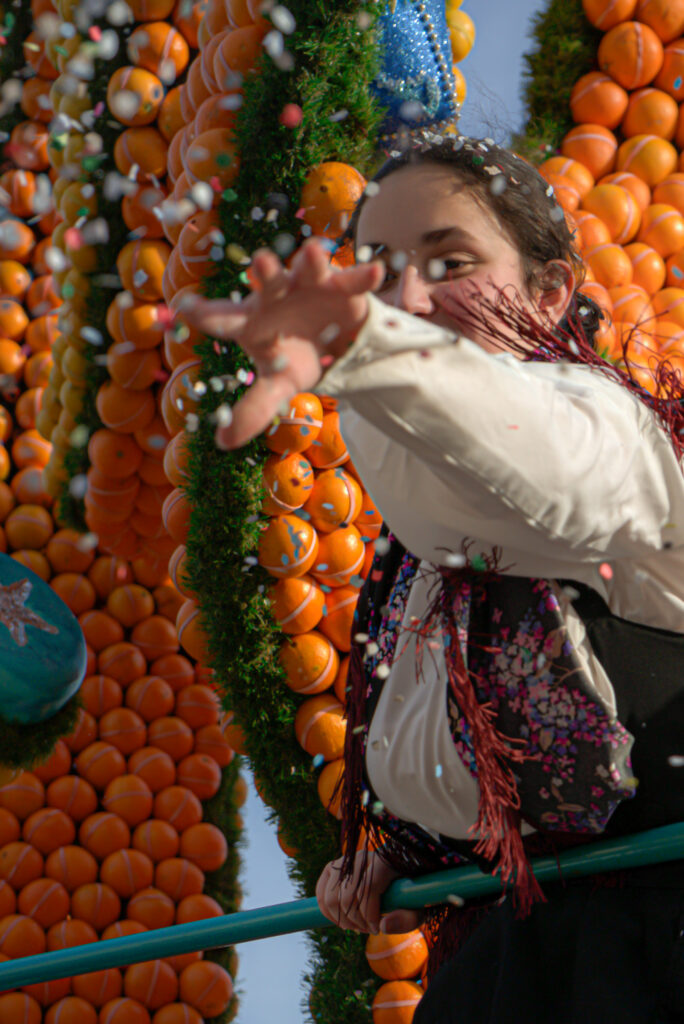
The sheer scale is what surprised me most during my first visit. The floats and sculptures look colorful in photographs, but photos don’t fully show how large they are or how carefully thousands of pieces of fruit have been attached by hand.
The second thing to understand is that crowds are part of the experience. Sundays are especially busy, and arriving shortly before a parade is not enough if you want a comfortable position. Reaching Menton before 11:00 a.m. may sound excessively early for a 2:30 p.m. parade, but it gives you time to arrive before the worst traffic, find the correct entrance, and eat before joining the crowd.
Staying in Menton is probably your best bet for avoiding traffic. In 2024, we stayed just downtown on the parade route. Our host had to get us special access passes for the parade, so make sure to talk to your host about anything you may need. This ensures parade volunteers know you are staying local within the parade route.
In 2025, we stayed in Garavan. I loved the Garavan apartment we stayed at because it was quiet, had beautiful seaside views, and was close to the Garavan train station, with a 20-minute walk to old-town Menton.
My husband and I positioned ourselves on Rue Pasteur and Promenade du Soleil; this is our preferred area to stand for the parade. We’ve learned you can catch a glimpse of the floats head-on. Also, it’s on a corner, so I feel like there is a pause as the floats turn the corner.
I also would not skip Jardin Biovès. The parade delivers movement, music and atmosphere, but the garden gives you time to notice the framework, symmetry and craftsmanship behind the citrus sculptures.
Finally, you do not need to book every ticketed event. For a first visit, I would prioritize one parade and the citrus sculpture exhibition. Add the Gardens of Light if you are staying overnight and want to see how different the installations look after dark.
How to Get to Menton for the Lemon Festival
By Train from Nice
The regional ZOU! train is the simplest way to reach the festival from Nice. Trains travel along the coast to Menton, and the station is within a short walk of Jardin Biovès and the Palais de l’Europe.
Service can become busy during major Riviera events, so check the current timetable and allow extra time. Don’t schedule your arrival around the last possible train before a parade.
From Nice Airport
If you are flying into the region, use Nice Côte d’Azur Airport (NCE). From the airport, connect to the rail network and continue east toward Menton. Confirm your route with the current local schedule, as connections and engineering work can change.
If you want a transport set up for you with a driver waiting, use Welcome Pickups to schedule a transfer from Nice Airport.
By Car and Parking
Driving is possible, but it is not my first recommendation on a parade day. The festival attracts more than 250,000 visitors across its run, and central roads and parking garages become congested.
If you must drive, reserve parking when possible and check the festival’s current traffic and shuttle information. Do not assume you will be able to enter central Menton and find a space just before an event.
Can You Visit the Fête du Citron on a Day Trip?
Yes. Menton is easy to reach by train from Nice, Monaco, and other French Riviera towns.
A day trip works best when you choose one main ticketed event and build the rest of your day around it. For example, arrive in the morning, explore central Menton, attend the citrus exhibition, and then watch the Sunday parade.
The trade-off is that parade days are crowded, and transportation is busiest immediately before and after the events. You may also miss the illuminated gardens or a night parade if your return schedule is limited.
If you want to experience daytime and evening events, have more flexibility, or explore Menton beyond the festival area, staying overnight is worth it.
Where to Stay During the Menton Lemon Festival
Staying in central Menton lets you walk to the primary venues and avoid relying on a crowded return train. Look around Jardin Biovès, Menton train station, or the lower Old Town if proximity matters most.
Garavan can be a quieter option, but check the exact walking distance before booking. Menton is compact, although hills and stairs can make a short distance feel longer with luggage.
Accommodation prices rise around parade dates, so book early and choose a cancellable rate if your plans aren’t final. My guide to where to stay in Menton compares the areas in more detail.
What to Wear in Menton in February
Menton is usually milder than many European destinations in February, but this is not guaranteed warm-weather travel. Conditions can shift between sun, wind and rain.
Bring:
- A light waterproof or water-resistant jacket
- A sweater or insulating midlayer
- Comfortable shoes for standing and walking
- A compact umbrella if rain is forecast
- Sunglasses and sunscreen for bright afternoons
- A warmer layer for night events beside the sea
If you are visiting the French Riviera in February, I have a blog post that goes into detail
Who Will Enjoy the Fête du Citron?
The festival is a good fit if you enjoy visual art, cultural festivals, photography, or winter trips that still feel lively. It also works well within a longer French Riviera itinerary because you can combine it with Menton’s Old Town, gardens and food.
It may not suit you if you strongly dislike crowds, want to visit without booking anything, or have a tight train connection. For a calmer experience, visit the citrus exhibition on a weekday rather than attending only on a Sunday parade date.

Why Does Menton Have a Lemon Festival?
Menton’s association with citrus is tied to its mild microclimate, which supports lemon cultivation along this part of the French Riviera. In 1929, when Menton was still a leading lemon producer in Europe, a hotelier organized an exhibition of flowers and citrus fruit at the Hôtel Riviera. The display proved popular, the celebration expanded into the streets, and the Fête du Citron was officially born in 1934.
The Citron de Menton now has protected geographical indication status, known as IGP in France. This designation protects the name and its connection to a defined growing region and production standards.
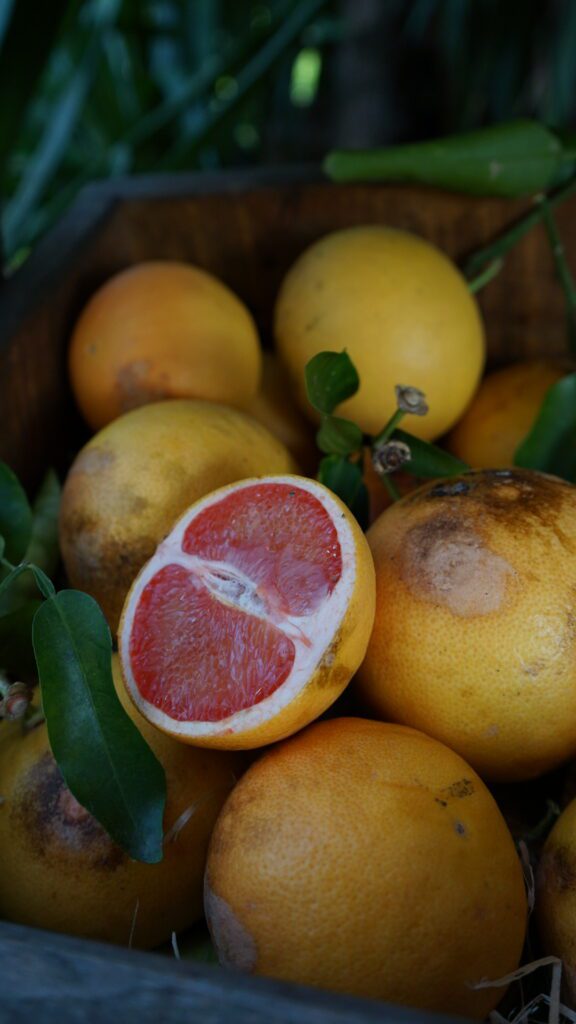
One of the festival’s most surprising facts is that the fruit covering the sculptures and floats does not come from Menton. The local crop is too limited to supply the enormous quantity required. Menton lemons are instead reserved for eating and locally produced foods, which gives you a good reason to taste one while you are in town.
I learned how different they could be when I realized I could eat a Menton lemon on its own. Its fragrance and flavor were nothing like the aggressively sour supermarket lemon I expected.
Other Things to Do During the Festival
Check the Menton, Riviera & Merveilles tourism calendar before your trip. Guided walks, garden visits, citrus tastings and other limited-capacity activities may be offered alongside the main festival, and some require separate reservations.
You can also use the festival as the anchor for a longer Menton stay:
- Plan five days in Menton in February
- Compare the best areas and hotels in Menton
- Find tours and guided experiences in Menton
- Read my complete Menton travel guide

Fête du Citron FAQs: What to Know Before You Go
The Fête du Citron is Menton’s annual Lemon Festival, held every February, featuring massive citrus sculptures, themed parades, and events celebrating the town’s lemon-growing heritage.
The festival typically runs from mid-February to early March, with specific dates announced each year. Events span multiple weekends and weekdays, including day and night parades.
Yes—February is actually one of the best times to visit Menton. The weather is mild, the town feels lively without peak-summer crowds, and the festival adds color and energy to the quieter winter season.
Yes, you need tickets for the citrus sculpture gardens and parade seating. Tickets are released on the official website, usually in December, and seated options sell out quickly.
You can, but staying overnight in Menton makes the experience far more enjoyable. Day trips are doable by train, but crowds and limited access zones can make same-day visits feel rushed.
The citrus sculptures are displayed in Jardin Biovès, while the parades take place along the Promenade du Soleil, right by the sea.
No. Menton lemons have protected IGP status, so the citrus used for sculptures is sourced elsewhere to protect the local harvest. You can still taste real Menton lemons in food and local products.
Day parades focus on costumes, floats, and music, while night parades add illuminated floats, performances, and fireworks. Both are worth seeing if your schedule allows.
It can be—if you plan carefully. Visiting the gardens early in the day, choosing weekday events, and staying centrally in Menton all help avoid the busiest moments.
Is the Fête du Citron Worth It?
If you’re looking for a winter festival that’s creative, deeply local, and genuinely unlike anything else in Europe, the answer is yes.
The Fête du Citron isn’t just about lemons. It’s about place, tradition, and a town that knows how to celebrate itself without trying too hard.
Pair it with a slow stay in Menton, walk everywhere, eat well, and let the festival unfold naturally around you.
And fair warning: once you’ve experienced it, you may find yourself planning your next February around it—just like I did.