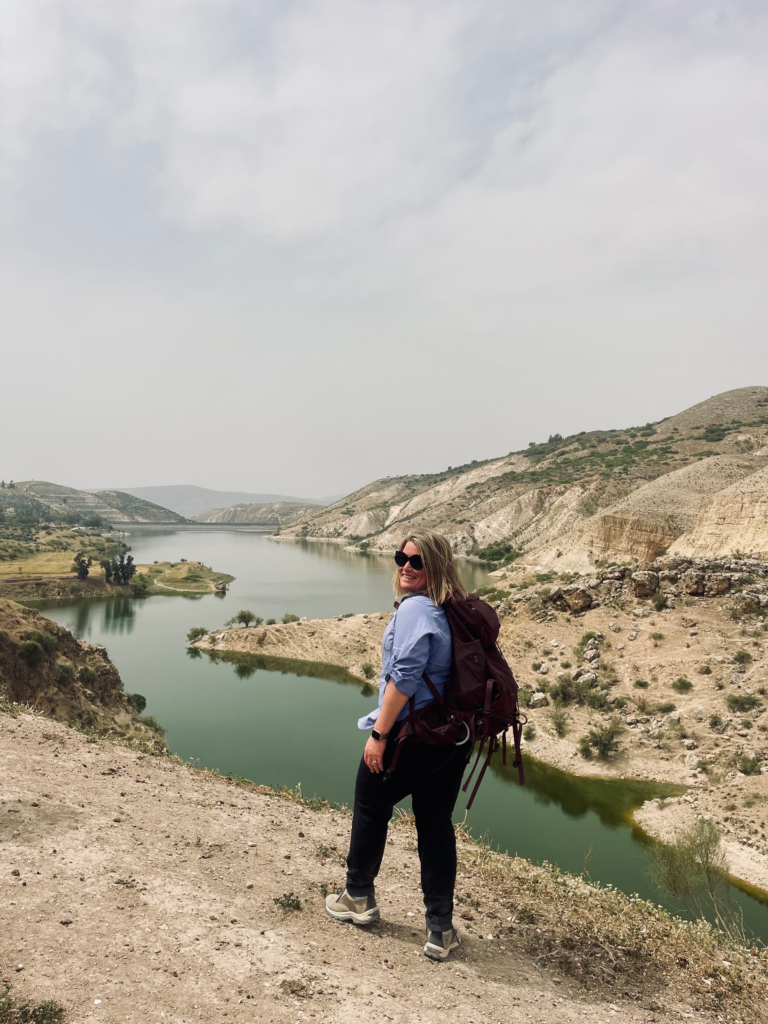
How to Travel Solo: 10 Steps to Start Traveling Solo as a Woman (2026)
Last Updated on November 11, 2026 by Kimberly
So you want to learn how to travel solo for the first time. How long have those tabs been open?
Be honest. Mine stayed open for most of a year before I booked anything.
My very first solo trip didn’t involve a passport. I had just gotten my driver’s license in Texas, and I drove myself to Enchanted Rock in the Hill Country. Small trip, but I was the one choosing where to go and getting myself there, which turns out to be the whole skill.
Today I’ve been to more than 40 countries, lived overseas for eight-plus years in Poland, South Korea, Italy and now Belgium, and I still travel by myself several times a year. None of that happened because I’m braver than you. It happened because I got good at the boring parts, which turn out to be most of the job.
So this is my checklist for traveling solo, start to finish: where to go on your first solo trip, how long to stay, what to book and in what order, how to get through your first day, and how to keep your first night from falling apart. Work through it in order. Step 1 takes eleven minutes, and you can do it before you close this tab.
In a Rush?
Book Your First Solo Stay
Filter for 24-hour reception, free cancellation and a rating of 8.0 or higher, then read the reviews other solo women left.
| Booking.com Best for map view and solo traveler reviews | Search stays → |
| Hotels.com Best for hotels with a front desk | Search hotels → |
How I Learned to Travel Solo
The first big one came years later. In 2019, my husband deployed to Afghanistan for eight months while we were stationed in Poland. I decided to use that time to travel, and I picked eight countries, giving each a weekend or a week depending on the budget. Iceland came first. Then Nice, Romania (Transylvania and Bucharest), Bosnia and Herzegovina with Croatia, England and Scotland, Sweden, and Greece, where I met up with friends. Estonia and Finland were on the list too, until I broke my foot and had to cancel.

Before Iceland, I was nervous about logistics. Would the car rental go through? Would they even have a car for me? Had I packed the wrong clothes? Then I got in the car and just went. I couldn’t believe how easy it was once I started, and once I treated the trip like a checklist, marking things off as they went right, I felt more confident with every box.

I didn’t have a gap year. I spent my twenties working, sometimes three jobs at once, and saving. Before Europe, my travel was whatever fit around work: road trips around Texas, Georgia, and California at each duty station, and trips to Washington, D.C., and North Carolina for Les Mills events.
Step 1: Why Am I So Scared to Travel Solo?
Before the list, one thing.
You already have permission. You’ve had it the whole time. Not from your job, not from your family, not from whoever raises an eyebrow when you bring it up at dinner. It was never theirs to give. What you’ve been waiting on is a plan, and that’s a much smaller problem than it feels like right now.
Most women, asked why they haven’t gone yet, say some version of “I’m not sure I’m ready.” That’s not one reason. It’s a lid on five different ones, and each needs a different fix, which is exactly why people research for eight months and never book. They’re solving the wrong problem.
Get a piece of paper. Write down the specific thing you picture going wrong. Not “something bad.” The actual scene, in one sentence. When I ask women this, it’s almost always one of two answers: “I get to the hotel, it’s dark and I don’t know where to eat,” or “I sit down at dinner and the whole room notices.”
Find Your Fear
Now find yours:
- Safety if there’s another person in your sentence doing something to you. It’s the most common answer and the most solvable, and Step 9 handles it.
- Loneliness if your sentence is a Tuesday evening with nothing in it. Steps 7 and 10 cover it, and so does picking the right destination.
- Being noticed if your sentence is about people seeing you’re by yourself. Real, rarely admitted, and the fastest to disappear, usually by day two.
- Decision fatigue if your sentence is just overwhelm: every choice yours, all day, with nobody to hand half of them to. This is the one that flattens people. Step 7 exists for it.
- Money if your sentence is the cost. Fair. Solo travel carries a real penalty, and I’ll give you the number in Step 4 instead of telling you it works out fine.
Write your category at the top of the page. There’s probably a second one. Write it underneath.
Here’s why this matters: if your real problem is that you can’t picture eating dinner by yourself, reading six more articles about pickpockets in Barcelona won’t move you an inch closer to booking. It’ll just feel like progress.
Do This Now
Write your one sentence. Circle which of the five it is. Eleven minutes, and everything after this gets faster.
Step 2: Where Should I Go the First Time I Travel Solo?
First, it doesn’t have to be far.
Instagram has convinced a lot of capable women that solo travel means three weeks across Southeast Asia, and that a night in a city two hours from home doesn’t count. It counts. You’re still the one reading the map, ordering dinner and deciding what happens next, and that’s the entire skill.

My first solo trip was a drive to Enchanted Rock. If a passport, a new currency, and a new language all at once make your chest tight, do the small version first.
For everyone else, here’s how to choose without losing three weeks to it.
Write down three places you already want to go. Don’t research first, and don’t open a listicle. Pick three places already in your head, because those are the ones you’ll still be excited about at 6 a.m. in an airport with a cold coffee. One is fine if one is all you’ve got.
Score Your Shortlist
Then run each of them through this check.
Quick Check
Is This a Good First Solo Trip?
Answer six questions for one destination. Nothing is saved or sent anywhere.
1. Can I get from the airport into town without renting a car?
Search “[city] airport to city center public transport.”
2. Can I walk from the center to dinner in under 15 minutes?
Drop a pin on the center in Google Maps and look at what’s within a 15-minute walk.
3. Is English widely spoken, or do I know about 20 words of the language?
You need to read a menu and ask which platform. That’s all.
4. Will there be other solo travelers around?
Search “[city] solo travel” and see what comes back.
5. Is the flight under four hours from home, or under eight from the US?
Long-haul plus solo plus first time is three new things at once.
6. Can I land before 4 p.m.?
Check arrival times in Google Flights on your rough dates.
Five or six, go. Four works if you enjoy logistics, and if that’s you, read Step 5 twice. Under four, save it for trip three.
Not because you couldn’t handle it, but because a hard first trip teaches you the wrong lesson. Women come home from a badly chosen destination and quietly decide solo travel isn’t for them, when what actually happened is they picked somewhere that needed a rental car and three connections.
Two places tie? Take the less expensive one. Money is one of the five fears, and getting it off the table early beats a slightly more impressive destination.
How to Research Without Spiraling
One more thing on research, because this is where women lose weeks. Check the US State Department advisory for the country. Then stop. Don’t read solo female travel horror stories as research. They aren’t data, and an hour of them will talk you out of a perfectly good trip.
What helps most is talking to other solo female travelers who have actually been there. Ask what surprised them, where they stayed, and what they’d do differently. Just keep in mind that their experience and background may be different from yours, so take what fits and leave the rest.
That matters even more depending on who you are. A Black, Native American or other traveler of color may have more to account for than a white traveler does, from how she’s treated at a border or in a shop to which neighborhoods feel comfortable after dark.
Those fears are real and valid. If that’s you, look for women who share your background and have been where you’re going. Communities like Nomadness Travel Tribe and Travel Noire, both built by and for Black travelers, are good places to start. Their read on a place will be more useful to you than any general guide, including this one.
A few good places to find those women: Wanderful, a community for women who travel, with local hubs and events; GreetHer, which connects you with local women guides; and NomadHer, an app built for solo female travelers to connect and meet up.
Going domestic? Aim for 90 minutes to three hours from home by train or car. Far enough that it’s a trip, close enough that you could come home if you wanted to. You won’t. But having the option changes how it feels.
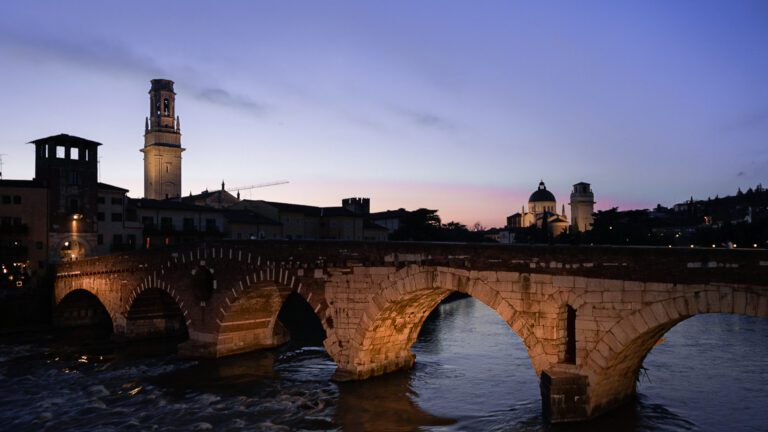
For more places I’d point a first-timer toward, start with my solo travel guides for women, or try 3 days in Paris and the Verona travel guide. Both cities pass all six questions, and so do Kraków and Ljubljana.
Do This Now
Score your three places. Write the winner down. Then close the tabs.
Step 3: How Long Should You Travel Solo the First Time?
If you can swing it, five to seven nights is the sweet spot for a first international solo trip.
But I know that’s a privilege. A lot of people can’t get a week off. PTO is hard to come by, budgets are tight, and some jobs won’t give you a week no matter how far ahead you ask.
If three nights is what you have, three nights is a win. I spent my twenties working, sometimes three jobs at once, so I know what it’s like to plan a trip around the time and money you actually have.
On a shorter trip, protect your energy. Stay in one city, book the airport transfer and keep the flight short, so you aren’t spending half your time off in transit. A long weekend somewhere close counts.
If you do have more time, here’s why five to seven nights works so well. Under five, the trip can stay in arrival mode, which is the hardest mode there is, and it’s easy to fly home thinking solo travel is stressful when really you never got past day two.
Two cities maximum. One is fine. Three cities in seven days means a third of your trip is moving luggage, and there’s nobody to watch your bag while you find the bathroom.
For the month, look at daylight first. Search “[city] sunset time [month].” If the sun goes down at 4:30 p.m., every walk home is a night walk, and that’s a lot on a first trip.

Aim for sunset after 7 p.m. Then look at shoulder season, when prices drop and everything’s still open. Then avoid the local peak, when prices double and every restaurant wants a reservation, which is harder to manage alone.
Pick the actual week. Not “October.” October 12 to 18. Choose one with nothing pressing on either side, because you want a buffer day at home afterward rather than landing the night before something that matters.
Do This Now
Put the dates in your calendar, then tell one person out loud. Not for permission. Saying it makes it real.
Step 4: What Should I Book Before I Leave?
All of it. Every night.
There’s a lot of good advice out there about staying flexible and letting a trip unfold. It’s excellent advice for your fifth solo trip. The reason isn’t safety. It’s fun to show up somewhere at 6 p.m. with no bed booked when you’ve done this fifteen times, and miserable when you haven’t.
Flights
Use Google Flights with your dates, then filter for arrival before 4 p.m. It’s the most important filter in this guide, and almost nobody uses it. Pay the difference. Landing in the dark on your first solo trip is a very different experience from landing at 2 p.m.
Rule out layovers under 90 minutes and anything with more than one connection, because you don’t want to be sprinting through Frankfurt on trip one. When the price is close, book direct with the airline, because when something goes wrong you’re the only person who can fix it.
A Note on Points and Miles
I’ll be honest, credit card points and airline miles are not my area, so I won’t pretend otherwise. If you want to fly for less using points, look for a beginner guide from someone who specializes in it.
Where to Stay
Search Booking.com or Hotels.com. Filter for free cancellation, your dates and a rating of 8.0 and up. Then sort by location instead of price and switch to map view, which is the step everyone skips.
Look for 24-hour reception first. Search the listing for the word “reception.” Lockbox check-in is fine on trip five, but on trip one you want a person there when you arrive. If you’ve fallen for a place with self check-in, message the host and get it in writing that they’ll be reachable when you land.
Next, check the walk to dinner, and don’t trust the distance number. Drop a pin in Google Maps, switch to Street View and look. Is the street lit? Is it a main street or the back of a parking lot? Ninety seconds tells you more than forty reviews.
Then confirm free cancellation on the booking page itself, because individual rates inside a hotel are sometimes nonrefundable even when the property advertises flexibility. I learned why this matters during my deployment year: Estonia and Finland were on my list, and then I broke my foot.
Then read the reviews, filtered to solo travelers. Solo women write down things couples never think about, like whether the walk up from the metro feels fine after dark.
Price comes last, and here’s the rule I’d give a friend. The gap between a good location and a cheap one is usually €20 to €30 a night. Pay it. You’ll barely be in the room. What you’re buying is not dreading the walk home every night for a week.
What Solo Travel Actually Costs
Solo travel is more expensive, and I won’t soften it. A single room almost never costs half of a double, so budget 20 to 30 percent more for accommodation than you would for the same trip split with a friend. Food, transportation and entry fees cost what they’d cost anybody. Accommodation is the whole penalty.
Kimberly’s Tip
Buy travel insurance when you book, not the week you leave. Alone, you’re the only one who can absorb a canceled flight or a hospital visit. I compare what solo women actually need in my World Nomads review.
Do This Now
Book the flight with the daylight arrival. Then screenshot every confirmation into your photo album, not your email, because you’ll need to open them at 3 percent battery with no signal.
Step 5: What Do I Actually Do on Arrival Day?
I still plan arrival day, and I’ve landed alone in more countries than I can count. I leave room for the magic, and for the delayed flights, but the bones of that first day are decided before I leave home. Not because I get nervous. Because I know what my brain is like at 6 p.m. after a travel day, and it’s not a brain I’d trust with a restaurant decision.
Here’s what nobody tells you when you travel alone for the first time. Day one isn’t scary. It’s draining, and that’s worse, because you don’t see it coming.
You land at 3 p.m. on four hours of sleep. Then it’s which train, which platform, does this machine take my card, is this the right stop, all in a currency you have no feel for yet, while dragging a bag you’re already regretting. You get to the hotel at 6:30 p.m., having eaten one croissant since the airport. The woman at reception asks if you’d like a dinner recommendation, and you can’t answer her. Not because you aren’t hungry, but because you’ve made four hundred small decisions since breakfast and there’s nothing left.
That’s where first solo trips fall apart. Not danger, not loneliness, just exhaustion. And the woman it happens to flies home believing she isn’t built for this, when she just asked a tired brain to choose a restaurant.
So do the deciding now, at your kitchen table, three weeks out, when deciding costs you nothing.

Book the Airport Transfer
Not the train, and not “I’ll figure it out when I land.” Book a driver holding a sign with your name on it. It runs roughly €40 to €60 in most European cities, compared with about €8 for the train, and I know how that sounds if you’re sensible about money. It’s still the best money on the trip. You clear customs and there’s a person standing there who knows where you’re going. Use Welcome Pickups for airports, and GetTransfer for odd hours or routes the standard services don’t cover. Landing in Korea? Here’s how to get from Incheon Airport to Seoul.
Write the Timeline Out
Write it hour by hour, from landing to lights out, in a note on your phone:
- 1:40 p.m.: land
- 2:20 p.m.: through passport control and baggage claim
- 2:30 p.m.: meet the driver at arrivals
- 3:10 p.m.: hotel
- 3:30 p.m.: check in, shower, unpack
- 5 p.m.: walk to [named café], sit, coffee
- 6:30 p.m.: dinner at [named restaurant, no reservation needed]
- 8:30 p.m.: back at the hotel
It looks fussy written down. What it does is hand you something to follow at the exact hour your judgment is at its worst. Like my first Iceland trip, it turns the day into a checklist, and every box you mark off is proof things are going right.
Pick One Restaurant
One restaurant, not six saved in Google Maps, because six saved places is still a decision, and it’s the decision you won’t be able to make. Pick one place, a 10-minute walk away, no reservation needed. Check that it’s open the day you land. Check that the kitchen opens before 7 p.m., because plenty of European kitchens don’t, and there’s a specific misery in standing outside a dark restaurant at 6:45 p.m. reading a sign that says dinner starts at eight. Pick one backup. Then close the tab.
It’s Okay to Stay In
Plenty of guides will tell you not to let the hotel bed win on night one. Sometimes the bed should win. After a long flight and a time change, when I want to rest, I stay in. Order dinner through Uber Eats or a local delivery app, eat it in your room and enjoy your night. That still counts as solo travel, and you’ll walk out the next morning with a full tank.
If you do want to get out, give yourself somewhere to sit that isn’t your room: a café, a bench, a bookshop. Nothing with a ticket line. One easy hour outside is enough.
Do This Now
Book the transfer, and name your one restaurant. Those two decisions carry the whole day.
Planning Your First Solo Trip?
Get My Solo Travel Notes in Your Inbox
Practical tips for traveling and hiking solo in Europe, the places I’d send a first-timer, and first word on my women’s group trips.
Step 6: What Do I Need on My Phone and in My Wallet?
These are the least exciting solo travel tips in this guide, and they make the difference between a smooth week and a stressful one.
Your Phone
Buy and install your eSIM two days before you fly, not at the airport. I use Holafly everywhere. Then test it, which is the part everyone skips and then panics about at baggage claim. Install it and check that your settings show two lines. You don’t switch the data on until you land, but you want to know it worked while you still have Wi-Fi and an afternoon. Headed to Korea? I compare options in my guide to the best eSIM for South Korea.
Download the offline map. In Google Maps, search the city, tap the name at the bottom, tap the three dots, choose Download offline map, and drag the box to cover everywhere you’ll actually be, which is bigger than the default. Then put your phone in airplane mode and try it. If it won’t search or navigate, your download didn’t cover what you thought.
Screenshot four things into one album: your accommodation address (including in the local script), flight confirmations, accommodation confirmations and your arrival timeline. Screenshots, not links. They load at 2 percent battery with no signal, which is exactly when you’ll need them.
Bring a power bank, too. A dead phone is the real worst case of a solo trip. For the rest of what lives on my phone, see my solo female travel apps.
Your Wallet
Carry two cards from two different banks, kept in two different places. Keep one in your wallet and one in your bag or the room safe, never both on you, so losing one is annoying rather than trip-ending. Tell your bank you’re traveling a week out, because a card frozen for suspected fraud on day one means a bad afternoon and a long phone call. Get local cash from a bank ATM inside the terminal, not the standalone exchange machines in arrivals, which have terrible rates.
Kimberly’s Tip
When a card machine asks if you’d like to pay in your home currency, always say no and pay in the local one. That habit alone saves 3 to 5 percent on every purchase of the trip.
Do This Now
Buy the eSIM and download the offline map. Both take under ten minutes, and both fail quietly if you leave them until the airport.
Step 7: How Do I Plan an Itinerary Without Overplanning?
One anchor a day. That’s the method.
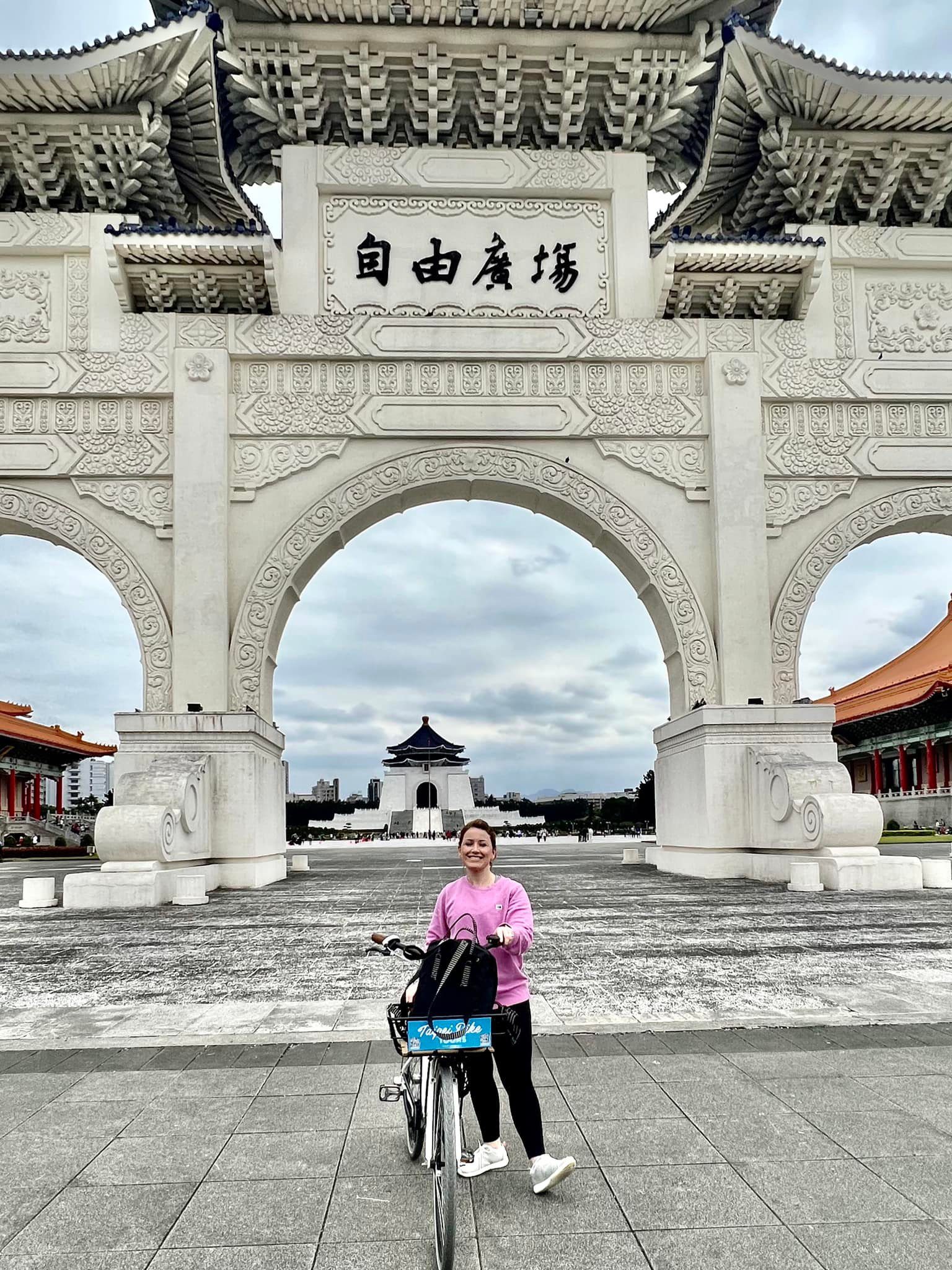
For each day, decide on one thing: a walking tour Tuesday morning, a museum Wednesday at 2 p.m., a day trip Thursday. Book whatever needs booking now rather than there, because timed entries sell out and sorting it from a café with patchy Wi-Fi wastes a morning.
Put the anchor in the morning or early afternoon, never the evening, because its real job is getting you out of the room.
Make at least one a group activity, like a walking tour, a cooking class or a food tour. This is the loneliness fix, and it works because it asks nothing of you socially. You show up, other people are there, you talk if you feel like it, and then it ends and you owe nobody anything. Put it on day two or three, not day one. My solo day in Paris is a good example of how one anchor shapes a whole day.
Everything else stays blank. One anchor and not three, because three fixed plans a day with travel time between them is how you end up eating a sad sandwich on a train. You can’t rest and you can’t change your mind, and those are the entire point of going alone.
Set Three Defaults
One more thing to do before you go: write down three defaults. These are places you go when the “what should I be doing right now” feeling shows up, because it will, usually mid-afternoon on day three. Mine are a market, a park and a bookshop. Deciding in advance means you walk somewhere instead of standing on a corner scrolling and feeling like you’re wasting the trip.
Want Someone to Build This for You?
If it’s the planning that’s stopping you rather than the traveling, that’s what my itinerary planning is for. I map out the anchors, the transportation and the neighborhood picks, and you show up with a plan you didn’t have to make.
See Itinerary Planning →Do This Now
Open your calendar, write one anchor per day and book the two that need booking.
Step 8: How to Pack When You Travel Solo
Whatever you can carry up a flight of stairs by yourself.
Nobody’s watching your bag while you use the bathroom. Nobody’s lifting it onto the train. And every European station you love has stairs and an elevator that’s out of service.
Go carry-on only for a week. It’s doable, and it changes the entire trip. Use a bag you carry on your back rather than a wheeled suitcase you drag over cobblestones, because cobblestones always win.

The 7-Day Packing Math
The math for seven days: three tops, two bottoms that go with all three, one nicer outfit, one warm layer, one waterproof layer, five sets of underwear and socks, and two pairs of shoes at most, including the ones on your feet. Keep it to one color family so everything goes with everything. It sounds like a style tip, but it’s really a volume tip, and it roughly halves what you bring. Before Iceland, I worried I’d packed the wrong clothes. A tight, layered capsule is how you stop worrying about that.
Whatever shoes you take, walk 6 miles (10 km) in them first. New shoes on a solo trip means limping around a foreign city with nobody to carry anything for you.
What I Actually Carry
Two Things That Go Everywhere With Me
For the full list, including what I pack for each season, see my Europe packing list.
Do This Now
Pack the bag this weekend, then carry it up and down your own stairs three times. If you can’t, take things out. Do it now rather than the night before, so you have time to fix it.
Step 9: How Do I Stay Safe When I Travel Solo as a Woman?
Good solo female travel safety comes down to a system, so you can stop worrying. Low-level worry all day is exhausting, and it doesn’t protect you. Habits do.

Before You Go
Pick one person, not a group chat, because in a group chat everyone assumes somebody else is paying attention. Choose one person who reliably looks at their phone. Send them your accommodation address and dates, your flight numbers and your rough plan. Turn on live location sharing (Find My on iPhone, or location sharing in Google Maps on Android) for the length of the trip.
Then agree on the check-in out loud, including what happens if you go quiet. Not just “I’ll text you.” Something like: one message a day, and if you haven’t heard from me by 10 p.m. two days running, call me, and if I don’t answer, call the hotel. Then give them the hotel’s number. That last part turns a worried friend into a useful one.
Save the local emergency number, which is 112 across nearly all of Europe. Download the local taxi or rideshare app before you go, because it’s often not the one you use at home, and the airport is a bad place to find that out.
While You Are There
The habits are small. Before you go out in the evening, know how you’re getting back: which app, which route and roughly what it costs, decided at 6 p.m. rather than 11 p.m. Check the map before you leave rather than on the street, and if you do need to check, step into a shop or café, because standing still on the sidewalk staring at your phone reads as lost. You don’t have to tell strangers you’re traveling alone, and “my friend’s meeting me” is a complete sentence. If something feels off, leave. Don’t finish the drink, and don’t be polite about it.
Then message your person when you’re back for the night. Every night. It takes nine seconds, and that’s the whole system.
What’s actually likely to happen to you is petty theft and getting overcharged. That’s the realistic risk profile, and it’s a long way from whatever your relatives are picturing. For the apps I rely on, see my solo female travel apps, and for coverage, my World Nomads review.
Do This Now
Pick your one person and turn on location sharing. It takes two minutes, and it’s the most valuable thing in this step.
Step 10: How Do I Get Comfortable Being Alone in Public?
For a lot of women, the hardest part isn’t danger and it isn’t logistics. It’s sitting at a table by yourself while everyone around you is in pairs.

- Three weeks out, eat lunch alone in a restaurant in your own town. A real restaurant with a table, a menu, and a server. Not a café with your laptop, because the laptop is a shield and it doesn’t count. Go at 1 p.m. on a weekday, when it’s busy enough to be unremarkable. Order an appetizer and an entrée, put your phone face down and leave it there. It feels ridiculous for about eleven minutes, and then it stops.
- Two weeks out, see a movie by yourself. It’s the easiest of the three, and it breaks the seal on doing fun things alone.
- One week out, take a day trip. Go somewhere an hour away, spend four hours there, and come home the same day. That’s the dress rehearsal, and it’ll tell you more about how you handle your own company than anything else here (being okay with being by yourself is a big reason I love solo hiking too!) Being okay with your own company is a big reason I love solo hiking, too. If that’s where you’re headed next, grab my free How to Start Hiking Solo guide.
After each one, write one sentence about how it actually went, not how you thought it would go. Women consistently remember these as much worse than they were, and your own handwriting is surprisingly useful at 11 p.m. the night before you fly, when the whole thing suddenly looks like a terrible idea.
If eating alone is the sticking point, I wrote about how I got past it in my solo Christmas markets guide. Early on, I worried about what strangers thought. Then I noticed everyone was too busy to notice.
Do This Now
Book a table for one this week. Not next week. This one.
What Changes When You Get Home
The trip ends, but what it changes in you doesn’t. Traveling solo shows you who you are when nobody else is making the decisions. You find out what you actually like, how you handle a day that goes sideways, and how capable you’ve been the whole time.

That confidence doesn’t stay on the trip. You prove one specific thing to yourself: that you can land somewhere unfamiliar, work out the trains, feed yourself, handle the day that goes sideways and get home again. That proof comes with you. It shows up as being harder to talk out of things, and it shows up the next time somebody has an opinion about what you can manage at your age.
I wrote more about what that looked like for me in The Transformative Power of Travel: My Journey from Lost to Empowered.
If you want support working through that change, before or after a trip, a travel coach can help. I’m a member of The Travel Coach Network, a professional community of travel coaches, and it’s a good place to find a coach whose approach fits you.
If Solo Still Feels Too Big
If you’re doing the math on your age and wondering whether you missed your window, you didn’t. I spent my twenties working and saving, and I didn’t start traveling internationally on my own until my husband deployed. There was no gap year. There was a plan, and then a car rental in Iceland.
And if solo feels like too big a first move, learning how to travel solo can start with a group trip. It’s a legitimate answer, not a lesser one. You still book your own flight and travel there and back on your own, which is most of the skill. The difference is that once you land, someone is there, and the days and evenings are planned. See my upcoming women’s group trips, or join the group trip interest list to hear about new dates first.

How to Travel Solo: FAQ
How do I start traveling solo?
Start with Step 1 today. Work out which of the five fears is actually yours, then score a destination against the six questions in Step 2. Most women who never go are stuck solving the wrong problem, not because they aren’t ready.
How do I travel solo as a woman safely?
With a system. Realistically, you’re looking at petty theft and getting overcharged, not the scenarios people picture. One person with your location, a daily check-in and a plan for getting home at night covers most of it.
Is solo travel more expensive?
For accommodation, yes. A single room rarely costs half of a double, so budget 20 to 30 percent more for lodging than the same trip split with a friend. Everything else costs the same.
How long should a first solo trip be?
Five to seven nights is ideal for a first international trip if you can get the time off. If you can’t, three nights is still a win. Stay in one city, keep the flight short and book your airport transfer so you don’t lose your limited time to logistics.
Where should I go on my first solo trip?
Somewhere with public transportation you can use without a car, a walkable center and a flight that lands before 4 p.m. Score your shortlist against the six questions in Step 2 rather than picking by scenery.
How do I meet people while traveling solo?
Book one group activity, like a walking tour, a cooking class or a food tour. It asks nothing of you socially, and it ends cleanly. Staying somewhere with a common area helps more than any app.
What if I get lonely?
Most people do, briefly, usually the evening of day two. It passes. Book one group activity and keep one anchor a day. Also leave room for the other version, where around day three the solitude stops being something you’re managing and becomes the reason you came.
Do I need to speak the language?
No. Learn about twenty words and download an offline translation app. Please, thank you, sorry and the numbers one to ten go a long way.
What’s the single most useful thing to book in advance?
The airport transfer for arrival day. After that, test your eSIM before you fly.