
What It’s Really Like to Visit the Joint Security Area in South Korea
I count myself incredibly fortunate to have visited the Joint Security Area (JSA), a tense, tightly controlled section of the Demilitarized Zone (DMZ) between North and South Korea. Few people ever get to see it in person, and even fewer under the circumstances I did.
As a U.S. military spouse living in South Korea, visiting the JSA became one of the most unforgettable experiences of my time abroad. It was eerie, historic, emotionally charged—and nothing as I expected.
In 2022, during a period of strict COVID restrictions and limited access, I had the rare opportunity to tour the JSA as part of a military-affiliated group. This post shares what that day was really like: from seeing North Korean soldiers watching us through windows, to standing in the very room where world leaders have negotiated peace—and propaganda.
But this isn’t just a travel story. I’ll also walk you through the history of the JSA, why it matters today, and what it’s like to be part of a military family experiencing one of the most politically sensitive borders in the world.
This Post Pairs Well With:
- Best Things to Do in Seoul, South Korea (From Someone Who Lived There)
- Where to Stay in Seoul: 5 Areas Actually Worth Staying In
- Learn All About Chorok Miso Village: Where I Paid to Be Buried Alive (For Wellness)
- Boseong Tea Fields in Korea: Stunning Views, Tea Trails, and Travel Tips
- Living in Korea as a Military Spouse: My Honest Experience
- The Magic of Seoul’s Lotus Lantern Festival: A Travel Guide to Light & Culture
- Mt. Inwangsan & HoneyTrail: An Epic Experience in Seoul
- Your Guide to Exploring Bukhansan National Park in Seoul
- Hiking Gwanaksan: A Complete Guide to One of Seoul’s Best Mountain Trails
What Is the JSA in Korea and Why Is It So Important?
The Joint Security Area is the only section of the Korean Demilitarized Zone where North and South Korean forces stand face to face.
It sits near Panmunjom, the village where the Korean Armistice Agreement was signed in 1953. That agreement paused the war. It did not end it.
As a traveler to South Korea, that distinction matters. The Korean War is not ancient history. It is an unresolved conflict suspended by paperwork.
Unlike other parts of the DMZ, the JSA allows direct contact between both sides. It has served as the site of:
- High-level diplomatic talks
- Military negotiations
- Symbolic crossings by world leaders
Timeline: A Brief Look at Key Historical Events
Before diving into what it’s like to visit, it’s important to understand the historical context that shaped this area:
🔹 1953: Korean Armistice Agreement
The Korean War ends in stalemate. The DMZ and JSA are established as part of the armistice. No formal peace treaty has ever been signed.
🔹 1976: The Axe Murder Incident
Perhaps the most infamous event in JSA history, two U.S. Army officers were killed by North Korean soldiers while trying to trim a poplar tree that blocked visibility at a checkpoint.
This led to Operation Paul Bunyan, a massive show of force involving aircraft carriers, bombers, and heavily armed troops, all deployed to cut down a single tree—a calculated act of power meant to deter further violence.
🔹 2000s–2010s: Tense Exchanges + Rare Diplomacy
Over the years, the JSA has seen everything from military defections to peace talks, including a dramatic moment in 2018 when South Korean President Moon Jae-in and North Korean leader Kim Jong-un briefly crossed the military demarcation line together in a historic handshake.
Who Can Visit the JSA?
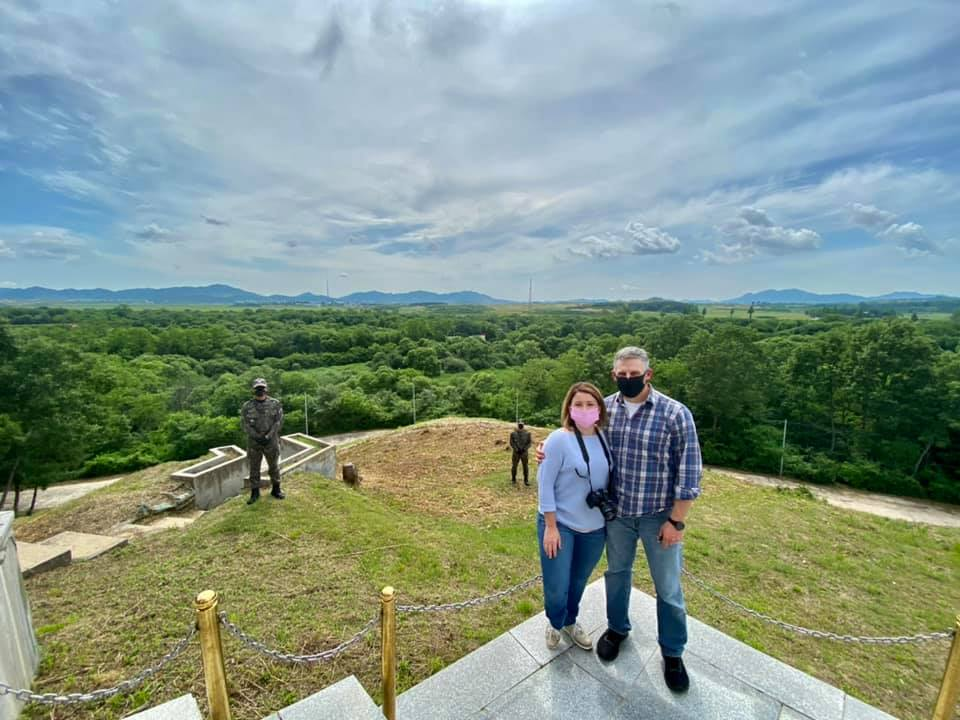
As I write this, public tours to the JSA are suspended. However, in 2022, the United Nations Command (UNC) authorized limited access for U.S. military personnel and their families through an approved agency called Hana Tour.
This was a rare opportunity, especially considering the ongoing COVID restrictions. It made the experience even more impactful, knowing how few people had seen what we were about to see.
Following the Dress Code: Propaganda and Protocols
Days before the tour, officials sent us a strict dress code. No casual or flashy clothing. No ripped jeans, open-toed shoes, or large logos.
Why?
North Korean soldiers photograph visitors through telephoto lenses. They use those images in propaganda campaigns, sometimes framing tourists as disrespectful or unserious. Dressing neatly and conservatively is not just about manners. It is about optics.
I took it seriously. I chose the most conservative outfit I could manage. It was the middle of summer in South Korea, and I melted in the heat, but I was not about to show up casually at one of the most politically sensitive borders in the world.
I didn’t want to be propaganda for any poster in North Korea!
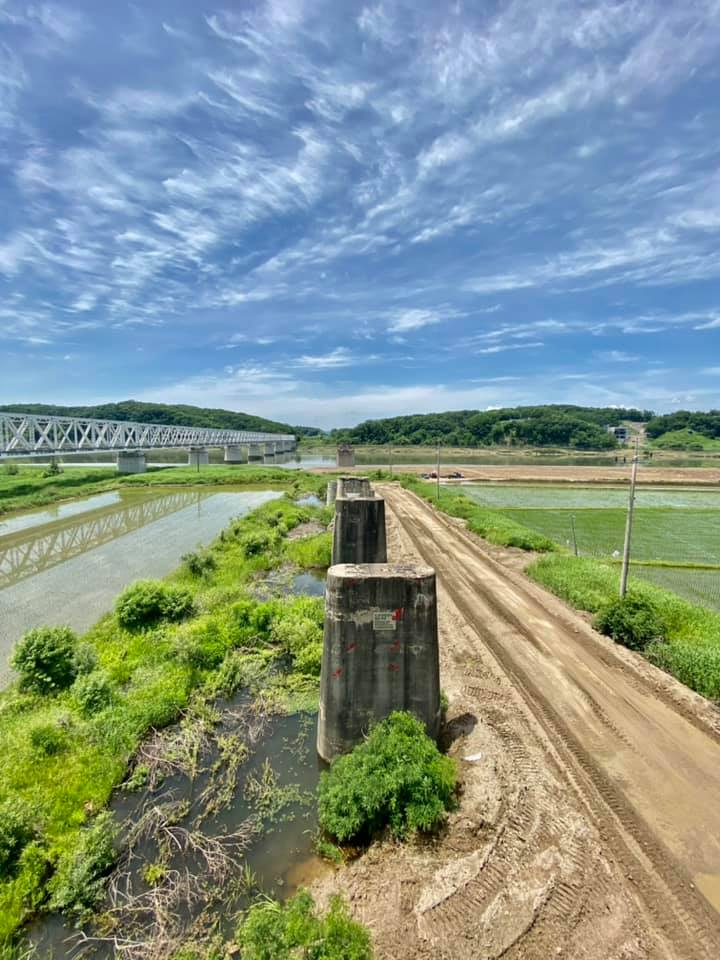
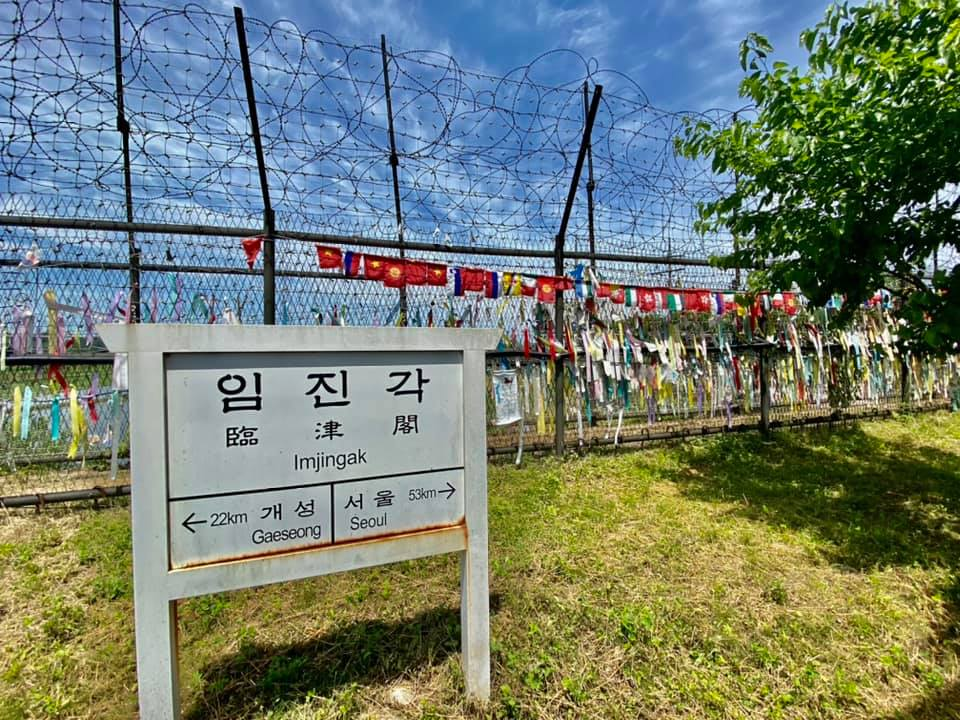
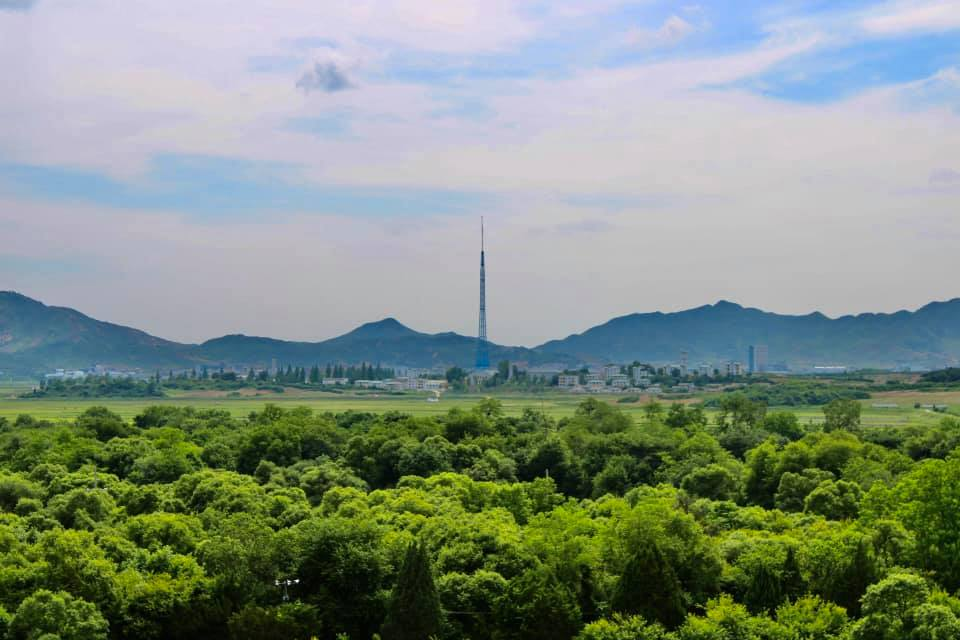
First Stop: Imjingak Peace Park
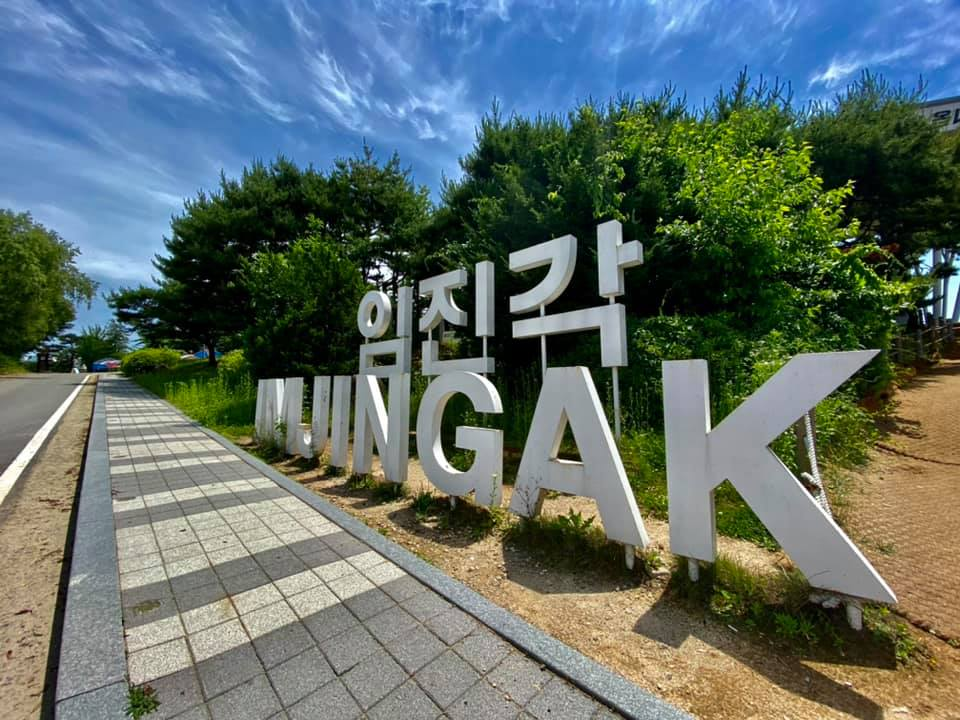
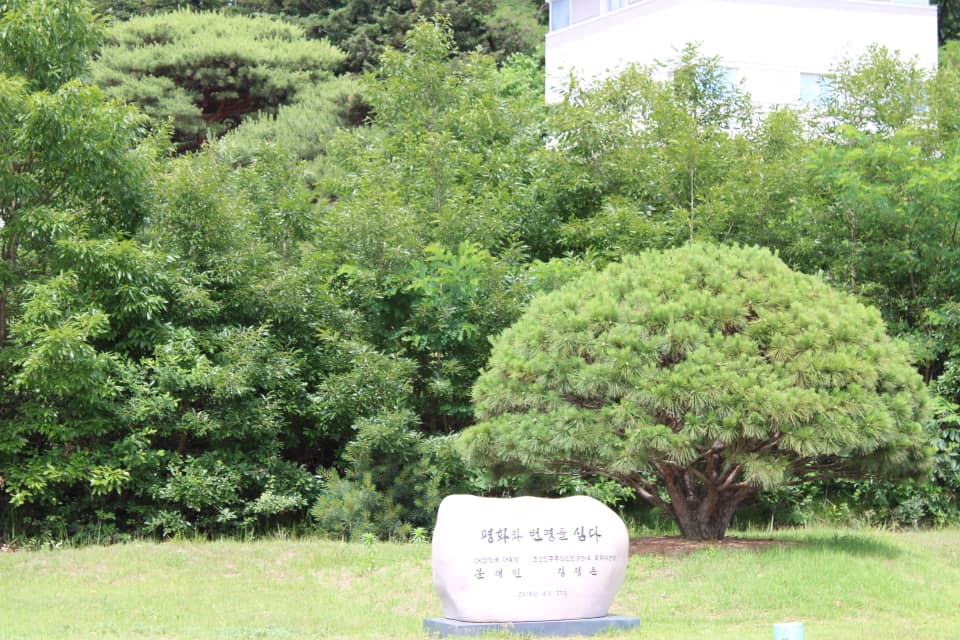
Before entering the Joint Security Area, we stopped at Imjingak Peace Park, located just south of the Demilitarized Zone.
This isn’t just a photo stop. It’s emotional.
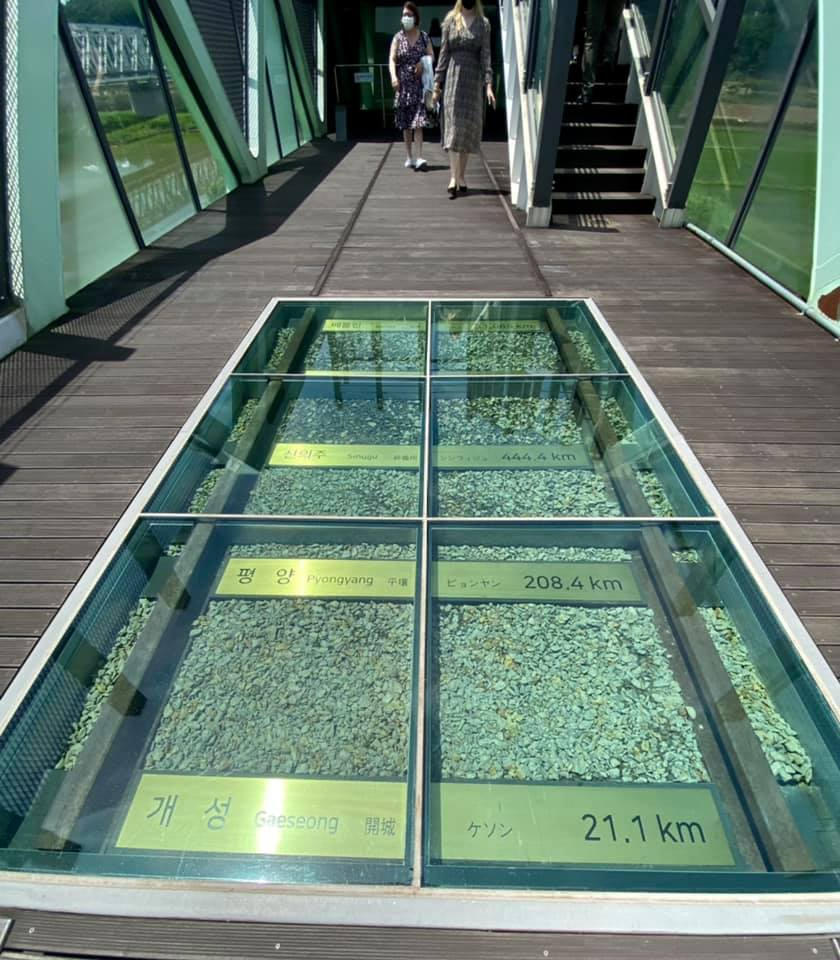
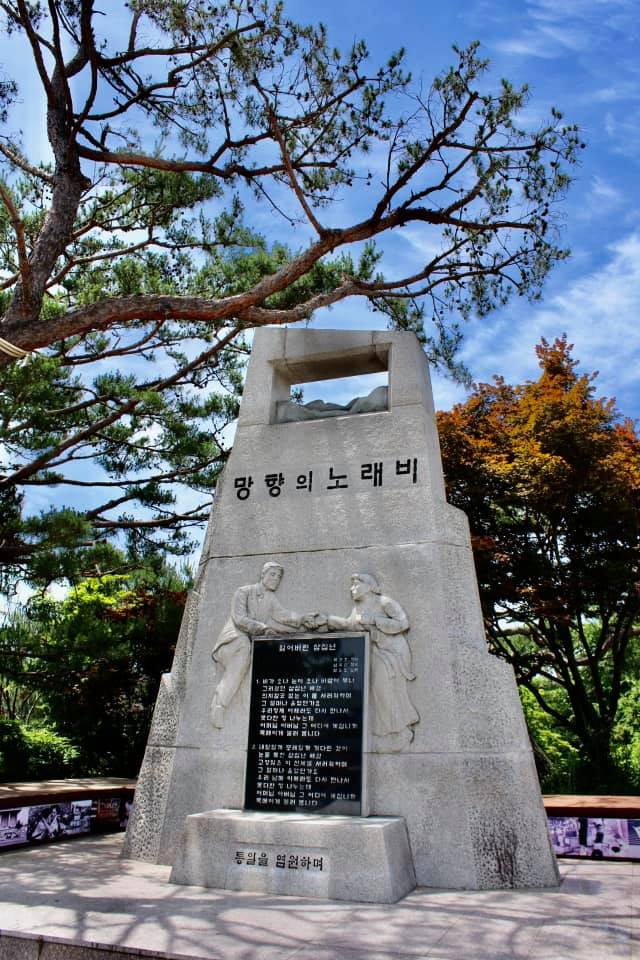
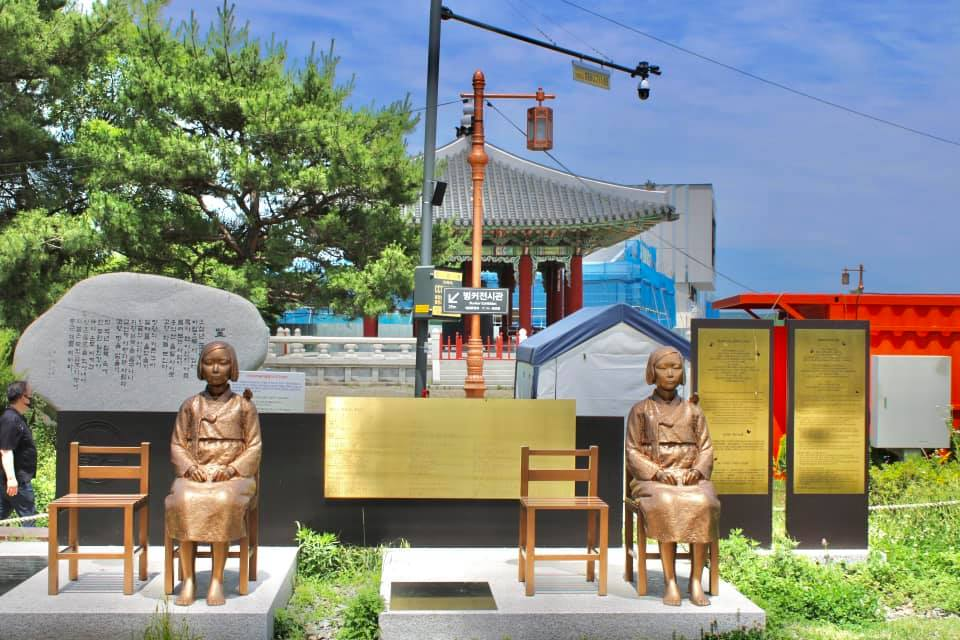
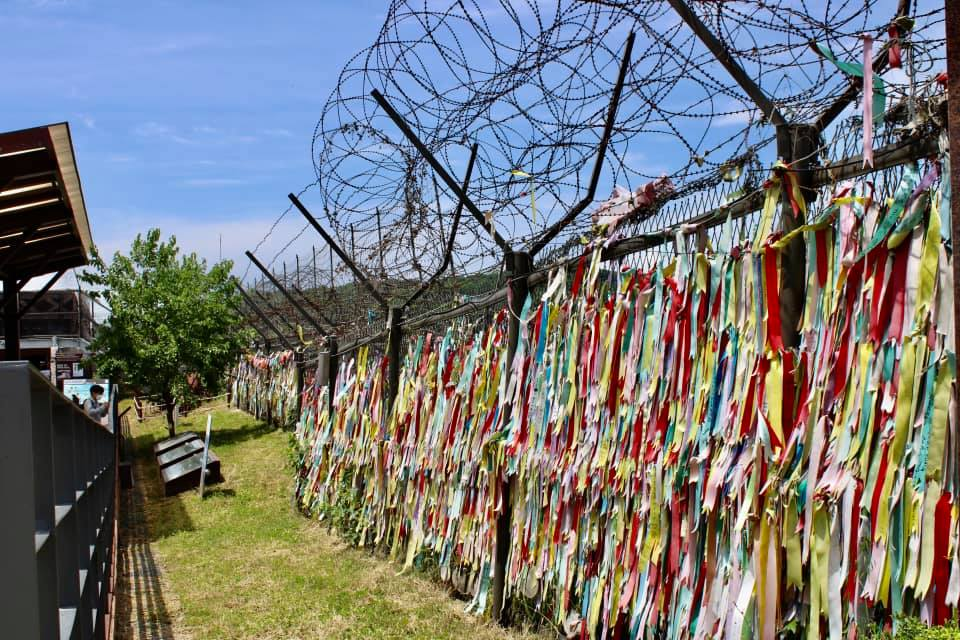
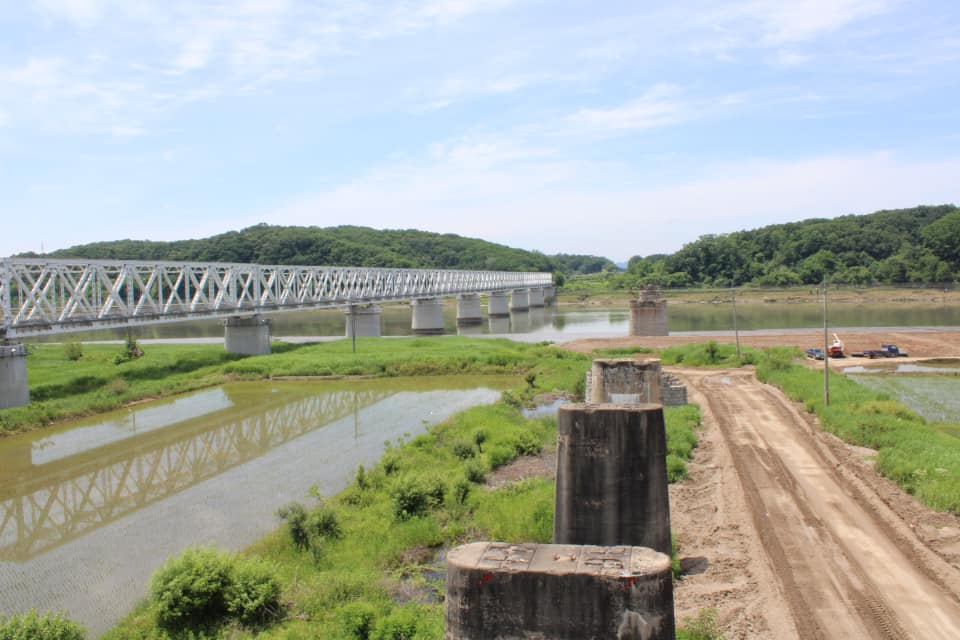
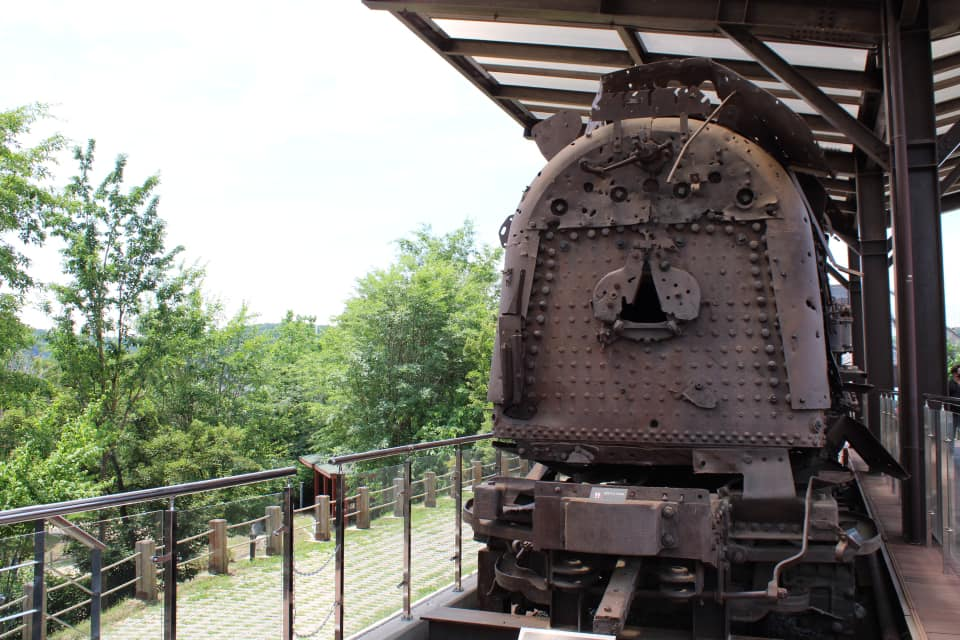
Imjingak Peace Park is filled with symbols of reunification, loss, and longing:
- Freedom Bridge – once used to return prisoners of war following the armistice
- The Wall of Hope – covered in ribbons and handwritten messages from families separated since 1953
- Memorials honoring those who died during the Korean War
The mood here felt reflective and calm. Quiet. Almost suspended in time. It was a powerful contrast to the tension we knew was waiting deeper inside the DMZ.
Our guide, Sunny from Hana Tour, added context that made everything land differently. She explained which parts of the park carry deep emotional weight for South Koreans and why reunification is not just political, but personal.
One detail that stuck with me: during the Korean War, many Koreans survived on the equivalent of around 70 cents a day. People relied on whatever the land could provide. That history still shapes how older generations talk about food, farming, and resilience.
She pointed out something I never expected.
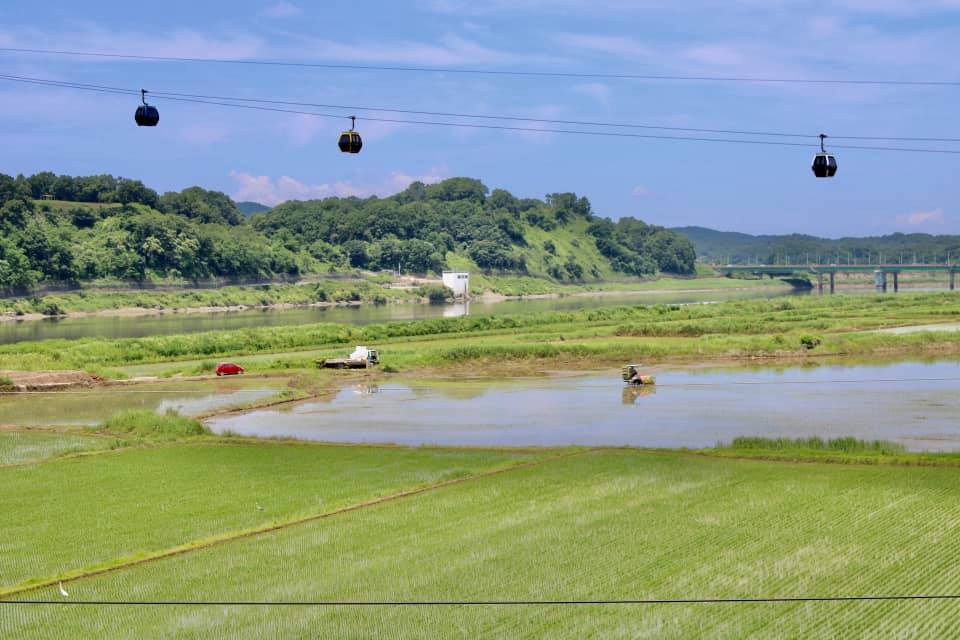
Farmers inside the Civilian Control Zone grow a specific brand of “DMZ rice.” They cultivate it on tightly controlled land with almost no industrial development nearby, which gives it a reputation for exceptional quality. Many visitors buy it as a souvenir, but it carries more weight than that.
Sunny also reminded us that during the Korean War, many Koreans survived on the equivalent of about seventy cents a day. People relied on whatever the land could provide. They stretched ingredients, repurposed scraps, and made do with almost nothing.
That history still shapes how food and farming are viewed today. In a place like the DMZ, even rice tells a story.
Can You Live in the DMZ?
Short answer: you cannot live inside the military DMZ.
However, civilians do live within the broader Civilian Control Zone near the border.
One of the most well known examples is Daeseong-dong, often called Freedom Village. Residents farm the surrounding land, some of the richest soil on the peninsula after decades without industrial development.
Here’s what makes life there so unusual:
- The government provides significant subsidies
- Farmers can earn the equivalent of around 80,000 USD per year
- Families must trace residency back to the Korean War era to qualify
- Land passes down through generations
- Men have historically received exemptions from mandatory military service
- Village leadership tightly controls outside marriage and residency
Few places in the world operate like this. Civilians live there, but the military monitors the area closely. The village exists under constant oversight, in the shadow of one of the most fortified borders on earth.
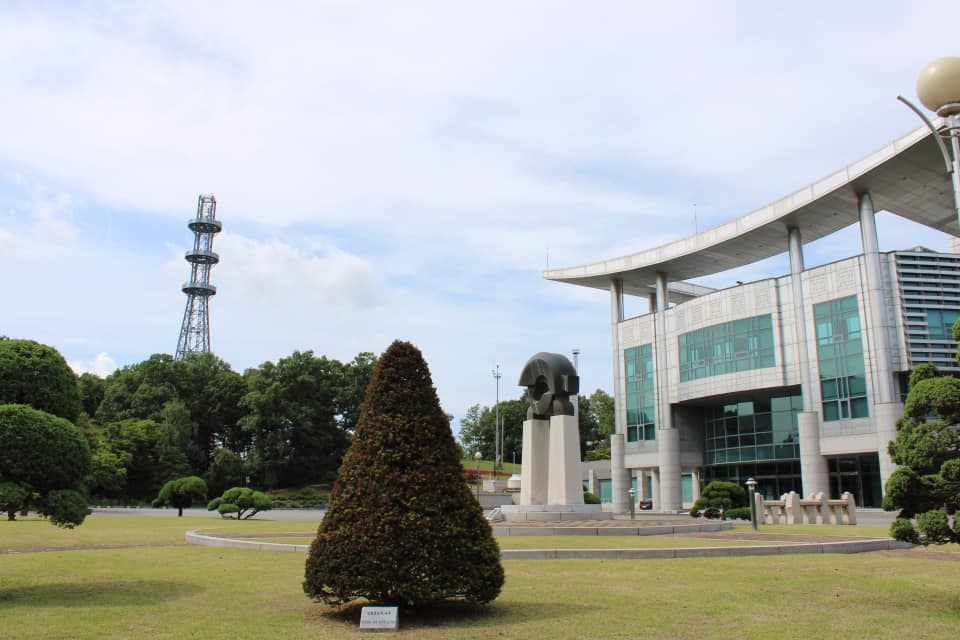
Crossing Into the JSA
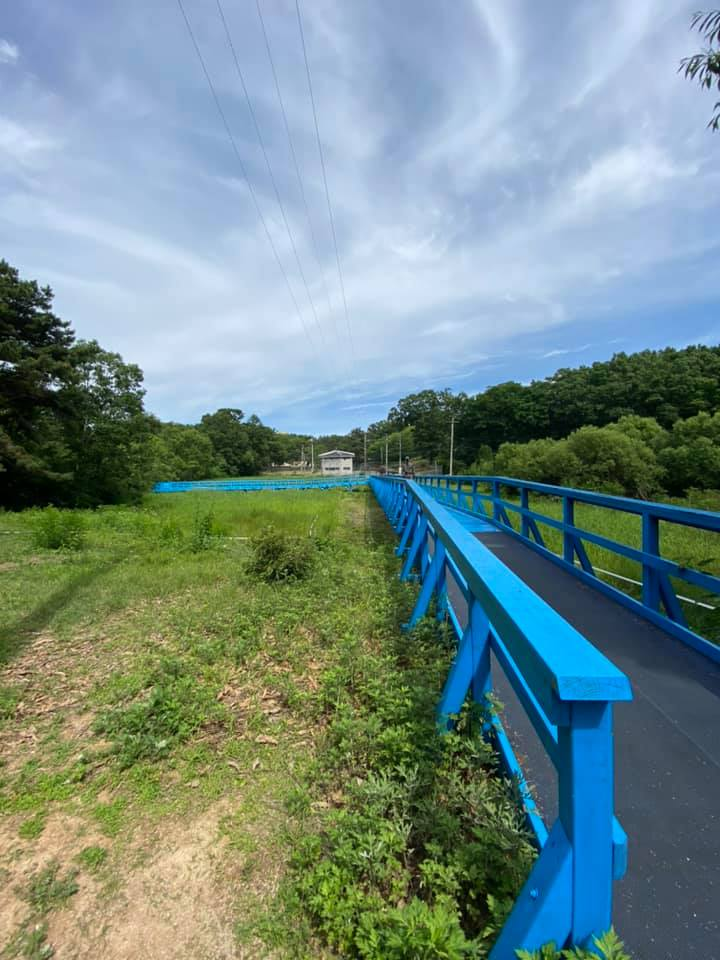
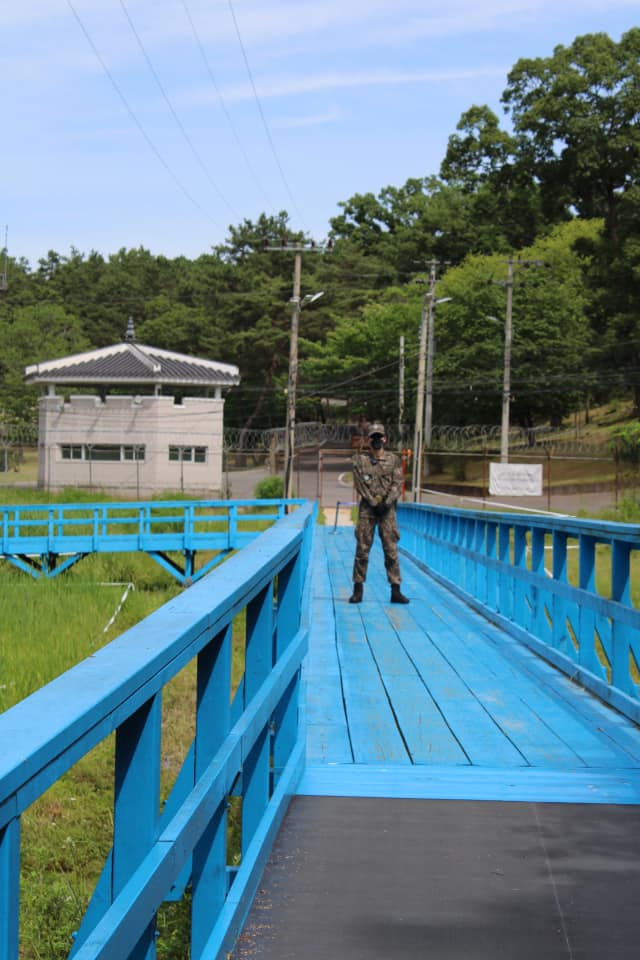
From Imjingak Peace Park, we boarded the bus again and crossed a guarded bridge toward the Joint Security Area.
The energy shift was immediate. I definitely felt it!
As we crossed the river, the bus weaved through roadblocks and checkpoints. Concrete barriers. Guard posts. Armed personnel. It felt eerie in a way that’s hard to explain unless you’ve experienced it. I was on edge, but I also trusted the process.
Before we entered the restricted area, we signed a waiver.
It stated clearly: if we saw North Korean or Chinese soldiers, we were to ignore them completely. No pointing, waving, gestures, or sudden movements. Basically, we couldn’t attempt to get their attention. The waiver also acknowledged that while the situation is stable, this is still technically an active war zone under an armistice, not a peace treaty.
Our military escort reinforced those rules repeatedly. Security here is not symbolic. It is real.
The Briefing
We stepped into a briefing room and watched a short film on the Korean War and the split of the peninsula. It did not sugarcoat anything. Before you cross that line, you need to understand why it exists.
Then the tour moved outside.
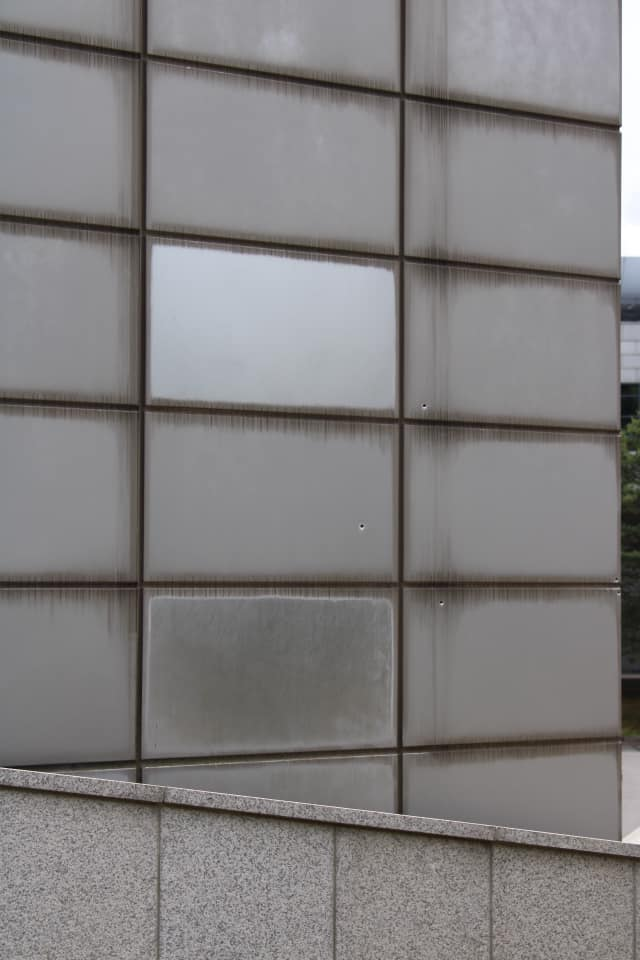
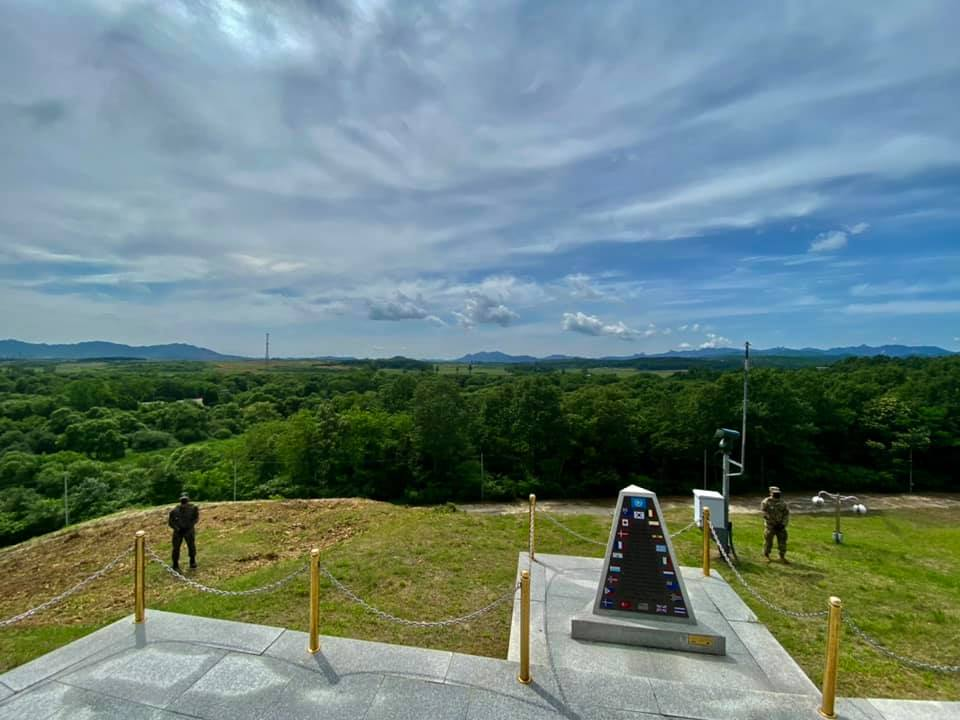
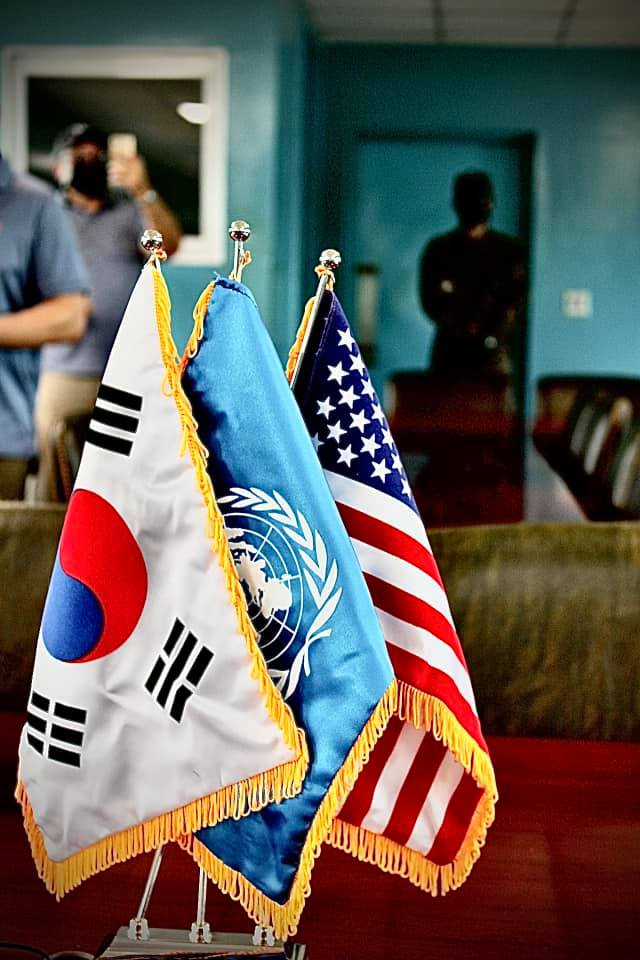
2017 Defection at the Joint Security Area
An American soldier from the United Nations Command guided us to the building where bullet marks from the 2017 defection of Oh Chong Song remain visible.
Sunny could not enter the JSA. Once you cross that line, military personnel take over.
On November 13, 2017, Oh Chong Song drove toward the border, crashed his vehicle, and ran across the Military Demarcation Line. North Korean soldiers opened fire as he crossed into the South. He survived and defected to South Korea.
Face to Face at Panmunjom
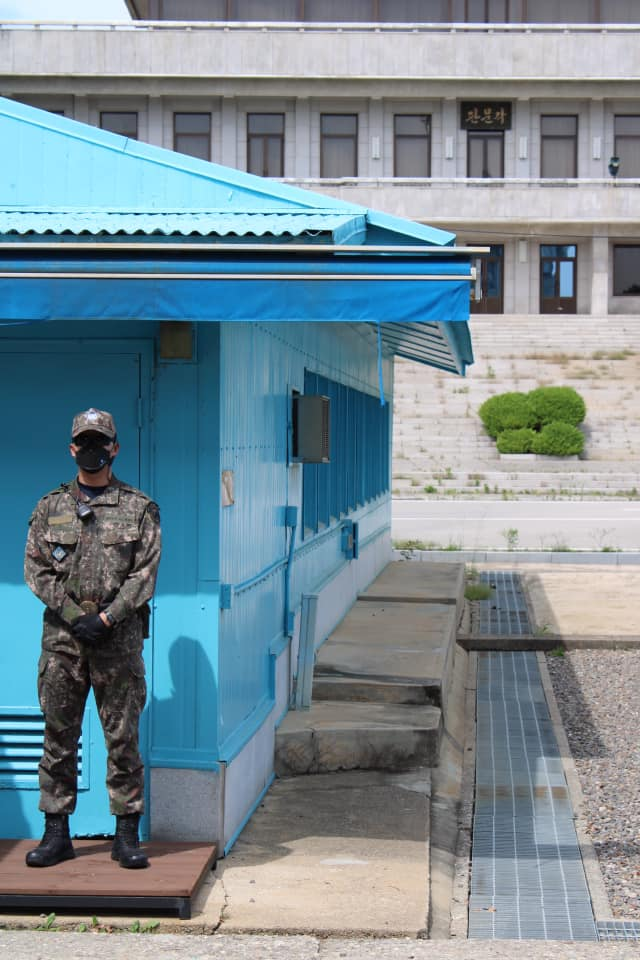
Before we entered the blue buildings at Panmunjom, we noticed curtains move in the structure across from us.
North Korean soldiers stood behind the windows.
We saw them clearly. Some held telephoto cameras and photographed visitors. They stayed inside. Our American UNC escort explained that leadership had restricted outdoor movement at the time due to COVID precautions.
No one interacted. No gestures. No eye contact.
They observed the tour groups from inside while we remained under military supervision on the southern side.
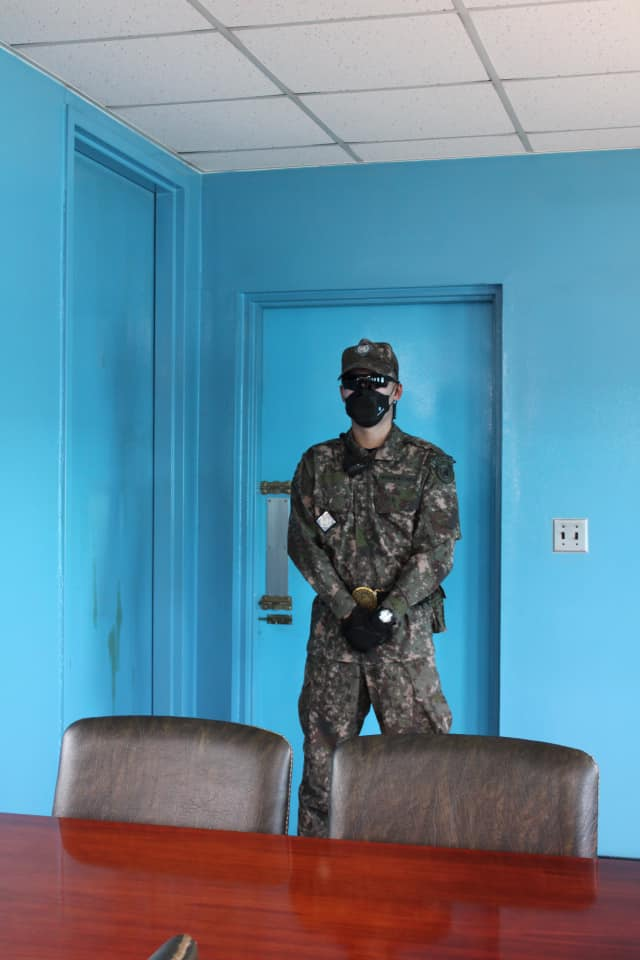
Inside the Blue Meeting Room at Panmunjom
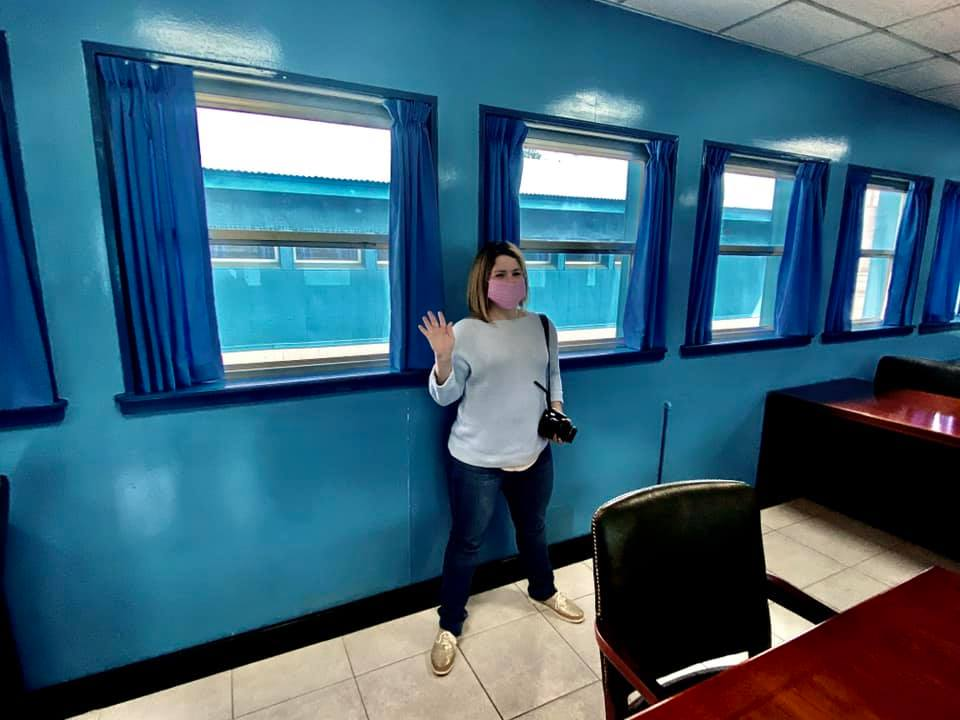
An American UNC soldier led us into the blue conference room you’ve seen in news coverage for decades. The building sits directly on the Military Demarcation Line.
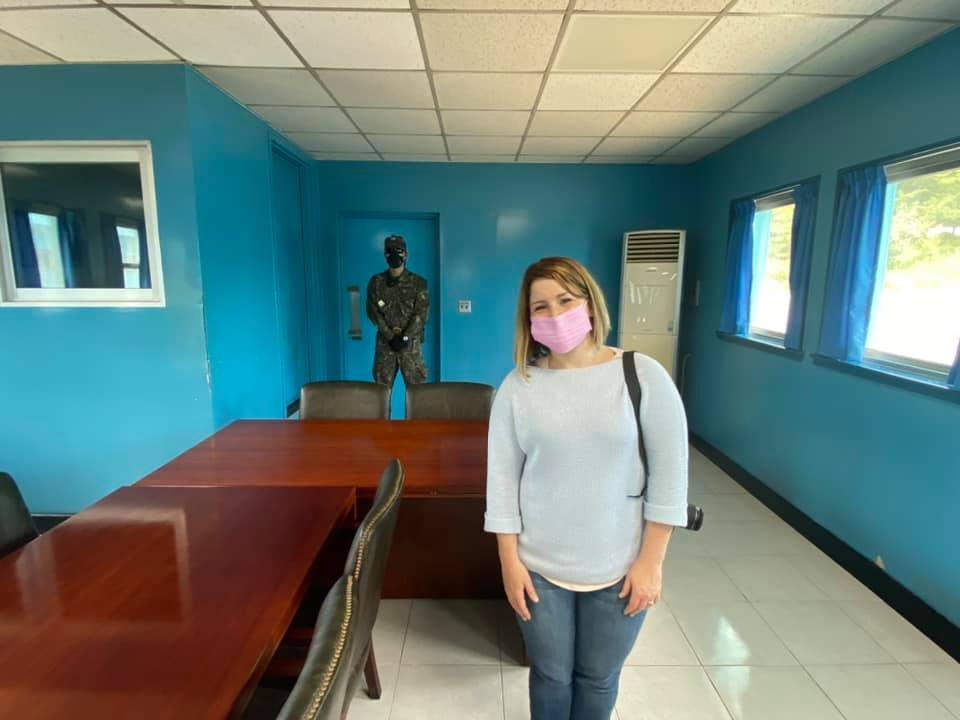
One half of the room is South Korea. The other half is North Korea. A long conference table runs down the center, and a red phone sits on top for cross-border communication.
The soldier directed us around the table, and we stepped onto the North Korean side of the room.
It sounds dramatic, but I promise you it’s controlled. Quick. Supervised. You step across, take a photo, and step back. You are really only allowed a few minutes in the meeting room.
The escort reminded us that officials monitor the room and instructed us to keep conversations minimal. I found that detail slightly surreal. The soldier guarding the door did not.
The room itself surprised me. On television, it looks large. In person, it feels smaller than expected. Clean. Functional. Almost sterile.
My husband pointed out a standing AC unit on the North Korean side. We asked how officials divide utilities between the two sides. The escort explained that the unit serves decorative purposes, part of the quiet competition that exists even in small details.
Throughout the visit, South Korean and American soldiers repositioned around our group. They moved calmly but intentionally, keeping formation on either side of us. Security never fades into the background here.
Standing Where History Was Made
Outside, our guide pointed to the exact location where Moon Jae-in and Kim Jong-un shook hands in 2018.
Standing there in 2022, I felt the weight of that moment. It’s one thing to see a handshake on the news. It’s another to stand on the same concrete where, for a brief second, the possibility of something different felt real.
IIs the DMZ the Same as the JSA?
This is where a lot of people get confused, especially when planning a DMZ tour from Seoul.
The Korean Demilitarized Zone is a 250 kilometer long, 4 kilometer wide buffer zone created in 1953 after the armistice. Despite the name, it is heavily fortified along both edges.
The Joint Security Area is a small section within the DMZ near Panmunjom. It is the only place where North and South Korean forces stand face to face and where official diplomatic meetings occur.
All JSA tours take place inside the DMZ.
But most DMZ tours do not include the JSA.
Can You Still Take DMZ Tours in Korea?
Yes! DMZ tours are still available to the public, even if the JSA remains closed. While the Joint Security Area is one of the most iconic parts of the DMZ, it’s not the only place worth visiting.
I recently read a blog post where a blogger said a lot of this wasn’t interesting, and I have to say, shame on them. I think this is what motivated me to write this blog post. Most Westerners lack awareness of what the DMZ is and what South Koreans have gone through. I get that bloggers are trying to catch traffic, but come on, we can do better.
That being said if you would like to take a tour here are a few great points for DMZ tours:
Most public DMZ tours from Seoul include:
- A stop at Imjingak Peace Park, which symbolizes reunification and offers memorials, monuments, and the Freedom Bridge
- A visit to the Dora Observatory, where you can use binoculars to look across the border into North Korea
- Access to the Third Infiltration Tunnel, one of several secret tunnels dug by North Korea and discovered in the 1970s
- A guided drive through restricted military zones near the border (with checkpoints and briefings)
These tours usually depart from Seoul and are offered by companies like KORIDOOR or Hana Tour (though availability may vary depending on the political situation).
While you won’t get to step inside the JSA right now, a DMZ tour still offers a powerful, educational, and sometimes emotional glimpse into one of the most heavily fortified borders in the world.
Pro tip: Always check current access conditions before booking—tensions and restrictions can change quickly based on inter-Korean relations.
Reflecting on the JSA: A Place of Tension and Hope
Visiting the Joint Security Area was not a casual sightseeing trip—it was an emotional, sobering experience that left a lasting impression.
It’s a place where:
- Armistice holds peace in place by a thread
- Diplomacy and distrust coexist
- History is made, one cautious step at a time
Though the JSA is currently closed to most visitors, I hope my story offers a glimpse into what it’s truly like to stand in this charged space—and why it matters so deeply to Korea and the world.
Frequently Asked Questions About the Joint Security Area
The JSA is a section of the DMZ where North and South Korean soldiers face each other. It’s been used for diplomacy, talks, and historic moments since 1953.
As of now, JSA tours are suspended for the public. In 2022, U.S. military families in South Korea could access the area through Hana Tour and UNC approval.
In 1976, two U.S. officers were killed by North Korean soldiers while trimming a tree. The U.S. responded with Operation Paul Bunyan—a major show of force.
No
