Are you thinking about visiting the Christmas markets in the Dolomites but not sure how to actually structure the trip?
When I planned my time in South Tyrol, I kept running into the same issue. There are so many incredible places in the Dolomites, but very little clarity on how to combine them into a winter itinerary that actually flows.
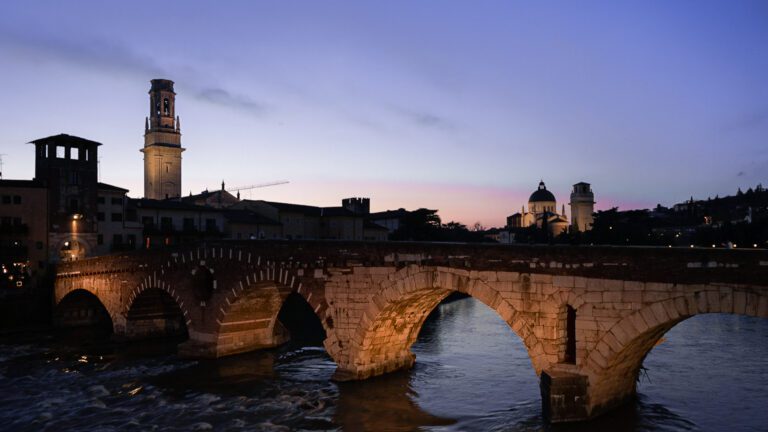
I knew I wanted to experience both the Bolzano Christmas Market and the Merano Christmas Market, but I also didn’t want to miss places like Lago di Braies or Lago di Resia.
So instead of jumping between hotels, I based myself in Bolzano and built the entire trip around that.
After doing it this way, I wouldn’t plan it any differently.
This is the exact 4-day Dolomites Christmas market itinerary I followed, what I would repeat, and what I would skip.
Where to Stay for This Itinerary (Quick Picks)
If you don’t want to overthink where to stay, these are the exact types of places I would book for this itinerary.
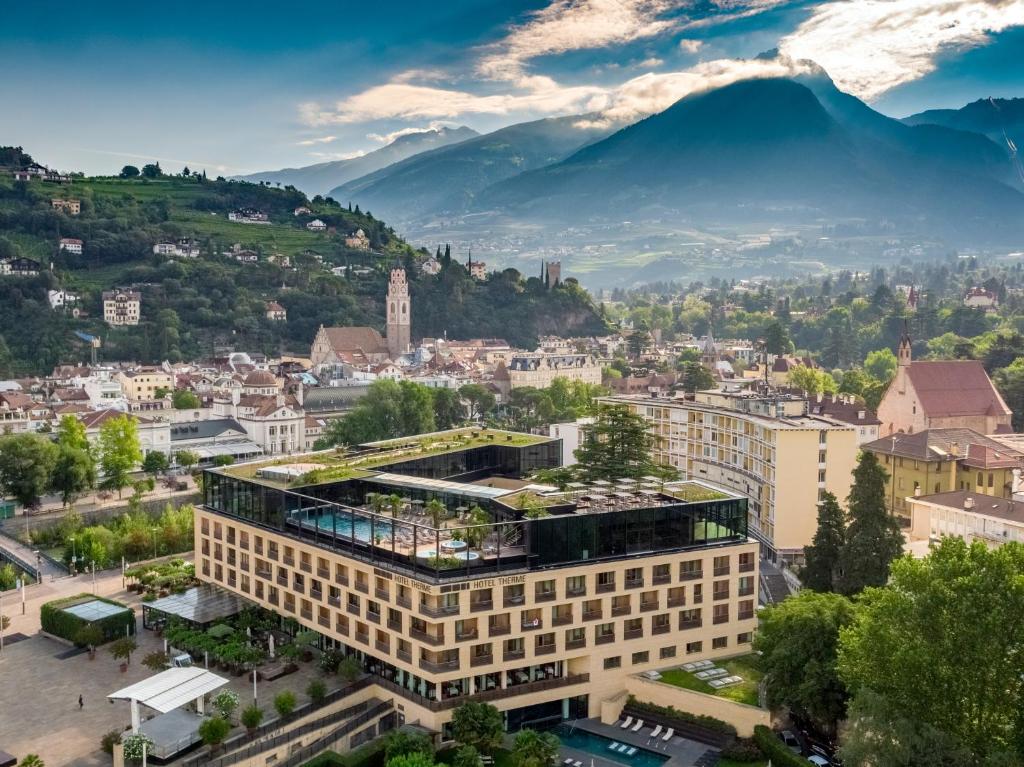
My Stay: Hotel Therme Meran
This is where I stayed in Merano, and I would go out of my way to book it again. The location is perfect, parking is easy, and in winter it just feels like part of the experience.
→ [Check availability at Hotel Therme Meran]
Stay in Bolzano
If it’s your first time, this is what I recommend. Everything is walkable, and it makes the entire trip easier to plan.
→ [Check hotels in Bolzano]
Stay in Kastelruth (Best for a More Relaxed Experience)
If you want something quieter and more scenic, Hotel Ortler in Kastel ruth is worth it.
→ [Check hotels in Kastelruth]
Map for Your Dolomites Christmas Market Itinerary
To help you visualize this route, map out Bolzano, Merano, Lago di Braies, Lago di Resia, and Sterzing before your trip.
Once I saw the distances, it became obvious why Bolzano works so well as a base. Everything connects back to it, which makes planning significantly easier.
How to Use This Map:
Click the icon in the top left corner to see all the places I’ve pinned around the city— from cafés and museums to scenic viewpoints. You can turn layers on or off and click any pin to learn more about each spot. Want to keep it handy for your trip? Click the star next to the map’s title to save it to your Google account.
Then, open the Google Maps app, go to “Saved” → “Maps,” and you’ll see this map ready to guide you while you explore.
4-Day Dolomites Christmas Market Itinerary
This is exactly how to structure the trip so it actually flows. For reference I stayed in Merano and took the train between the two cities.
I took the train to Bolzano—which takes about 44 minutes via their regional train. You can find tickets on the TrenItalia website. Or you can book through Omio
Pay special attention to the train schedules if you do this like I did. They may adjust or there maybe strikes.
If you wanto learn all there is about taking the train in italy, read my [How to Take the Train in Italy Guide]
I also have an informative guide on [How to Drive in Italy: 5+ things you Should Know! ]
Day 1: Arrive in Bolzano + Christmas Market
When I arrived in Bolzano, everything immediately felt easy.
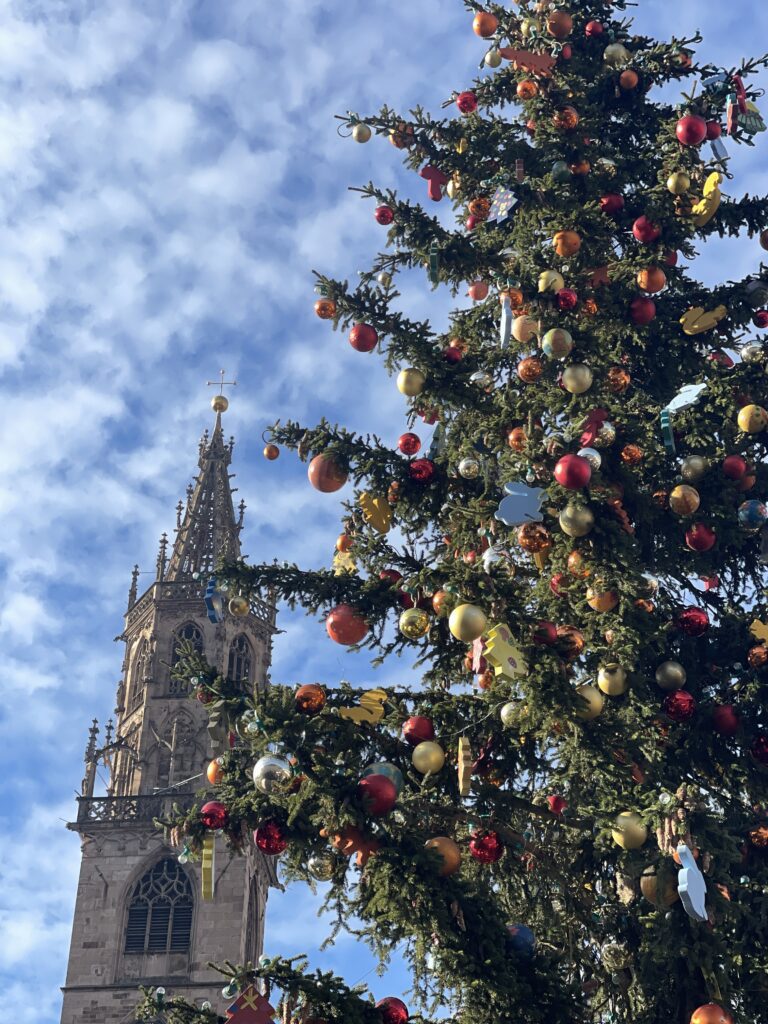
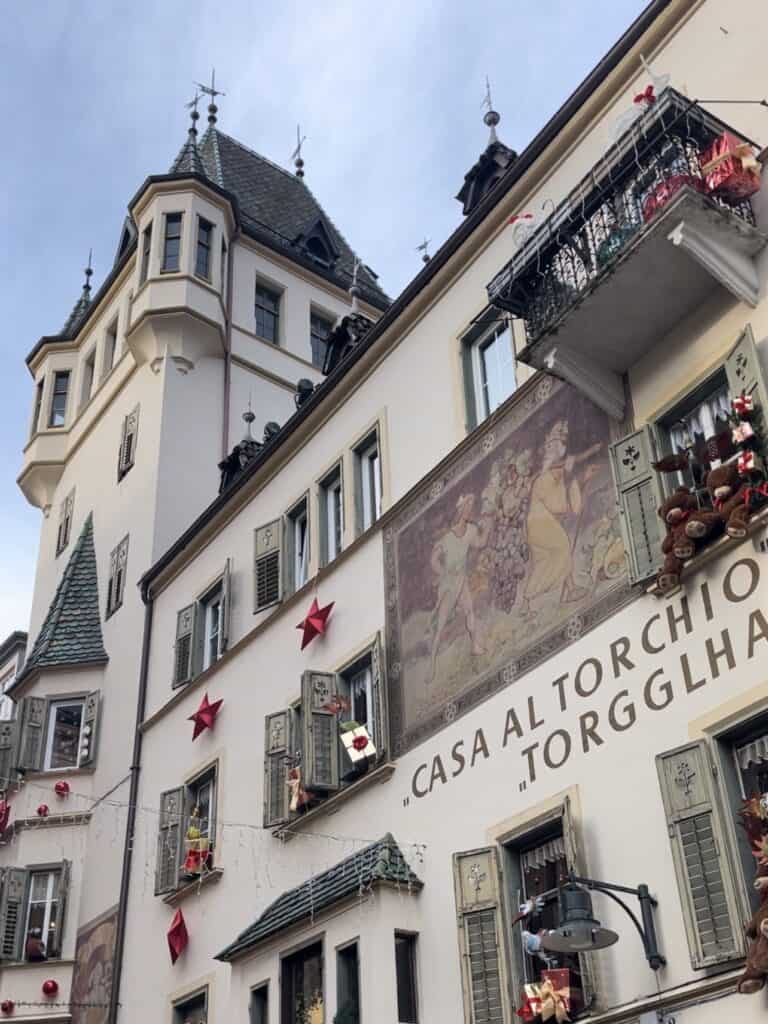
I walked from the station straight into the historic center and within minutes I was in Piazza Walther at the Bolzano Christmas Market.
This market sets the tone for the entire trip.
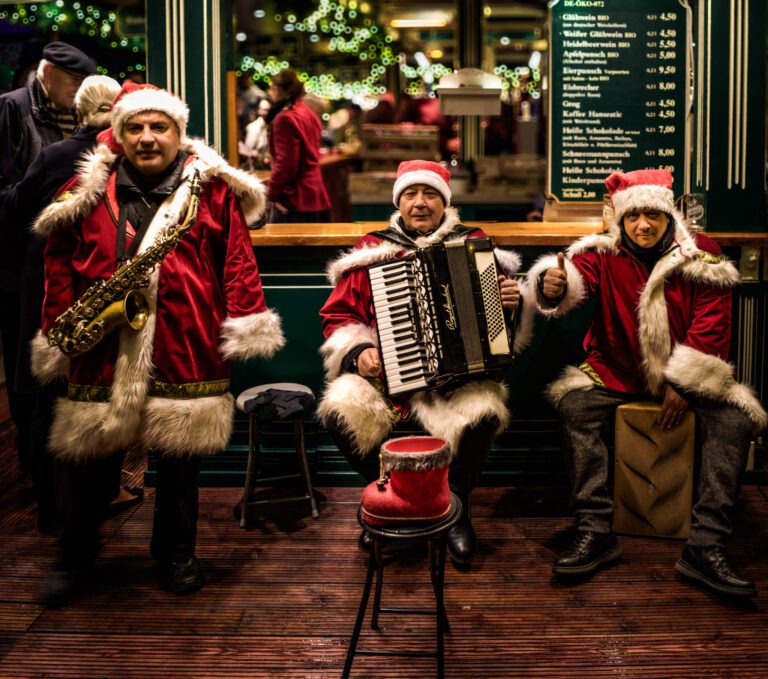
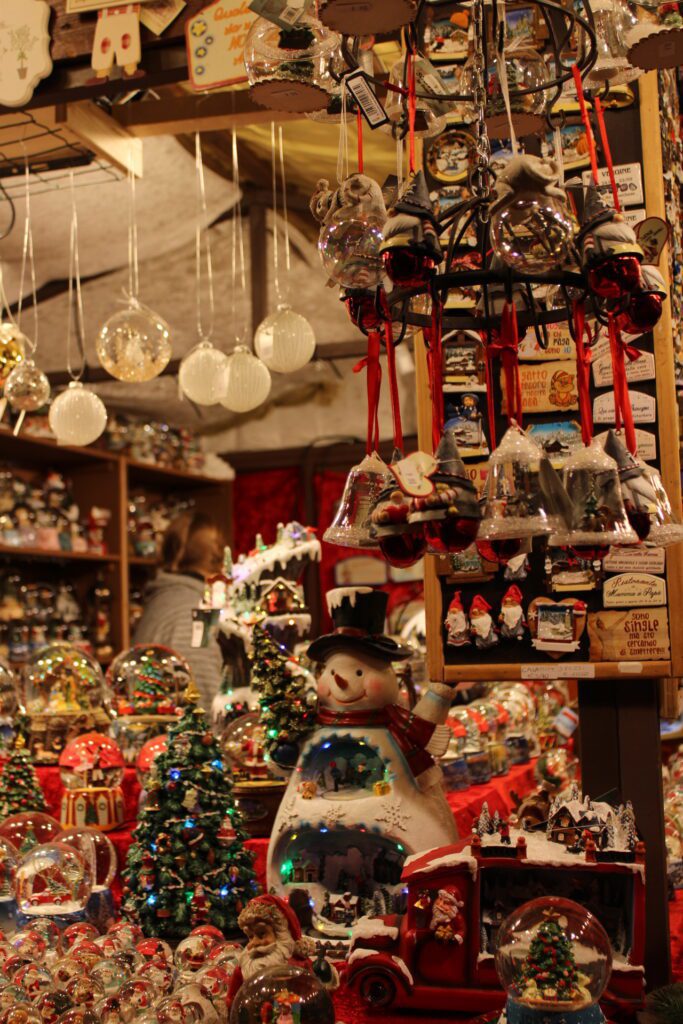
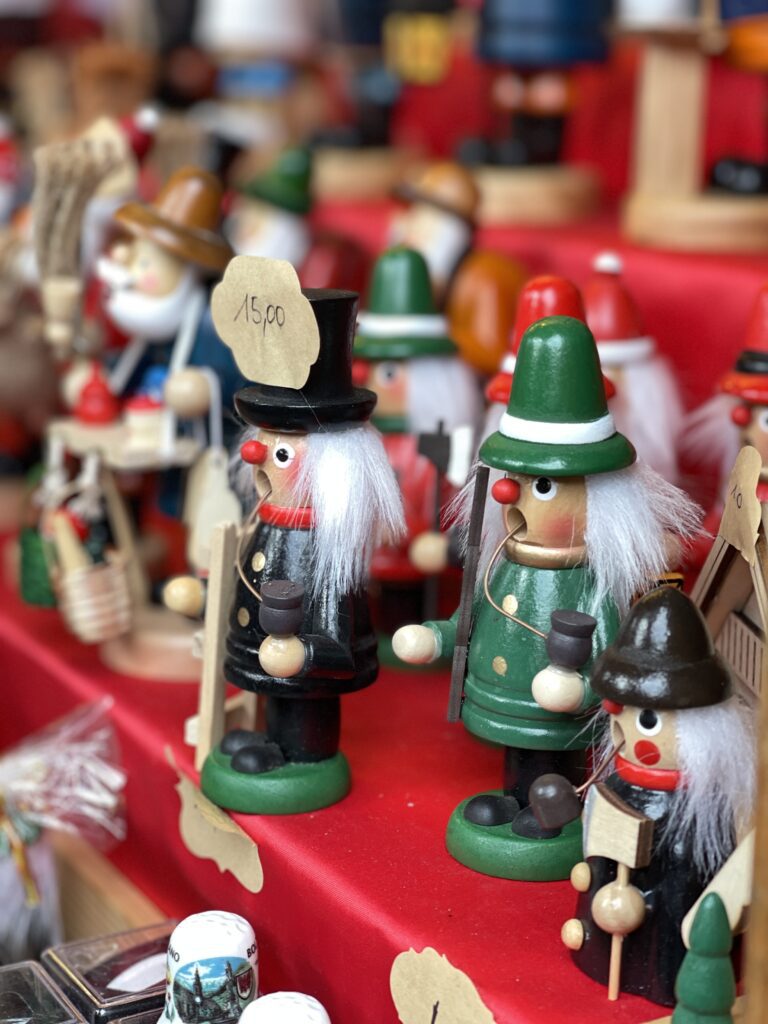
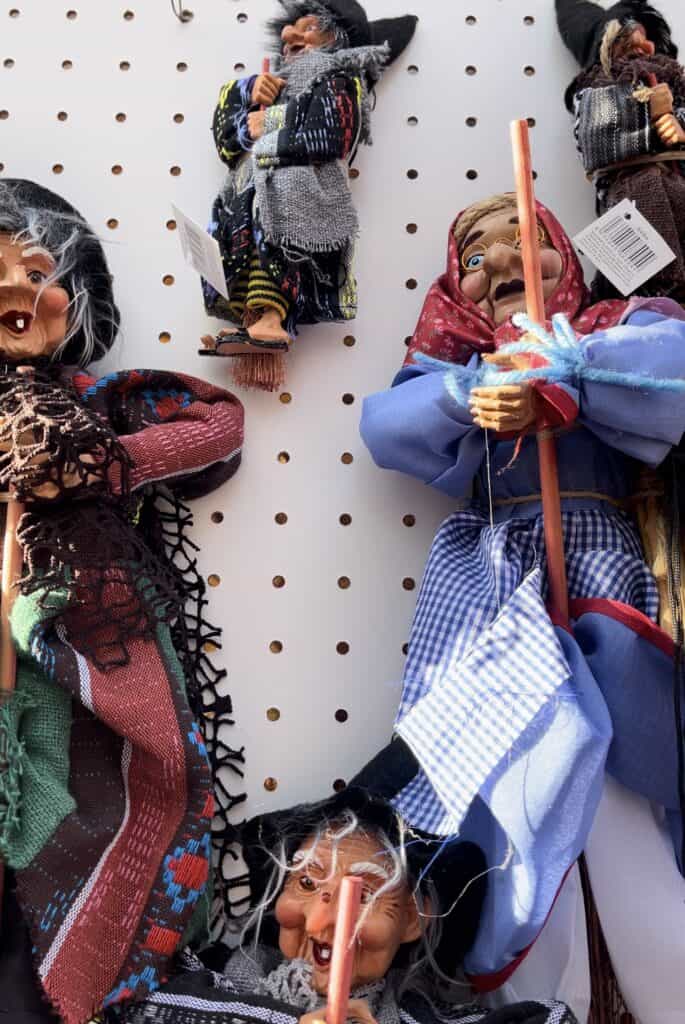
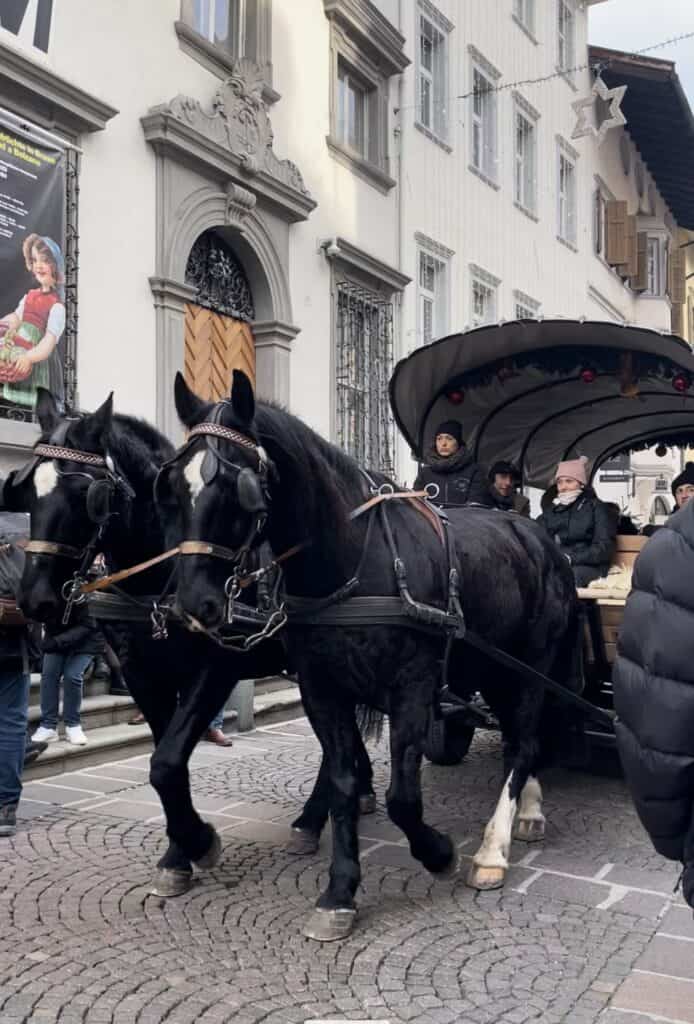
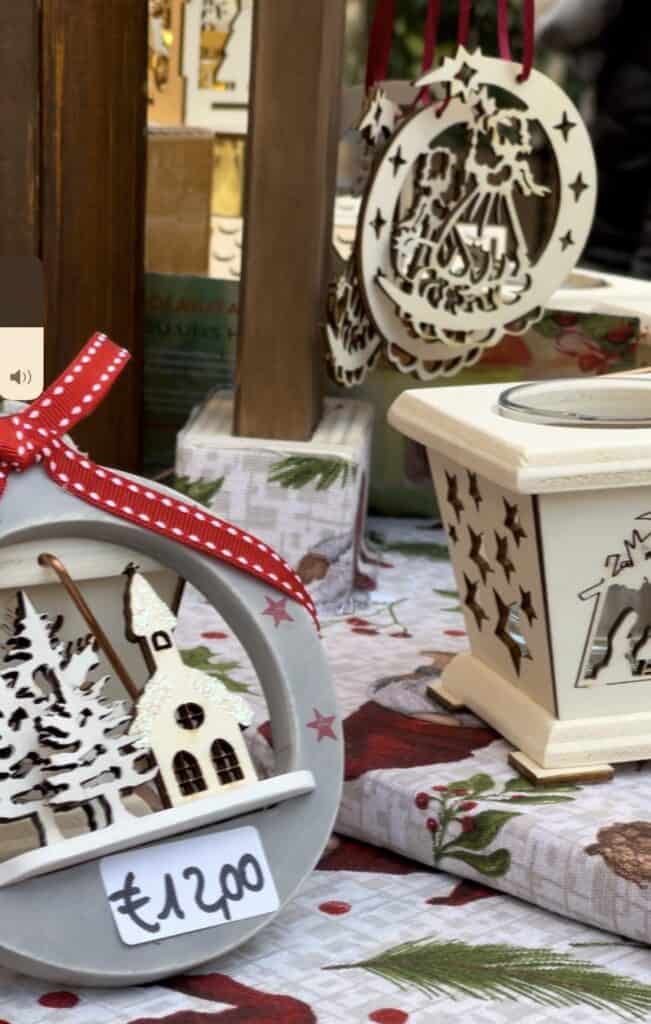
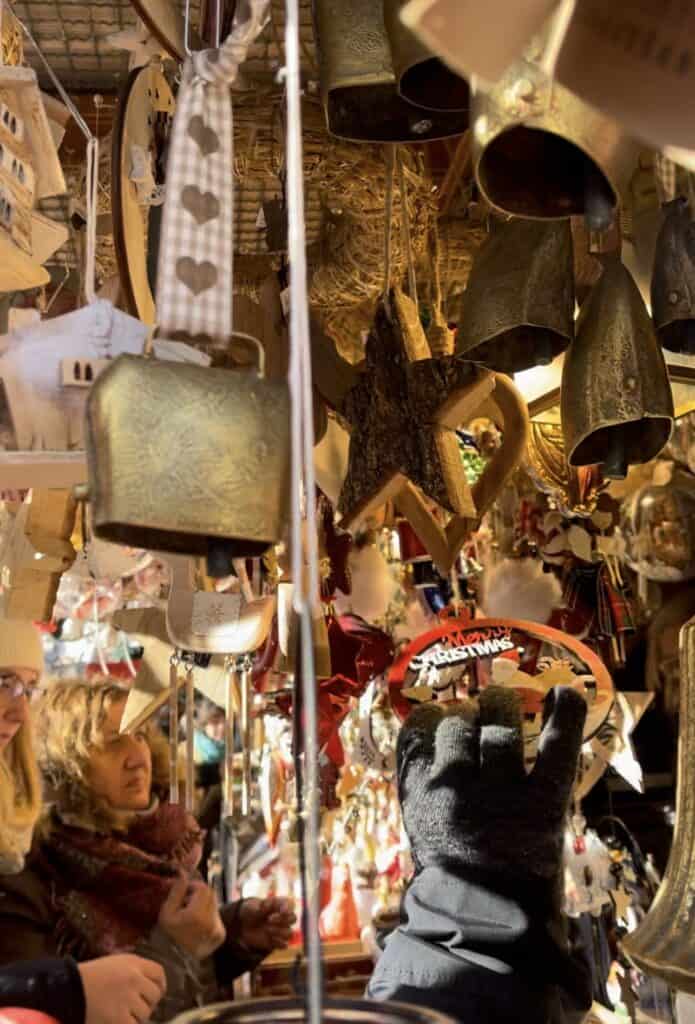
It feels more Austrian than Italian, with wooden chalets, alpine food, and mountain views, but it’s smaller and more manageable than markets in Germany or Austria.
The biggest mistake I almost made was trying to do everything too quickly.
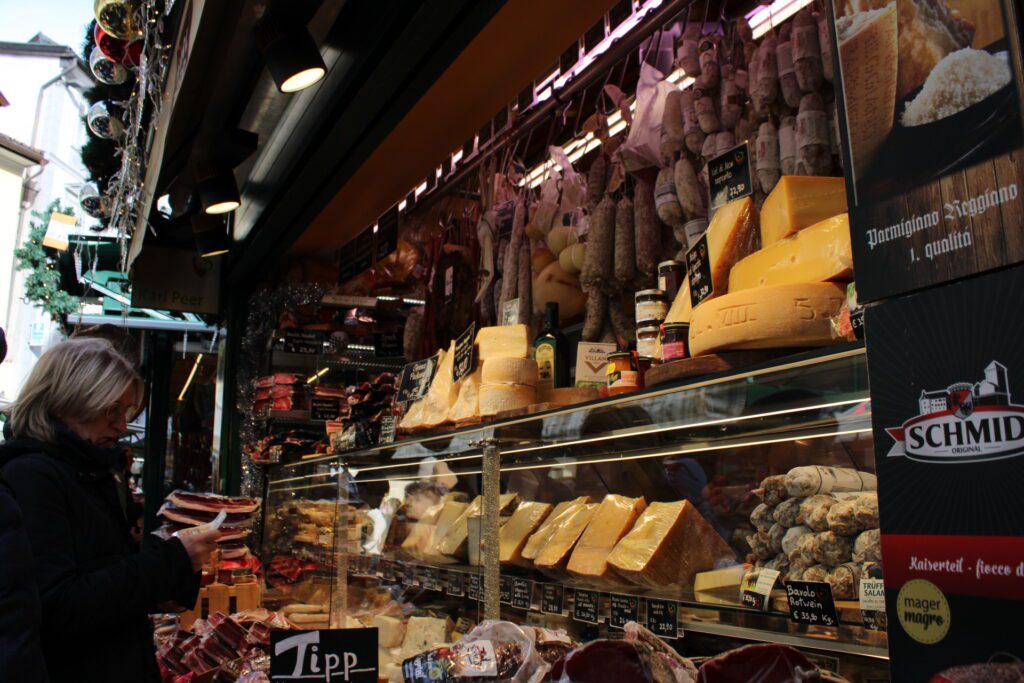
What worked better was walking the market once, seeing what stood out, and then going back through to actually eat.
What I recommend eating first:
- Knödel (bread dumplings)
- Polenta dishes
- Sausage with sauerkraut
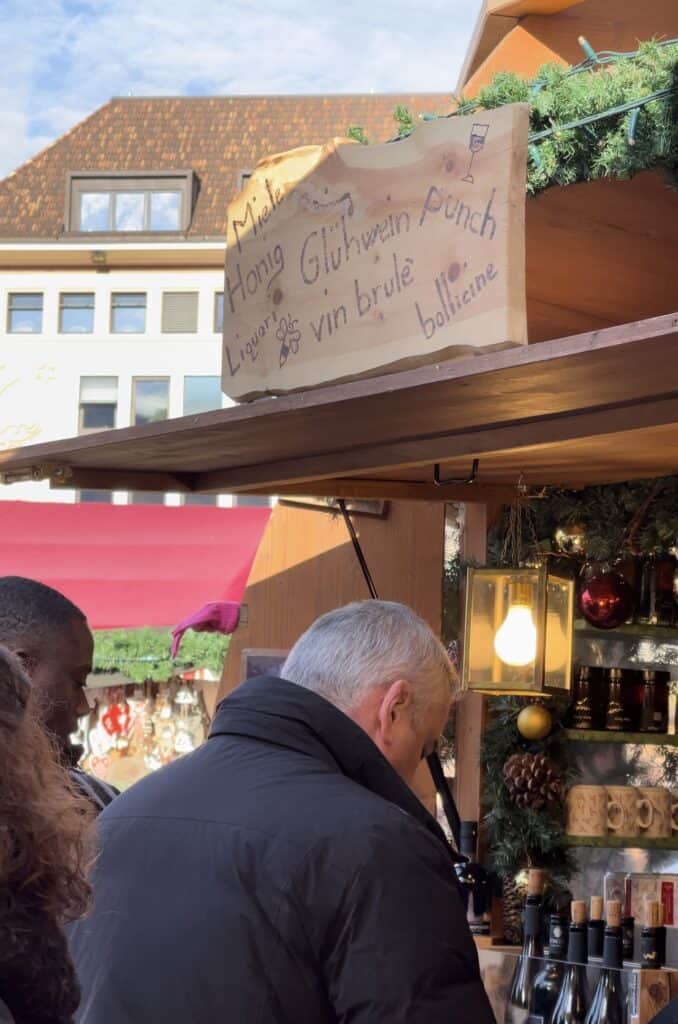
- Vin brulè
Everything is heavy, warm, and designed for winter.
I spent the rest of the day exploring the old town, and that’s really all you need. This day is about settling in, not rushing.
I chose to visit the South Tyrol Museum of Archaeology to visit Otzi the Iceman. The Museum is well worth it you want to learn more about the area. You can find the opening hours on the official museum website
I chose to eat at Franziskanerstuben for dinner, where I feasted on generous portions, and hearty alpine food from South Tyrol.
If you don’t want to walk through the old town alone, I suggest doing a walking tour! This Street Food Tour in Bolzano has a high rating and is loved by guests!
Day 2: Merano Christmas Market + Spa Evening
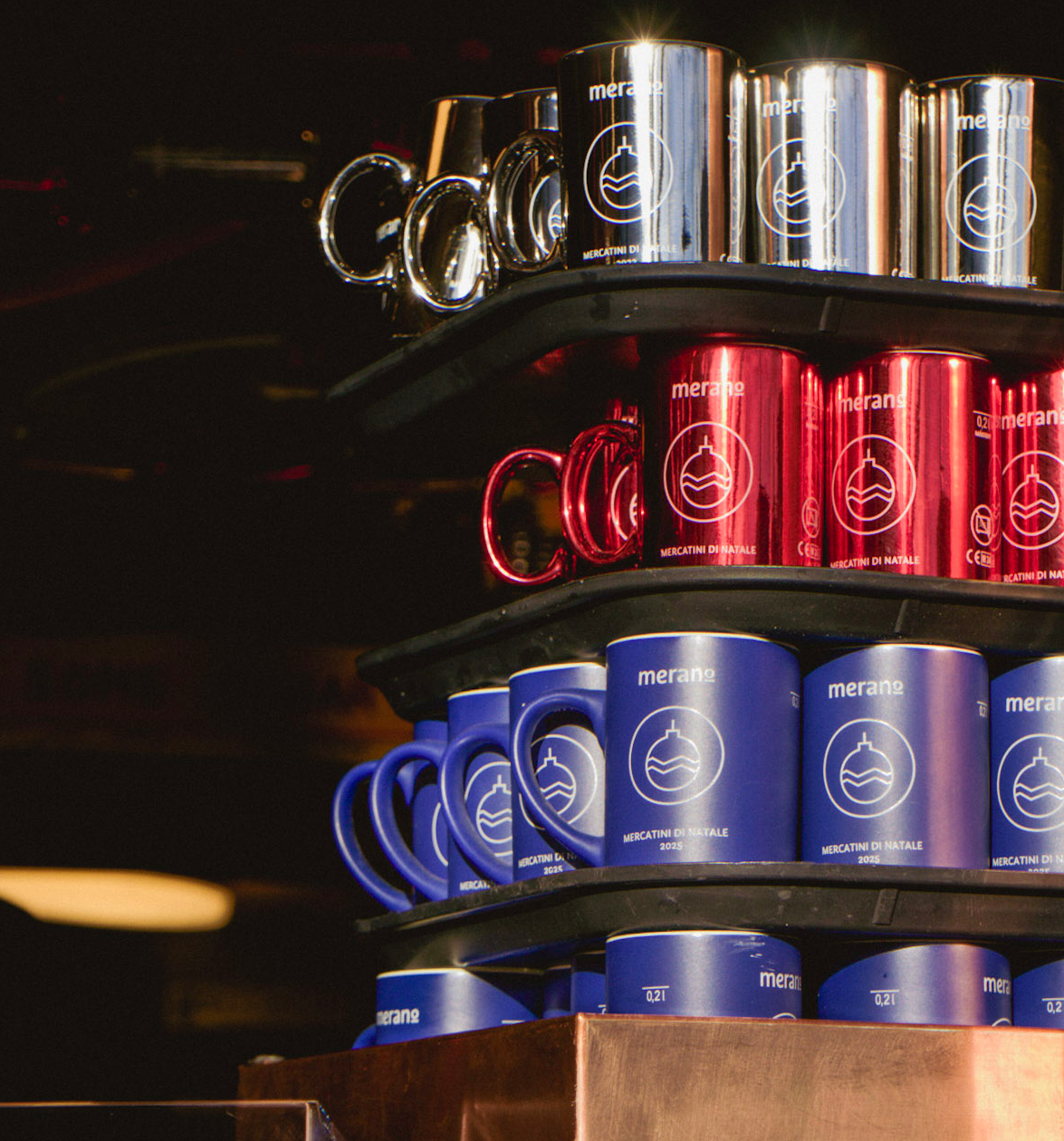
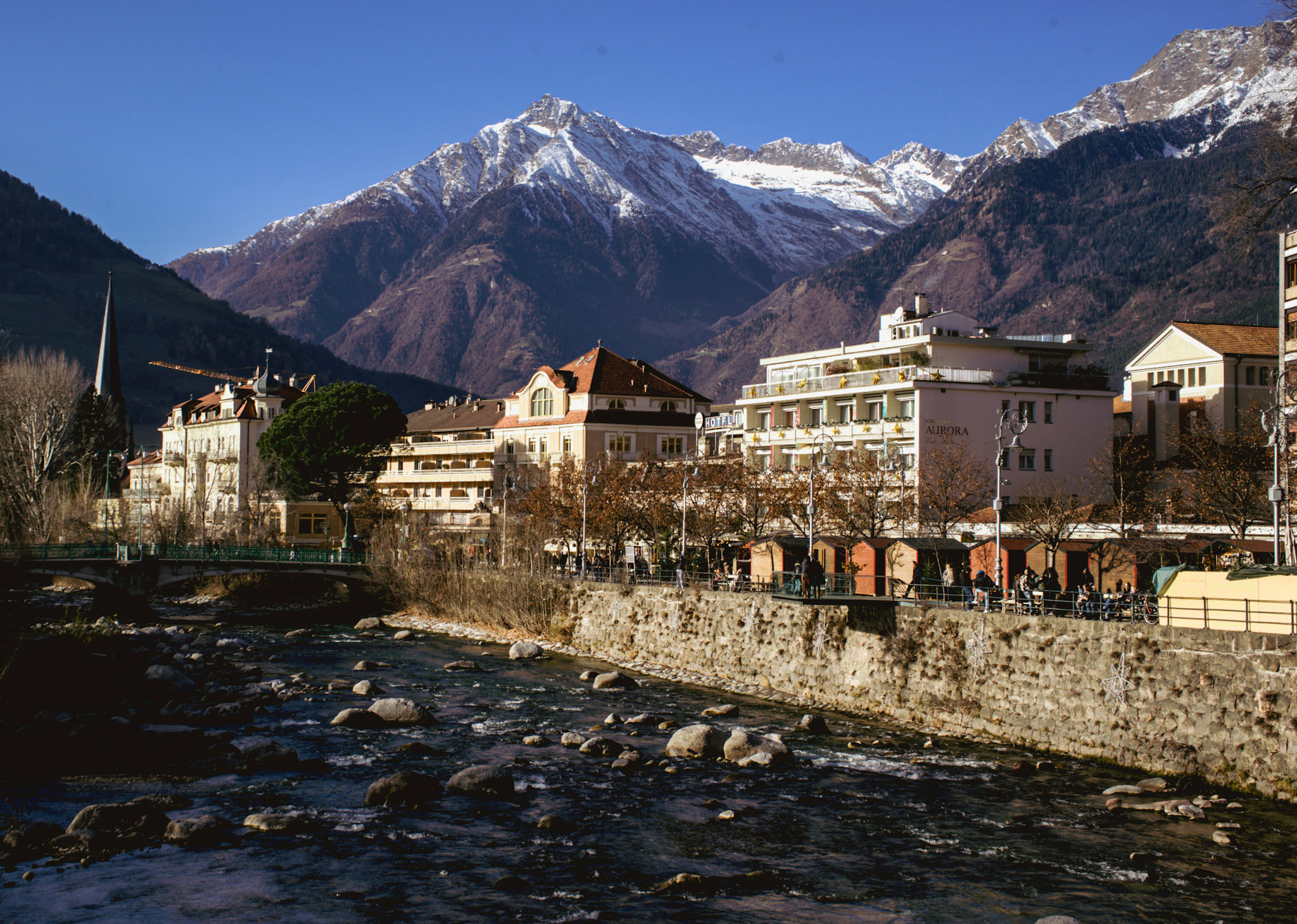
The Merano Christmas Market runs along the river, not in a central square, and that changes everything. The good news for me? It was right outside my hotel! Everything about this whole city is beautiful and I much prefer it over Bolzano
It feels:
- quieter
- more open
- more scenic
It’s a bit smaller and more intimate, allow yourself to walk through the old town and enjoy this sites
I particularly loved the stalls here because there are more local artisans and I adored the whimsical items they had on sale. Not to mention the views were phenomenal. It’s safe to say that if Bolzano is busy city life (it’s the most major city in South Tyrol) Merano is it’s quiet other half.
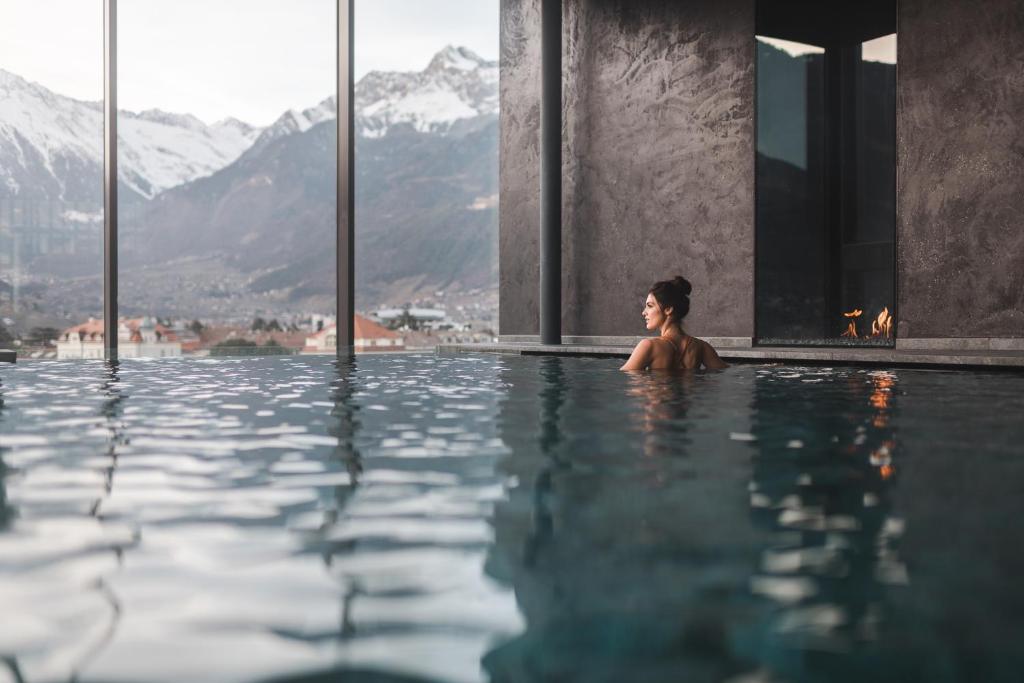
That night, I went to Terme Merano—and this is something I would absolutely do again.
After being outside in the cold all day, stepping into the thermal baths completely changed the experience.
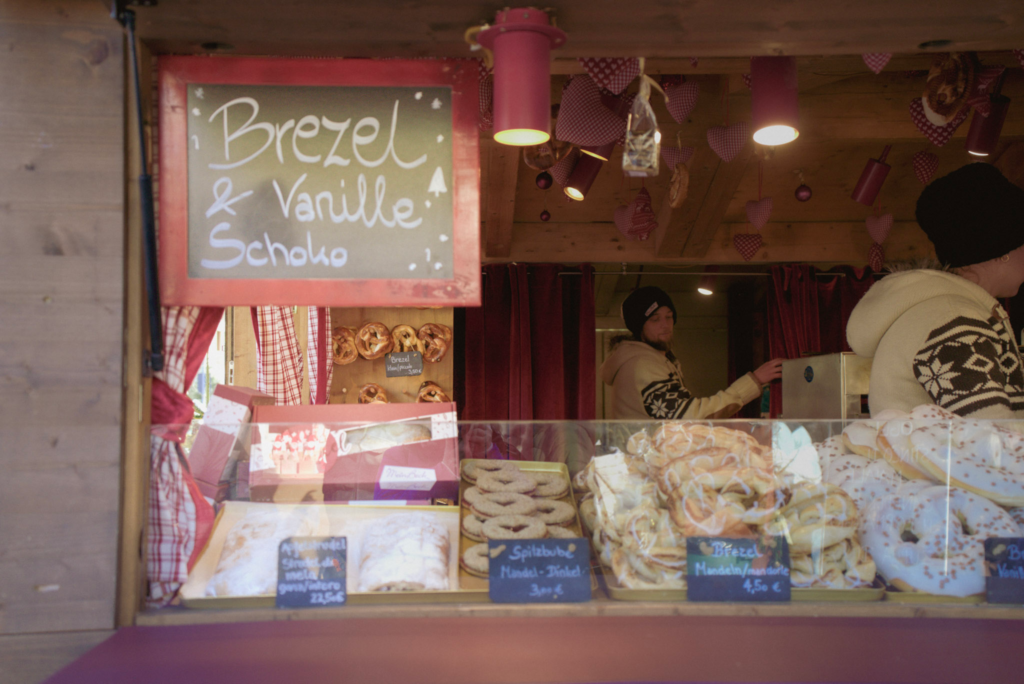
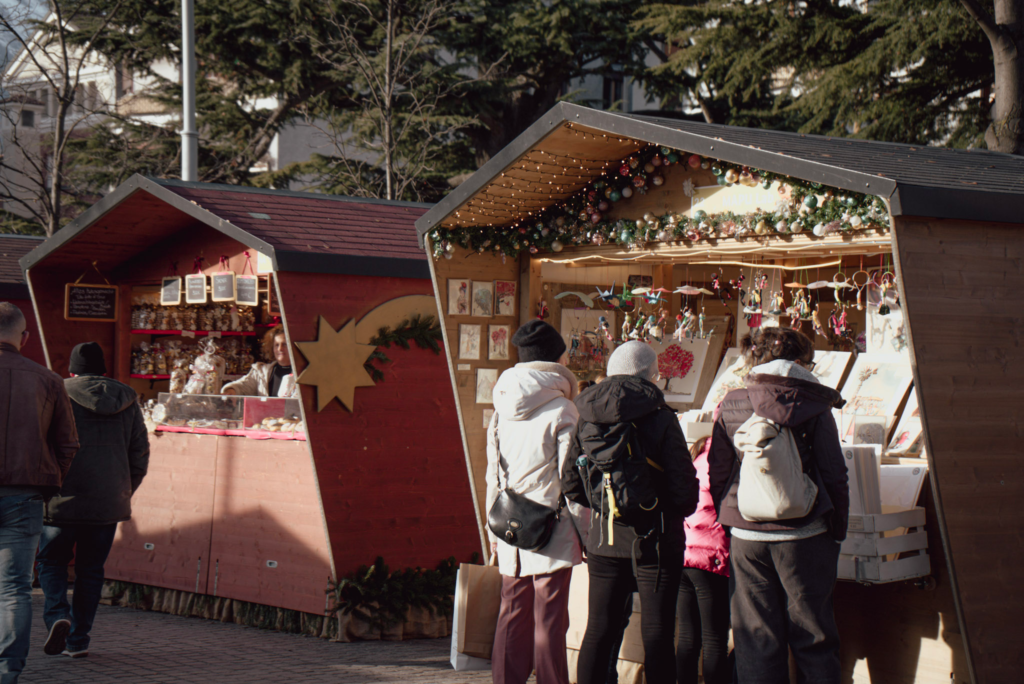
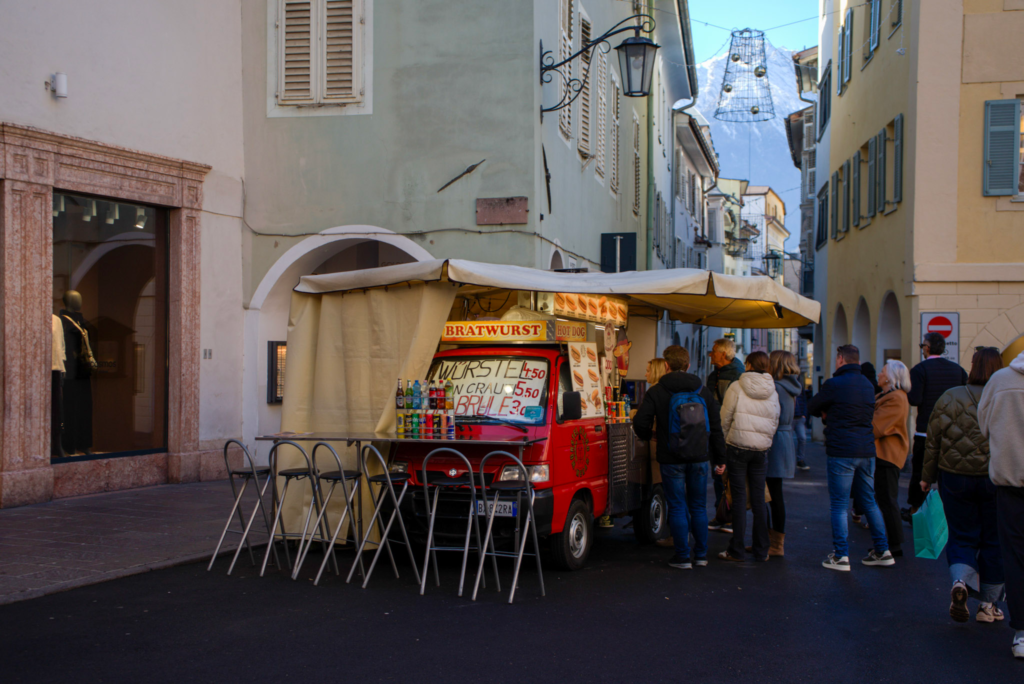

Where I stayed in Merano
I stayed at Hotel Therme Meran, and it was one of the best decisions I made. The location is perfect, especially if you’re driving, and in winter the entire experience feels elevated. The Hotel is right next to the Chirstmas Market in Merano!
Day 3: Lago di Resia
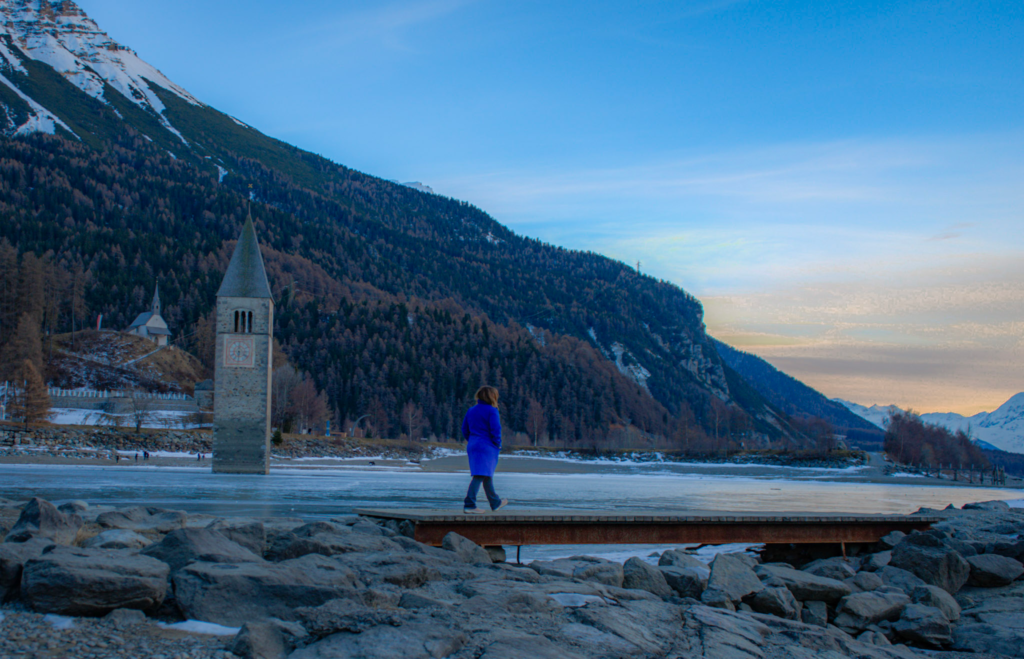
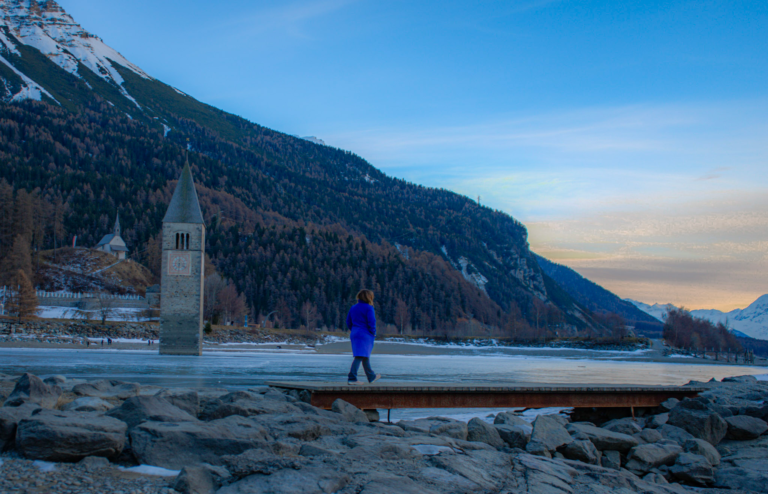
On my third day, I went to Lago di Resia—and I would do it this way again every time. The drive is about 1 Hour away from Merano. This is the one day where I would absolutely recommend having a car.
Most people go straight to Lago di Braies, but Lago di Resia ended up being one of the most memorable parts of my entire trip.
The drive into Val Venosta feels completely different. It’s quieter, more open, and far less crowded.
And then you see the bell tower.
The History of Lago di Resia (Why the Bell Tower Exists)
What makes Lago di Resia so striking isn’t just the landscape—it’s the history behind it.
The lake itself is actually artificial.
In the 1950s, a dam project merged two natural lakes—Reschensee and Mittersee—to create what is now Lago di Resia, mainly for hydroelectric power.
But doing that meant flooding the entire village of Curon.
Homes, farms, and buildings were submerged beneath the water, and most of the town was relocated.
The only structure left standing was the 14th-century church tower of Curon
You can walk on the lake but I also suggest just sticking to the path around the lake, there is one, and enjoying it that way.
Standing there, surrounded by mountains, in total silence—it just sticks with you.
On the Way Back to Merano
If you have time, I would also stop at Abbey of Monte Maria. It sits above the valley and adds a completely different layer to the day.
Where I Ate in Merano: Sissi Restaurant
While I was in Merano, I had dinner at Sissi Restaurant, and it ended up being one of the more memorable meals of the trip.
The restaurant focuses on South Tyrolean cuisine but in a more modern, elevated way. It’s not overly formal, but it definitely feels like a step up if you’re looking for something a bit more special for dinner.
What I liked most was how it still felt connected to the region. The flavors, ingredients, and dishes all reflect where you are, just presented differently than what you’ll find at the markets.
If you’re spending the day in Merano, I think this is a really good option for dinner—especially if you want to break up the trip with one nicer meal.
Day 4: Lago di Braies
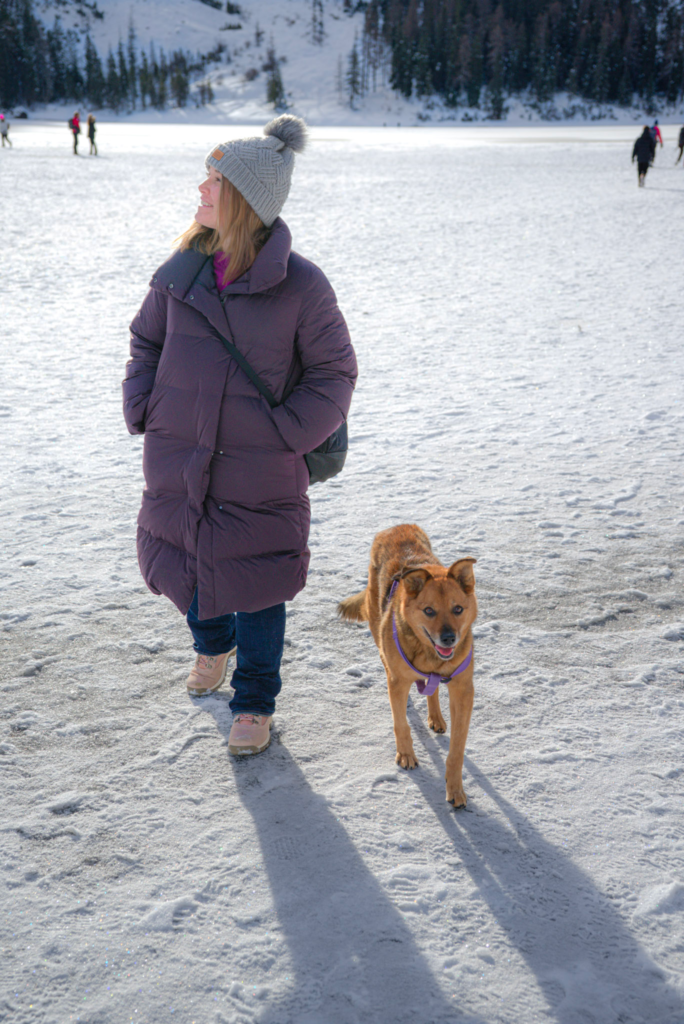
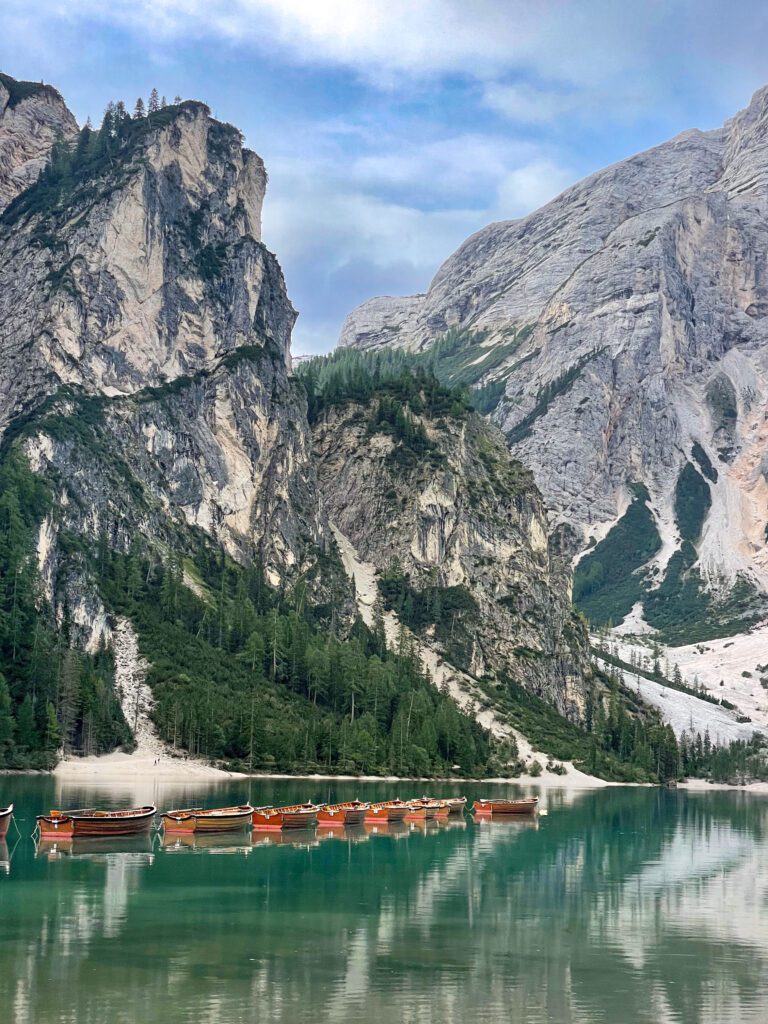
On my last day, I went to Lago di Braies—and yes, it’s popular, and it’s far, but it’s still worth it.
I went early, and that made a huge difference. It felt quiet, still, and way less crowded than I expected. On select days you’ll need to reserve access to Lago di Braies/Pragsersee, yes even during the winter time. So make sure you visit their website and understand if there are any enterance fees.
Here you can walk on the lake, but please do so at your own risk. with the weather being warmer the top of the lake isn’t as stable. The paths around Lago di Baries are walkable in the winter but a good pair of boots will go a long way!
If you want more time to explore Val Pusteria properly, I’ve put together a full 3-day Val Pusteria winter itinerary that goes deeper into this region.
👉 [Val Pusteria Winter Itinerary– Coming Soon]
Optional Add-On: Extend Your Trip to Sterzing or Bressanone
If you have an extra day, this is where I would add it.
After doing Bolzano, Merano, Lago di Resia, and Lago di Braies, you’ll have a really solid feel for the region. But if you’re not ready to leave yet, adding one more Christmas market day works well—and these are the two I would choose from.
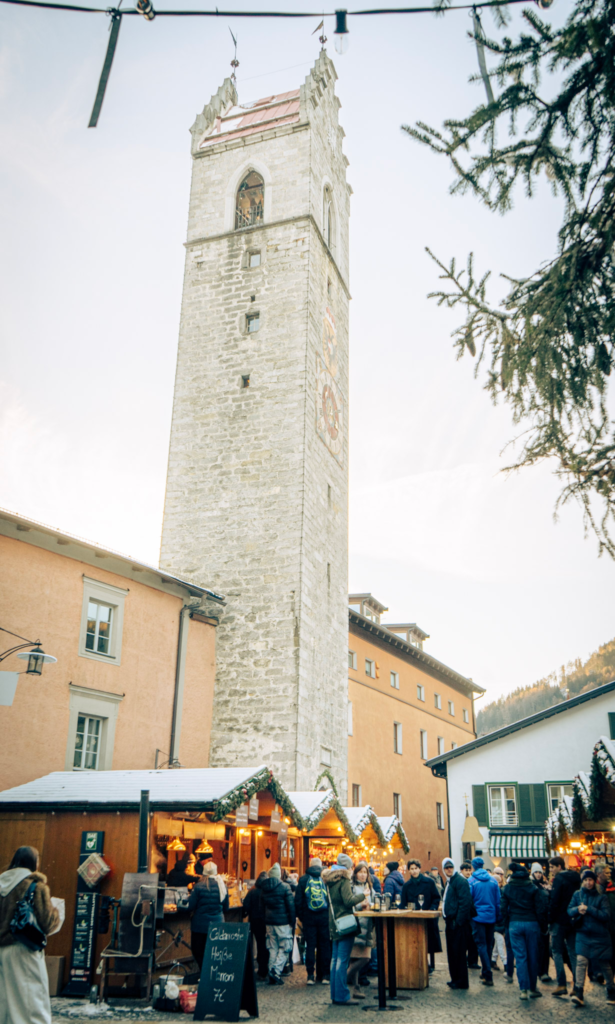
Sterzing (Vipiteno) Christmas Market
If you want something smaller and more local, I would go to Sterzing.
This ended up being one of the most underrated stops for me. It’s quieter than Bolzano and Merano, easier to walk through, and doesn’t feel as busy or overwhelming.
The market is set right in the historic center, with colorful buildings and a really cozy atmosphere. It feels more like a town Christmas market than a destination market.
It’s also an easy trip from Bolzano, which makes it a low-effort addition if you don’t want to overcomplicate your itinerary.
Dates of the Sterzing (Vipiteno) Christmas Market are on the official website.
Bressanone (Brixen) Christmas Market
If you want something a little more polished, I would choose Bressanone.
The Christmas market here is set in Piazza Duomo, right in front of the cathedral, and the setting is what really stands out. It feels more structured and a bit more “classic” in layout compared to Sterzing.
Bressanone also tends to have more events, including light shows and performances, which makes it a good option if you want something that feels a bit more festive in the evenings.
Dates of the Bressanone (Brixen) Christmas Market are on the official website
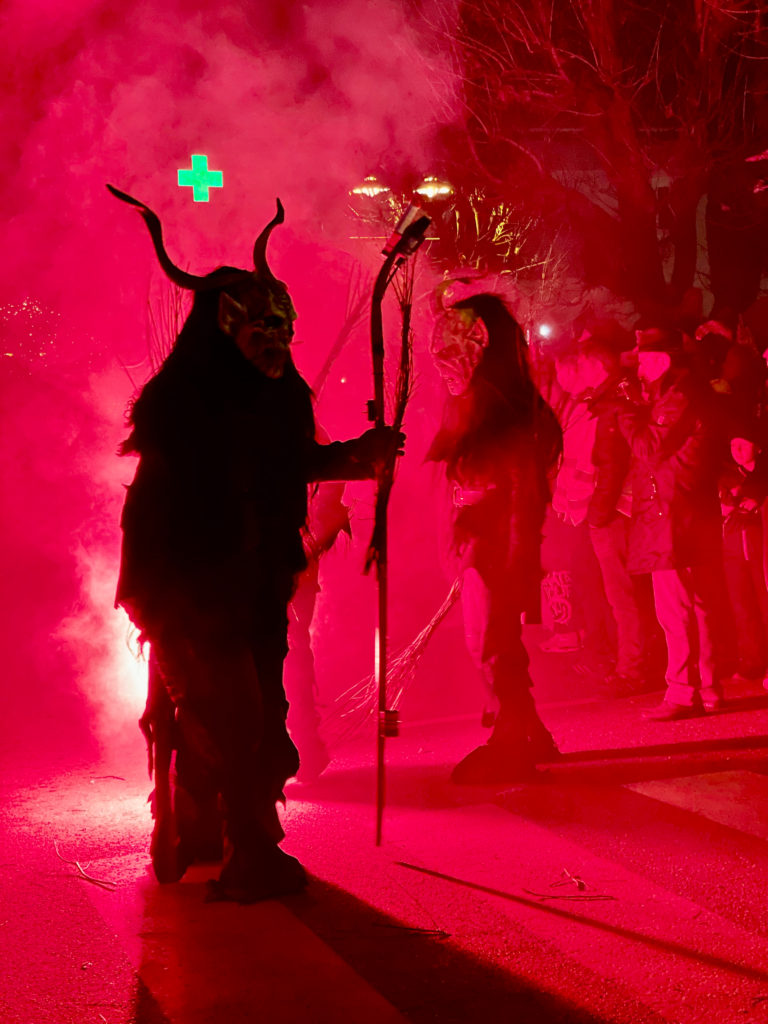
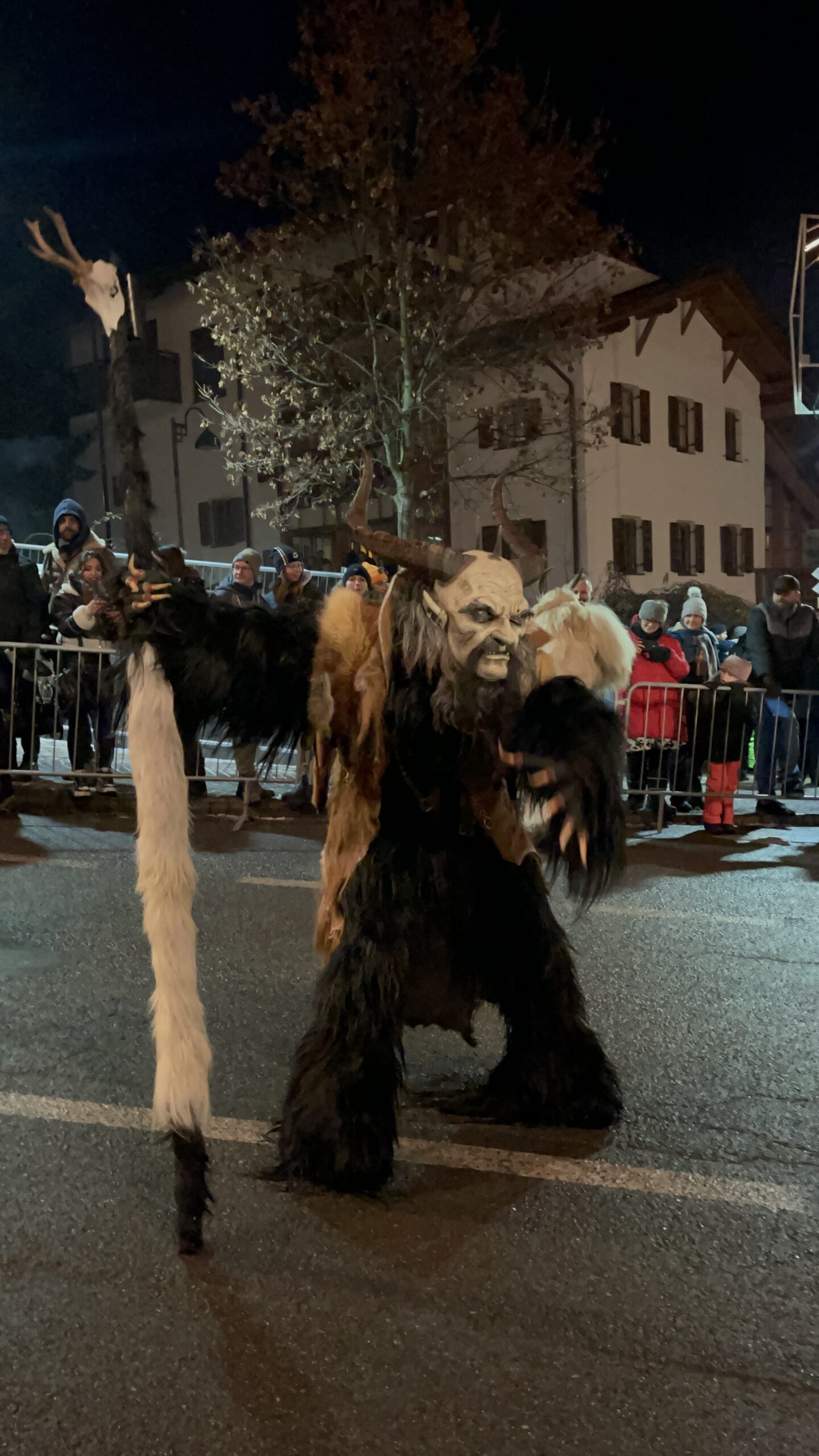
Krampus Runs in the Dolomites (What to Know)
If your trip lines up with it, experiencing a Krampus Run is one of the most unique things you can do in the Dolomites during the Christmas season.
I didn’t fully understand what to expect before going—but it’s very different from the Christmas market atmosphere.
Krampus Runs are traditional alpine events where people dress in elaborate, often terrifying costumes—wooden masks, horns, fur—and move through the streets in groups. It’s loud, chaotic, and a complete contrast to the cozy, relaxed feeling of the markets.
Some are more intense than others, but even the smaller ones feel immersive.
Kastelruth (Castelrotto)
This one is especially well known—but it only happens every two years, so timing matters.
👉 How to attend the Krampus Run in Kastelruth
Dobbiaco (Toblach)
This is one of the easier ones to pair with a Val Pusteria day.
👉 How to Survive the Dobbiaco Krampus Run
Check this schedule from the south tyrol tourism board so you can plan for more!
What to Eat at the Christmas Markets in South Tyrol
The food here is built for winter.
Polenta is served straight from large pans, knödel (bread dumplings) are filling enough for a full meal, and speck and mountain cheeses reflect the region’s alpine traditions.
My personal favorites were dumplings with speck and grilled sausage.
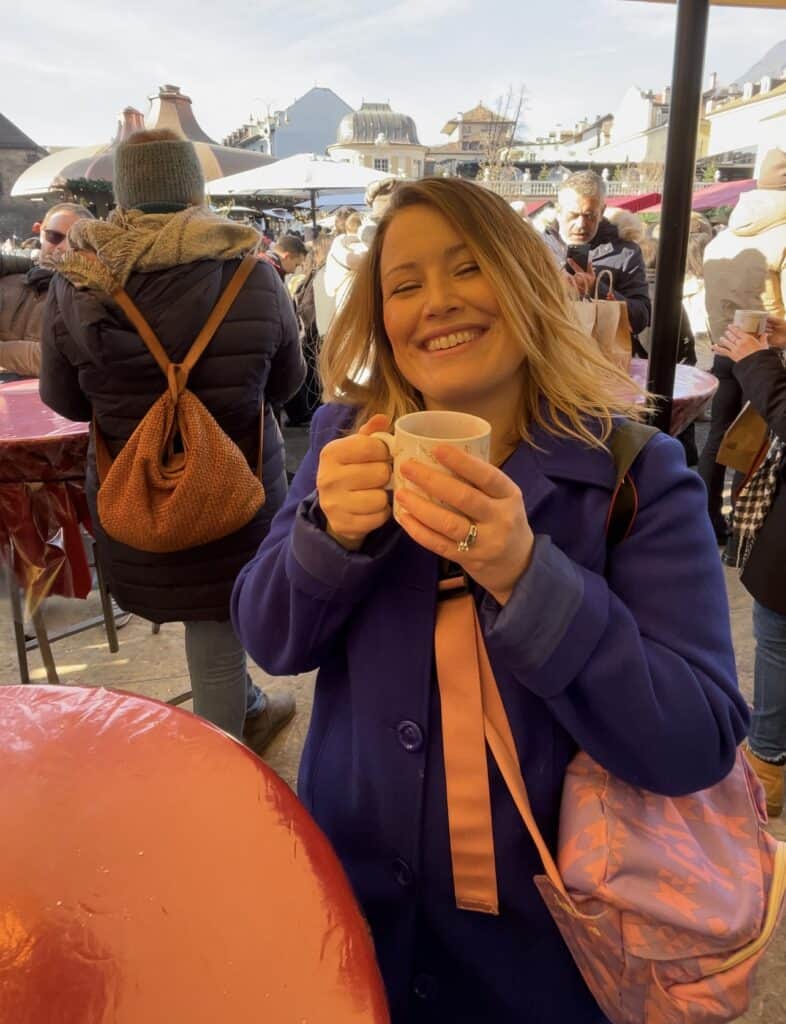
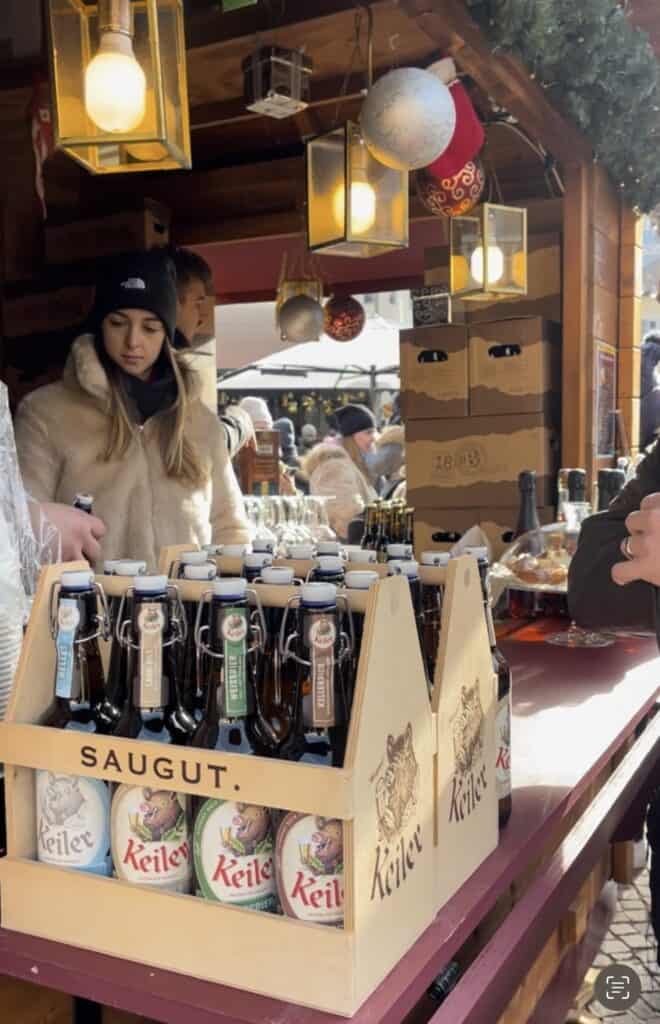
Vin brulè is the go-to drink. It’s similar to glühwein but typically stronger and less sweet. You’ll also find Forst beer and plenty of grappa.
Everything is designed for cold weather, slow evenings, and lingering.

How I Got Around the Dolomites in Winter
Since I live in Vicenza, I drove to Merano, and I would recommend doing the same if you have access to a car.
Driving gave me flexibility getting into South Tyrol, especially in winter when delays can happen.
But once I arrived, I stopped relying on my car.
Merano is compact and walkable, and I found it much easier to use trains to move between towns when I could. I used Trenitalia to check schedules, and the regional trains were reliable, inexpensive, and connected more places than I expected.
For example, I took the train to Bolzano without planning ahead. It took about 30–40 minutes and cost around €7.
My recommendation to you:
- drive to Merano
- use trains for places like Bolzano
- only use a car for deeper Dolomites stops
That balance made everything easier.
Where to Stay For this Christmas in the Dolomites Itinerary
If this is your first trip, stay in Bolzano.
If you want to elevate the trip: Stay in Merano.
I stayed at Hotel Therme Meran, and I would go out of my way to stay there again.
If you want peace and quiet and a bit of Dolomiti views stay in Kastelruth
You can view all of the Dolomites hotels I stayed with this link below.
👉 [Where to Stay in the Dolomites]
What Things Actually Cost at the Christmas Markets
One of the things I always try to figure out before a trip like this is how expensive the Christmas markets actually are—and honestly, South Tyrol felt pretty fair for what you get.
From my experience, prices at both the Bolzano and Merano Christmas markets were consistent and easy to plan around.
Here’s what I was typically paying:
- Vin brulè (mulled wine): €4.50–€6
- Hot apple cider or punch: €4–€5
- Sausage with bread or sauerkraut: €6–€9
- Knödel (dumplings): €7–€10
- Polenta dishes: €8–€11
- Desserts like apple strudel: €4–€6
What stood out to me wasn’t just the pricing—it was the portion sizes.
The food here is heavy, alpine-style food, and it’s actually filling. I found that one meal and a drink was usually enough, especially if you’re stopping multiple times throughout the day.
Most of the time, I would walk the market first, see what looked good, and then go back and choose. That helped me avoid over-ordering (which is very easy to do here).
If you’re traveling as a couple or with friends, it’s even easier to share a few dishes and try more things without spending a lot more.
Overall, I found that €25–€35 per person was more than enough for a full evening at the markets, including food and drinks.
Is This Dolomites Christmas Market Itinerary Worth It?
After doing this trip, I can confidently say yes—and I would follow this exact structure again.
What made it work wasn’t trying to see everything. It was simplifying the trip and building it around Bolzano.
That one decision made everything easier.
Bolzano gave me a base that was easy to navigate and well connected.
Merano slowed everything down and added a completely different atmosphere.
Lago di Resia made the trip feel unique and unexpected.
And Lago di Braies delivered that classic Dolomites experience.
Nothing felt rushed, and nothing felt like I was trying to force too much into one day.
If this is your first time visiting the Dolomites in winter, this is exactly how I would plan it.
You don’t need to overthink it. You don’t need to bounce between multiple hotels. And you don’t need to try to see everything.
Follow this structure, and you’ll experience the best of the Dolomites at Christmas in a way that actually feels manageable—and memorable.