
A Day Trip From Krakow to Zalipie, Poland: Visiting the Country’s Most Beautiful Painted Village
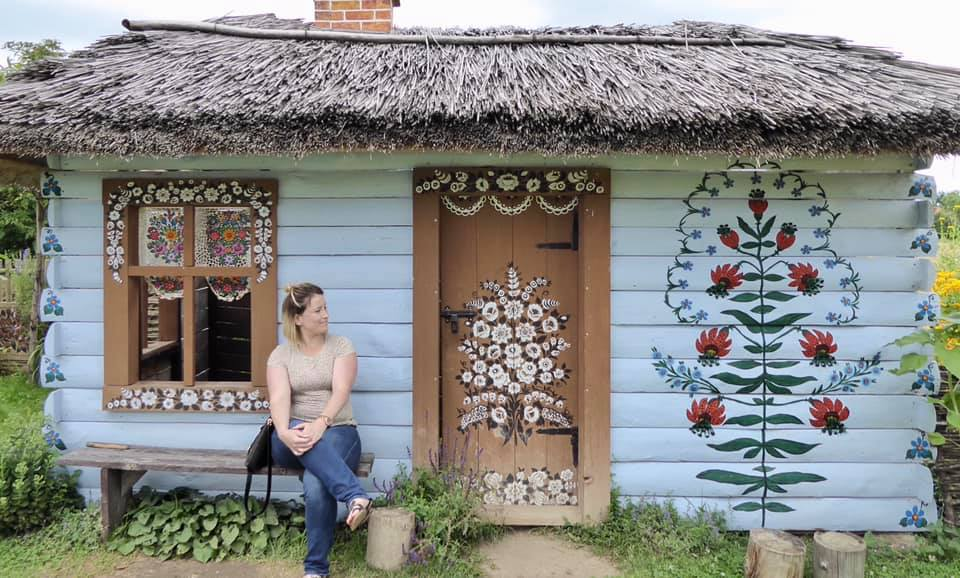
Certain places stay with you long after you leave, and for me, Zalipie, Poland, is one of them. I first visited during a summer road trip through southern Poland, a meandering route from Kraków heading toward Solina and the Bieszczady Mountains, the kind of slow travel that lets you take in places a little bit longer.
Zalipie was high on my list of places I’d long wanted to visit because I wanted to learn more about the folk villages of Poland. At the time, I felt like it was all I was seeing spread across my social media accounts. “The Painted Village of Southern Poland” by Culture.PL left me wanting to see this place for myself. No doubt, Zalipie left an impression on me.
I wasn’t prepared for the feeling of actually walking its quiet lanes, where wells, barns, gates, and even doghouses bloom with hand-painted flowers.
Zalipie just is what it has always been: a rural village where creativity lives on the walls of everyday life. And that’s exactly why it deserves a place on your Poland itinerary, and I want you to learn more about it!
What to Read Next:
- Where to stay in Krakow For First-Timers + map!
- Nowa Huta: A Guide to a Lesser-known Gem in Krakow, Poland
- Best Tours to Take in Krakow, Poland, For First-Timers
- Traditional Polish Foods in Krakow: What to Eat, Where to Find it!
- 10 of the Best Places to Visit in Krakow, Poland
Zalipie, Poland At A Glance
Where: Zalipie, Lesser Poland (1.5 hours from Kraków)
Known For: Painted cottages + folk floral art
Must-See: Felicja Curyłowa Museum, Dom Malarek, painted wells & barns
Best Time: Late spring–summer (June for the freshest murals)
How Long: 2–3 hours
Getting There: Car is easiest; train to Tarnów + bus is possible
Cost: Museum ~12 zł; rest free
Entry Fees: Free Village Wander: Free
Good to Know: Quiet rural village; bring water/snacks and be mindful of private homes
Felicja Curyłowa Museum: ~12 zł (about €2.50)
Dom Malarek: Free
What Is Zalipie? Why This Painted Village Captures Travelers’ Hearts
If you’re searching for an unforgettable day trip from Kraków, Zalipie is one of the most unique cultural stops you can make. It’s often described as Poland’s most beautiful village, and while that’s a bold claim, it doesn’t take long to understand why.
Instead of grand architecture, Zalipie’s beauty comes from its simplicity:
- whitewashed cottages covered in bright flowers
- hand-painted barns and fences
- wells ringed with colorful motifs
- women tending gardens in front of masterpieces they created
Walking through Zalipie feels like entering a living folk art gallery — but one without crowds or commercialization. Just quiet roads, color, and creativity rooted in everyday life.
Where Is Zalipie, Poland?
How to Use This Map:
Click the icon in the top left corner to see all the places I’ve pinned around the city— from cafés and museums to scenic viewpoints. You can turn layers on or off and click any pin to learn more about each spot. Want to keep it handy for your trip? Click the star next to the map’s title to save it to your Google account.
Then, open the Google Maps app, go to “Saved” → “Maps,” and you’ll see this map ready to guide you while you explore.
Zalipie sits in the quiet countryside of southeastern Poland, tucked into the rolling farmland of the Małopolska (Lesser Poland) region. It’s not far from the Dunajec River valley, and it lies between the small towns of Dąbrowa Tarnowska and Tarnów, about 100 kilometers east of Kraków.
This is rural Poland at its most peaceful — a patchwork of fields, gardens, wooden cottages, and winding country lanes. When you drive toward the village, you’ll notice how quickly the landscape shifts: the noise of Kraków fades, the roads narrow, and the countryside opens into wide skies and family farms. By the time the first painted cottage appears around a bend, you feel like you’ve stepped into a completely different pace of life.
Even though Zalipie looks remote on a map, it’s incredibly doable as a day trip. Most travelers reach it by driving from Kraków (about 1.5 hours) or from Tarnów (around 35 minutes). From Kraków, the route takes you east along the A4 motorway before gently dipping into the countryside where the painted houses begin to appear, scattered across the village rather than clustered in one central square.
In short, Zalipie is close enough to visit in a single day, but far enough to feel removed from everything. It’s one of those rare places where the journey sets the tone, quiet, slow, and beautifully local, long before you even reach your first blooming mural.
The History of Zalipie’s Painted Houses
The tradition of painting houses in Zalipie didn’t begin as decorative art. It started as a practical solution to a very rural problem.
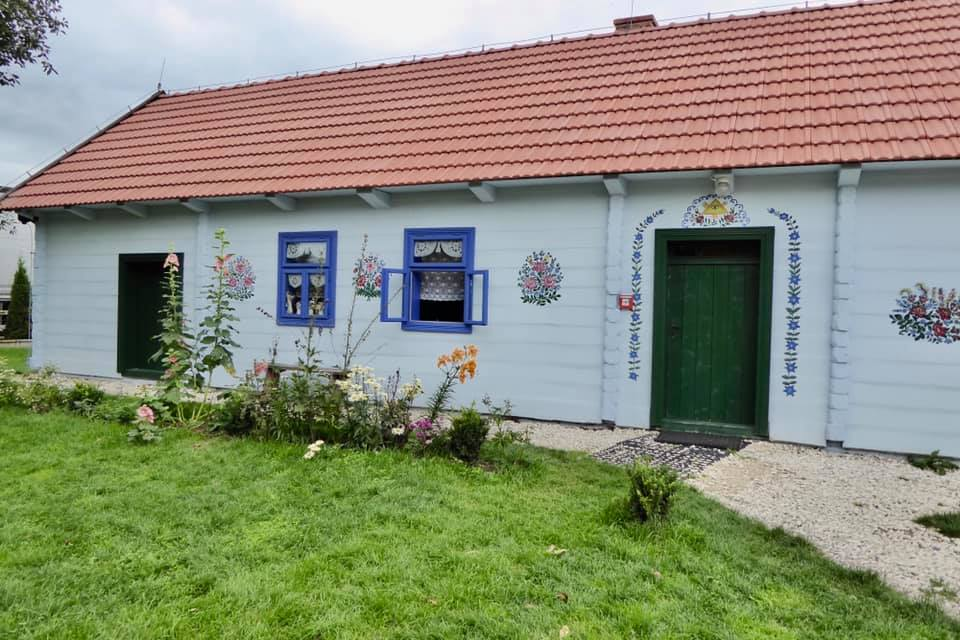
Before homes had chimneys, soot from stoves coated the interiors of wooden cottages. To brighten up the dark walls, the women of Zalipie whitewashed over the stains and began adding simple patterns like dots, circles, and flowers.
Over time, those simple decorations evolved into a recognizable folk tradition.
Women painted:
- interior walls
- ceilings
- stoves
- beds and furniture
- window frames
- and eventually the entire exterior of their homes
It’s a tradition passed down through generations, and today Zalipie is known across Poland as the village that bloomed through ingenuity and artistry.
How Zalipie’s Painted Tradition Survived the Communist Era
What makes Zalipie even more remarkable is that this quiet, floral tradition survived some of the most turbulent decades in Poland’s history. During the communist era, especially between the late 1940s and the 1980s, rural communities across the country were reshaped by state policies. Collective farms rose and fell, village life changed dramatically, and many local customs slowly disappeared under the weight of modernization and political control. But Zalipie held on. While other regions saw their folk practices pushed aside, the women of Zalipie kept repainting their cottages year after year — not as a statement, not as agitprop, but as a stubborn act of continuity. They painted because it was theirs. It brightened the long winters, because it was how they understood beauty and home.
And strangely, the communist government helped preserve what might otherwise have faded. After WWII, state authorities were eager to promote a unified Polish identity rooted in “the people,” which meant folk art was seen as culturally valuable and ideologically safe. Modern art was censored, intellectuals were watched, but floral bouquets on village cottages? Those were harmless, even desirable.
Malowana Chata Competition
In 1948, the government launched the first Malowana Chata competition, encouraging women to repaint their homes every spring. Judges traveled from Tarnów and Kraków to evaluate the murals, select winners, and showcase the village as a model of “authentic” Polish rural culture. While the motivations were political, the outcome was unexpectedly protective: Zalipie’s cottages were refreshed annually, its painters were supported, and its tradition not only survived — it bloomed.
Walking through Zalipie today, it’s impossible not to feel that layered history. The flowers aren’t just decorative. They’re echoes of women who kept painting through rationing, through propaganda broadcasts on state radio, through the silence of long winters, through years when hope was something you tended quietly, like a seedling. The very fact that the village still blooms today is a testament to resilience — not loud, not heroic in the conventional sense, but steady, patient, and rooted in place.
- Where to stay in Krakow For First-Timers + map!
- Nowa Huta: A Guide to a Lesser-known Gem in Krakow, Poland
- Best Tours to Take in Krakow, Poland, For First-Timers
- Best Polish Folk Shows in Krakow: Which One Should You Take?
- Traditional Polish Foods in Krakow: What to Eat, Where to Find it!
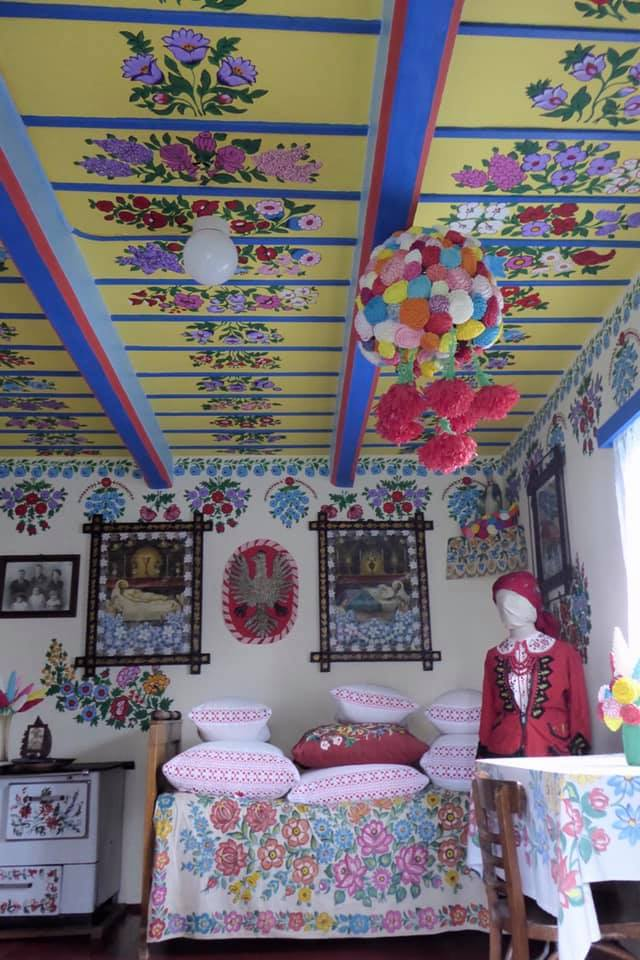
Felicja Curyłowa: The Woman Who Brought Zalipie to the World
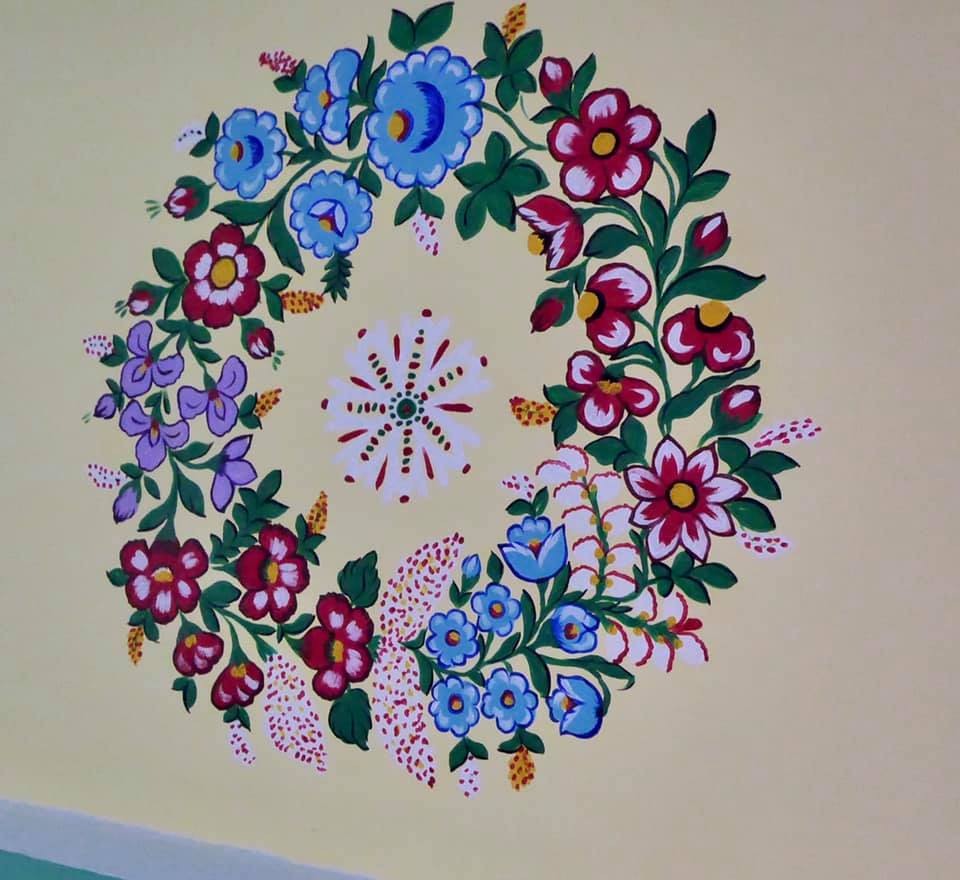
Stepping inside Felicja Curyłowa’s cottage was one of the most memorable parts of my visit. Her farmhouse, now a museum, is a wash of color. Every surface bursts with flowers. The walls. The ceilings. The stove. The dishes. Even the lightbulbs once carried her designs.
Felicja began painting secretly as a child, decorating her family’s cottage when no one was looking. She was reprimanded, but thankfully, she never stopped. Imagine what would have happened if she stopped?!?
Her talent eventually made her the face of Zalipie’s folk art. She traveled around Poland, painted public spaces, and even designed patterns for ceramics. She also fiercely advocated for her community, fighting for electricity, pushing for paved roads, and using her growing recognition to uplift her village.
What stays with you, though, isn’t just what she painted.
It’s the life she created around that paintbrush and the legacy she left behind.
Her cottage museum is a must-see when visiting Zalipie.
The Malowana Chata Festival: Where Tradition Continues
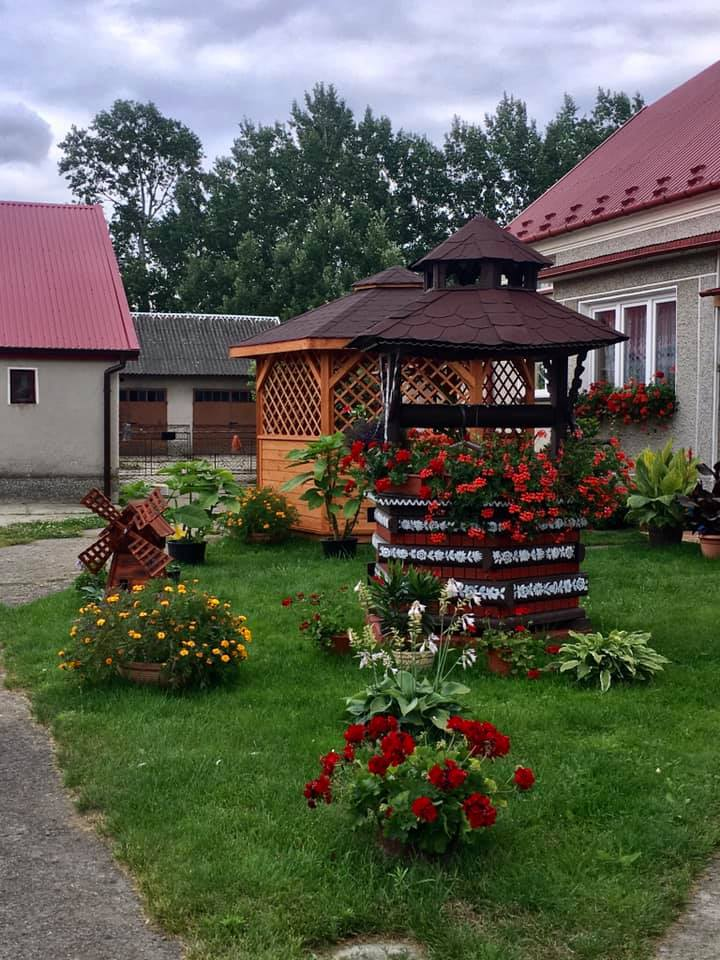
Every June, right after Corpus Christi, Zalipie hosts the Malowana Chata (“Painted Cottage”) competition. This decades-old tradition encourages residents to repaint and refresh their homes each year, keeping the village vibrant.
If you visit in late spring or early summer, you’ll see the newest designs at their brightest — sometimes still drying in the sun. It’s folk art as community identity, and the entire village participates.
Things to Do in Zalipie: What to See on Your Day Trip
Despite its small size, Zalipie offers a surprisingly rich experience. The beauty is in how slow it is, how gentle the rhythm feels as you wander.
1. Visit the Felicja Curyłowa Farmstead Museum
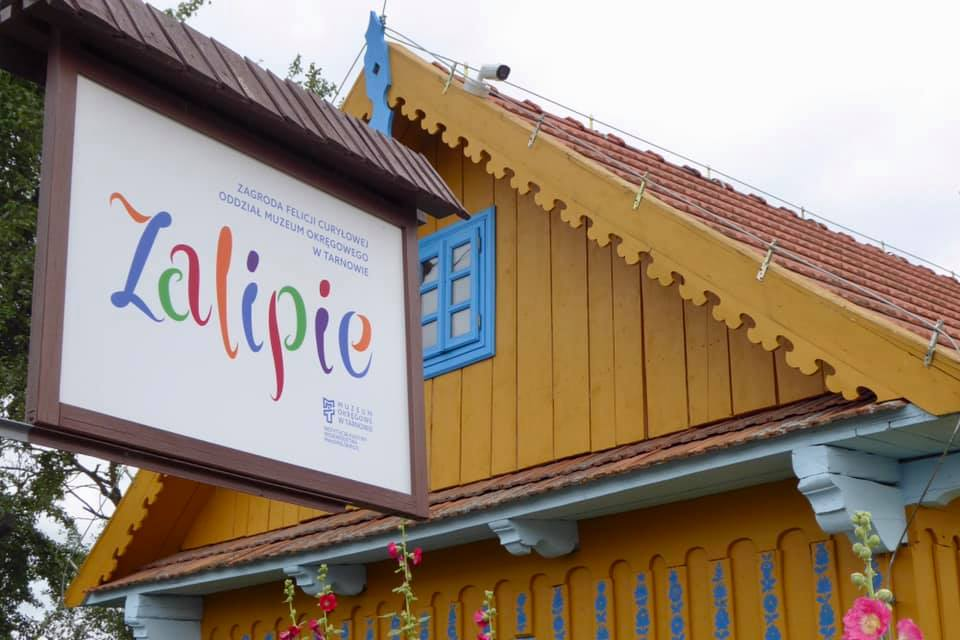
This was Felicja Curyłowa’s home — the woman who turned Zalipie’s folk tradition into a national treasure — and today it’s a branch of the Tarnów Regional Museum. A guided tour runs on the hour, and stepping through the doorway feels like entering another world entirely.
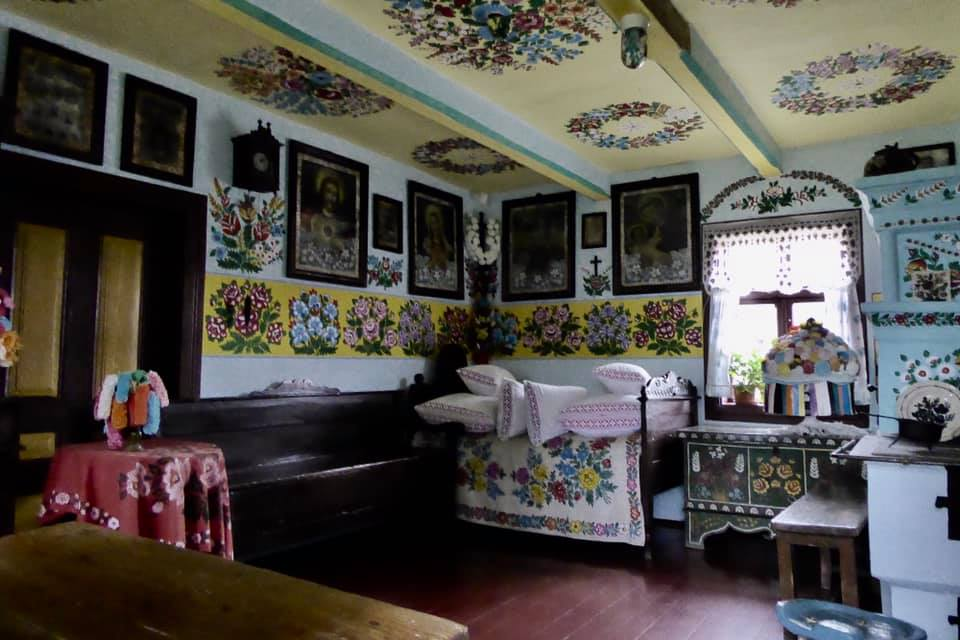
The cottage is made up of three small rooms, each one overflowing with Felicja’s original artwork. The walls are covered in hand-painted flowers. The ceilings bloom with ornate vines. Even the furniture, dishes, and beams are decorated. Don’t miss the blue kitchen stove — it’s one of the most striking pieces in the entire house.
The museum complex includes more than Felicja’s cottage:
- A second cottage belonging to Stefania Łączyńska, another local painter, filled with traditional furnishings and floral motifs.
- A smaller painted cottage showing what a more modest home looked like — proof that this tradition belonged to everyone, not just those with means.
- A converted barn and cowshed, now used for exhibits, workshops, and the ticket office.
Museum entry is very affordable (around 12 zł / ~€2.50) and it’s usually open Tuesday–Sunday. Summer hours tend to be longer, while winter hours are more limited — it’s worth checking times before you go.
This stop sets the tone for everything else you’ll see in the village.
2. Stop at Dom Malarek (House of the Painters)
Address: Zalipie 128A
Admission: Free
This is the village’s cultural hub — part gallery, part archive, part community space. Inside, you’ll find exhibits of Zalipie’s floral art ranging from historic black-and-white photos to contemporary pieces created by today’s painters.
It’s also where the tradition continues.
Local women still gather here to teach workshops, share techniques, and pass their style on to younger generations. If you’ve ever wanted to try your hand at painting a Zalipian flower, this is the place. The artists are welcoming, and the workshops are hands-on without feeling intimidating.
Dom Malarek also sells locally made items, so if you want a hand-painted wooden box, pottery, or small artwork, buying it here directly supports the community.
Hours are typically weekdays year-round, with weekend openings in the warmer months.
3. Explore the Painted Cottages
This was my favorite part of visiting Zalipie — simply walking, even though southern poland can be warm. I didn’t mind walking around Zalipie.
There’s no Main Street. No official loop. The painted homes are scattered across the village, so bring your curiosity and let yourself drift. You can pick up a free map at Dom Malarek or the museum with marked houses worth seeing.
Expect to find:
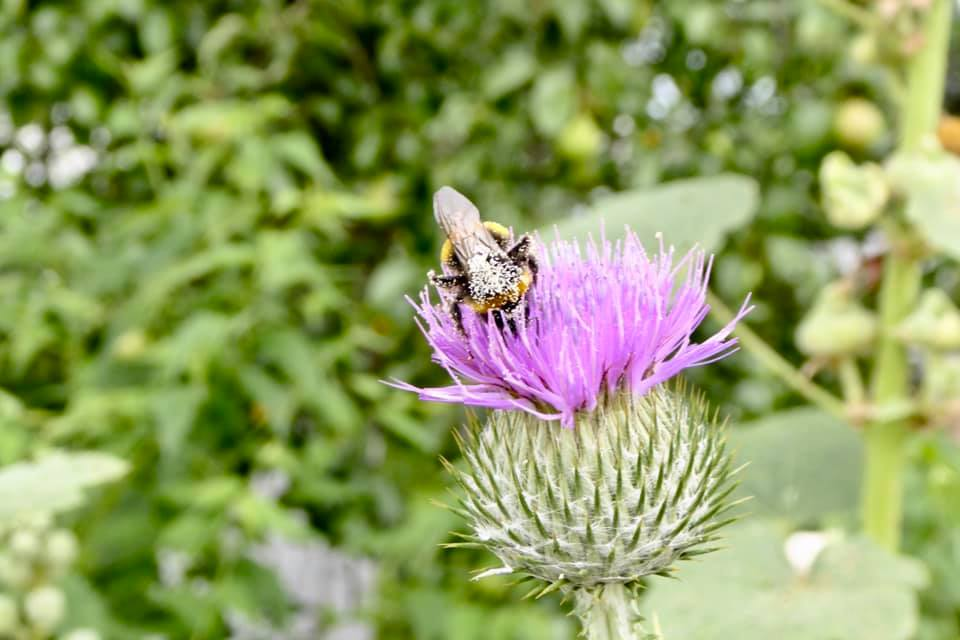
- white cottages blooming with flowers and so many bees and butterflies!!
- gardens filled with hollyhocks and marigolds, WHICH ARE GORGEOUS!
- wells and barns covered in vines and bouquets
- blue-framed windows decorated with delicate petals
- tiny painted doghouses
- gates with bright garlands
- Apiaries– even these are painted!
Some estimates say about 20–30 houses are actively decorated at any given time. In reality, it feels like more, because every corner reveals something new.
Zalipie is a rural village — the kind where you might hear chickens clucking, see someone tending strawberries in the garden, or spot a cat sleeping beside a painted fence. It’s peaceful, quiet, and incredibly grounding.
4. Step Inside St. Joseph’s Church
One thing I love about folk traditions in Poland is how seamlessly they blend with daily life — and Zalipie’s church is a perfect example.
Inside this small village parish, the walls and altars are decorated with Zalipian floral motifs, making the space feel warm and deeply personal. Even some of the liturgical elements carry painted designs. It’s one of the most beautiful examples of how folk art and faith meet in rural Poland.
The Flowers of Zalipie: A Folk Art Style All Its Own
One of the things that surprised me most during my visit was how different Zalipie’s painted flowers are compared to other regions in Poland. In places like Łowicz, Kurpie, or Kaszuby, folk art follows strict patterns, color rules, and recognizable floral motifs. I loved discovering throughout my time living in Poland that folk flowers are everywhere — and that nearly every region has its own signature style or design.
But Zalipie is the exception.
While many areas follow a defined regional pattern, Zalipie’s art doesn’t adhere to a formalized design system at all. The flowers here are freer, more intuitive, and more personal — painted by women who simply recreated the wildflowers and garden blooms they saw around them.
Their inspiration came from:
- wild poppies
- cornflowers
- daisies
- marigolds
- roses
- sunflowers
- hollyhocks
And often, from flowers that exist only in their imagination — rounded, oversized, joyful blossoms.
Zalipian floral style is known for:
- curved, generous petals
- bold colors (red, blue, yellow, green)
- brown and black outlines
- sweeping vines and garlands
- composition that feels like a bouquet rather than a single flower
- no symmetry — a complete contrast to Łowicz patterns
Once you know this, wandering Zalipie becomes even more special. You start noticing each cottage’s personality in its brushstrokes. No two homes look alike — each reflects the woman who painted it.
How to Visit Zalipie From Kraków
Zalipie is about 1.5 hours east of Kraków by car — one of the easiest and most rewarding day trips you can make. We had our own car (obviously because we lived in Bydgoszcz)
By Car (Best Option)
The fastest and most flexible way. You can easily rent a car in Krakow and drive to Zalipie from Krakow.
The closer you get, the more scenic the drive becomes. This area of Poland is probably one of the most scenic.
Use the simple chart below for travel by car to Zalipie.
| Departure City | Train Route | Bus Route | Total Travel Time |
| Kraków | Kraków → Tarnów (45–60 min) | Tarnów → Zalipie (40–50 min) | ~1 hr 45 min–2 hr 15 min |
| Tarnów | — | Tarnów → Zalipie (20–40 min) | ~20–40 min |
| Warsaw (Warszawa) | Warsaw → Tarnów (2–2.5 hr) | Tarnów → Zalipie (40–50 min) | ~2 hr 40 min–3 hr 20 min |
Tours to Zalipie, Poland, from Krakow
Several companies offer Zalipie day trips from Kraków. Good for those who don’t want to drive or navigate public transport, I love this for travelers on a budget. I think guided tours are a perfect way to learn more because a) you are with a guide b) transportation is included!
1. From Kraków: Zalipie Village Day Tour
Discover the floral-painted village of Zalipie on a full-day outing from Kraków.This tour takes you right into the heart of rural folk art tradition — wander hand-painted cottages, visit the museum of the legendary painter Felicja Curyłowa, and explore countryside lanes far from typical tourist routes. Ideal for travelers who want a deeper cultural escape beyond city walls.
2. Kraków: UNESCO Salt Mine & Rural Poland Tour
For a day that pairs Poland’s subterranean marvels with pastoral charm, this tour delivers. Start at the atmospheric salt mine (a UNESCO site) and then head into rural Poland’s quieter corners — including a visit to Zalipie’s painted village. Perfect for those who want to combine history, unique landscapes and folk art into one memorable trip.
3. From Kraków: Guided Tour of Zalipie
If you’re focused solely on Zalipie and want a guided experience, this tour is your match. With a local guide leading you, you’ll step beyond the picture-postcard houses into the stories: the women painters, the village tradition, the evolving style. It’s more than just seeing—it’s understanding.
4. Kraków: Guided Day Tour of Zalipie Village with Museum Entry
This tour highlights the best of Zalipie—complete with entry to the museum of Felicja Curyłowa. You’ll combine wandering the painted lanes with the deeper context of her farmhouse, original artwork and village life as it is today. Ideal if you want the fuller story behind the flowers and the heritage.
Honestly, I would NOT visit during the wintertime, as I think a visit here during the wintertime in poland, you’ll lose the vibrancy, instead:
- Visit in late spring or summer for peak color
- Start at Dom Malarek for maps and info
- Wear comfortable shoes
- Bring water and snacks
- Be respectful when photographing private homes
- Allow 2–3 hours to wander the village slowly
Why Zalipie Is Worth the Day Trip
Zalipie isn’t a flashy destination.
It doesn’t try to overwhelm you.
Instead, it invites you into something gentler — a village where creativity became a way of life, where women transformed soot-stained walls into joyful patterns, and where one remarkable artist helped protect a tradition that still blooms today.
If you’re traveling through southern Poland and want something meaningful, quiet, and deeply cultural, Zalipie is one of the most rewarding day trips from Kraków.
It’s simple.
It’s beautiful.
And it stays with you.
