
Food in Krakow: 15 Polish Dishes and Where to Try Them
Last Updated on September 13, 2026 by Kimberly
Poland is so much more than pierogi, and Kraków is one of the best cities in the country to discover how varied Polish food can be.
I lived in Poland and have returned to Kraków repeatedly, sometimes with Polish friends who introduced me to dishes and restaurants I would never have found on my own. Over the years, I have eaten everything from smoky żurek and mushroom-filled pierogi to late-night kiełbasa served beside Kraków’s famous blue van.
This guide covers 15 traditional Polish foods worth trying in Kraków, including dishes that originated in the city, regional specialties from southern Poland, and comforting classics found throughout the country. I have also included where I tried them, what they taste like, and approximately what you can expect to pay.
Quick answer: If you only have time to try five foods in Kraków, choose obwarzanek krakowski, zapiekanka, maczanka krakowska, pierogi, and żurek. The first three have particularly strong connections to Kraków, while pierogi and żurek offer an excellent introduction to traditional Polish cooking.
This Post Pairs Well With:
- Learn More About Poland Here
- Chasing Paczki: Learn All about Tlusty Cwartek and Where to find the BEST Paczki in Krakow!
- Polish Christmas Market Food Guide: Don’t leave the Christmas Markets WITHOUT trying this food
Polish Food in Kraków at a Glance
| Food | What It Is | Where to Try It |
|---|---|---|
| Obwarzanek krakowski | Twisted, boiled-and-baked street bread | Street carts throughout Kraków |
| Zapiekanka | Toasted baguette with mushrooms and cheese | Plac Nowy or BarOko |
| Maczanka krakowska | Pork in caraway gravy served in a roll | Andrus at Judah Food Market |
| Pierogi | Polish dumplings with savory or sweet fillings | Pierogarnia Krakowiacy |
| Żurek | Sour rye soup, often served with sausage and egg | Staropolska Karczma |
| Kiełbasa | Grilled Polish sausage | Kiełbaski z Niebieskiej Nyski |
| Pączki | Filled Polish doughnuts | Cukiernia Michałek |
| Placki ziemniaczane | Crispy Polish potato pancakes | Krakowska Koliba |

Kraków Street Food and Local Specialties
1. Obwarzanek Krakowski
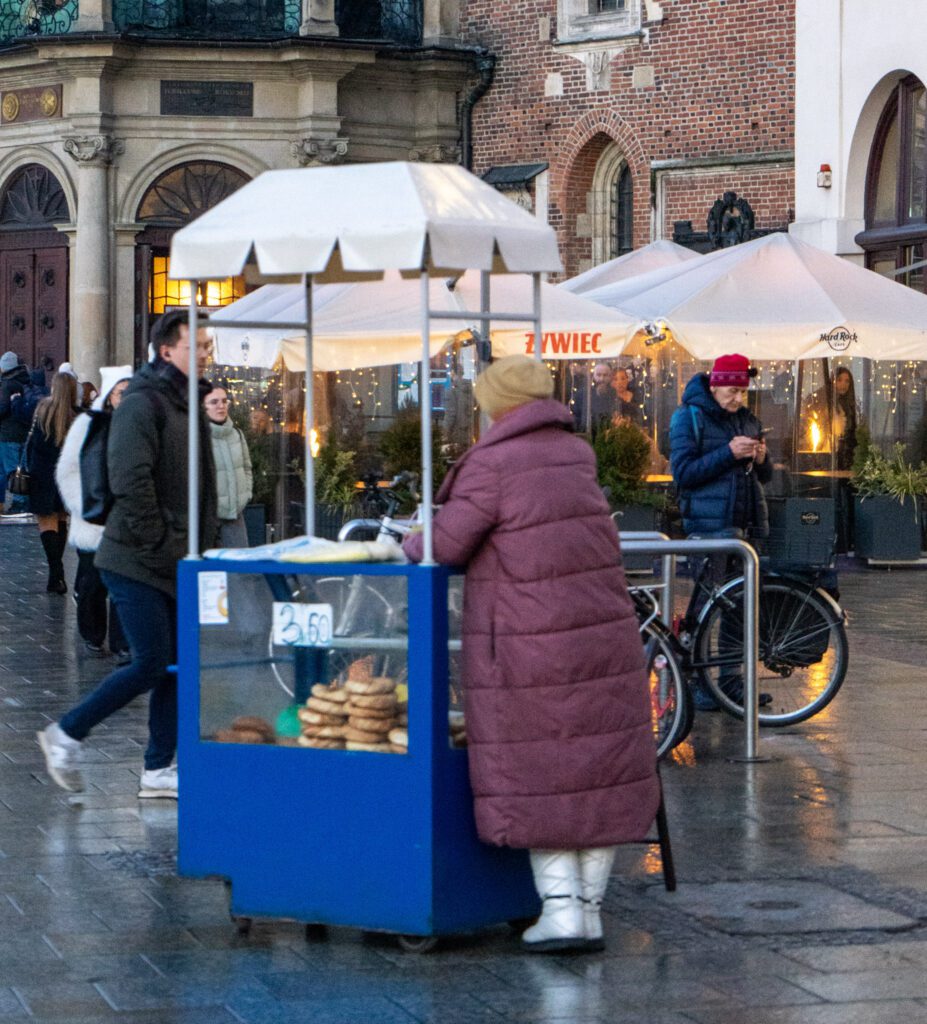
Obwarzanek krakowski, pronounced roughly ob-vah-ZHAH-nek kra-KOV-skee, is Kraków’s signature street food. The ring-shaped bread is twisted, briefly boiled, and then baked with toppings such as salt, sesame seeds, poppy seeds, cheese, or mixed herbs.
Although it is sometimes compared to a bagel or pretzel, obwarzanek has its own protected identity.
The first known reference dates to 1394, and the European Union granted it Protected Geographical Indication status in 2010. To qualify as an authentic obwarzanek krakowski, it must be produced in Kraków or the surrounding Kraków and Wieliczka counties.
You will see obwarzanek sold from blue street carts throughout the city. I usually buy one away from the busiest parts of Main Market Square, where prices are slightly lower and turnover is often better.
Where to try it: Look for the blue carts around Kraków
Typical price: Approximately 3–7 PLN
My recommendation: Choose one that still feels fresh and slightly warm. They become considerably chewier as they sit.
GO TO: Look for the blue carts scattered around the Main Square or Wawel Castle. They may be more expensive in the Stary Rynek and Wawel Castle, so if you see them in Nowa Huta, or outside the main areas, GRAB ONE!
2. Zapiekanka
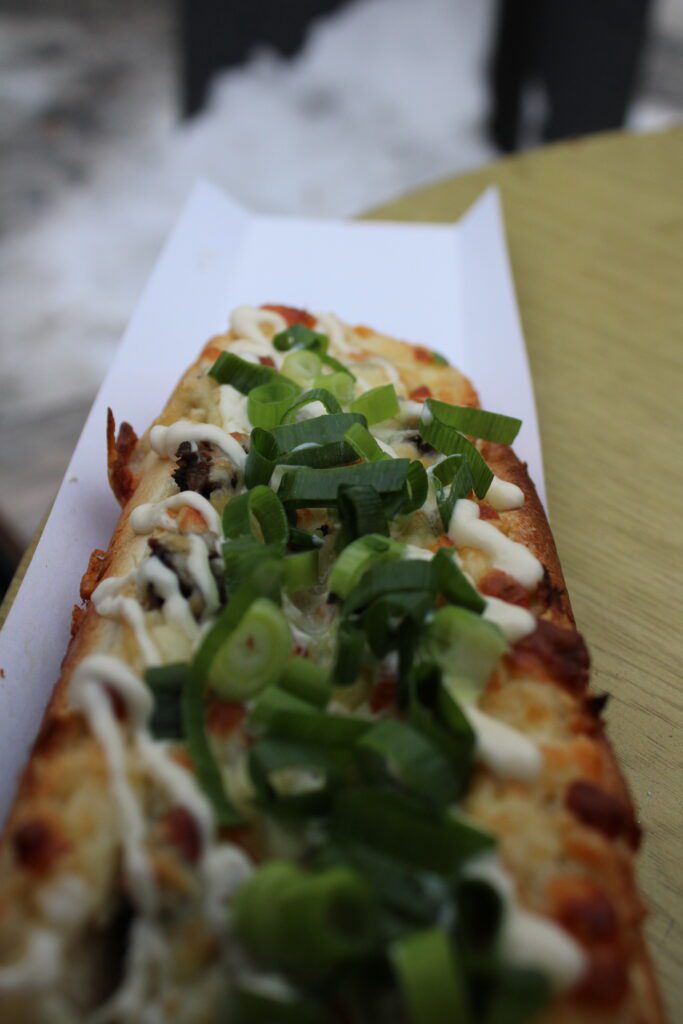
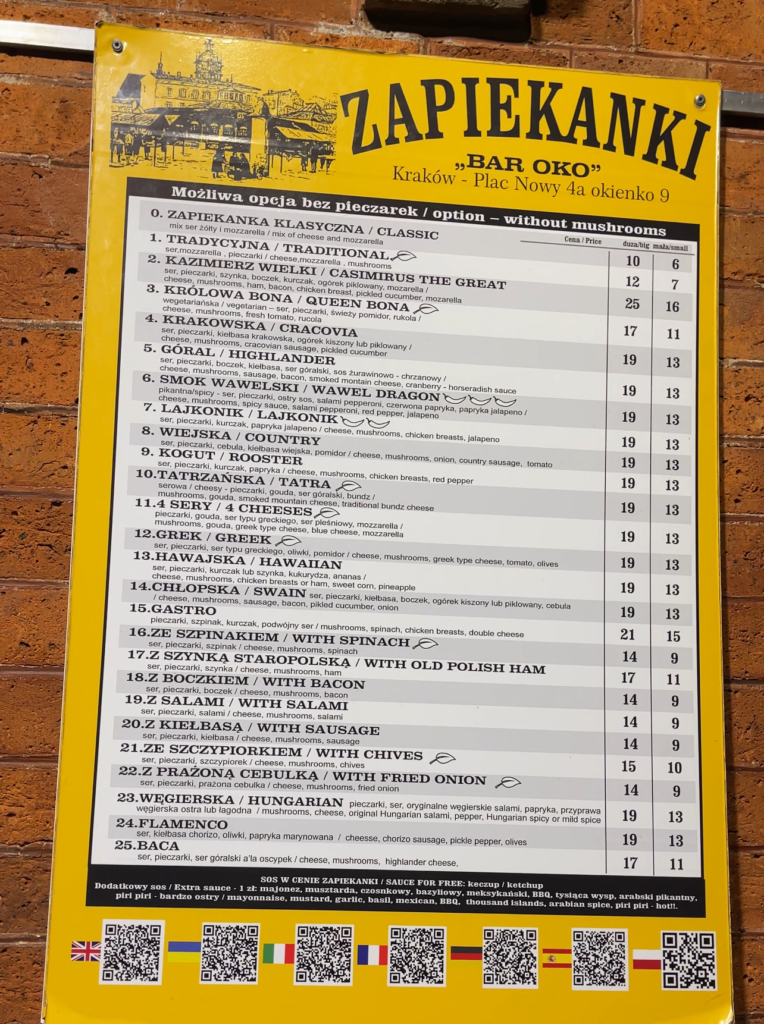
Zapiekanka (Za-Pe-Kan-Ka) is traditional Polish street food at its finest. Imagine a crispy half-baguette, slathered in melted cheese, sautéed mushrooms, and drizzled with ketchup. Simple? Yes. But don’t underestimate it.
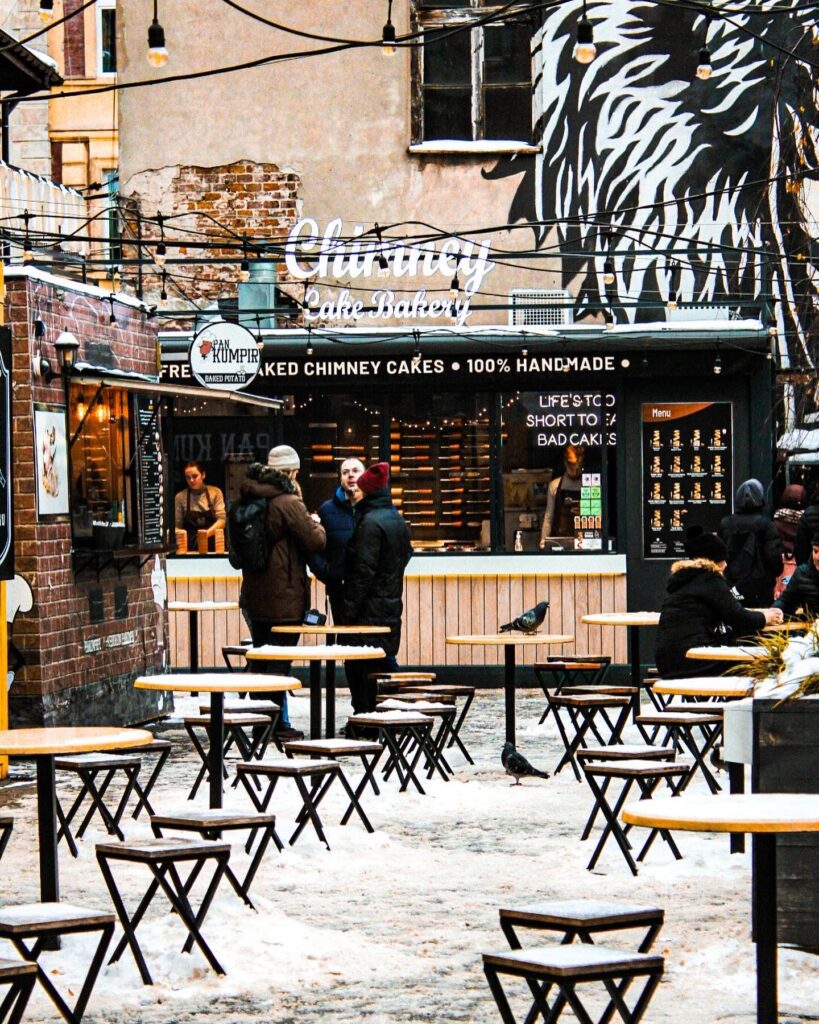
Every bite is crunchy, savory, and completely addictive. I first had zapiekanka Plac Nowy at Bar Oko, near the old Jewish quarter, where the smell of freshly toasted bread fills the air.
You can find them all over the city, but Kazimierz has the best zapiekanka. I loved the version from Zapiekanki Bar Oko, and you can also find great renditions at the Judah Food Market.
12–25 PLN
GO TO: @zapiekanki.baroko
3. Maczanka Krakowska
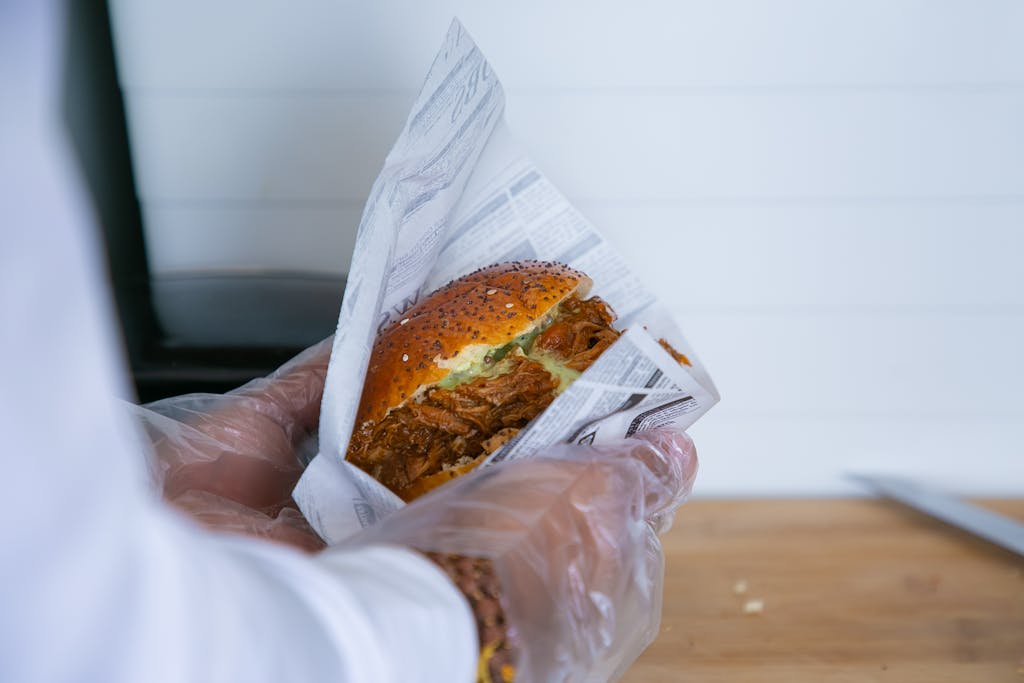
Often described as Krakow’s take on pulled pork, maczanka is slow-cooked pork shoulder soaked in caraway-spiced gravy and stuffed into a crusty bun. It’s savory, juicy, and wonderfully messy.
Price: 18-20PLN
Go To: Judah Food Market
4. Kiełbasa From the Blue Van
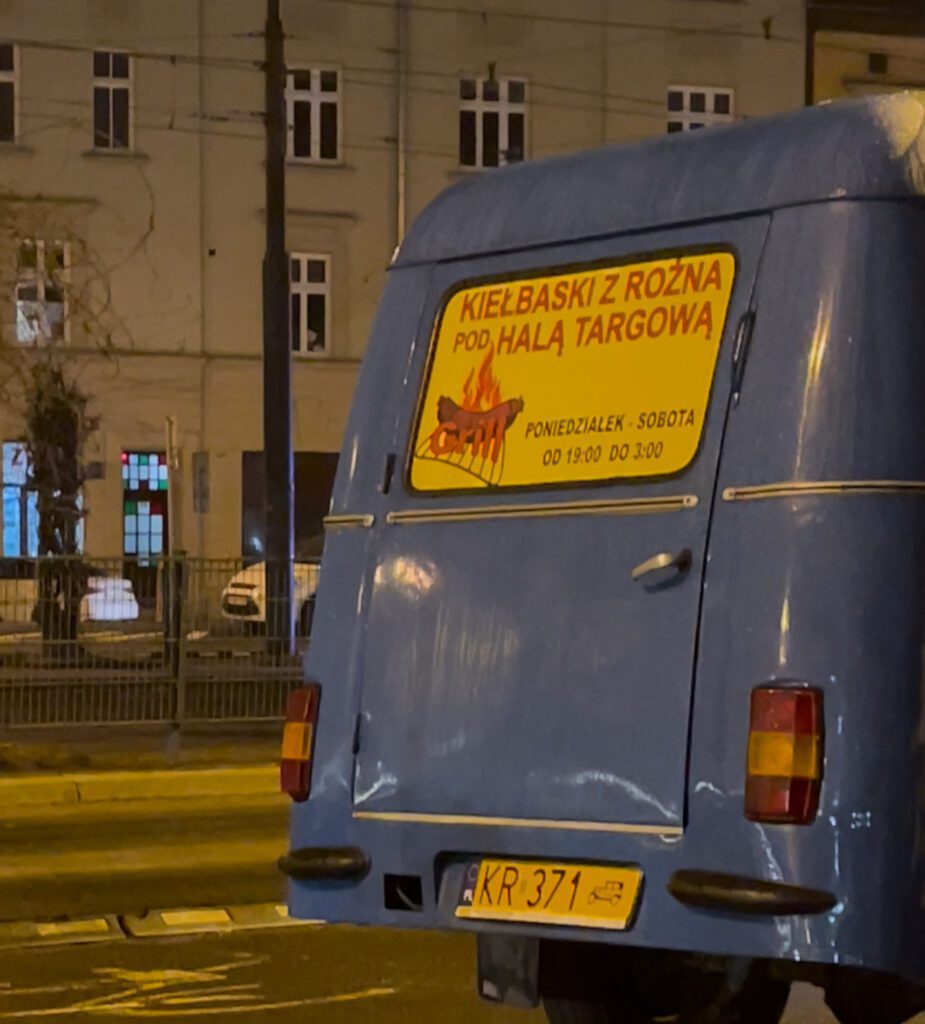
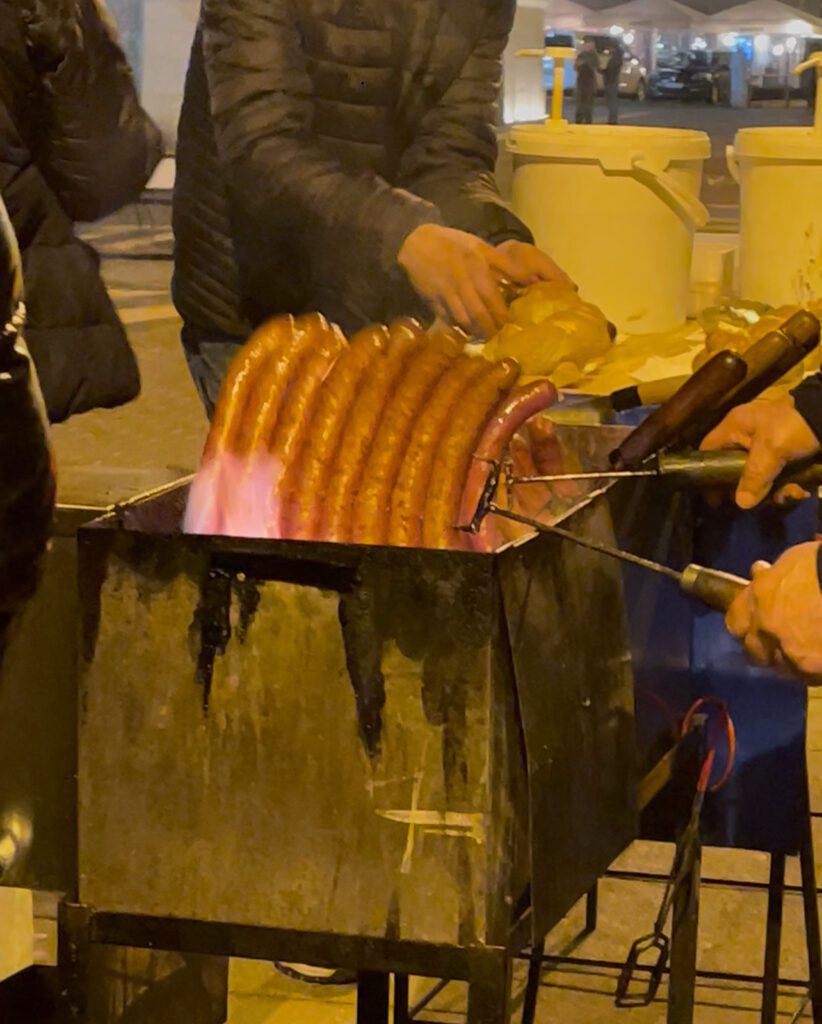
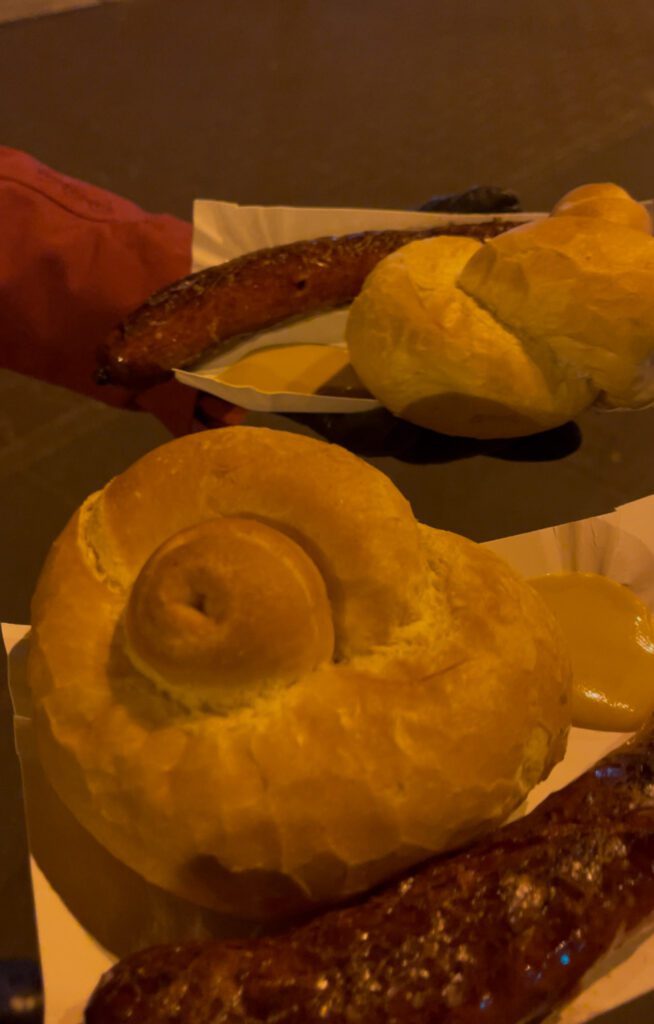

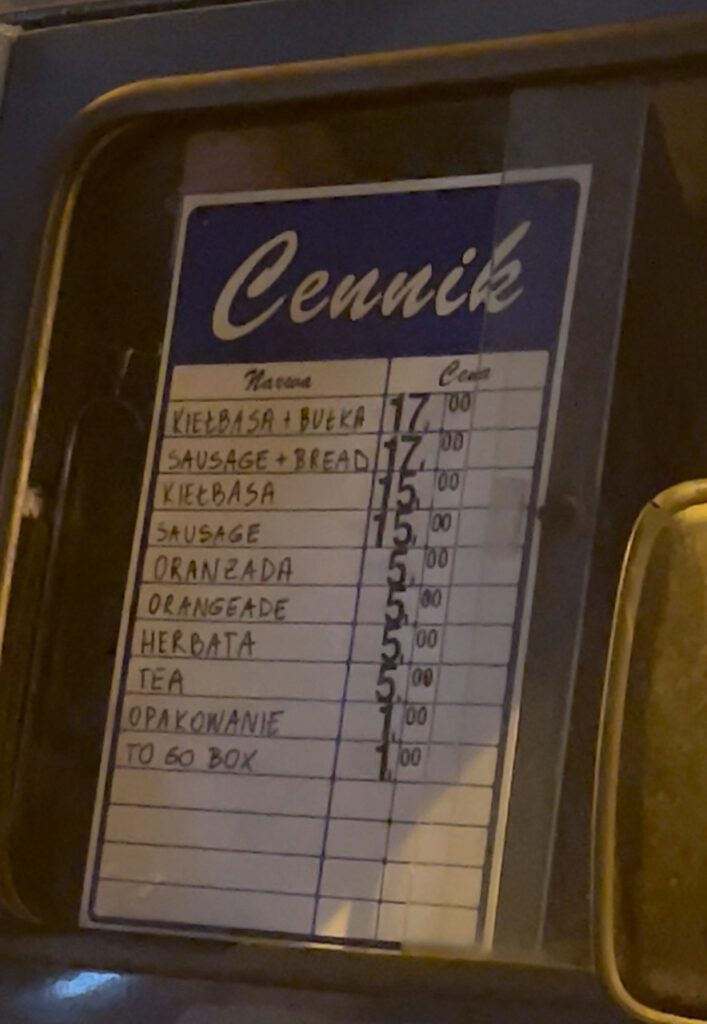
Craving a late-night snack in Krakow? A wonderful place near the edge of Kazimierz is open from 7 pm to 12 am, and it serves some of the best grilled Kiełbasa you can get your hands on! I am talking about Kiełbaski z Niebieskiej Nyski
This family sets up their blue van and serves Kielbasa fresh from a grill while you wait! It was some of the best Kielbasa I have had in my life; I am not kidding you!
Price 15–20 PLN
| Friday | 7 pm–3 am |
| Saturday | 7 pm–3 am |
| Sunday | Closed |
| Monday | 7 pm–3 am |
| Tuesday | 7 pm–3 am |
| Wednesday | 7 pm–3 am |
| Thursday | 7 pm–3 am |
Traditional Polish Dishes to Try in Kraków
5. Pierogi
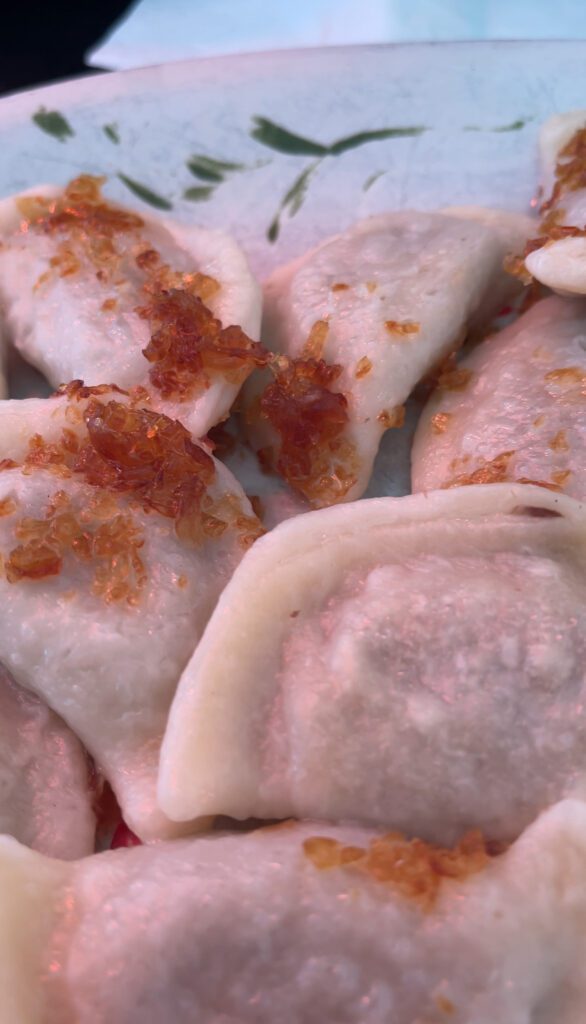
Pierogi was the first Polish dish I learned how to make when we were living in Poland. I know every country has its take on a dumpling; however, I love the Polish dumpling. TRY ANY KIND!! My favorite is cabbage and mushrooms!
In Krakow and all over Poland, you’ll find Pierogi stuffed with mashed potatoes, fried onions, quark or farmer’s cheese, cabbage, sauerkraut, meat, mushrooms, spinach, cheese, or other ingredients, depending on the cook’s preferences.
You can even find Dessert versions, often stuffed with sweetened quark or with a fresh fruit filling such as cherry, strawberry, raspberry, blueberry, apple, or plum!
18-35PLN
GO TO: Pierogarnia Krakowiacy, try their Cholpskie Pierogi! It’s quite delicious. Typically, if you go to any Polish Milk bar, you’ll be able to find the most delicious Pierogi!
4. Żurek:
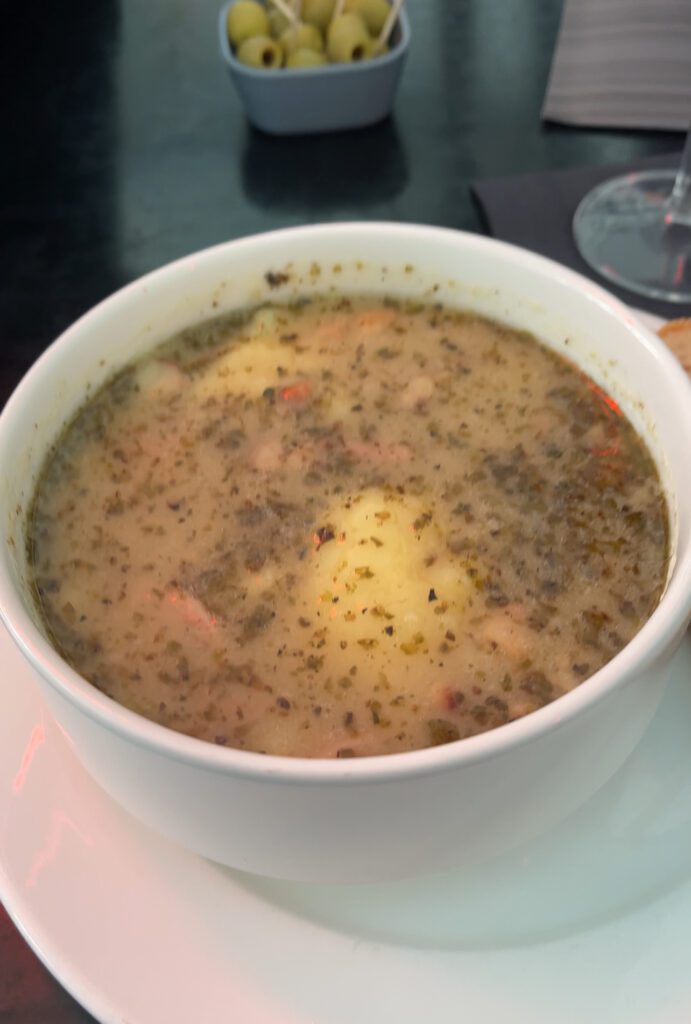
This Polish soup has ties back to the Middle Ages and is a traditional Polish soup known for its distinctive sour taste.
Polish peasants used to keep a ceramic pot to make their Zakwas, the sour base for the soup. It sits for a few days and becomes sour over time.
Pretty incredible, right? Interestingly, the pot wasn’t washed, so fermentation from the previous batch could act as a starter for the next.
The sour flavor in żurek comes from fermenting rye flour, a key ingredient. For the love of all things Polish, if you do grab some sachets from the store, don’t post about it on TikTok or Instagram.
GO TO: Staropolska Karczma, located in the main square next to St. Mary’s Basilica, or you can find this on any menu in Krakow. However, some restaurants will have different variations depending on the region of Poland you are in.
8. Kotlet Schabowy
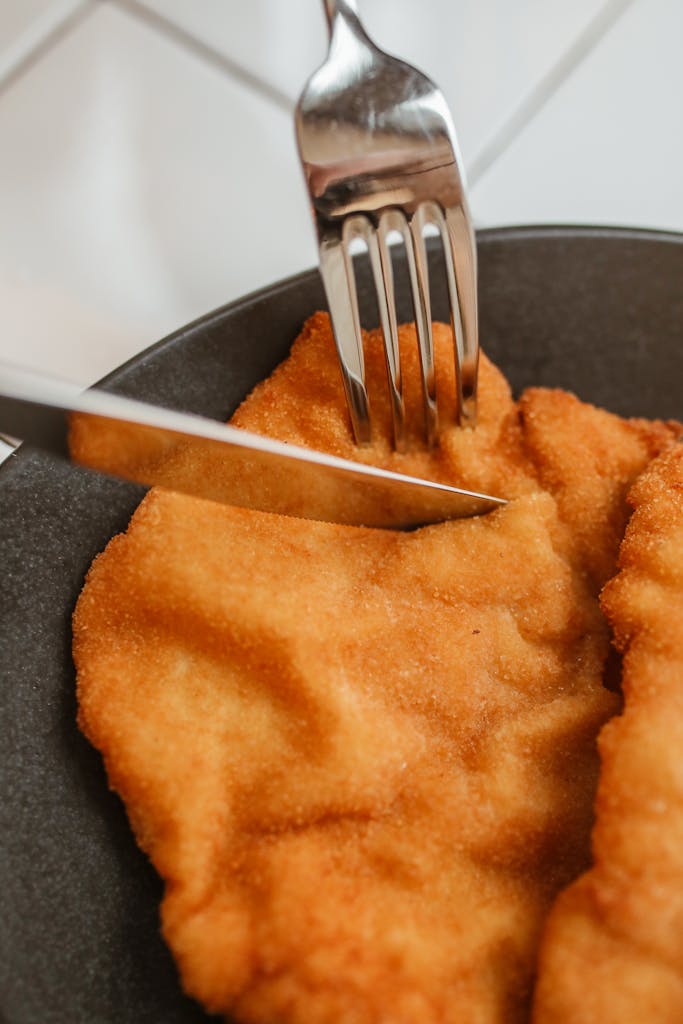
Poland’s version of a schnitzel, kotlet schabowy, is a breaded pork cutlet that’s pan-fried until golden and served with mashed potatoes and mizeria (a creamy cucumber salad). It’s comfort food done right.
Go To: U Babci Maliny or Pod Wawelem Kompania Kuflowa
9. Gołąbki
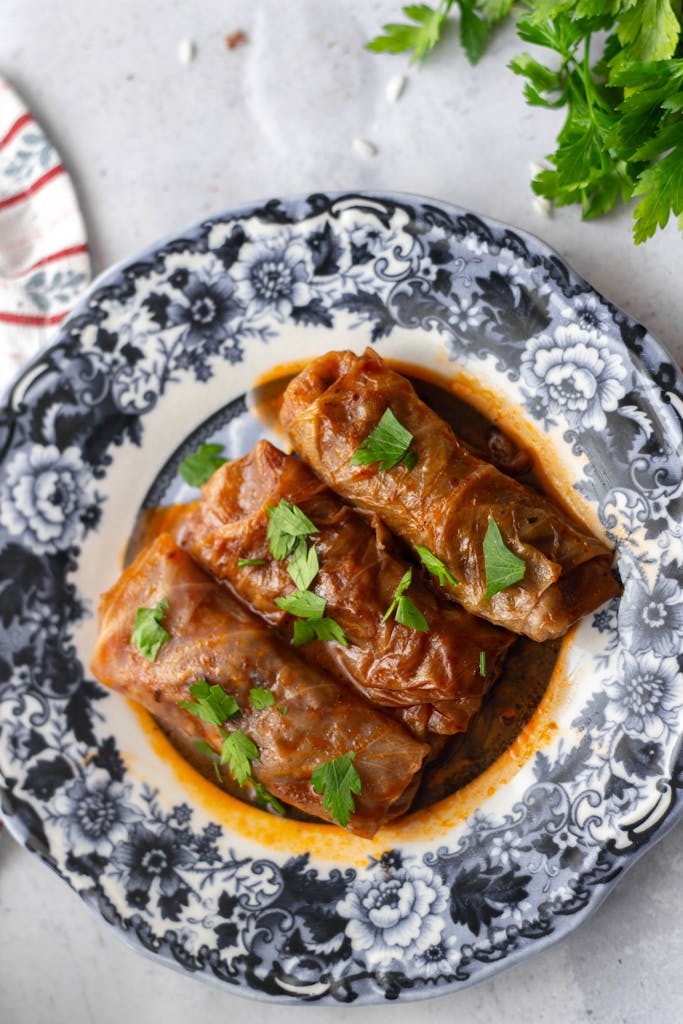
This is such a treasured dish; the first time I tried this at Krakus in Krakow, I was floored. Gołąbki (pronounced goh-WOMP-kee) are tender cabbage leaves wrapped around a savory mix of ground pork, rice, and seasonings, then baked in a tangy tomato sauce. This is Polish comfort food at its finest—simple, filling, and made with love. You’ll find gołąbki on many traditional menus in Kraków, and each restaurant tends to add its own spin. It can also signal different regions.
Go To: Krakus
10. Bigos
No picture included because it doesn’t photograph well. This Stew is known as Poland’s national dish. Bigos is a rich stew made from sauerkraut, fresh cabbage, various meats, and sometimes mushrooms and prunes. It’s slow-cooked for hours and tastes even better the next day. It’s hearty, tangy, and perfect on a cold day. This is a stew I would eat when I was feeling homesick or just down and out; it has a warmth I cannot describe!
Go To: Miod Malina
11. Kluski Śląskie
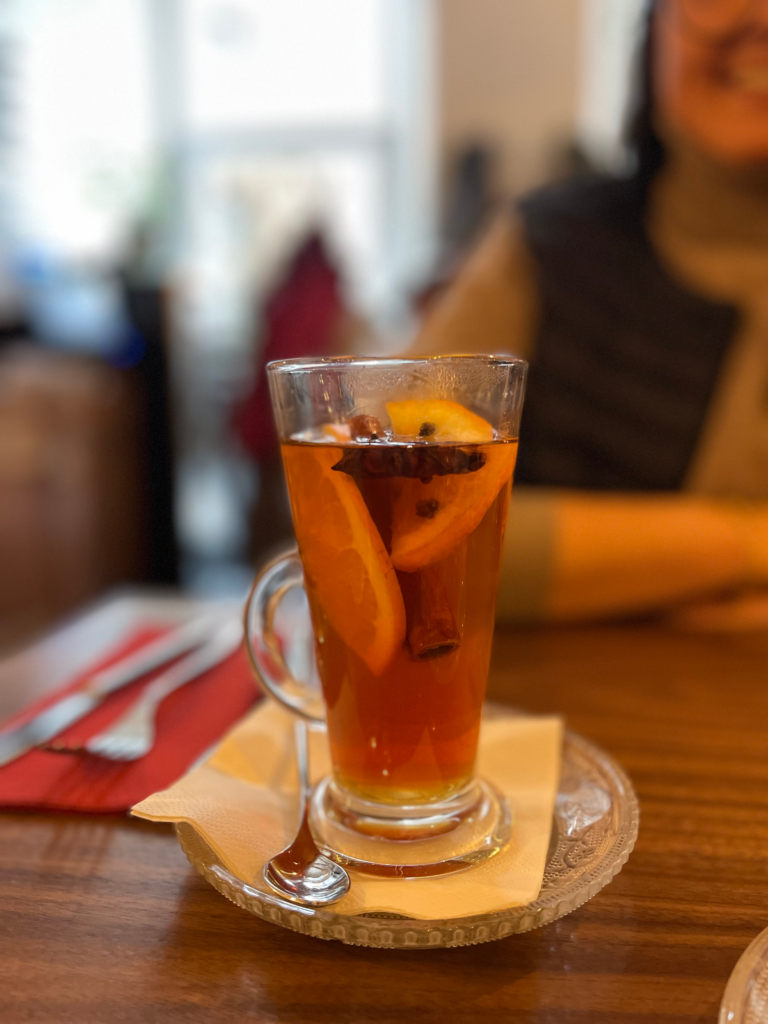
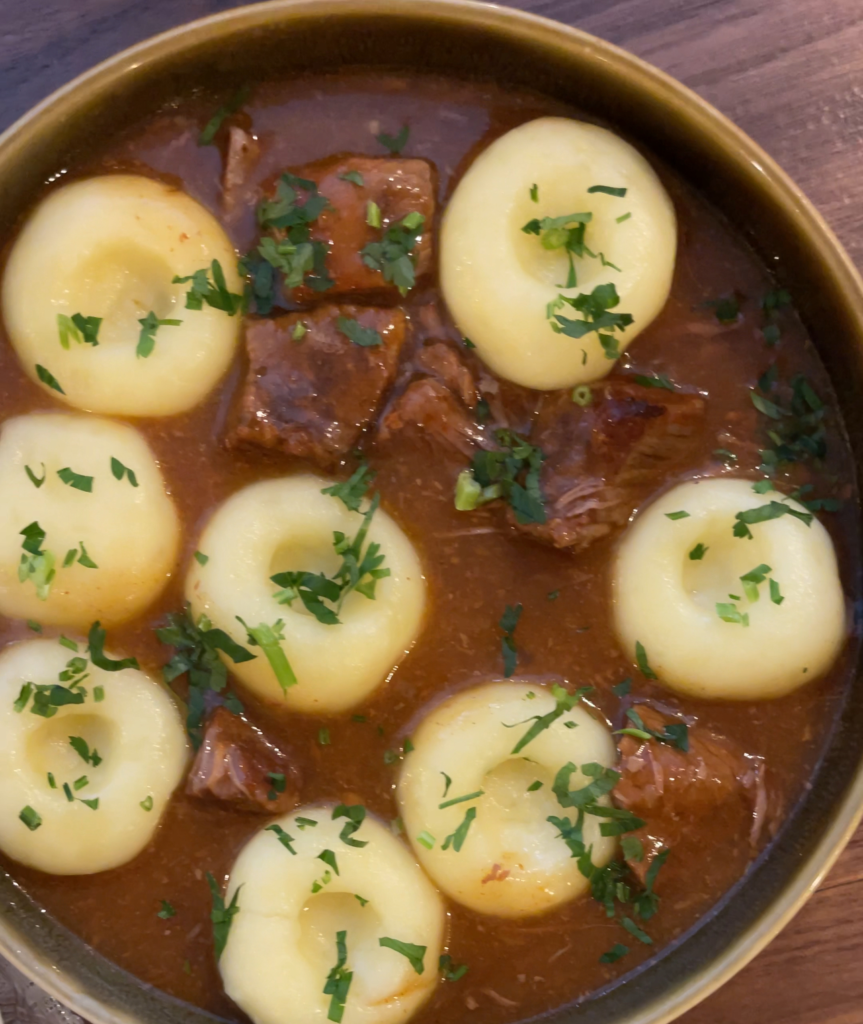
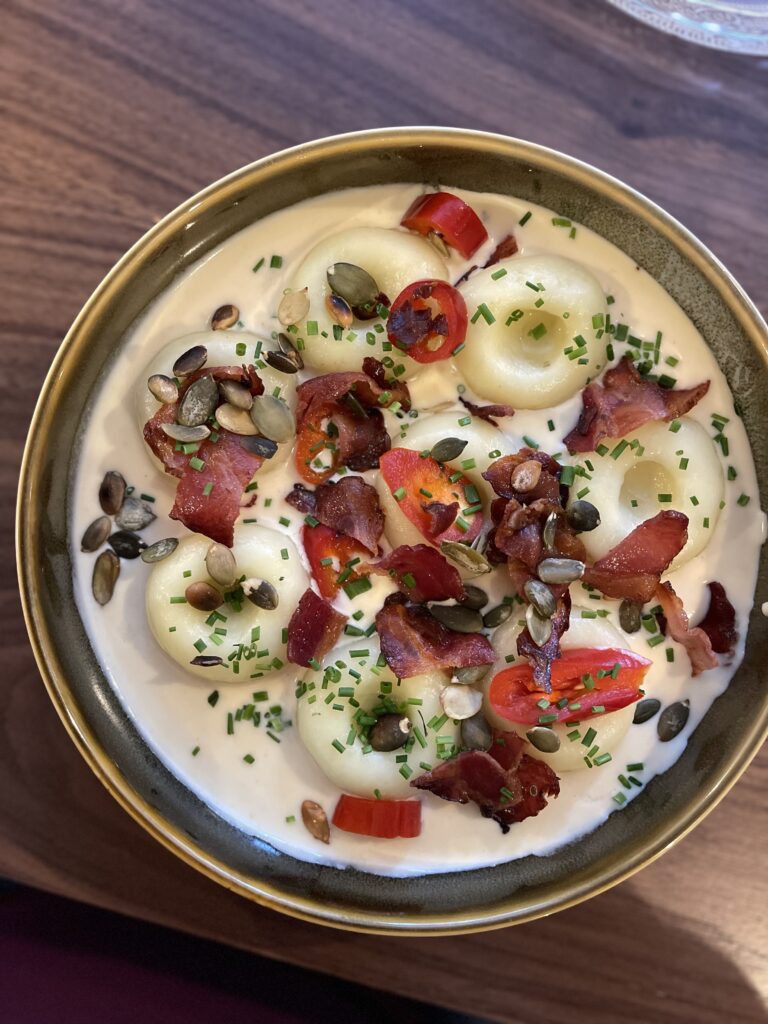
Kluski Śląskie (KLOO-skee SHLOWN-skee) is something special. It’s filled to the brim with traditional Polish food. Poland shares history with many surrounding countries, so you may see these on menus in Germany, Czechia, and Hungary.
Talk about Traditional Polish Food! Essential components include starchy potatoes (like Russet or Yukon Gold), potato starch for binding, and eggs. They have a distinctive round shape with a small depression in the center.
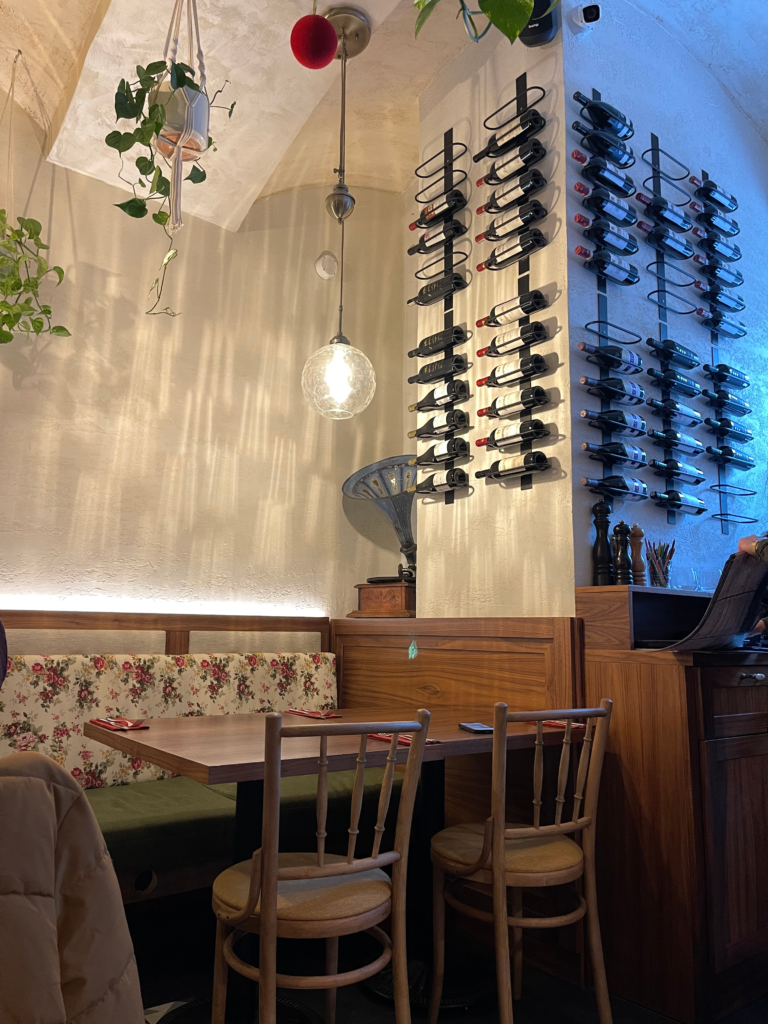
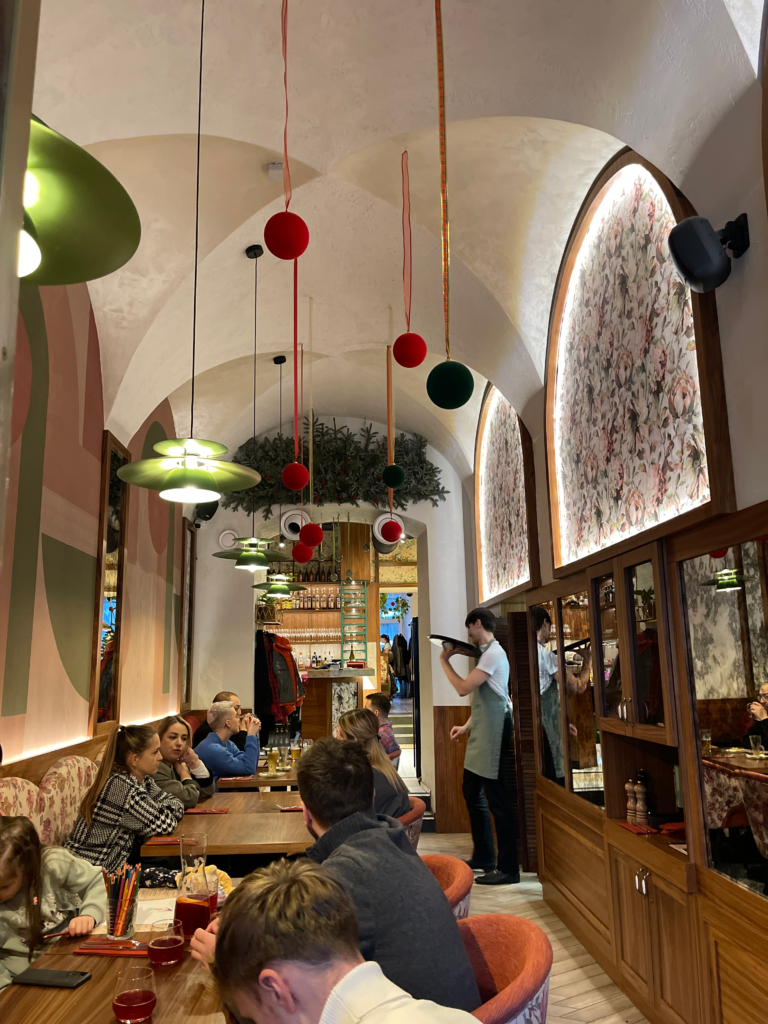
My friend Aleksandra took me to Kluska Na Placu in Krakow. They specialize in regional food, and this is one of them. This restaurant is a treat, and the atmosphere is pretty incredible.
It feels like you are in someone’s house, about to have a meal that Grandma made. Kluska Na Placu has such an extensive menu full of YUMMY traditional Polish food.
I tried the Silesian Dumplings with Bursztyn Cheese Sauce and Bacon (Kluski z sosem z sera Bursztyn i bekonem). Aleksandra had the Silesian Dumplings with Beef Stew ( Kluski z gulaszem wołowym).
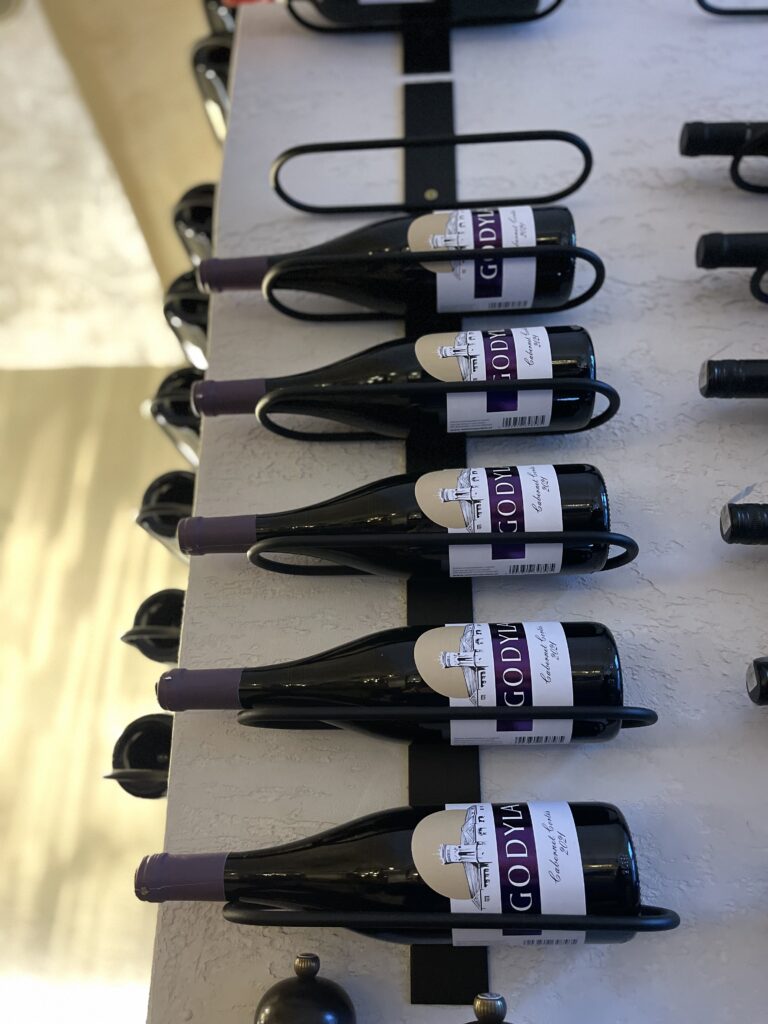
Both dishes were incredible and such a treat on a warm winter day! I topped my meal off with a glass of wine from the region, Godyla, a 2021 Cabernet Cortis. The notes were light and refreshing. I normally do not go for Polish wine, but I think I may have changed my mind with this last visit!
Where to Go: @kluska_krakow
12. Smalec
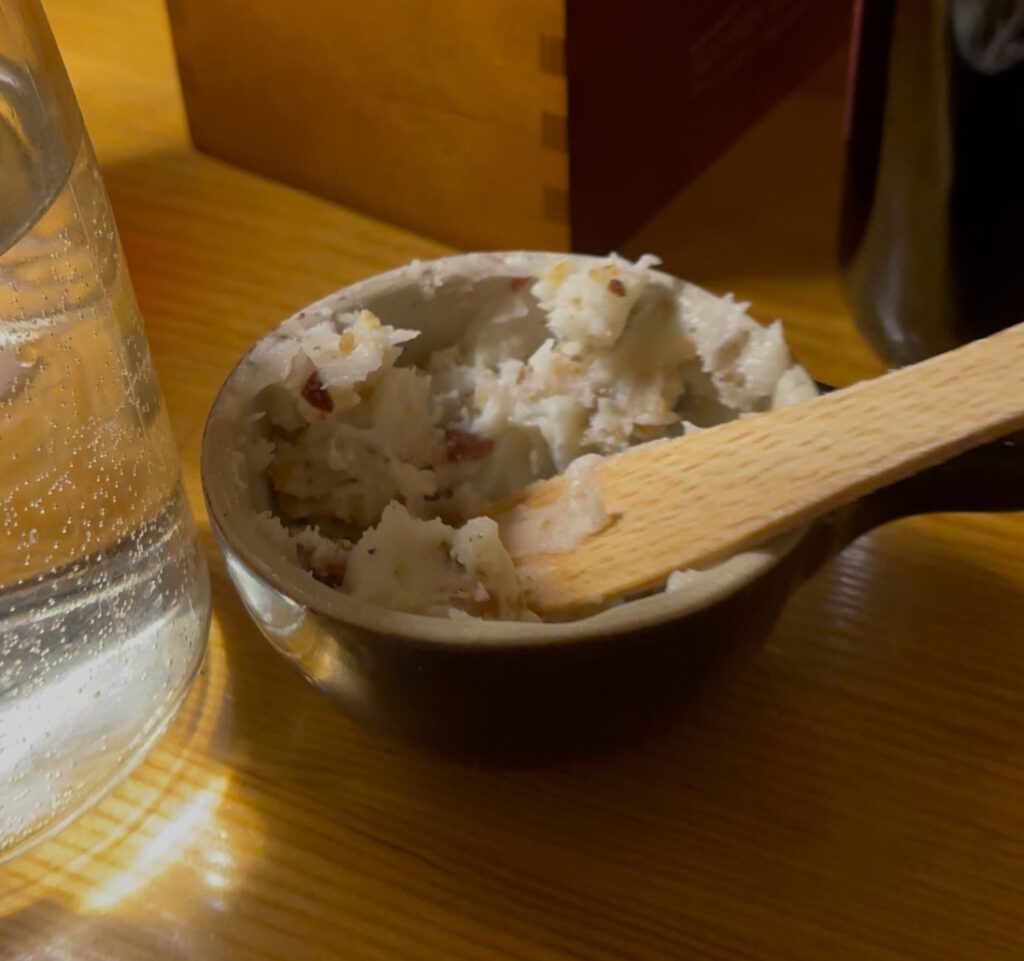
Smalec is a traditional pork lard spread, usually mixed with crispy bacon bits, onion, garlic, and sometimes apple. Served cold on slices of thick rye bread and topped with pickles, it’s an old-school starter that’s packed with flavor. It might sound unusual, but it’s hearty, rustic, and one of the most Polish things you can eat.
To be honest, I hated this at first, but then I grew to love it!
Go To: Restauracja Sukiennice , This is at the Sukiennice near the Stary Rynek
13. Barszcz (Borscht)
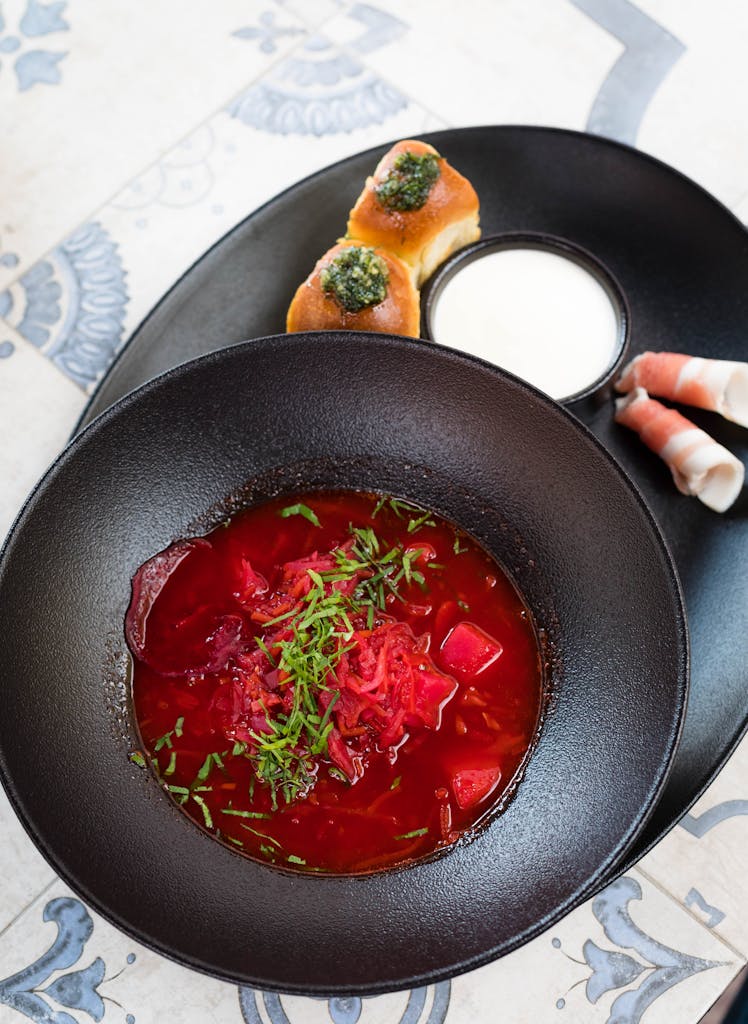
Barszcz is a beet-based soup that’s tangy, earthy, and beautifully red. The clear version is often served in a cup with mushroom-filled dumplings (called uszka), especially around the holidays. There’s also a heartier version with beans and cabbage known as barszcz ukraiński.
Go To: Restauracja Sukiennice , This is at the Sukiennice near the Stary Rynek
14. Ziemniaczane, the potato pancakes
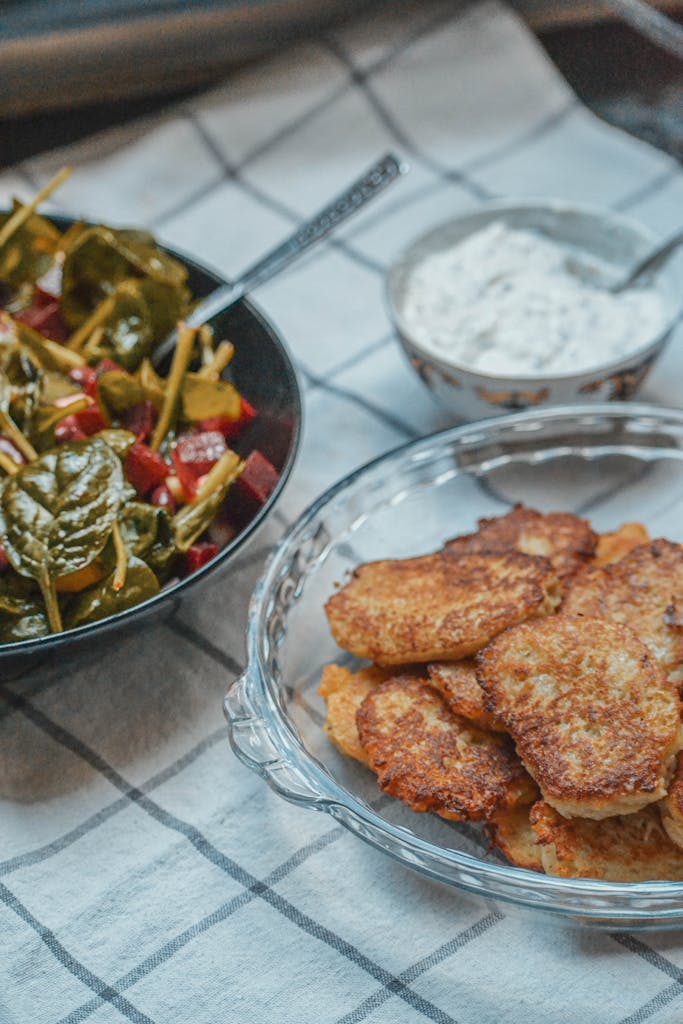
These golden-brown potato pancakes are crispy on the outside and soft inside. They’re often served with sour cream or mushroom sauce, and in some homes, with a dusting of sugar.
My friend Aleksandra taught me this as we were sitting in a restaurant in Krakow, and she opened up the canister of sugar and told me to try! It was SO DAMN GOOD!
Go To: Krakowska Koliba right near the Maly Rynek
14. Pączki:

One of my favorite desserts I have missed is pączki.
This is a Traditional Polish Food that you need to try while in Krakow, or anywhere in Poland!
Every year, on Fat Thursday, Poles line up to devour these donuts and will eat dozens of them right before Lent.
I always found this fascinating, and yes, I partook in this tradition. Why not? You can find stand-alone stores that sell them, or you can stop by your local grocer and find them in the pastry aisle. I love Rose with candied orange on top.
GO TO: @dobrapaczkarnia is one of the more mainstream places, but you need to stop by Cukiernia Michałek for some of the best donuts you can get your hands on! Oftentimes, the line is past the block!
15. Oscypek, Polish smoked cheese
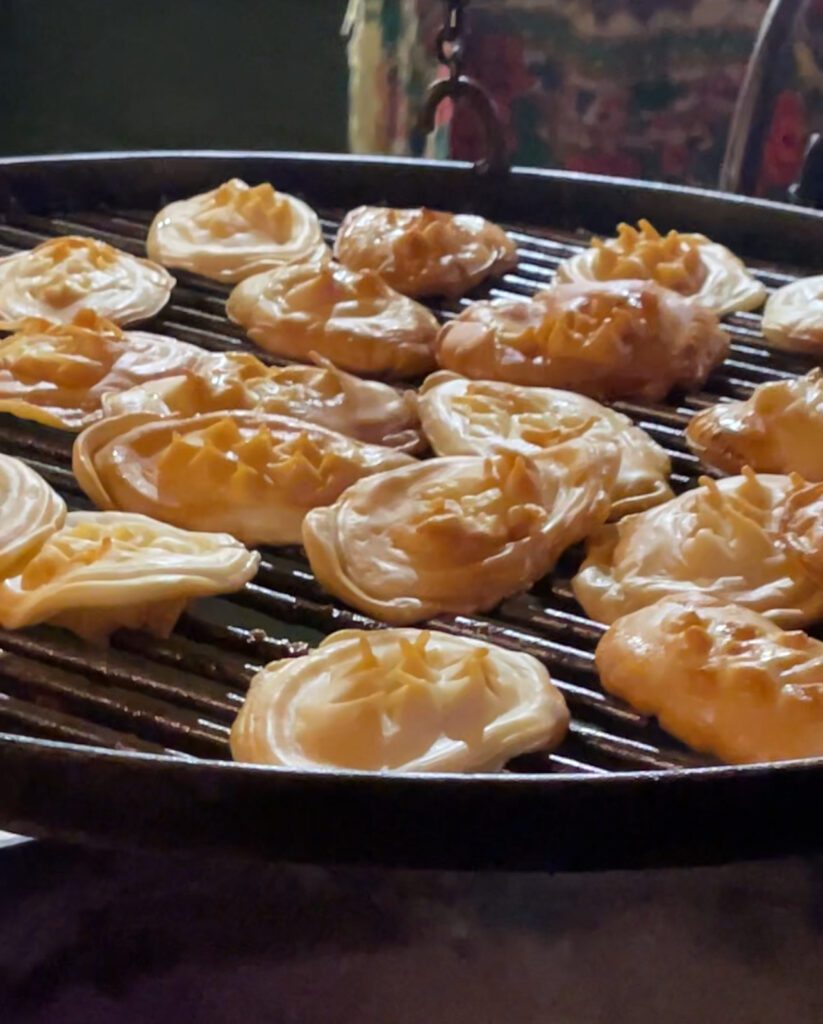
This smoked sheep’s cheese comes from the Tatra Mountains but is a beloved addition to Kraków’s culinary scene. It’s usually grilled and served with cranberry sauce—salty, smoky, and sweet in one perfect bite. It’s quite delicious, and I highly recommend trying it if it’s on any menu!
Check out my Blog Post: Christmas Market Foods in Poland, here
Christmas Market stalls or Pod Wawelem restaurant year-round.
Where to Eat Traditional Polish Food in Kraków
To make your food adventure easier, I’ve mapped all the places mentioned in this guide—from zapiekanka in Kazimierz to pierogi near the Market Square. Kraków is incredibly walkable, but the city’s food scene spans a few key districts: Old Town (Stare Miasto), Kazimierz, and the area around Wawel Castle. Use this map to plan your meals, pair dishes with nearby sights, and explore at your own pace.
- Best for Kraków street food: Plac Nowy and Judah Food Market
- Best for pierogi: Pierogarnia Krakowiacy
- Best for pączki: Cukiernia Michałek
- Best traditional atmosphere: Staropolska Karczma
- Best late-night experience: Kiełbaski z Niebieskiej Nyski
- Best for regional dumplings: Kluska na Placu
- Best milk-bar experience: Krakus
How Much Does Food Cost in Kraków?
Kraków can still be affordable, especially if you mix traditional milk bars and street food with a few sit-down restaurant meals. Prices rise noticeably around Rynek Główny, the Main Market Square, where you are paying partly for the location.
The prices below are based on what I paid and observed during my visits to Kraków. Treat them as a general planning guide rather than fixed prices, since menus and exchange rates can change.
| Type of food or experience | Typical price per person |
|---|---|
| Obwarzanek or small street snack | 3–14 PLN |
| Zapiekanka or larger street-food meal | 15–30 PLN |
| Meal at a milk bar | 25–45 PLN |
| Casual restaurant meal with a drink | 50–90 PLN |
| Traditional restaurant near Rynek Główny | 75–130 PLN |
| Kraków food tour | 170–400 PLN |
Street Food Prices in Kraków
Street food is one of the least expensive ways to try traditional food in Kraków. An obwarzanek from one of the city’s blue carts generally costs around 3–7 PLN, while a pączek from a bakery usually costs between 5 and 14 PLN, depending on the filling and bakery.
A large zapiekanka generally costs around 15–30 PLN. Prices depend on the size and number of toppings, and one can easily be large enough for lunch. Kraków’s famous grilled kiełbasa and a maczanka krakowska sandwich usually fall toward the higher end of the street-food range.
Street food around the Main Market Square and major tourist attractions may cost slightly more than it does in Kazimierz, Podgórze, or other neighborhoods.
How Much Does a Milk-Bar Meal Cost?
A Polish milk bar, or bar mleczny, is one of the best places to eat traditional food on a smaller budget. Most dishes are ordered separately, so you can build your meal according to your appetite.
A bowl of soup may cost around 8–15 PLN, while pierogi, placki ziemniaczane, gołąbki, or another main dish will often cost between 18 and 35 PLN. A complete meal with soup, a main course, and a drink will generally cost around 25–45 PLN per person.
Milk bars are usually simple, self-service restaurants rather than leisurely dining experiences. Menus may be written primarily in Polish, and dishes can sell out as the day progresses. That is part of the experience, and they remain one of my favorite ways to try everyday Polish cooking.
Casual Restaurant Prices in Kraków
At a casual restaurant outside the most tourist-heavy parts of the Old Town, expect to pay approximately 30–60 PLN for a main course. Pierogi and soups are usually at the lower end of that range, while meat dishes such as kotlet schabowy, duck, pork knuckle, or beef stew tend to cost more.
A casual meal with a main course and a soft drink, beer, or glass of wine will usually cost around 50–90 PLN per person. Adding an appetizer, dessert, or several drinks will increase the total.
Restaurant Prices Near the Main Market Square
Restaurants directly on Rynek Główny are generally more expensive than comparable restaurants a few streets away. A traditional Polish main course near the square may cost around 45–80 PLN, with larger meat dishes sometimes costing more.
For a sit-down meal near the Main Market Square that includes a main course and a drink, I would budget approximately 75–130 PLN per person. You are paying for the central location and atmosphere as well as the food.
That does not mean you should avoid every restaurant near the square. I have enjoyed traditional meals in this part of Kraków, but I would check the menu before sitting down and avoid choosing a restaurant based only on the view.
How Much Do Kraków Food Tours Cost?
Food tours in Kraków vary considerably in price. Shorter tasting tours can begin at approximately 170 PLN per person, while longer small-group experiences with multiple tastings, beer, or vodka may cost 300–400 PLN or more.
A food tour is considerably more expensive than putting together your own meal, but it can be worthwhile if you want cultural context, help understanding unfamiliar dishes, and the opportunity to sample several foods without ordering full portions of everything.
Check exactly what is included before booking. Some tours provide enough food to replace a full meal, while others offer only smaller samples.
Can You Pay by Card in Kraków Restaurants?
Card payments are widely accepted in Kraków, including at most restaurants, cafés, bakeries, and many casual food establishments. Contactless payment is common, so you will not need to carry a large amount of cash.
Smaller street carts, temporary market stalls, and a few traditional businesses may still prefer cash or occasionally have problems with their card terminals. It is worth carrying some Polish złoty as a backup.
If a card terminal asks whether you want to pay in your home currency or Polish złoty, choose Polish złoty. Allowing the terminal to convert the charge can result in a less favorable exchange rate.
How Much Cash Should You Carry?
I recommend carrying about 100–200 PLN in cash for street food, small purchases, market stalls, public toilets, and any business that doesn’t accept cards. Small notes and coins are particularly useful.
You usually don’t need to carry enough cash to cover your entire stay. Use your card for restaurant meals and larger purchases, and keep a modest amount of złoty available for smaller vendors. If you need additional cash, use an ATM operated by a recognized bank and review the conversion options carefully before accepting the withdrawal.
Vegetarian-Friendly Traditional Polish Dishes
Poland doesn’t always get credit for being vegetarian-friendly, but Krakow is one of the easiest places in the country to enjoy traditional dishes without meat. I’ve eaten my way through the city with vegetarian friends, and they never struggled to find something comforting, hearty, and genuinely Polish.
The classics are still the best place to start—pierogi ruskie (potato and cheese) and pierogi with cabbage and mushrooms are both flavorful, filling, and show up on almost every menu. If you want something warm and crispy, potato pancakes are a staple year-round, and a classic zapiekanka (the cheese + mushroom version) is usually safe for vegetarians too. For something lighter, a cup of barszcz, Poland’s tangy beet broth, is perfect on a cold afternoon. And of course, there’s the humble obwarzanek—Krakow’s signature street bread and one of the easiest snacks to grab on the go.
Vegetarians won’t feel left out at all here. Krakow makes it unbelievably easy to enjoy traditional Polish flavors without needing to modify much.
Seasonal Foods in Poland
Traditional Polish food shifts beautifully with the seasons, and Kraków is one of the best places to taste those changes. In winter, you’ll see steaming bowls of żurek, hearty bigos, and grilled oscypek everywhere—usually paired with a cup of mulled wine to warm your hands as you wander the Christmas markets. Spring brings lighter flavors, like fresh pączki and delicate dairy pastries that feel almost celebratory after the cold months. Summer is all about fruit-filled pierogi, especially blueberry and cherry, which taste like childhood and sunshine. By autumn, mushrooms take over menus across the country. This is the season for rich mushroom sauces, earthy soups, and plenty of potato pancakes—the comfort food everyone craves as the weather turns cold again.
Quick Tips for Visiting Krakow
Kraków is incredibly easy to navigate, especially for first-time visitors. Here are a few things that will make your trip smoother.
Krakow Card:
If you plan to visit several museums or use public transport often, the Kraków Card can be worth it. It gives you unlimited tram and bus travel plus free entry to more than 40 attractions, including Schindler’s Factory and the Barbican. If you’re mostly eating and wandering on foot, you might not need it.
Getting Around:
Krakow is walkable, but when you need a lift, Bolt is the easiest app to use and usually cheaper than taxis. Trams and buses run frequently and are reliable — especially for reaching places like Kazimierz or Podgórze.
Currency & Money Tips:
Poland uses the Polish złoty (PLN). Skip the exchange kiosks in the Old Town; the rates are terrible. Use an ATM or a reputable kantor (currency exchange office) instead. Most places take card, but having a little cash is helpful for markets and street food stalls.
Useful Polish Phrases:
Poles appreciate it when visitors try—even a little. Here are the phrases I used most:
• Dzień dobry — Hello
• Dziękuję — Thank you
• Przepraszam — Excuse me / Sorry
• Ile to kosztuje? — How much is it?
• Gdzie jest najbliższy przystanek tramwajowy? — Where’s the nearest tram stop?
• Proszę menu po angielsku — Could I have the menu in English?
Even if your pronunciation isn’t perfect, people will meet you halfway.
FAQ: First-Time Visitor to Krakow
How many days should I spend in Krakow?
A 3-day stay is ideal for exploring Krakow’s historic Old Town, Wawel Castle, Kazimierz (the Jewish quarter), and nearby attractions like Auschwitz-Birkenau or the Wieliczka Salt Mine. For a more relaxed pace, extend your visit to 4-5 days.
Do I need to know Polish to visit Krakow?
No, English is widely spoken in tourist areas, hotels, and restaurants. However, learning a few basic phrases like “Dzień dobry” (Good day) and “Dziękuję” (Thank you) can enhance your experience.
Is Krakow walkable?
Yes, Krakow is pedestrian-friendly, especially around the Main Market Square and Old Town. Most major attractions are within walking distance, though trams and buses are available for longer trips.
Is Krakow solo traveler-friendly?
Absolutely. Krakow is a safe and welcoming city with plenty of guided tours, communal dining options, and cozy cafes for solo travelers.
Which airport is closest to Krakow?
John Paul II International Airport Kraków-Balice (KRK) is the main airport, located 11 km (7 miles) from the city center. The airport is well connected by train, bus, and taxi.
Is Krakow accessible by train?
Yes, Kraków Główny is the main train station with direct connections to major Polish cities like Warsaw, Wrocław, and Gdańsk, as well as international routes to the Czech Republic, Slovakia, and Austria. Check PKP Intercity for train schedules.
What is the currency of Poland?
The Polish złoty (PLN). Withdraw cash from ATMs or exchange currency at reliable exchange offices.
Conclusion
Now that you know where to find the best food in Krakow, it’s time to plan your culinary adventure. If you try any of these dishes, let me know! Follow me on Instagram @kimberlykepharttravels and share your favorite bites with me.
PIN THIS!
Pin this guide for your travel planning and follow me on Pinterest for more travel tips.
Have you checked out my other blog posts about Krakow and Poland?
- Top Places to Stay in Krakow for First-timers
- Best Tours to Take in Krakow for First Timers
- Top Places to see in Krakow
- Nowa Huta: A Soviet-Era District in Kraków You Can’t Miss
- Chasing Pączki in Kraków: A Tłusty Czwartek Adventure
- All Saints’ Day in Poland: A Tradition of Remembrance
- Malbork Castle Visitor’s Guide: Tickets, Tours, and What to See