Boseong Tea Fields in Korea: Stunning Views, Tea Trails, and Travel Tips
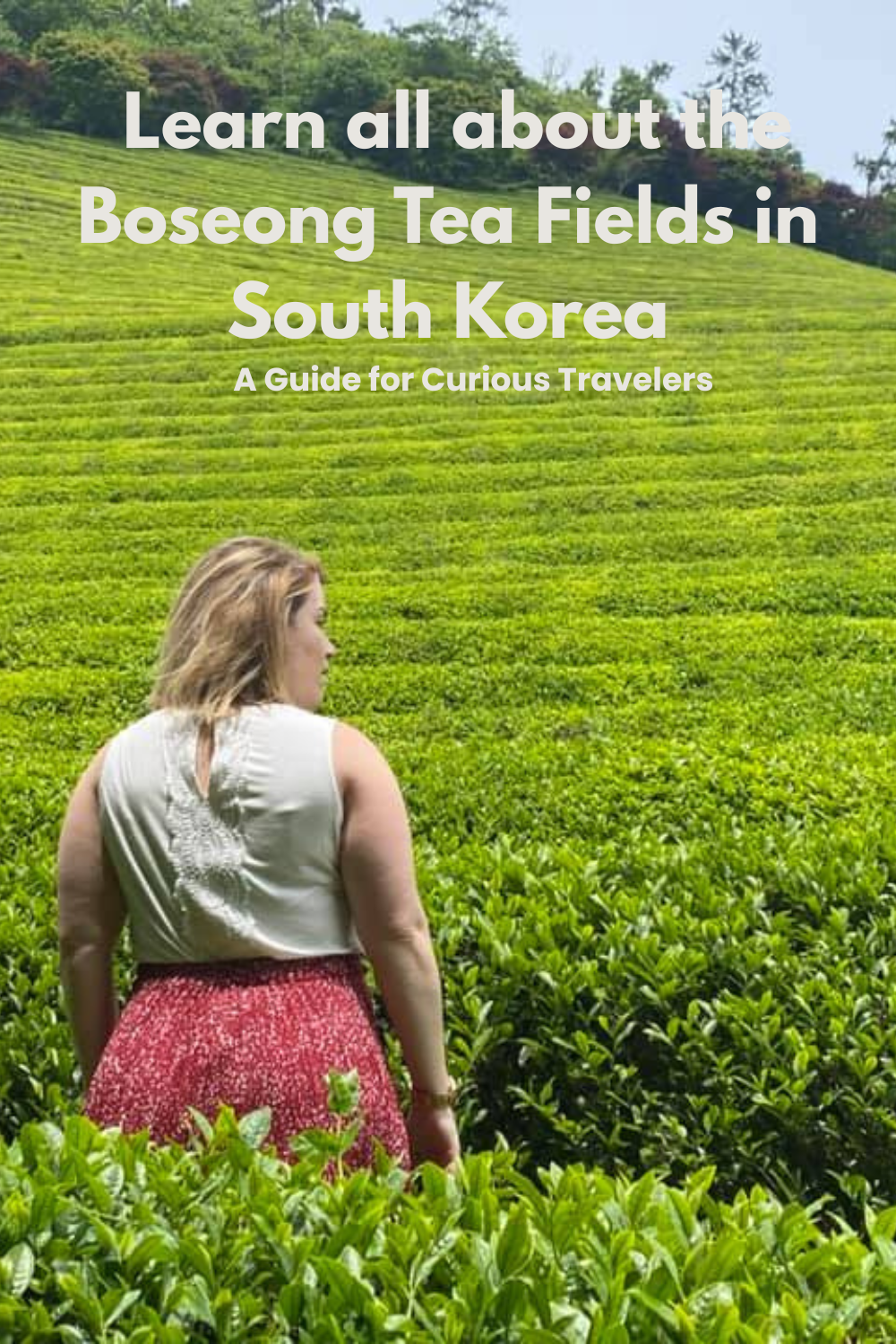
When we moved to Korea for my husband’s military assignment, I had a long list of places I wanted to see — including the Boseong Green Tea Fields. If you’re curious what life is like a military spouse stationed here, I’ve shared more in my Military Spouse Life in Korea Post. Boseong Tea Fields weren’t just another stop — it was the place. So when our road trip to southern South Korea lined up perfectly with a chance to see it (and the Suncheon Wetlands), I was already buzzing with excitement.
The moment my feet hit the path lined with towering cedar trees, my jaw dropped so far my husband joked he’d have to pick it up for me. I’d seen the photos — those endless emerald terraces spilling down the hillsides — but nothing prepared me for the real thing. Cool, crisp air carried the faint scent of tea leaves and forest, and for a few blissful moments, the only sounds were birdsong and the soft rustle of the leaves.
If you’ve been dreaming about visiting the Boseong Green Tea Fields in Korea — or you’re planning your first trip and want to know the best views, how to get here, and what else to do in the area — this guide is for you. I’ll share exactly what to expect, how to make the most of your visit (even if you’re traveling solo), and the little details that made this one of my favorite days in Korea.
This Post Pairs Well With:
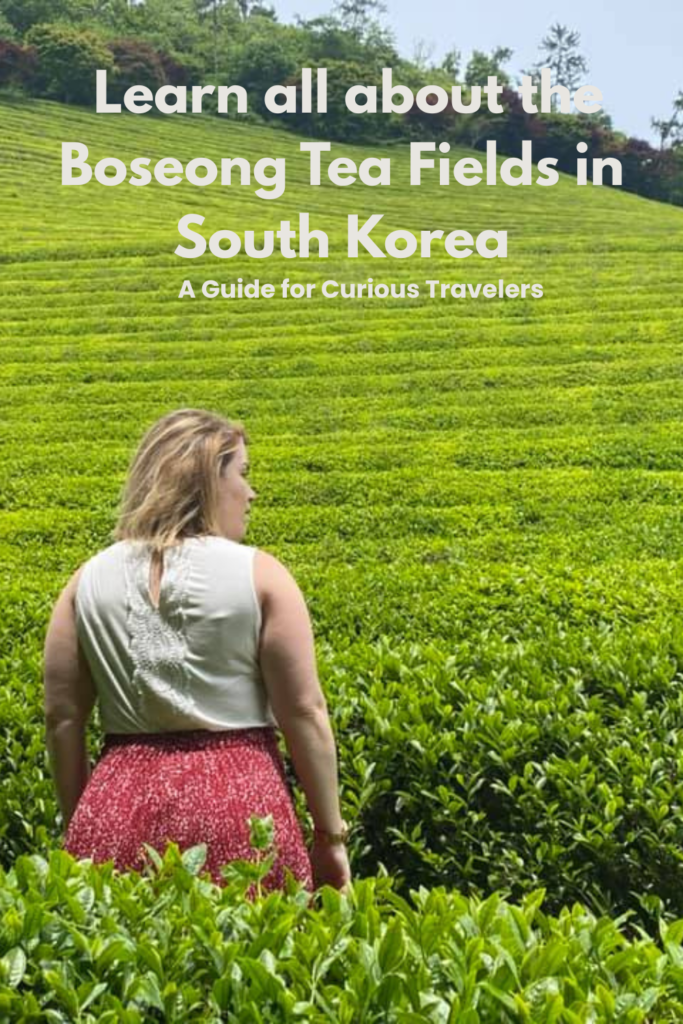
Boseong Tea Fields At a Glance
Official Name: Daehan Dawon Tea Plantation (대한다원)
Location: Boseong County, Jeollanam-do, South Korea
Admission: ~₩4,000 adults / ~₩3,000 children & seniors
Opening Hours: Daily, 9:00 a.m. – 6:00 p.m. (shorter in winter)
Best Time to Visit: April–May for the Boseong Green Tea Festival, or early mornings year-round for fewer crowds
Getting There: Bus, train + bus, or car (see directions below)
Facilities: Café, gift shop, restrooms, parking, local bus stop nearby
Getting Around South Korea: I highly recommend using NAVER maps. Please do not use Google or Waze
Traveler Tip: Come early to walk the cedar-lined entrance before the tour buses arrive — it’s pure magic when the fields are quiet.
Why Boseong is Korea’s Green Tea Capital
Before I visited Boseong, I had no idea just how deep Korea’s connection to tea really went. Tea has been part of Korean life for well over a thousand years. People were harvesting wild tea here long before it ever became trendy, and green tea eventually made its way from China during the Silla period. Over time, tea shifted in meaning — treasured in temples, enjoyed by the royal court, and eventually grown naturally across regions like Jeolla, where Boseong sits today. It’s a long, winding history, but standing in these fields, you can actually feel how rooted it is.
The Daehan Dawon Tea Plantation, the one you see in every postcard, was first developed in the 1930s when the Japanese realized Boseong’s climate was perfect for growing green tea. After being nearly destroyed during the Korean War, farmer Chang Young Seop re-established it in 1957. Today, it’s responsible for about 40% of Korea’s tea production and boasts over 5.8 million tea trees.
Tea Culture in Korea
Tea in Korea is more than just a drink — it’s history, tradition, and a quiet moment in a busy day. While coffee shops are everywhere now, green tea still holds a special place in Korean culture, especially in regions like Boseong, where it’s been grown for centuries.
Korean tea ceremonies (darye, meaning “etiquette for tea”) are about slowing down, appreciating the aroma, and being present with the people you’re sharing tea with. The pace is unhurried — the water is poured slowly, the cups are warmed before use, and each sip is savored.
The taste of Korean green tea is often softer and less astringent than Japanese matcha. Depending on when it’s harvested, you might notice fresh, grassy notes (from the early Woojeon leaves) or a deeper, roasted flavor from later harvests.
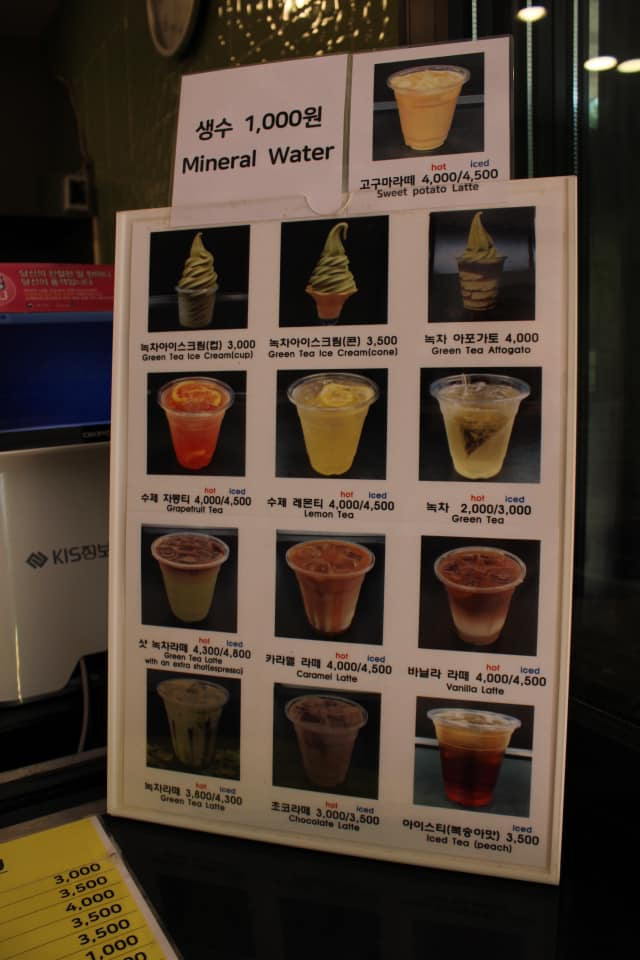
Even outside traditional tea houses, you’ll find tea woven into daily life — from bottled green tea in convenience stores to green tea–infused desserts like nokcha ice cream, cakes, and even noodles.
Visiting Boseong gives you the chance to see where this tea begins, how it’s grown, and why it’s been treasured for over a thousand years. And once you’ve experienced tea here, you might find yourself seeking it out elsewhere in Korea — maybe even at places like Chorok Miso Village in Pyeongtaek, where the focus is on wellness and tea-based treatments.
First Impressions: Walking the Boseong Green Tea Fields
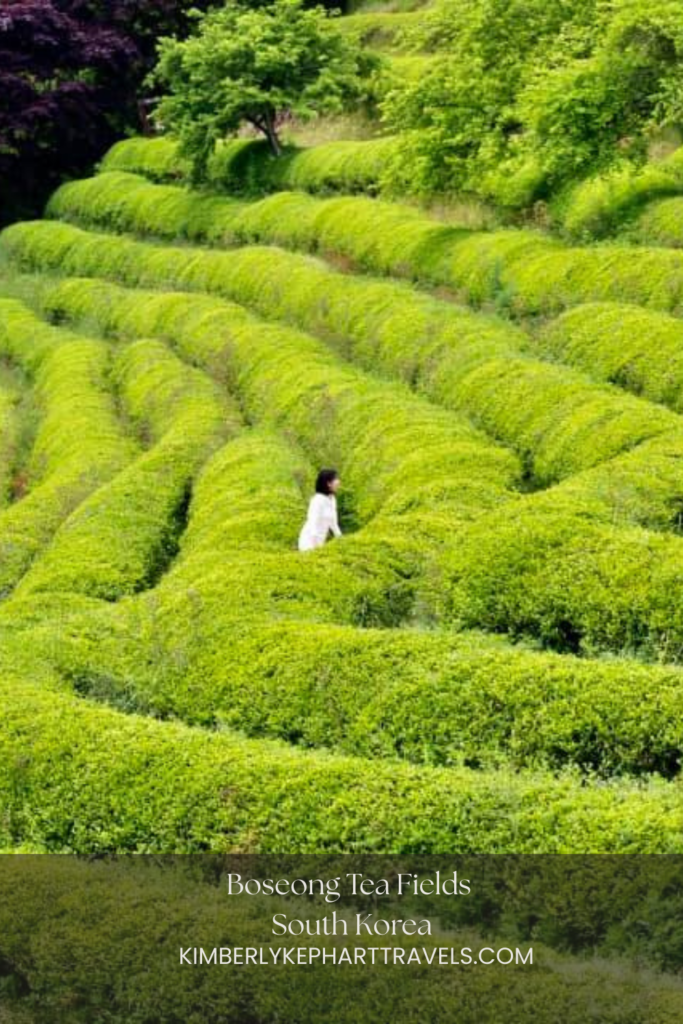
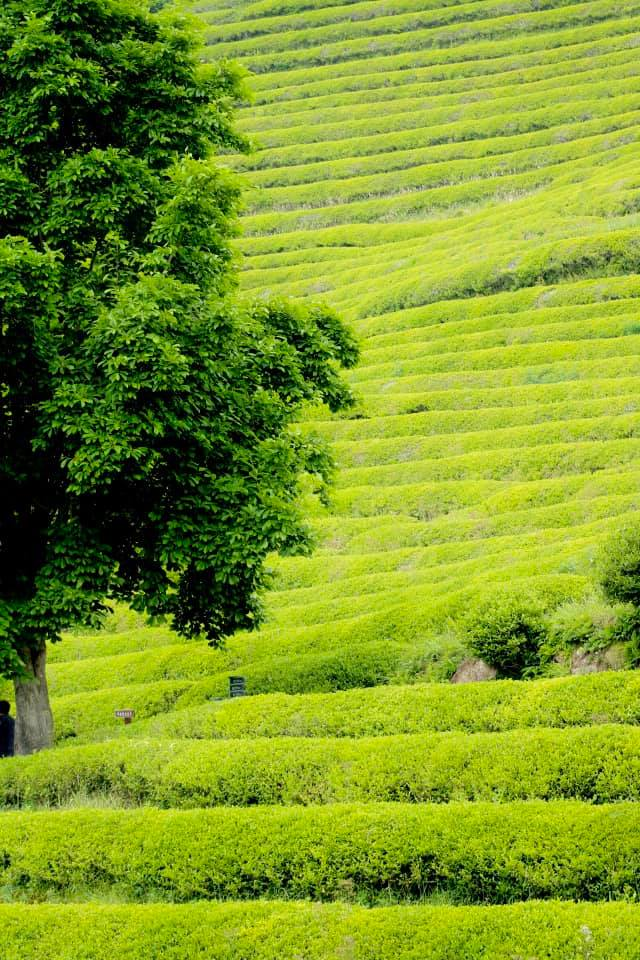
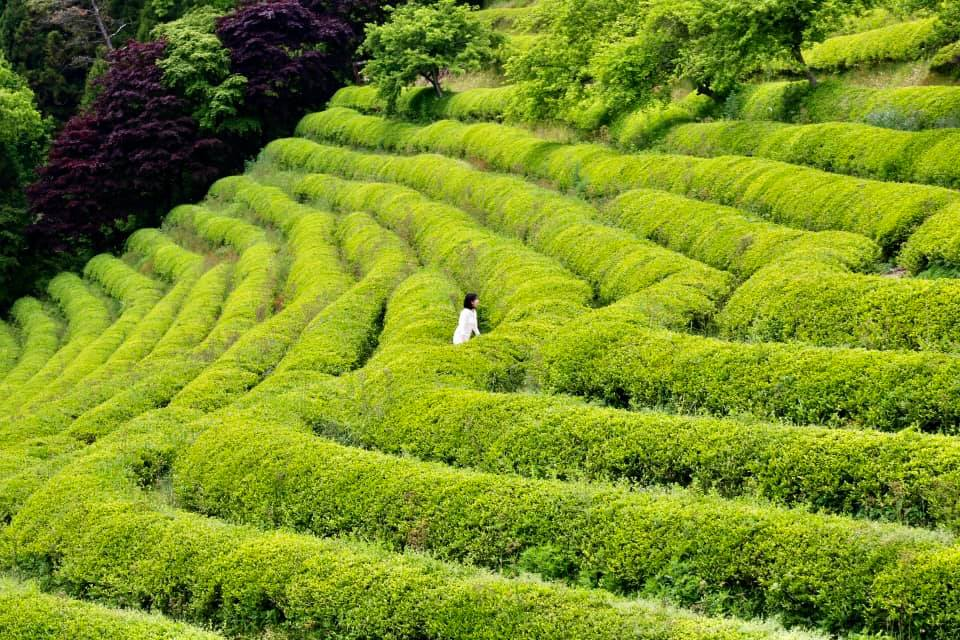
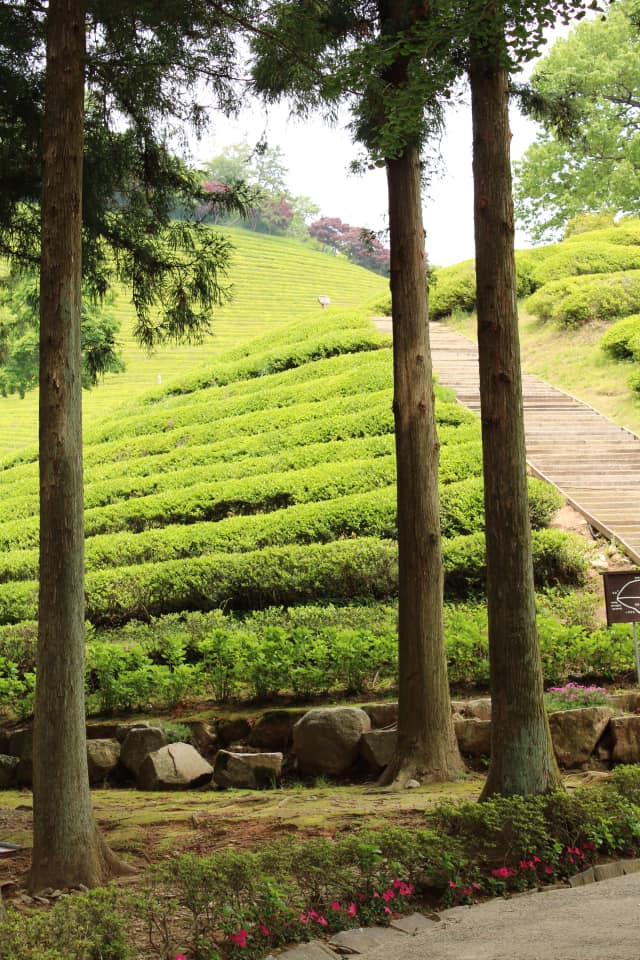
Even if you’ve never touched a cup of tea in your life, the Boseong Tea Fields will leave you speechless, or at least it did for me. My husband had to pick my jaw up off the ground. The plantation is a quilt of neatly trimmed terraces that look like they’ve been painted onto the hillside.
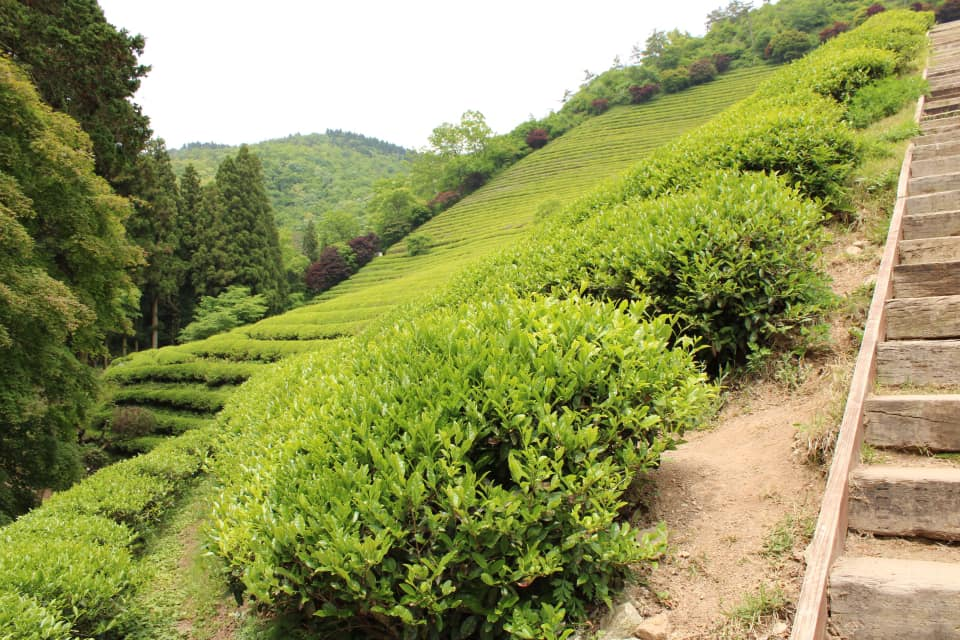
Our walk began under those famous cedar trees before opening into the tea fields. I wandered slowly, taking in the earthy smell of the leaves and the distant sound of water from a nearby stream. I know I was with my husband, but I couldn’t help but think that as a solo traveler, this is the kind of place you want to soak in without rushing.
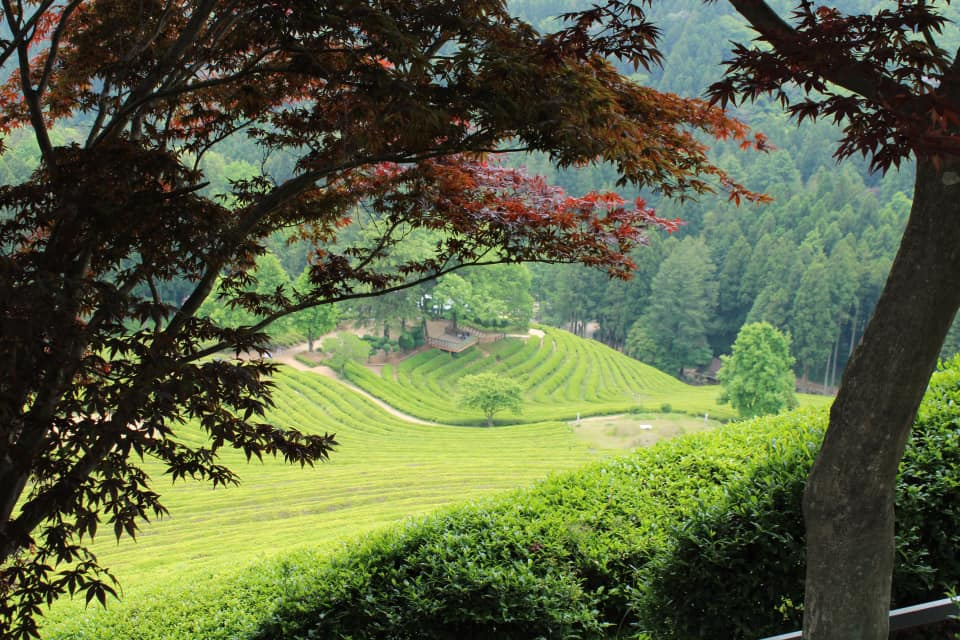
There’s a marked trail that winds up to an observation point. It’s not a hard climb, but you’ll want decent shoes because the dirt paths can be slick after rain. The higher you go, the better the view: row after row of green tea plants rippling down the slopes, and on a clear day, you might even spot the Yellow Sea in the distance.
Understanding the Tea Harvests in Boseong
Tea in Boseong tells the story of the season, and you can taste the shift with every harvest. Woojeon is the first to appear — picked before April 20 — delicate, light, and honestly a treat if you can get your hands on it. By early May, the leaves become Sejak or Jakseol, the everyday favorite you’ll see most often in shops. Mid-May brings Jungjak, smoother and a little more balanced, and then late May rolls in with Daejak or Ipha, which has a fuller, bolder flavor. By June and July, you’re into Yeop Cha territory — the kind of tea that makes an incredible iced brew. If you’re thinking about bringing tea home, this lineup gives you a feel for what to look for and why each one hits differently.
My favorite is Jungjak, because it’s so balanced.
Things to Do in Boseong
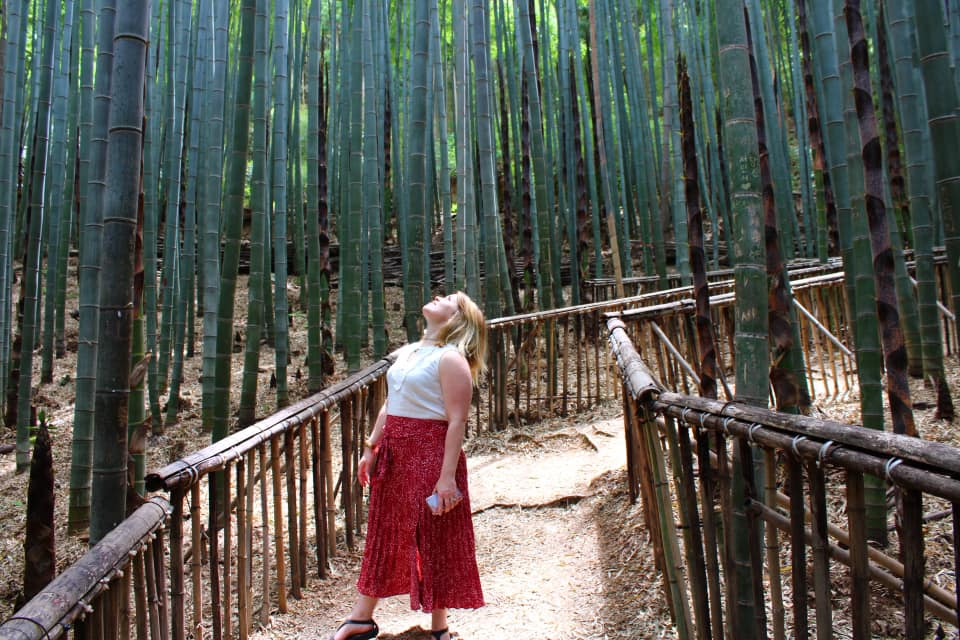
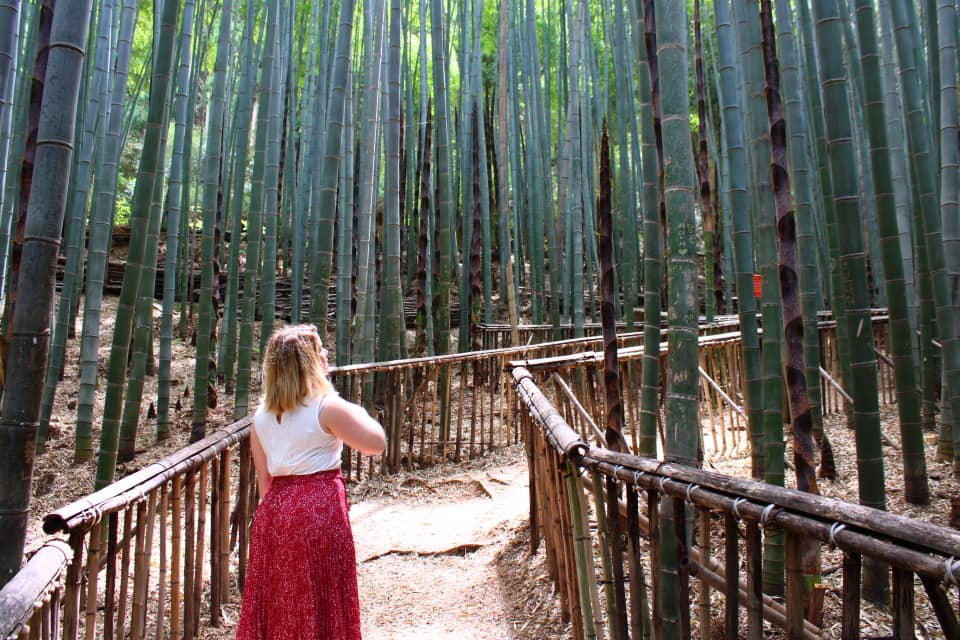
Boseong is one of those places that nudges you into slow travel, whether you planned on it or not. Start with the Cedar Path and Bamboo Grove. It’s a shaded, whisper-quiet walk that feels like nature easing you into the rhythm of the tea fields. Take your time hiking up to the observation point, because the views are best when you’re not rushing.
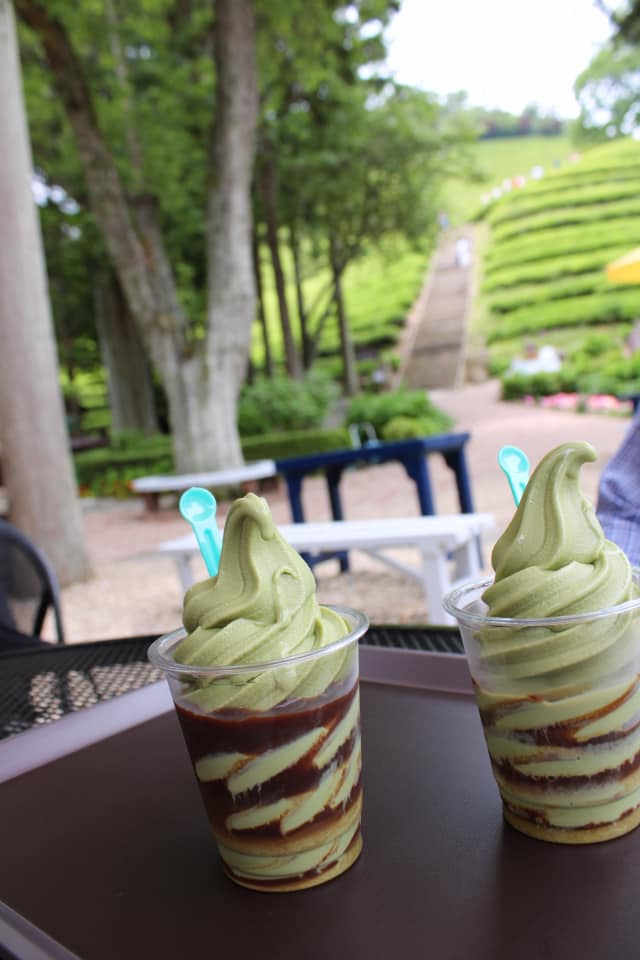
The Tea Museum of Korea gives you a deeper appreciation for the craft behind every cup, and wandering through at your own pace makes it even better. And then there are the small joys that define slow travel here: lingering over a matcha latte while staring out across the terraces, or savoring a scoop of green tea ice cream simply because the moment calls for it. Boseong rewards anyone willing to pause, breathe, and take it all in.
Korea has no shortage of gorgeous outdoor escapes, from the rolling terraces of Boseong to the granite peaks of Bukhansan National Park in Seoul
How to Get to the Boseong Green Tea Fields
- From Seoul – Intercity bus from Central City Terminal to Boseong (5–5.5 hrs).
- From Busan – Bus to Gwangju (3 hrs), then Gwangju to Boseong (1.5 hrs).
- From Gwangju – Frequent buses, about every 30–50 mins (1.5 hrs).
- From Suncheon – Around 1 hr by bus.
From Boseong Bus Terminal, take the local bus toward Yulpo and get off at the tea fields stop (Nokcha-bat). It’s a short 5-minute walk to the entrance.
Solo Traveler Tips
- Arrive early for fewer crowds and softer morning light.
- Use Naver Map for bus schedules — Google Maps won’t cut it here.
- Wear comfortable shoes — you’ll be walking on dirt paths.
- Bring cash for small purchases like ice cream or bus fares.
- Give yourself 3–4 hours to wander, rest, and enjoy tea.
When to Visit Boseong Tea Fields
We were there in early Summer, and it was humid, but manageable. That said, it’s wise to grab a green tea ice cream and bring water with you to stay cool!
Spring is festival season, and it’s when the first flush of green tea is harvested — the whole region feels fresh and alive. If your travels in Korea overlap with a festival, it’s worth planning your trip around it.
I loved visiting Boseong during the Green Tea Festival just as much as I loved seeing the streets of Seoul glow during the Lotus Lantern Festival.
Summer brings peak greenery with those impossibly lush terraces, though it definitely runs hot and humid, so go slow and build in breaks.
Autumn is quieter and cooler, with softer light and a calmer atmosphere that makes wandering the fields feel peaceful. In winter, everything shifts again as the Tea Plantation Light Festival turns the hills into a glowing landscape. It’s a completely different way to experience the plantations, and worth considering if you don’t mind the chill.
Are the Daehan Dawon Tea Fields worth it?
Boseong wasn’t just a checkmark on my Korea bucket list — it was a day I’ll always remember. The rows of green tea plants, the calm of the early morning, the earthy sweetness of fresh tea — it all left me feeling grounded and grateful. Whether you’re a lifelong tea lover or just in it for the views, the Boseong Tea Fields are a trip worth making.
Commonly asked questions about Boseong Tea Fields
The Boseong Tea Fields are in Boseong County, South Jeolla Province, South Korea, about 5–5.5 hours from Seoul and 1.5 hours from Gwangju. The main plantation is Daehan Dawon.
Take an intercity bus from Seoul’s Central City Terminal to Boseong Bus Terminal (5–5.5 hours). From there, ride the local bus toward Yulpo and get off at the Nokcha-bat (green tea fields) stop, then walk 5 minutes.
Admission to Daehan Dawon is usually ₩4,000 for adults and lower for children and seniors.
They’re generally open daily from 9:00 a.m. to 6:00 p.m., with shorter hours in winter.
April–May for the fresh harvest and the Boseong Green Tea Festival, summer for lush green views, autumn for cool weather, and winter for the Boseong Tea Plantation Light Festival.
Wear comfortable walking shoes and dress in layers. Bring a hat or sunscreen in sunny weather.
Yes. The area is safe, easy to navigate, and offers peaceful trails. Use Naver Map or KakaoMap for bus schedules.
Yes. Shops sell Woojeon, Sejak, Jungjak, Daejak, matcha, green tea snacks, and skincare products.
Yes. Guided tours are available!