
A Short and Sweet Guide to the Aosta Christmas Market (“Marché Vert Noël” )
Estimated reading time: 13 minutes
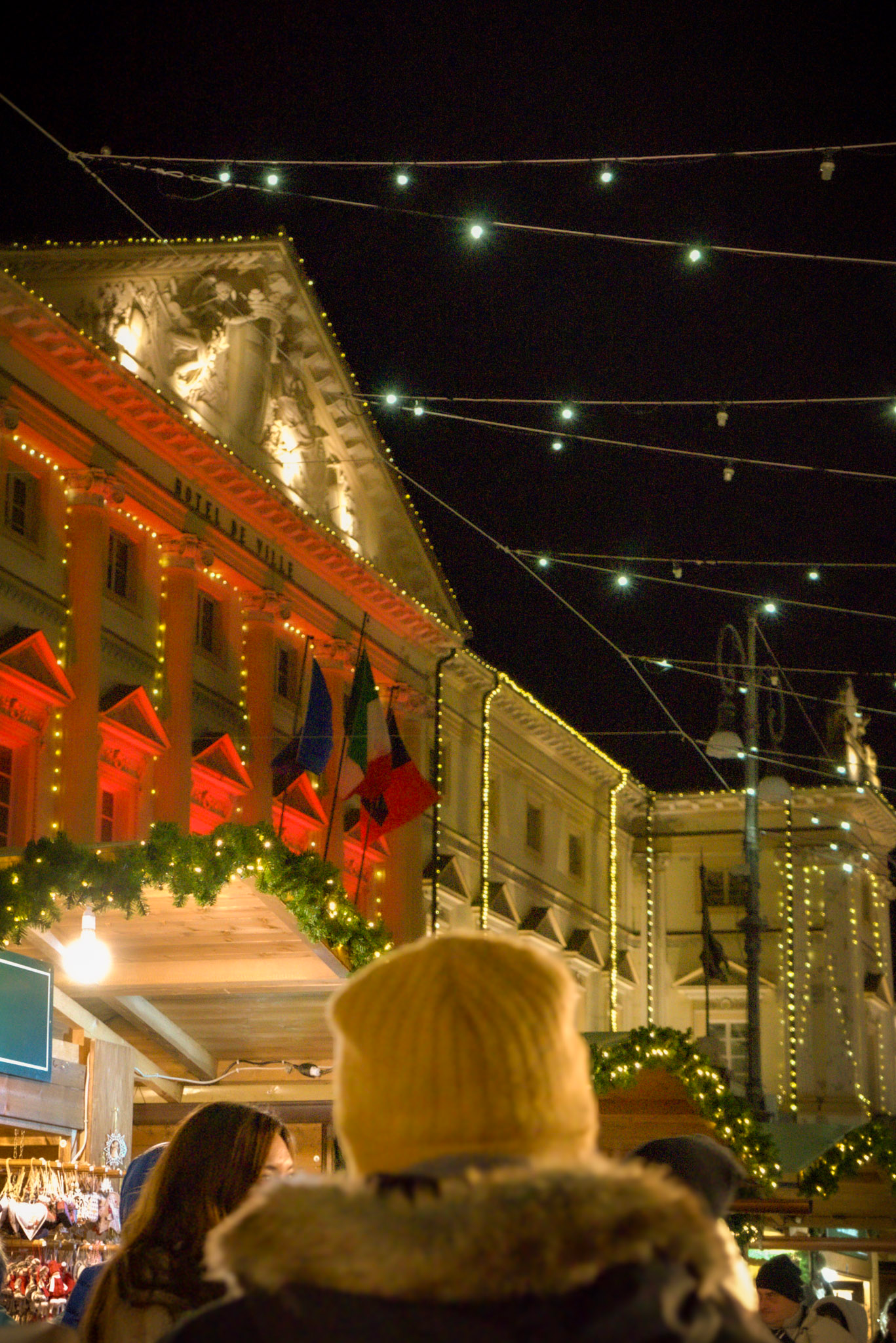
If you’re looking for a Christmas market in Italy that feels festive but not overwhelming, the Aosta Christmas Market (Marché Vert Noël) is worth your attention. Located in Italy’s Aosta Valley region, this alpine market blends mountain charm, handmade goods, and a relaxed holiday atmosphere that’s surprisingly easy to enjoy.
My husband and I spent five days in Aosta in December, and the Marché Vert Noël quickly became part of our daily rhythm. It was simple to reach, easy to wander, and never felt rushed. We’d stop by in the evening, warm our hands around vin brûlé, browse local crafts, and let the night unfold naturally—no planning required.
That ease is what sets the Aosta Christmas Market apart. The market is compact and walkable, woven into the historic center of Aosta, with Roman ruins and snow-dusted Alpine peaks just steps away. Instead of navigating dense crowds or rigid routes, you’re free to slow down and actually enjoy the season.
In this guide, I’ll show you what the Aosta Christmas Market is really like, when to visit, how to get there, what to eat and buy, and why Aosta Valley works so well as a winter base in northern Italy.
This Post Pairs Well With:
- Christmas Markets
- Rango Christmas Market in Garda-Trentino, Italy
- An Honest Guide to The Verona Christmas Market
At a Glance: Aosta Christmas Market (Marché Vert Noël)
Location: Piazza Chanoux, Aosta’s historic center
Dates: 22 November 2025 – 06 January 2026
Vibe: Small alpine village, warm lights, handcrafted gifts, local foods
Highlights:
• Wooden chalets with local crafts
• Aosta Valley delicacies and regional wines
• Live artisan demonstrations
• Kids’ activities and festive displays
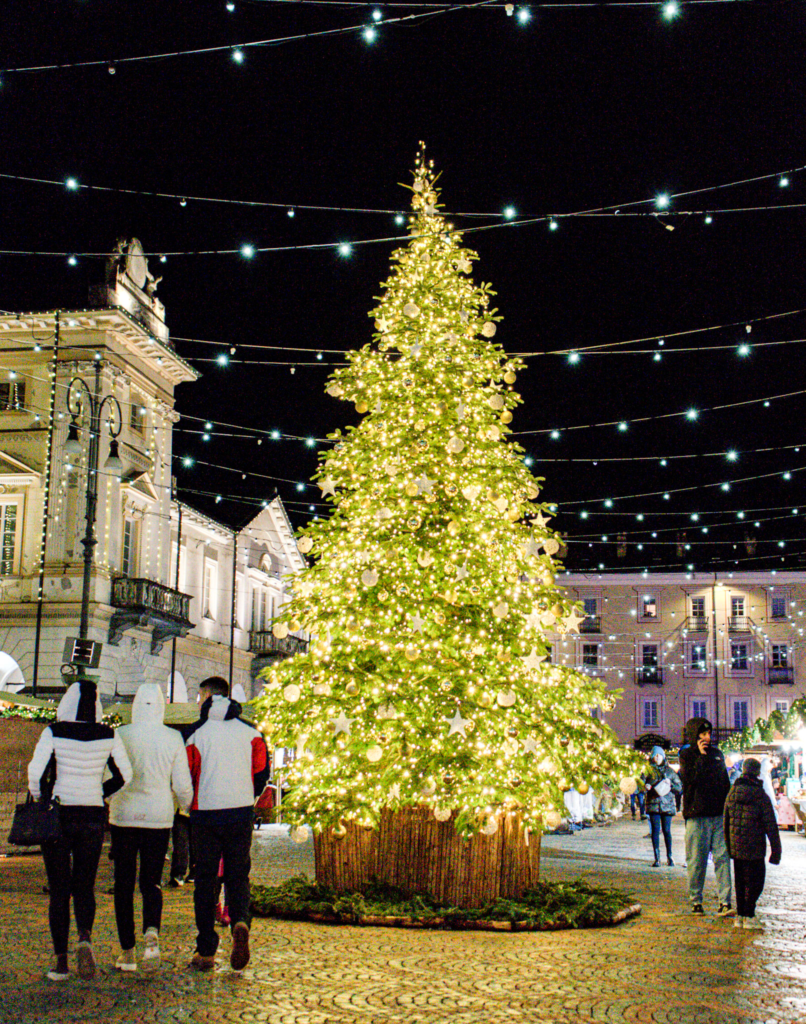
• Giant Christmas tree with 7,000+ lights
• Illuminations throughout the old town
Don’t Miss:
• Porta Praetoria & the Roman Theatre
• Cathedral and Church of Saint Orso
• Light shows at Lussu Park
• Video mapping near Porta Praetoria
• The “talking magic book” at the Arch of Augustus
Where Is Aosta, Italy?
Aosta sits in the far northwest corner of Italy, in the Aosta Valley region, tucked beneath Mont Blanc and just minutes from the borders of France and Switzerland. It’s small, scenic, and easy to miss on a map—but once you arrive, it leaves an impression.
You step into a valley ringed by dramatic Alpine peaks, with ancient Roman ruins woven into the city center and cafés lining the streets. One moment you’re passing a Roman arch; the next, you’re holding a cappuccino—or a spritz—while watching the mountains catch the light. Aosta feels lived-in, not staged.
If you’ve never heard of Aosta before, you’re not alone. Many travelers skip over it entirely, and that’s part of what makes it special. The town blends Italian and French influences in both its food and culture, and in winter, everything slows down. Snow settles over the rooftops. The streets feel calmer. The pace becomes gentler.
And yes—Aosta has a Christmas market worth traveling for. The Marché Vert Noël may be smaller than Italy’s most famous markets, but it’s atmospheric, walkable, and genuinely enjoyable. It fits Aosta perfectly.
A Snapshot of Aosta’s History
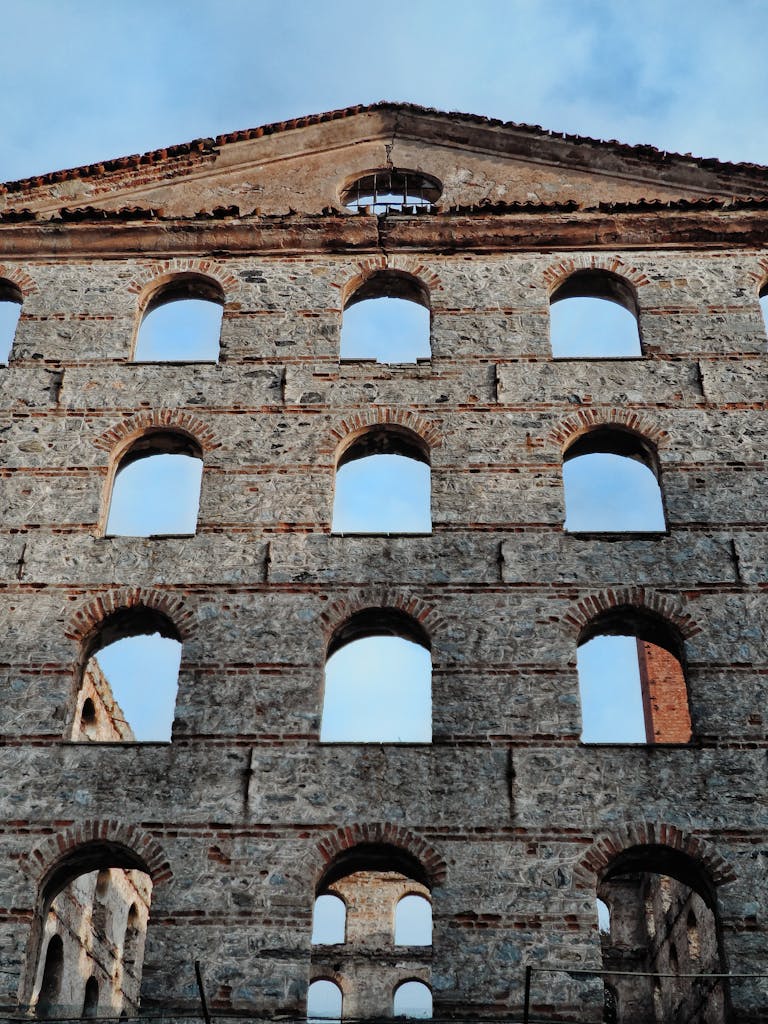
Aosta was founded in 25 BCE by the Romans, who named it Augusta Praetoria. Its role was strategic: guarding the Alpine passes between Italy and Gaul. That’s why Roman landmarks aren’t tucked away in museums here—they’re part of daily life.
Walk through the city center, and you’ll pass a Roman arch, ancient walls, and the remains of a forum, all within a few minutes of each other. Because of this unusually intact layout, Aosta is often called “the Rome of the Alps.” The difference? You can actually enjoy it without crowds.
Over time, Aosta became more than just a Roman outpost. Its position near France and Switzerland shaped a distinct cultural blend—Italian warmth, French influence, and a deeply rooted mountain identity. You see it in the stone buildings, taste it in the cheese and wine, and feel it in the slower, more grounded pace of life.
Aosta’s Layout: The Town You Can Actually Navigate
The best part? Aosta is compact and shockingly easy to understand, even on your first walk through town.
The historic center sits on a Roman grid, which means the streets run neatly north–south and east–west. Everything revolves around:
- Piazza Chanoux – the main square and home of the Aosta Christmas Market (Marché Vert Noël).
- Via Porte Prétorienne – the main pedestrian street lined with shops, bakeries, and wine bars.
- Via Sant’Anselmo – another lively artery where you’ll find cafés, patisseries, and locals out for their evening stroll.
Head to the edges of the old town and you run right into Aosta’s greatest hits: the Roman Theatre, Porta Praetoria, and the Arch of Augustus. All within a quick walk from each other.
How to Use This Map:
Click the icon in the top left corner to see all the places I’ve pinned around the city— from cafés and museums to scenic viewpoints. You can turn layers on or off and click any pin to learn more about each spot. Want to keep it handy for your trip? Click the star next to the map’s title to save it to your Google account.
Then, open the Google Maps app, go to “Saved” → “Maps,” and you’ll see this map ready to guide you while you explore.
What’s Near Aosta
I have bookmarked a few of these places on my map above, but Aosta makes an exceptional base if you want to explore more of the Alps without long travel days:
• Courmayeur – chic ski town at the base of Mont Blanc
• Skyway Monte Bianco – panoramic cable car into the high Alps
• Pila Ski Resort – accessible by cable car directly from Aosta
• Gran Paradiso National Park – winter wildlife, snowshoeing, and mountain views
• Chamonix, France – under an hour away
The combination of history, accessibility, and mountain scenery is what makes Aosta such a welcoming surprise for winter travelers — and the perfect setting for a Christmas market that feels both intimate and magical.
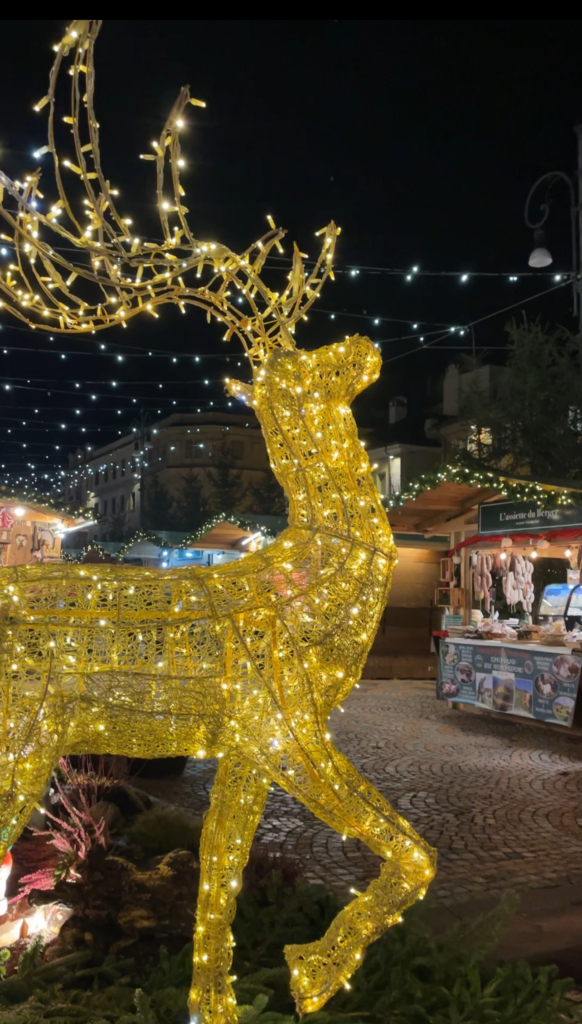
What to expect at the Aosta Christmas Market
The Aosta Christmas Market, also known as Marché Vert Noël, typically runs from late November through early January. For the 2025–2026 season, dates are expected to be November 22, 2025 through January 6, 2026, aligning with Italy’s Epiphany holiday.
Before you arrive, it’s important to set the right expectations—especially if you’ve visited larger Christmas markets in northern Europe. The Marché Vert Noël is small by design. And that’s exactly what makes it work.
The entire market is centered in Piazza Chanoux, Aosta’s main historic square. Around 30 to 40 wooden chalets line the space, creating a layout that feels cozy, walkable, and intentional. It genuinely feels like a miniature Alpine village dropped into the heart of the city rather than a sprawling event you have to navigate.
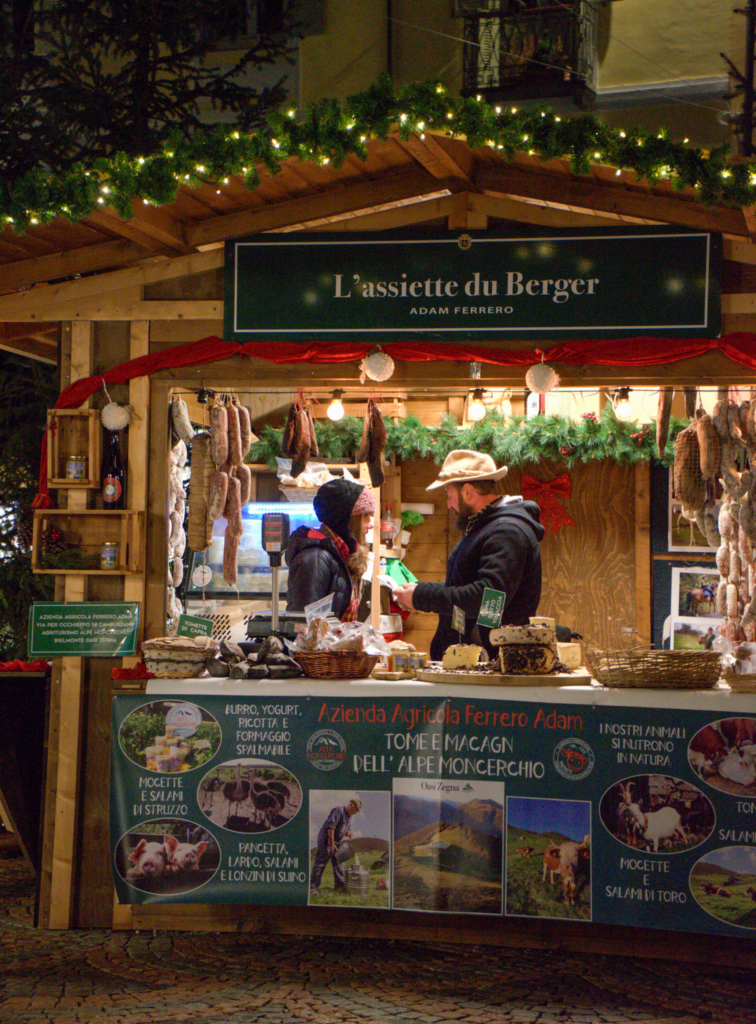
What stood out most to me was the quality. This isn’t a market filled with mass-produced souvenirs or filler stalls. Local artisans dominate, and the crafts feel thoughtfully made and worth lingering over. I especially loved the pottery—whimsical shapes, mushroom designs, and pieces that felt playful without being kitschy. Prices generally ranged from €30 to €80, which felt fair for handmade items.
We visited the market multiple times during our stay, often in the evenings, and it never felt overwhelming. The vendors were friendly, happy to chat, and genuinely proud of what they were selling. The overall atmosphere felt warm, relaxed, and very much in tune with Aosta’s slower pace of life.
Is the Aosta Christmas Market family-friendly?
Yes—very much so. While I don’t travel with kids, I saw plenty of families enjoying the market together. There aren’t large rides or amusement-style attractions, but the space is compact, safe, and easy to navigate, which makes it approachable for families with younger children.
Beyond the market itself, light projections and festive illuminations are scattered throughout Aosta’s city center, adding to the holiday atmosphere as you wander the surrounding streets.
Market Layout and Atmosphere
Piazza Chanoux becomes the heart of the Aosta Christmas Market, with wooden chalets arranged in a gentle U-shape around the central Christmas tree. The square is framed by classic Alpine architecture and Aosta’s civic buildings, while the mountains rise quietly in the background—never competing for attention, just setting the scene.
In the early evening, just before sunset, the atmosphere shifts. The lights warm up, the air cools, and when there’s snow on the peaks, the whole square feels softly lit and intimate rather than busy. Trust me, this will make you want to linger a little bit longer!
What stood out most to me was how calm and unhurried the experience felt. You can move through the stalls at your own pace, stop to chat with vendors, sample food without long waits, and actually enjoy what you’re seeing. Nothing feels rushed or overcrowded.
What to Eat and Drink
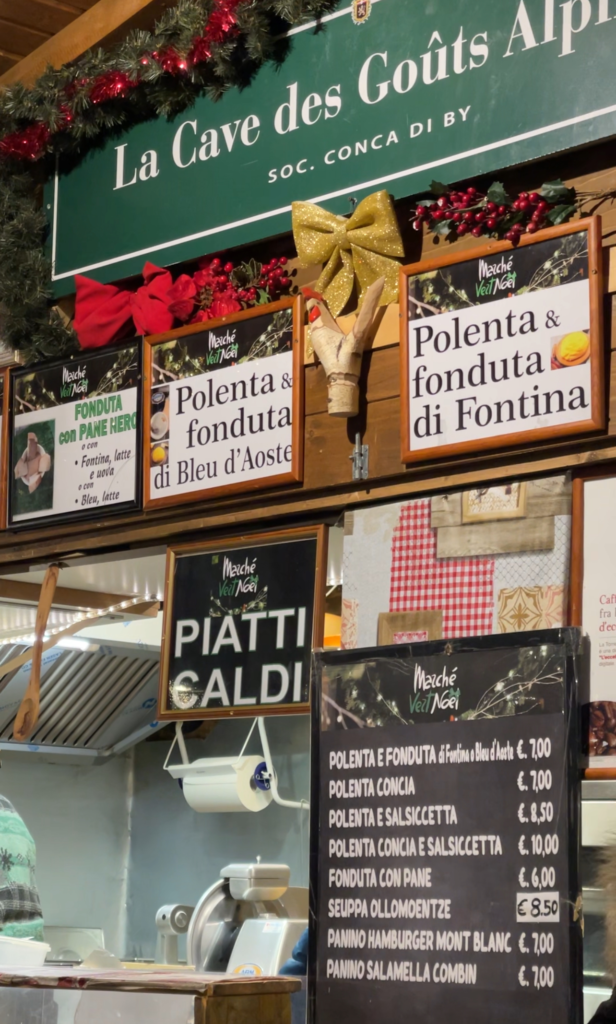
The food here leans into everything good about mountain cuisine. It’s warm, cheesy, filling, and comforting — with French and Swiss influences layered in. When we went in 2024, this is what I took note of and even tried a bit of it.
- Polenta concia: Creamy cornmeal topped with Fontina cheese.
- Fondue: Served with bread or potatoes — simple, but so good.
- Valdostano sandwiches: Panini with cured meats and gooey cheese.
- Crepes: Sweet and savory, made with a distinctly French touch.
- Torcetti & cookies: Buttery, crunchy, and perfect for snacking.
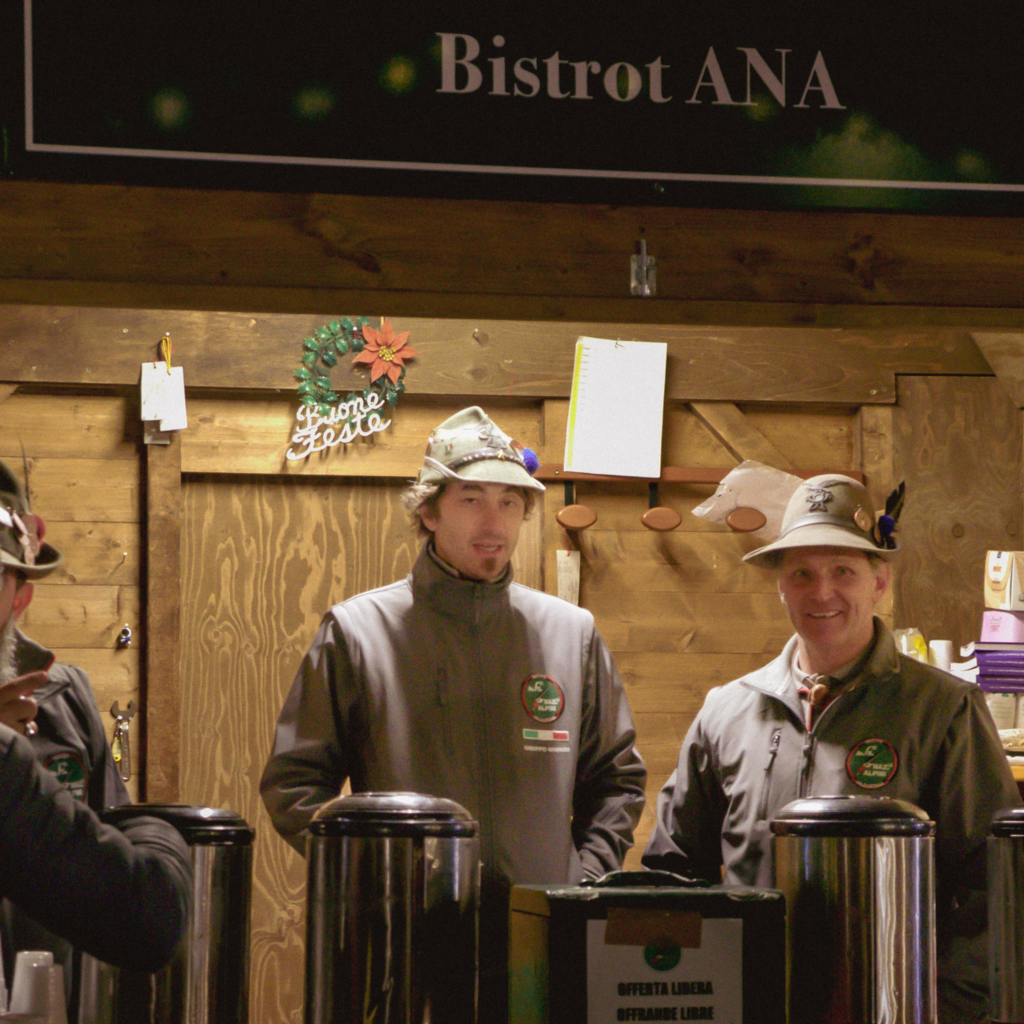
- Vin Brulé: The one from the Alpini stall was the standout. Bonus: your purchase supports the ANA (Italy’s Alpine troops) and their charitable endeavors. Think of it like the VFW (for Americans)
There’s no souvenir mug system here — and honestly, that was fine. No extra clutter to carry, and the wine was better than most mug markets we’ve been to.
If you’d like prices, use this as a guideline:
- 3–4 EUR for wine
- 6–8 EUR for polenta/fondue
- 4–6 EUR for crepes
- 10–30 EUR for crafts and accessories
Bring some cash — a few food stalls didn’t take cards.
What to Buy
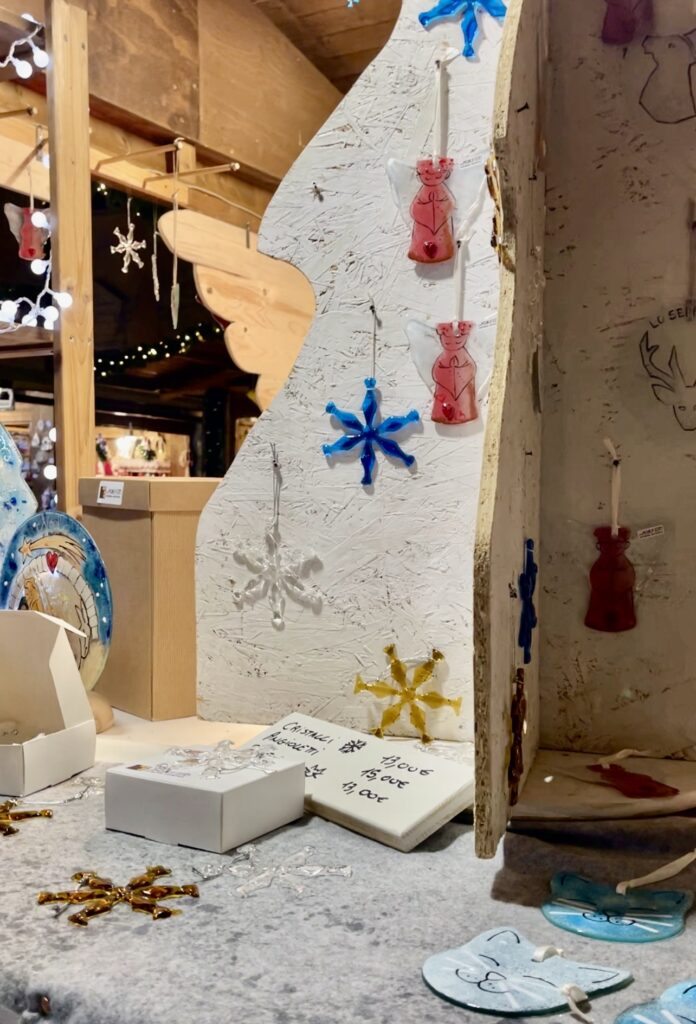
The market vendors in Aosta are mostly local artisans, which is something I love. I often hate it when I head to Christmas Markets, and it’s nothing local.
You’ll find:
- Hand-carved wooden toys and ornaments
- Wool scarves, gloves, and socks
- Ceramic pieces with French/Swiss Alpine designs
- Small-batch honey, genepy liqueur, and preserves
- Wines from Aosta Valley vineyards
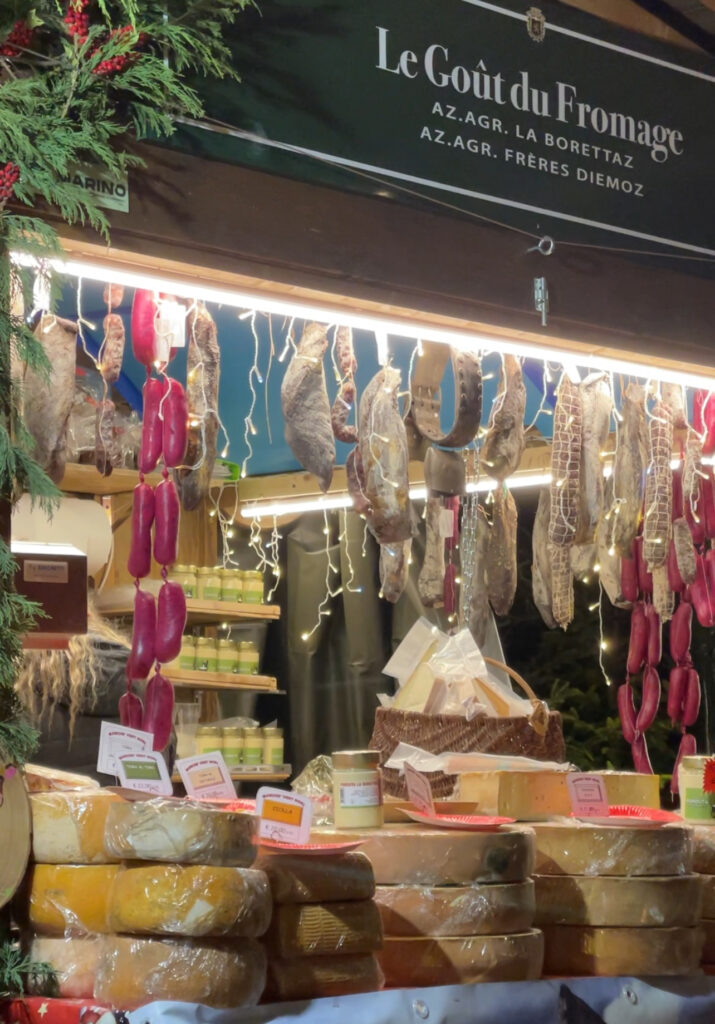
We brought home a wooden ornament and some cheese. We ate it that week at our apartment we were staying at in Aosta. It was so freaking good, don’t ask me the flavor, but you’ll find all the Swiss/French/Italian cheese in one spot. It’s like you’re in heaven.
More Than a Market
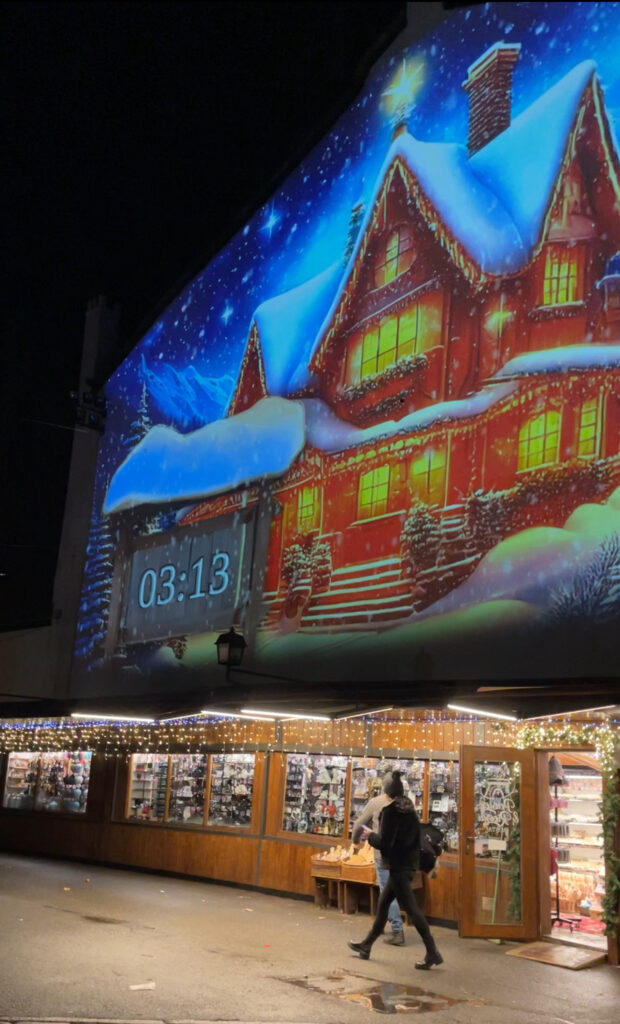
Even though the market was our main reason for visiting, Aosta had more to offer than just Piazza Chanoux. The Roman ruins are stunning and scattered all over town. You can walk from the market to the Porta Praetoria in five minutes. The Roman Theatre is even closer. The Arch of Augustus sits just beyond the walls, and during the holidays, it’s lit with winter projections and home to a quirky animated “talking book” that tells a Christmas story.
We wandered through Lussu Park one night and found a small light show that felt charming and unexpected. Everything was within walking distance, which we loved.
When to Go and Where to Stay
The Marché Vert Noël typically runs from late November through early January. We visited In December, during the Week of Christmas, and found it festive and surprisingly not too crowded. If you can swing a weekday visit, even better, but as always, please check opening hours!
We stayed on the outskirts of Aosta at an Apartment called Au Petit Chevrot. It was an apartment on the smaller side; they have various apartment sizes you can stay in. We opted for a first-floor option that was easy access for both of our dogs. This was our last Christmas with our dog buddy, and looking back on these memories, they were some of my favorites.
You can check out rates for Au Petit Chevrot here, or search below for an apartment that suits your needs.
My rating on this market:
I give this market a 7/10 because ambiance is a big factor for this one. It’s small, cozy, and you get to visit one of Italy’s most beautiful regions, all while taking in the history of Aosta. Visiting Aosta for Christmas means that you have a chance to slow down and take in the sights, maybe go skiing and get views of Mont Blanc in and not have to deal with the rush of the Christmas Market hustle up north.
Frequently Asked Questions About the Aosta Christmas Market
Yes — especially if you want a quieter, more authentic Alpine experience. It’s a great alternative to larger, tourist-heavy markets.
You can, but we recommend staying at least one night. It’s more magical after dark and there’s plenty to enjoy around town.
Yes. You can take a regional train from Turin or Milan with a connection in Chivasso. The train station is a 10-minute walk from the market.
No. Entry to the Marché Vert Noël is completely free.
Definitely. It’s family-friendly, with light shows, a talking “magic book,” and low crowds compared to bigger markets.
You can easily visit Chamonix, Courmayeur, Fort Bard, and Pila Ski Resort
