
Verona Travel Guide for First-Timers (What to Do, Where to Stay & What to Book)
Planning your first trip to Verona, Italy, and wondering if it’s worth visiting?
Yes. Verona is one of the best cities in northern Italy for first-time visitors, but only if you plan it intentionally. Verona is romantic, historic, and is a great base for Northern Italy!
This Verona travel guide covers exactly what to do, including my favorite tours, where to stay, how many days you need, how to get there, how to get around Verona, what to book in advance, and the common mistakes travelers make.
I live 45 minutes from Verona and visit often, so this guide is built from real experience, not a rushed day trip or a 3-day visit.
If you want a relaxed, walkable base near Lake Garda, the Dolomites, and Valpolicella wine country, here’s how to plan it properly.
Verona Travel Guide Quick Planning Summary
Best for: First-time visitors to northern Italy
Ideal stay: 2–3 days
Style: Walkable historic city with wine, Roman history, and easy day trips
Stays
Hotel Milano & SPA
The Hostello
Nuova Opera Rooms
Things to Do
Verona Old Town Small-Group Walking Tour
Verona Food & Wine Walking Tour in Small-group
Is Verona Worth Visiting in 2026?
Absolutely — and in my opinion, it’s one of the most underrated cities in northern Italy for many reasons:
- Less chaotic than Venice
- Proximity to the Dolomites and Pre-Dolomiti
- Smaller than Florence
- More manageable than Rome
- Close to wonderful wine regions (Valpollicella, Soave, Gambellara, Garda, Trentino)
- Strategic northern Italy base
Verona is mere minutes away from some wonderful pre-Dolomiti hikes as well. You’ll find that the Strada Delle 52 Gallerie, Strada Del Vino Soave, and Sentiero Grandi Alberi are close to Verona.
Where is Verona located and how to get to verona
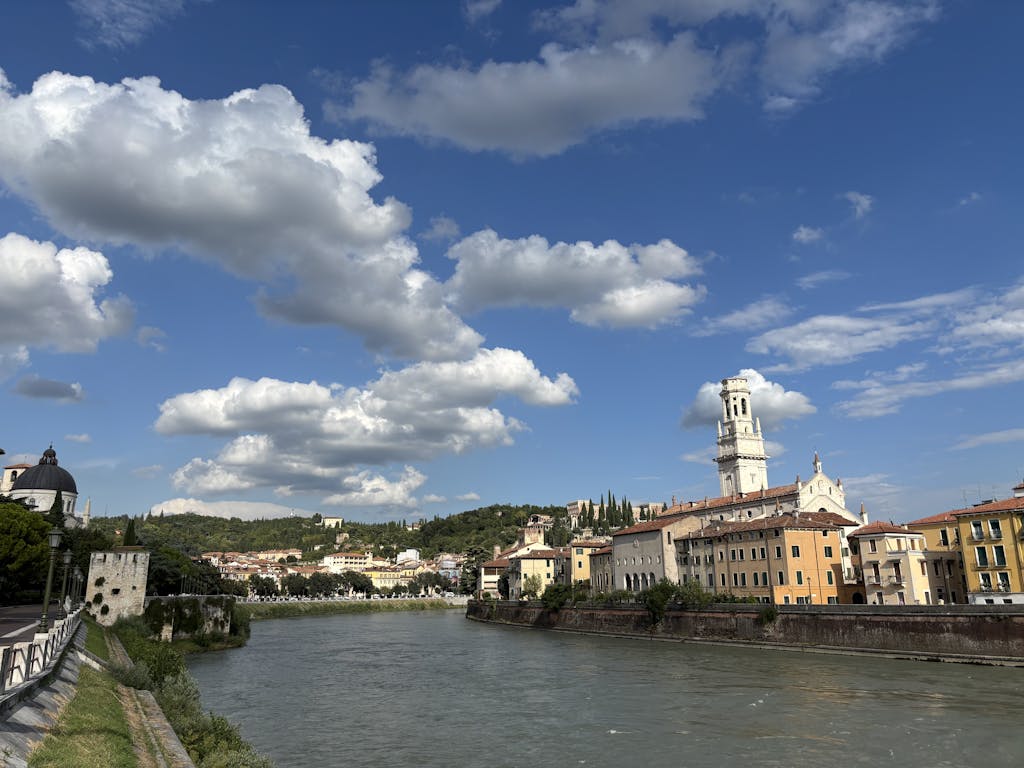
Verona is in northern Italy, in the Veneto region, along the Adige River.
It sits:
• 30 km east of Lake Garda
• 120 km west of Venice
• 160 km east of Milan
• 230 km north of Florence
This location makes Verona one of the most strategic bases in northern Italy. From here, you can easily reach Lake Garda, the Dolomites, Valpolicella wine country, Soave, Vicenza, and Venice.
Verona is also known for its Roman and medieval history, most famously the 2,000-year-old Arena di Verona, which still hosts opera performances each summer. The Arena di Verona is quite beautiful as well! It is equally tied to Shakespeare’s Romeo and Juliet and sits at the gateway to the Valpolicella and Soave wine regions, home to Amarone and Ripasso.
Here is a map to give you a visual of what to expect:
How to Use This Map:
Click the icon in the top left corner to see all the places I’ve pinned around the city— from cafés and museums to scenic viewpoints. You can turn layers on or off and click any pin to learn more about each spot. Want to keep it handy for your trip? Click the star next to the map’s title to save it to your Google account.
Then, open the Google Maps app, go to “Saved” → “Maps,” and you’ll see this map ready to guide you while you explore.
How to Get to Verona
Verona is well connected by air, train, and highway, making it one of the easiest cities to reach in northern Italy. I love flying in and out of Verona Airport, and getting to Verona by train is incredibly easy. I’ve always loved that you can do a daytrip from Venice to Verona very easily, or even from Vicenza!
By Air
Verona Valerio Catullo Airport (VRN) is about 12 km from the city center and serves domestic and international routes.
From the airport to central Verona:
Taxi: 15 minutes, approximately €25 to €30
Aerobus: Runs every 20 minutes to Verona Porta Nuova station, €6
If you prefer a pre-booked transfer, private drivers are available and can take you directly to your hotel. I usually book a welcome pickups transfer if I know I’ll need it. You can check rates and input your dates below for detailed information.
By Train
Verona Porta Nuova is a major rail hub with high-speed connections across Italy and into Austria and Germany. I love getting around Italy by train, even with all the strikes that can occur during your time here.
Approximate train times:
- Rome: 3 hours 15 minutes
- Florence: 1 hour 30 minutes
- Milan: 1 hour 15 minutes
- Venice: 1 hour
- Innsbruck: 3 hours 30 minutes
- Munich: 5 hours 30 minutes
Porta Nuova station is about a 12 to 15 minute walk from the historic center, or a short bus or taxi ride.
There is no metro system in Verona, but the historic center is compact and highly walkable.
By Car
Renting a car and driving in Italy is an adventure. I think driving in Northern Italy is much easier than driving down south. I’ve listed driving times to Verona from major cities:
- Rome: 5 hours
- Florence: 3 hours
- Milan: 2 hours
- Venice: 1.5 hours
- Innsbruck: 3 hours
- Munich: 5 hours
If you plan to rent a car for day trips to Valpolicella, Lake Garda, or the Dolomites, Verona is an easy starting point.
Important: Verona’s historic center has a ZTL (Limited Traffic Zone). Do not drive inside it unless your hotel has registered your license plate. Park outside the zone and walk in.
How Many Days Should You Spend in Verona?
You can see Verona in one day. You’ll enjoy it much more with two.
Three gives you flexibility.
1 day:
One day in Verona is enough to see the Arena, Piazza delle Erbe, Juliet’s Balcony, Ponte Pietra, and a sunset viewpoint. It will feel efficient but slightly rushed.
2 days (ideal for first-timers):
While two days gives you time to explore the historic center properly, visit museums, enjoy long meals, and take a walking tour or wine tasting.
3 days:
Add a Valpolicella wine tour, Lake Garda day trip, or a relaxed morning in Giardino Giusti without feeling pressed for time.
If you’re using Verona as a base for northern Italy, two or three nights works beautifully.
For detailed breakdowns, see:
• My One-Day Verona Itinerary
• How to Spend 3 Perfect Days in Verona
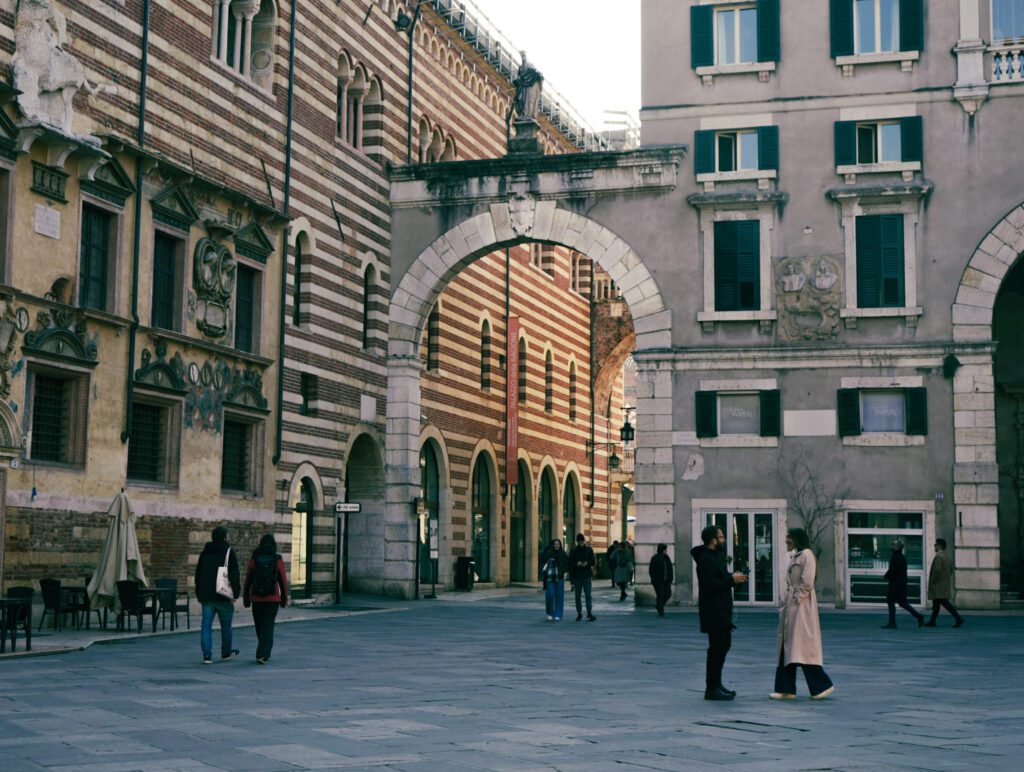
Best Times to Visit Verona
The best time to visit Verona is April to June and September to October.
These months offer warm but manageable temperatures, fewer tour groups, and ideal conditions for walking the historic center, visiting Lake Garda, or touring Valpolicella wine country.
Here’s how each season compares:
Spring (April–June)
Best overall balance.
Mild weather, blooming gardens, outdoor café season, and manageable crowds.
Ideal for first-time visitors.
Summer (July–August)
Hot and busy, with temperatures often above 30°C (86°F).
However, this is opera season at the Arena di Verona, which is one of the city’s most iconic experiences.
Book accommodation and Arena tickets well in advance.
Fall (September–October)
Warm days, harvest season in wine country, and fewer crowds than summer.
Excellent for wine tastings in Valpolicella and Soave.
Winter (November–February)
Quieter and cooler, but charming.
December brings Christmas markets and a festive atmosphere. Yes, Verona has a smaller Christmas market, and I’ll be honest in this post about it. It’s definitely worth attending, but keep your expectations to a minimum.
Good option if you prefer fewer tourists and lower hotel rates.
If this is your first visit and flexibility allows, aim for late spring or early fall.
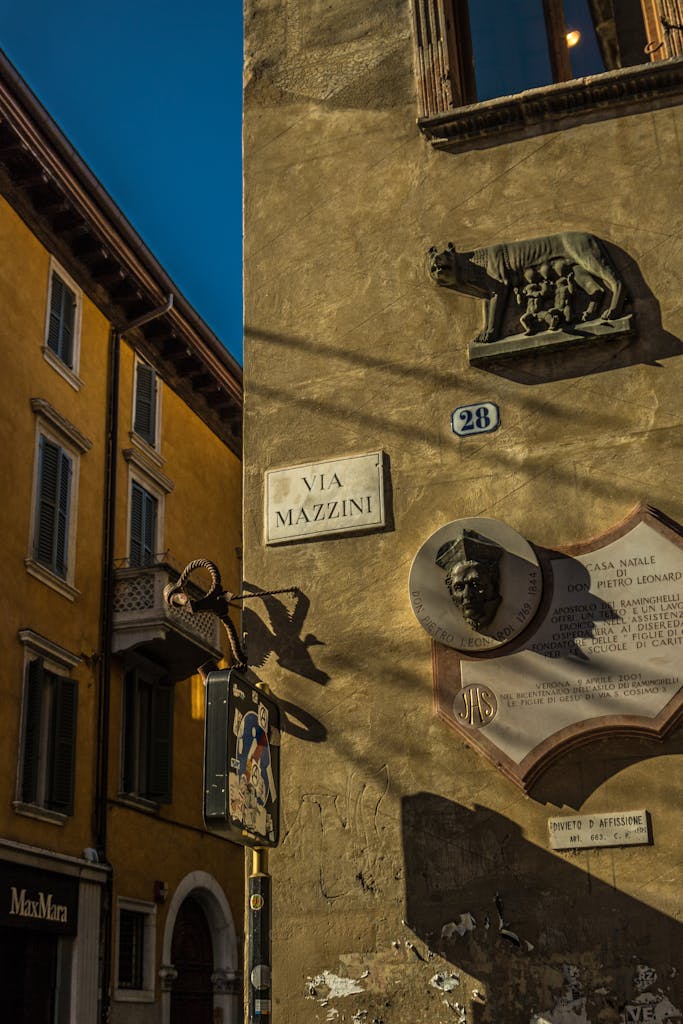
Where to Stay in Verona (Best Areas for First-Timers)
If it’s your first time in Verona, stay inside or just outside the historic center.
Verona is compact and highly walkable, so your hotel location will shape your entire experience.
Here’s how to choose (or at least how I would choose if I were you!)
Centro Storico
Best for first-time visitors who want to walk everywhere.
You’ll be steps from the Arena di Verona, Piazza delle Erbe, Juliet’s Balcony, and most major sights. It’s lively, convenient, and ideal if you only have one or two nights.
→ See my full breakdown of neighborhoods and hotel recommendations: Where to Stay in Verona by Neighborhood + Map.
Borgo Trento
Quieter, residential, and just across the river.
Great if you prefer peaceful evenings and don’t mind a short walk into the historic center.
Veronetta
More local, slightly bohemian, and budget-friendly.
Close to Giardino Giusti and the Roman Theater. Good for longer stays or repeat visitors.
If you’re visiting for opera season or a major event, book accommodation well in advance. Verona fills quickly in summer and during festivals.
For specific hotel recommendations at different budgets, read:
• Where to Stay in Verona, Italy (2025 Guide)
The Verona Card: Is It Worth It?
If this is your first time in Verona and you plan to visit at least two major attractions, the Verona Card is usually worth it. I think you need to weigh the pros and cons of it, and below I have just that!
What the Verona Card Includes
• Entry to the Arena di Verona
• Castelvecchio Museum
• Torre dei Lamberti
• Several churches and smaller museums
• Unlimited city bus travel
Cost
24 hours: around €30
48 hours: around €36
When It Makes Sense
• You’re staying 2 days
• You want to visit the Arena
• You prefer skipping ticket lines
• You want simple, bundled access
When You Can Skip It
• You only plan to wander the historic center
• You’re not entering major attractions
• You’re staying just one quick afternoon
For most first-time visitors spending two full days in Verona, it simplifies planning and saves money. If you’re moving slowly and mostly exploring outdoors, you likely don’t need it.
Now that the logistics are sorted, here’s how to experience Verona.
Top Things to Do and See in Verona: Self-Guided Walk through Verona
There’s no single “right” way to experience Verona, and these highlights don’t need to be done in a specific order. If you prefer exploring at your own pace, you can easily see all of the sights below on a relaxed, self-guided walk through the historic center.
If you’d rather have context, stories, and local insight woven in, you can skip ahead to my Tours in Verona section or check out my dedicated guide to the best tours to take in Verona, where I share the ones I personally recommend for first-time visitors.
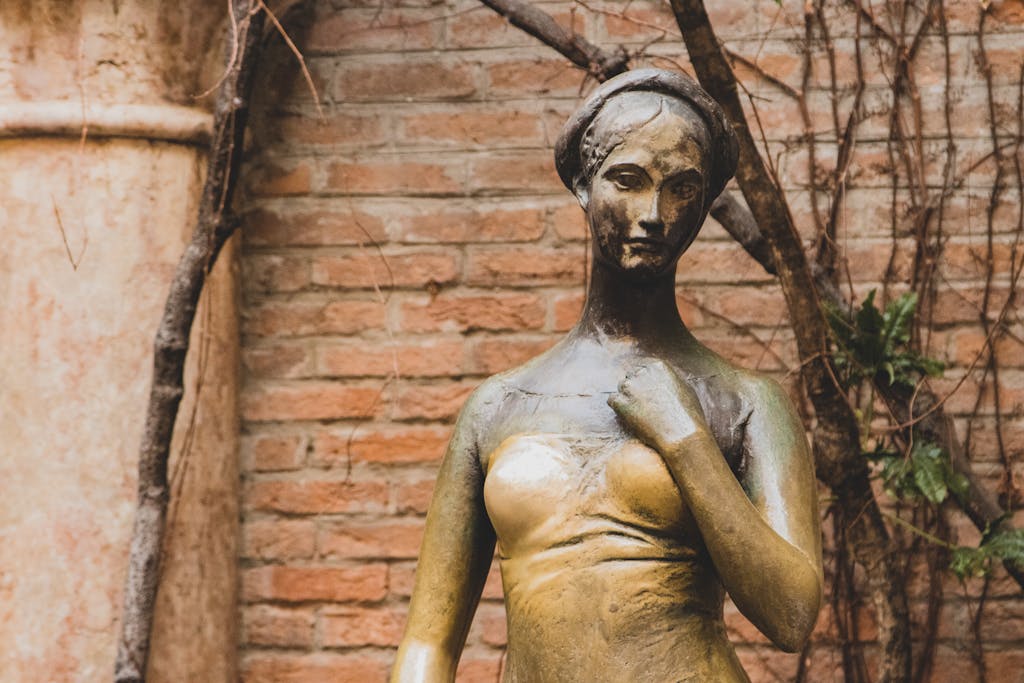
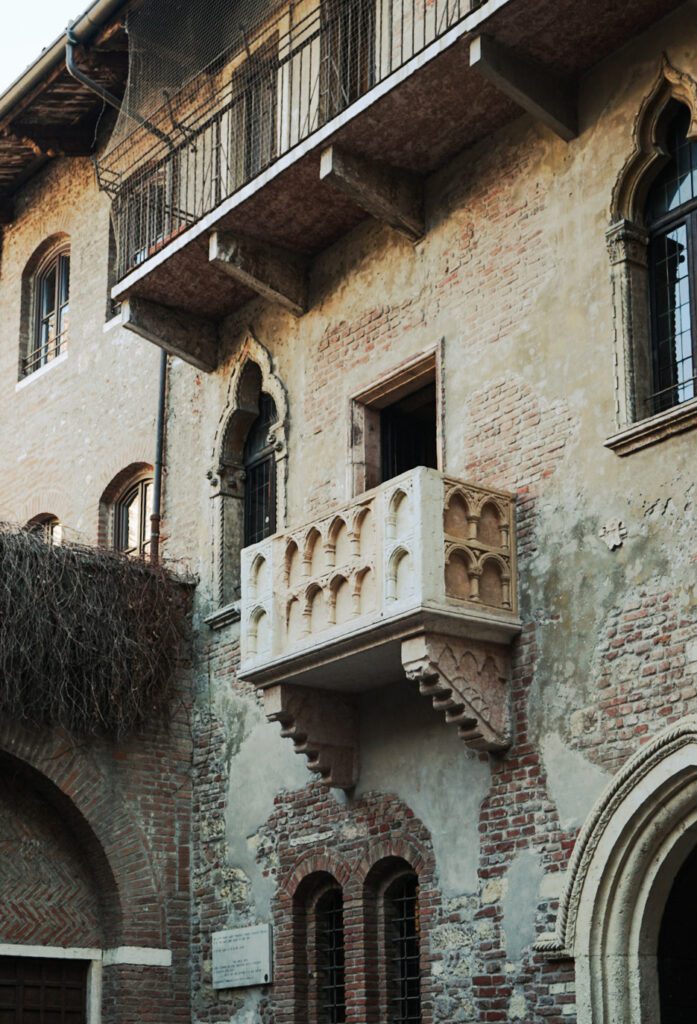
1. Juliet’s Balcony: A Must-See or a Skip?
Ah, Juliet’s Balcony—one of Verona’s most visited spots, all thanks to Shakespeare’s Romeo and Juliet. Tourists flock here to snap photos, scribble love notes on the walls, and yes, even rub the statue of Juliet’s breast for luck in love (a tradition I personally find a little… questionable).
Some locals and guides will tell you the house and balcony aren’t worth the ticket price, as the whole thing is more of a modern tourist attraction than an actual historical site. That said, if you’re a Shakespeare, Letters to Juliet fan or want to see what all the fuss is about, it’s your trip—you decide what’s worth your time!
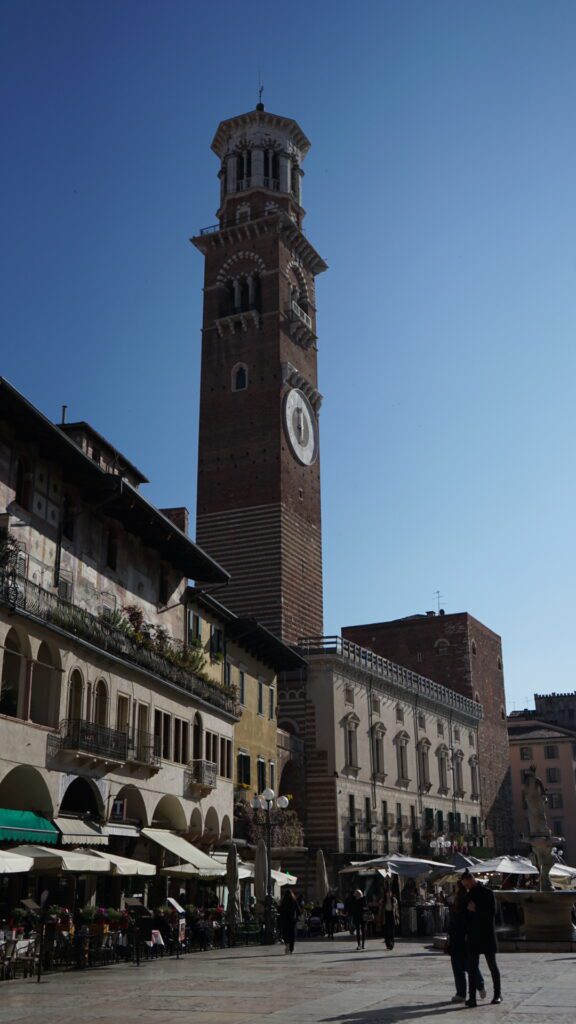
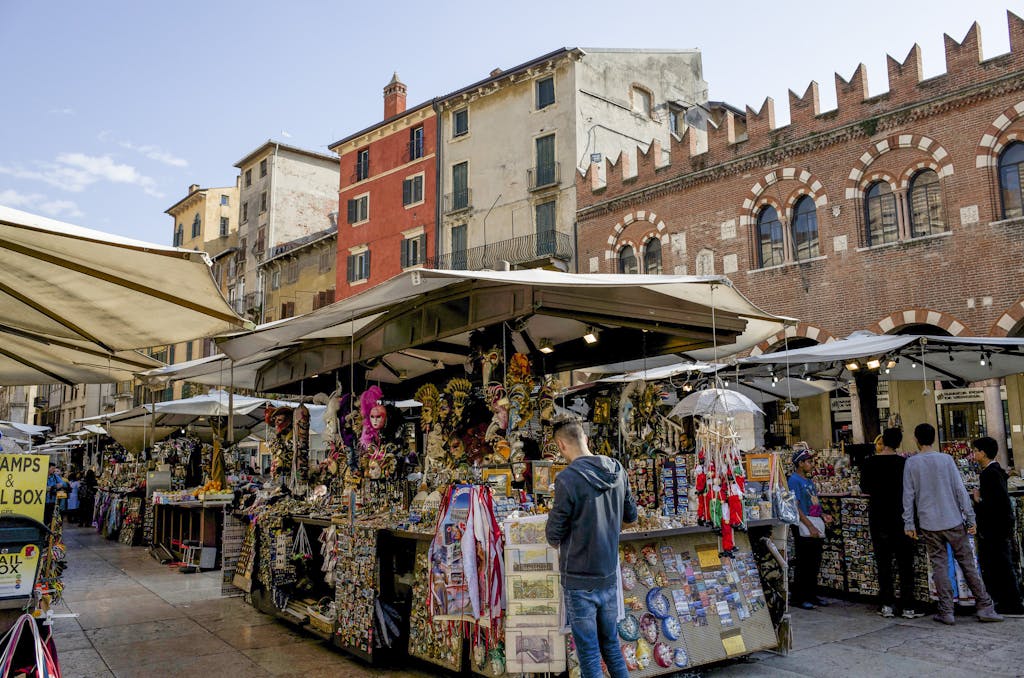
2. Piazza delle Erbe: Verona’s Vibrant Heart
If there’s one place that truly captures the energy of Verona, it’s Piazza delle Erbe. Surrounded by colorful historic buildings, charming cafes, and bustling market stalls, this lively square has been the city’s gathering place since Roman times.
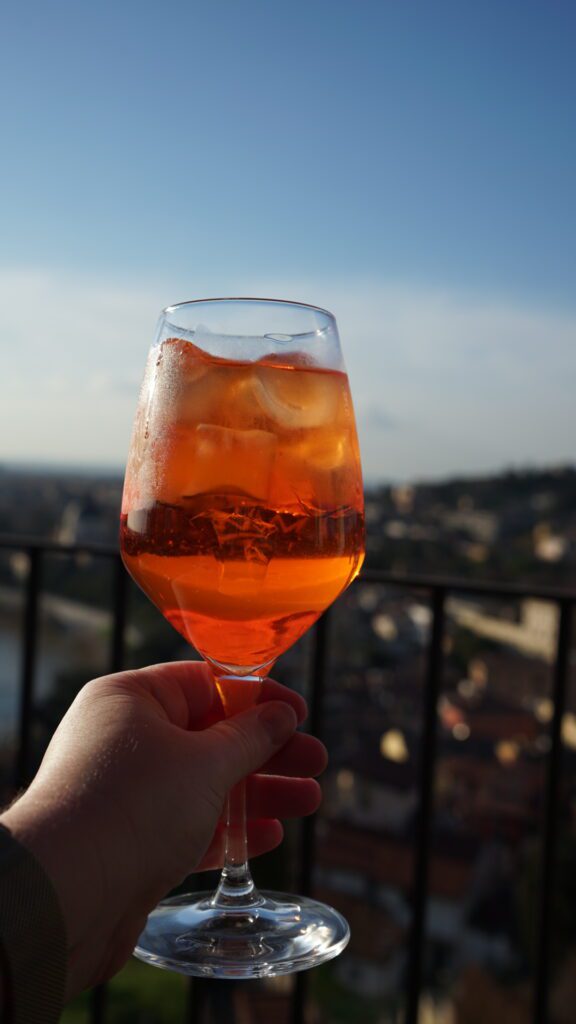
Grab a spritz, people-watch from a café terrace, or browse the stalls for souvenirs.
Whether you’re here in the morning when vendors are setting up or in the evening when the piazza is glowing under soft lights, it’s always full of life.
3. Taking the Funicolare di Castel San Pietro to Castel San Pietro
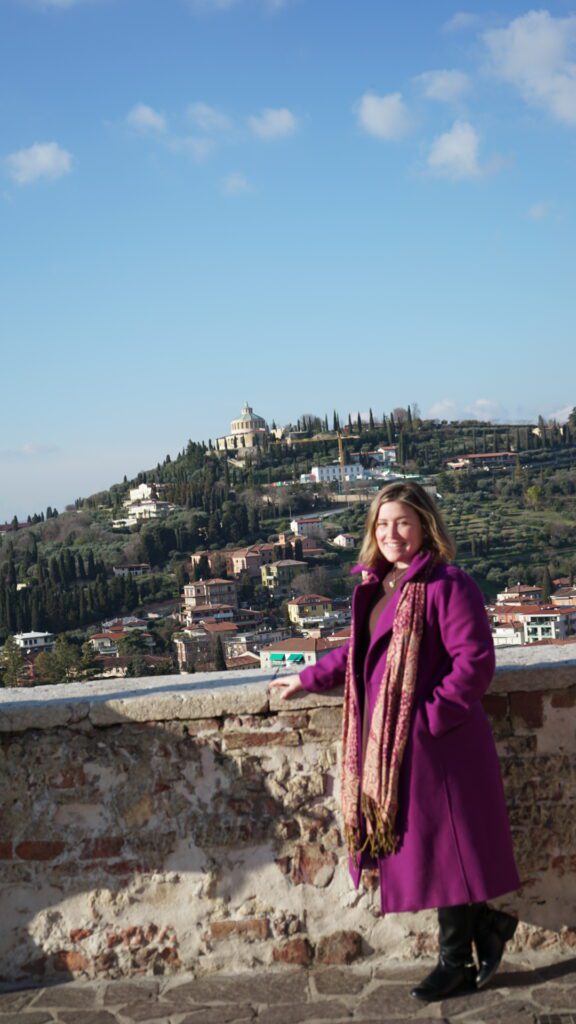
If you want the best views in Verona without committing to a steep uphill walk, take the Funicolare di Castel San Pietro. This short funicular ride connects the historic center near Ponte Pietra to the hilltop viewpoint of Castel San Pietro in just a couple of minutes, making it an easy option for first-time visitors, solo travelers, and anyone short on time. At the top, you’re rewarded with panoramic views over Verona’s terracotta rooftops, the winding Adige River, and the surrounding hills — one of the most photographed spots in the city, especially at sunset. Tickets are inexpensive and can be purchased on-site, and the funicular is also included with some city passes, making it a simple, stress-free way to experience one of Verona’s best viewpoints without the climb.
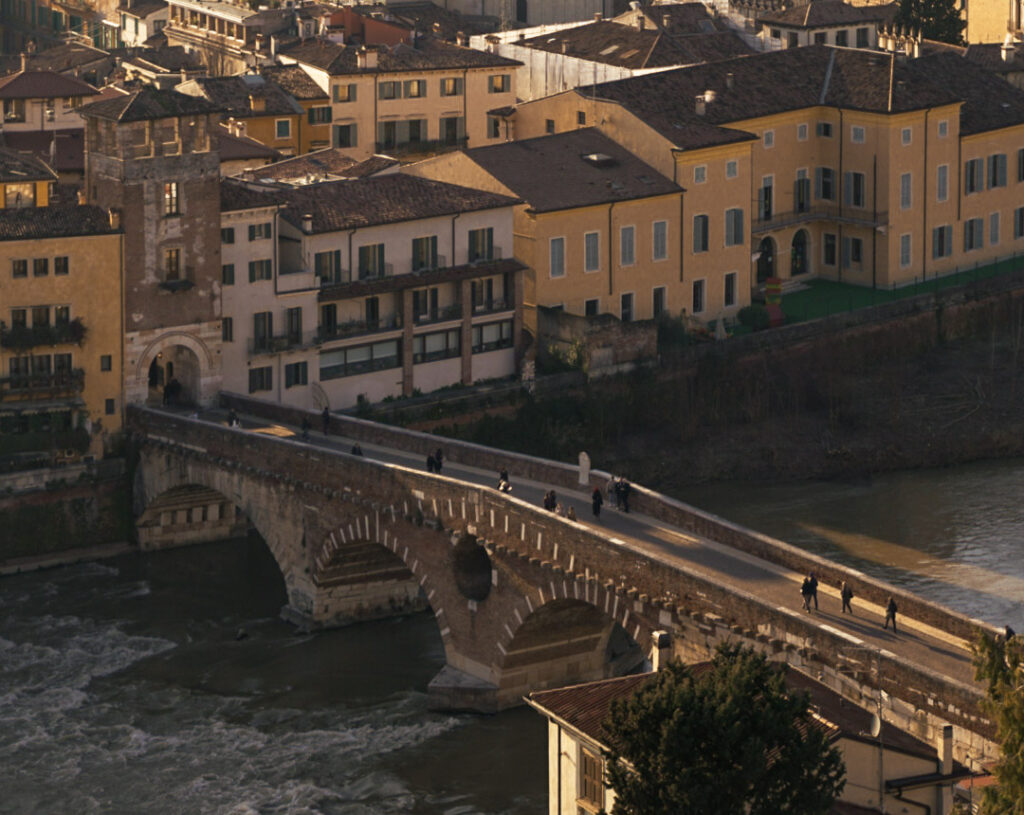
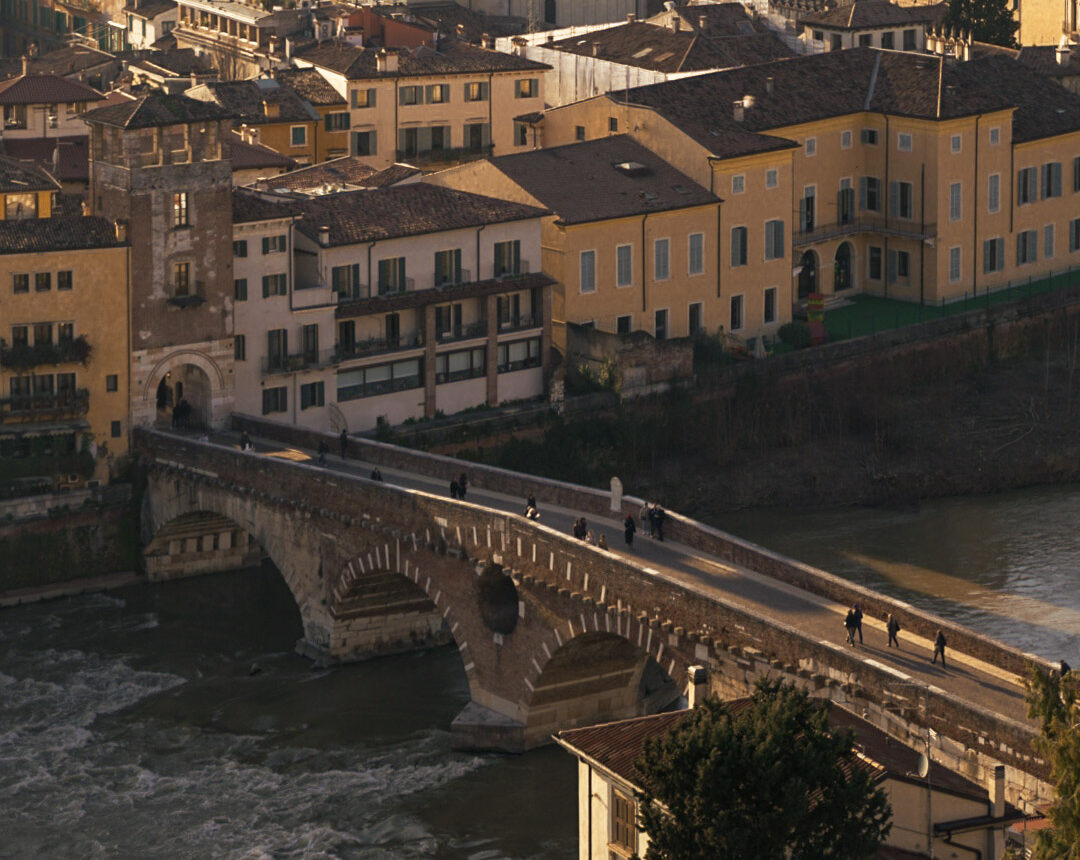
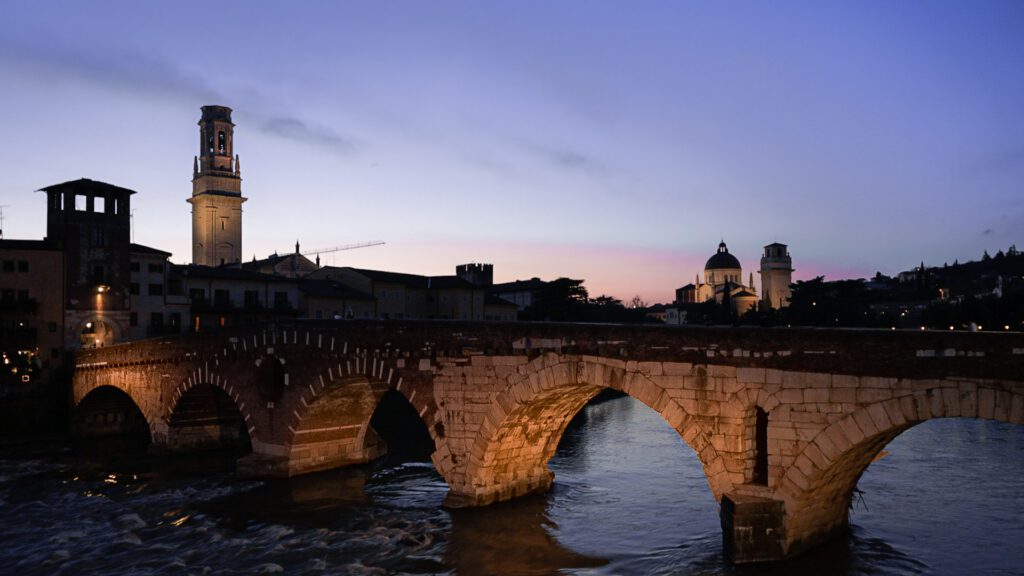
4. Ponte Pietra: A Timeless Sunset Spot
One of Verona’s oldest and most picturesque bridges, Ponte Pietra has been standing here since 100 BC—yes, you read that right! It was once part of the Via Postumia, an important Roman road connecting Genoa to Aquileia. Today, it’s one of the best spots in the city to catch the sunset, with a view that feels straight out of a painting. Whether you’re strolling across in the golden hour or simply taking in the historic charm, this bridge is pure Verona magic.
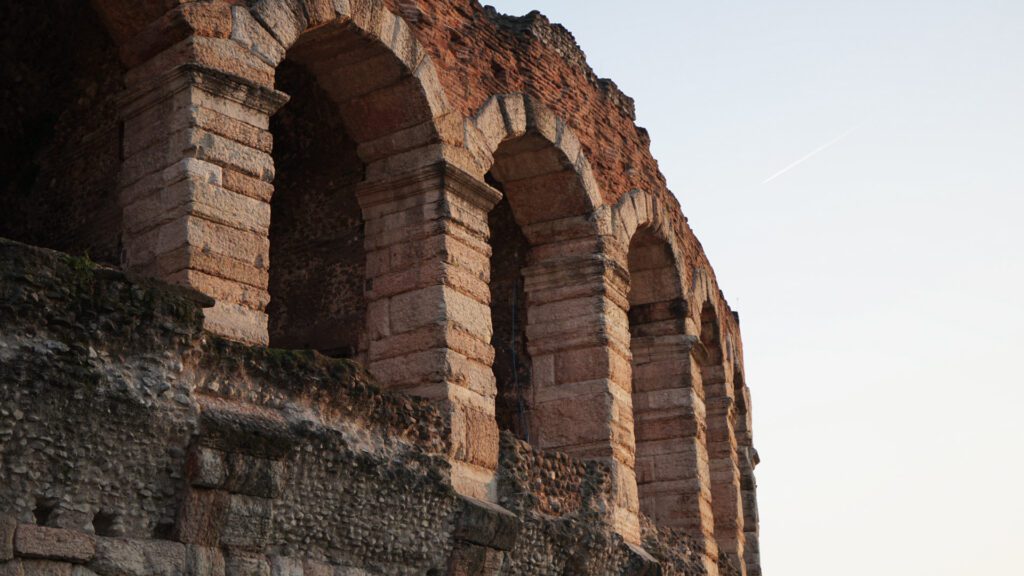
5. Arena di Verona: Where History Meets Opera Magic
The Arena di Verona is a 2,000-year-old Roman amphitheater that continues to host incredible concerts and operas today. Its ancient design creates perfect acoustics, making performances here absolutely unforgettable. If you’re visiting during opera season, you’re in for a real treat—imagine sitting under the stars, surrounded by history, while world-class singers bring the stage to life. It’s one of the most magical experiences in Verona. Want to catch a show? Check the official schedule to see what’s on during your visit!
During the Milano–Cortina 2026 Winter Olympics, the Arena di Verona will take on a new role as the Verona Olympic Arena, hosting both the Olympic Closing Ceremony and the Paralympic Opening Ceremony—a rare honor that places Verona at the heart of the Games.
6. Scaliger Tombs
The Scaliger Tombs in Verona are among the finest examples of Gothic funerary art in Italy.
Built to showcase the power and prestige of the ruling Scaliger family, these elaborate monuments stand next to the small Romanesque Church of Santa Maria Antica, which served as their private chapel.
I think that one of the most striking features of the tombs is the presence of equestrian statues, symbolizing the military strength of the buried lords. You kind of almost get a sense for how powerful this family was known to be. The sarcophagi are uniquely elevated above ground level, emphasizing the ruler’s importance even in death.
Did you know that the most famous tomb belongs to Cangrande I della Scala, a revered leader who provided refuge to Dante Alighieri during his exile from Florence?
Dante later praised him in the Divine Comedy, solidifying his legacy ( I thank the many tours I have taken in Verona for this bit of info!)
Lastly, the tombs are enclosed by intricate iron fencing adorned with a ladder motif, a reference to the Scala family name, which means “ladder” in Italian. Visitors can also spot carvings of loyal canines, a nod to Cangrande’s name, which translates to “Big Dog.”
So keep an eye out for these details!
7. Porta Borsari: Verona’s Grand Roman Welcome
Step through Porta Borsari, and you’re walking in the footsteps of Roman soldiers, merchants, and travelers from nearly 2,000 years ago! This ancient gateway, dating back to the 1st century AD, once marked the grand entrance to Verona, standing tall as part of the city’s defensive walls.
But it wasn’t always called Porta Borsari—back in Roman times, it was known as Porta Iovia, named after a nearby temple dedicated to Jupiter. The current name comes from the medieval toll collectors (borsari) who stood here, making sure merchants paid up before entering the city.
Built from dazzling white limestone, the gate boasts two massive arches, framed by elegant Corinthian columns, with a row of ancient windows above. Look closely, and you’ll spot Latin inscriptions carved into the stone—a message straight from the Roman Empire.
8. Roman Ruins under United Colors of Benetton
No, I am not trying to tell you to go shopping here; you can if you want, but if you pop into the store, head down to the bottom floor and check out the Roman ruins there!
Check out my Instagram reel about this cool encounter!
9. Porta Leoni: A Glimpse into Ancient Verona
Walking past Porta Leoni, you might not realize at first that you’re looking at a piece of Verona’s Roman past—but take a closer look! These 2,000-year-old ruins are the remains of a once-mighty gate that guarded the city’s southeastern entrance.
Unlike Porta Borsari, which still stands tall, Porta Leoni is more of a timeworn treasure, with its half-preserved archway and exposed foundations giving visitors a peek at ancient construction techniques. Fun fact: Beneath the street level, you can actually see the original Roman road!
Today, this historic spot is seamlessly woven into Verona’s modern cityscape, making it a fascinating stop for history lovers and casual explorers alike.
10. Verona Vecchia: A Stroll Through Time
If you want to experience the soul of Verona, wander through Verona Vecchia, the city’s old town. Here, every cobblestone street, hidden alleyway, and elegant piazza tells a story.
This historic district is home to some of Verona’s most famous landmarks, from the grand Piazza delle Erbe, once a Roman forum, to the stunning Scaliger Tombs and the iconic Juliet’s Balcony. But beyond the big sights, Verona Vecchia is a place to get lost in the charm—grab a cappuccino at a centuries-old café, browse local boutiques, or simply soak in the medieval atmosphere. Whether you’re a history buff, a romantic at heart, or just looking for a postcard-perfect stroll, Verona Vecchia delivers a magical experience.
11. Giardino Giusti: Verona’s Most Beautiful Garden Escape
If you’re looking for a quiet break from Verona’s historic streets, Giardino Giusti is the garden worth visiting. This beautifully preserved 16th-century Renaissance garden sits just east of the historic center and offers a peaceful contrast to the busier piazzas and monuments nearby. Visitors can wander through manicured hedges, cypress-lined paths, and shaded terraces, gradually making their way uphill to panoramic viewpoints overlooking Verona’s rooftops and the Adige River.
Giardino Giusti is typically open daily, with seasonal hours that usually run from late morning into the early evening, making it easy to pair with sightseeing before or after lunch. For the best experience, visit in the morning or late afternoon, when the garden is quieter, and the light is soft. It’s an ideal stop for travelers who enjoy slow travel, photography, or simply want a moment of calm woven into their Verona itinerary.
12. Botteghe Storiche Di Verona
Another fascinating walk you can do is a self-guided tour of the Botteghe Storiche Di Verona. These bronze plaques signify historical businesses and buildings throughout the city. In my two-day guide to Verona, I detail some of the local businesses you can visit and one of my favorite cafes. Check out this Instagram post where I talk about the Botteghe Storiche Di Verona!
Is Verona Safe for Solo Travelers?
I hate answering this question because I believe that how we view being safe is very personal.
However, yes, Verona is generally very safe for travelers.
The crime rate is low, and violent crime is rare. As with any tourist destination, pickpocketing can be an issue in crowded areas, so it’s best to stay aware of your belongings. Solo travelers like me, often feel comfortable walking around even in the evening.
Should you take a tour in Verona?
A walking tour early in your stay helps you get oriented and hear the stories behind the city.
For curated recommendations, read:
The Best Verona Tours to Take for First-Timers
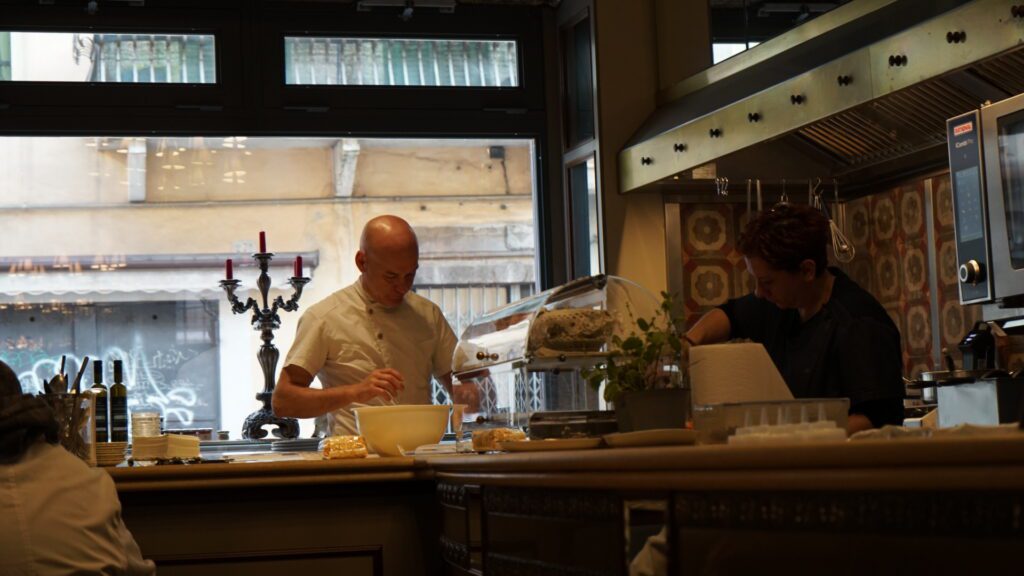
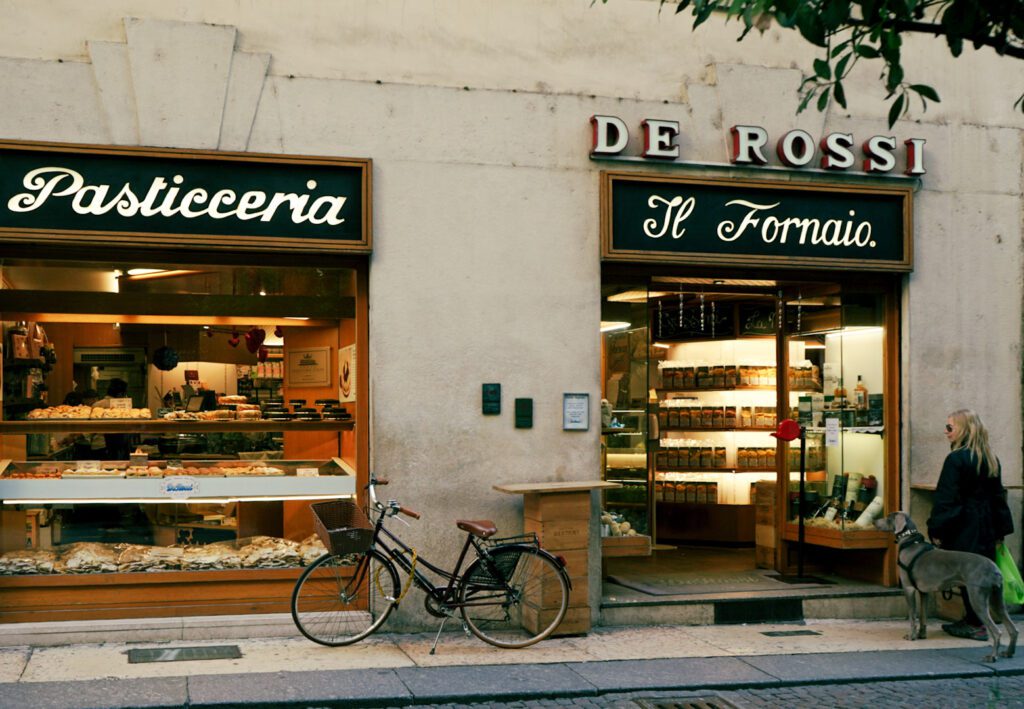
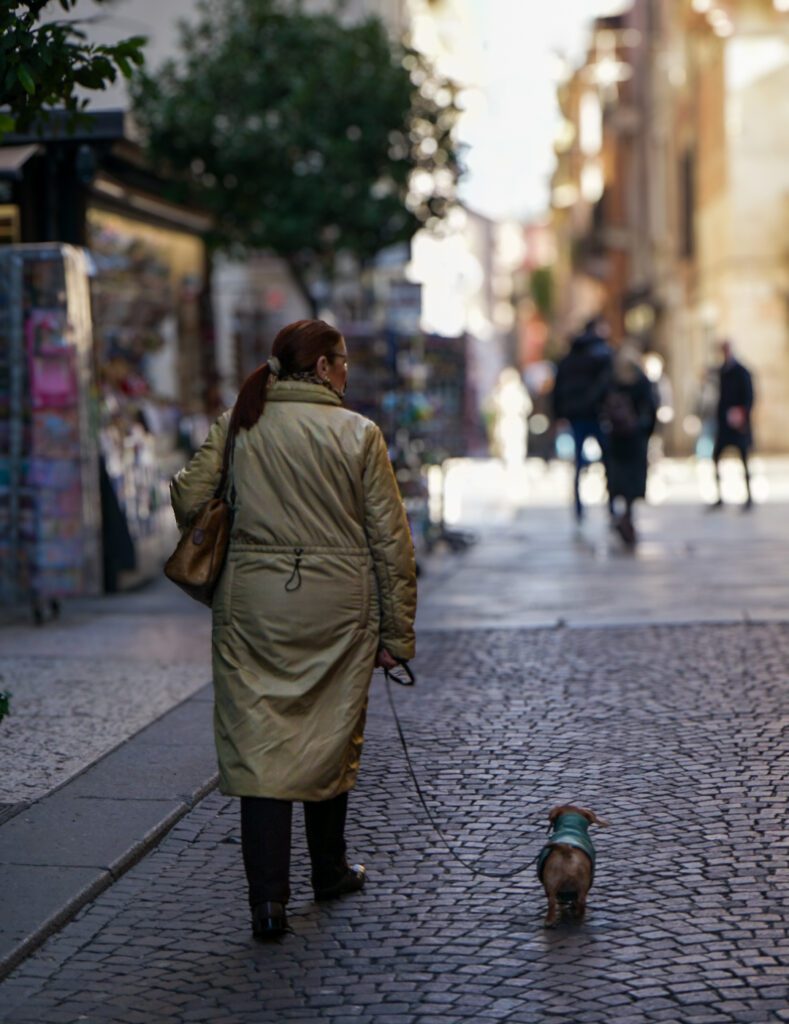
What are the must-try foods in Verona?
You can’t leave without trying:
- Risotto all’Amarone – A creamy risotto made with Valpolicella’s famous Amarone wine.
- Bigoli pasta – A thick, hand-rolled pasta often served with duck ragù.
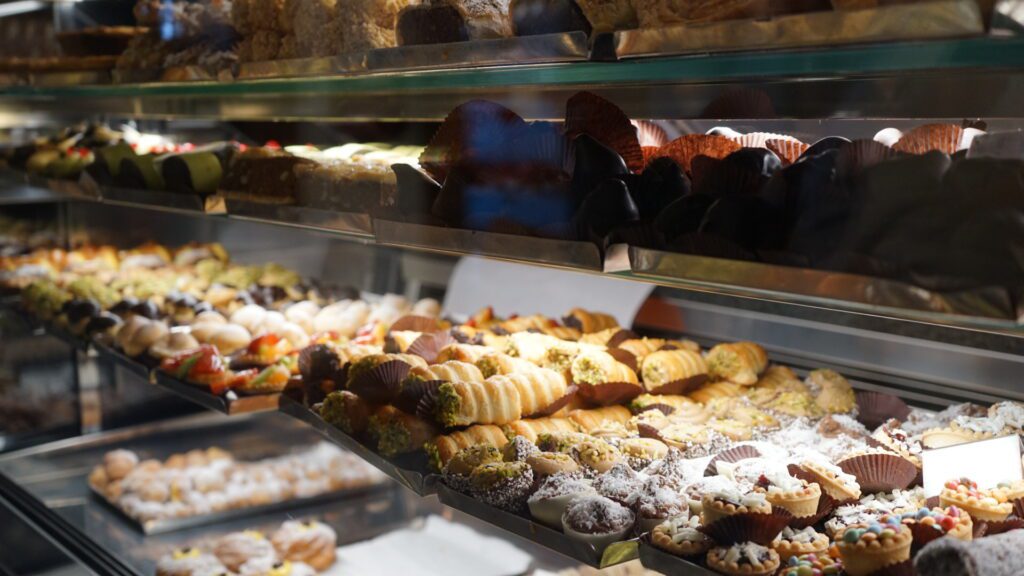
- Pandoro – A delicious sweet bread (especially during Christmas).
- Horse meat stew (Pastissada de Caval) – A traditional dish, but only for the adventurous! There are lots of places in Italy where you will find horse on the menu. Be mindful of this.
Best Restaurants in Verona (or my favorites at least…)
Looking for places to go for an authentic meal while in Verona? Don’t worry I got you! These are all outside the busy Piazza Erbe, and they all feature local dishes like Polenta, Risotto, and Valpolicella
- Locandina Cappello – I felt like the service here was excellent and the waiter directed my friend and I to some local dishes on the menu. We had the best cheese, fried polenta, and local sausage platter as an appetizer. Everything was from local producers and the main menu items were spectacular. Mine had tons of cheese and it was perfect. Do I remember the names of the items we ate? no, because I am a terrible blogger.
- Osteria Ponte Pietra Ristorante– Recently renovated and adorned with exquisite 19th-century furnishings, this Michelin-starred restaurant exudes elegance and sophistication. Each room offers a stunning view of the Adige River, immersing guests in one of Verona’s most romantic and enchanting settings.
- Malga Veronetta– I loved this restaurant as it was local comfort food. The appetizer was polenta, cheese, and mushrooms. It’s like stepping into a mountain hut in the Dolomites and eating food only grandma could make.
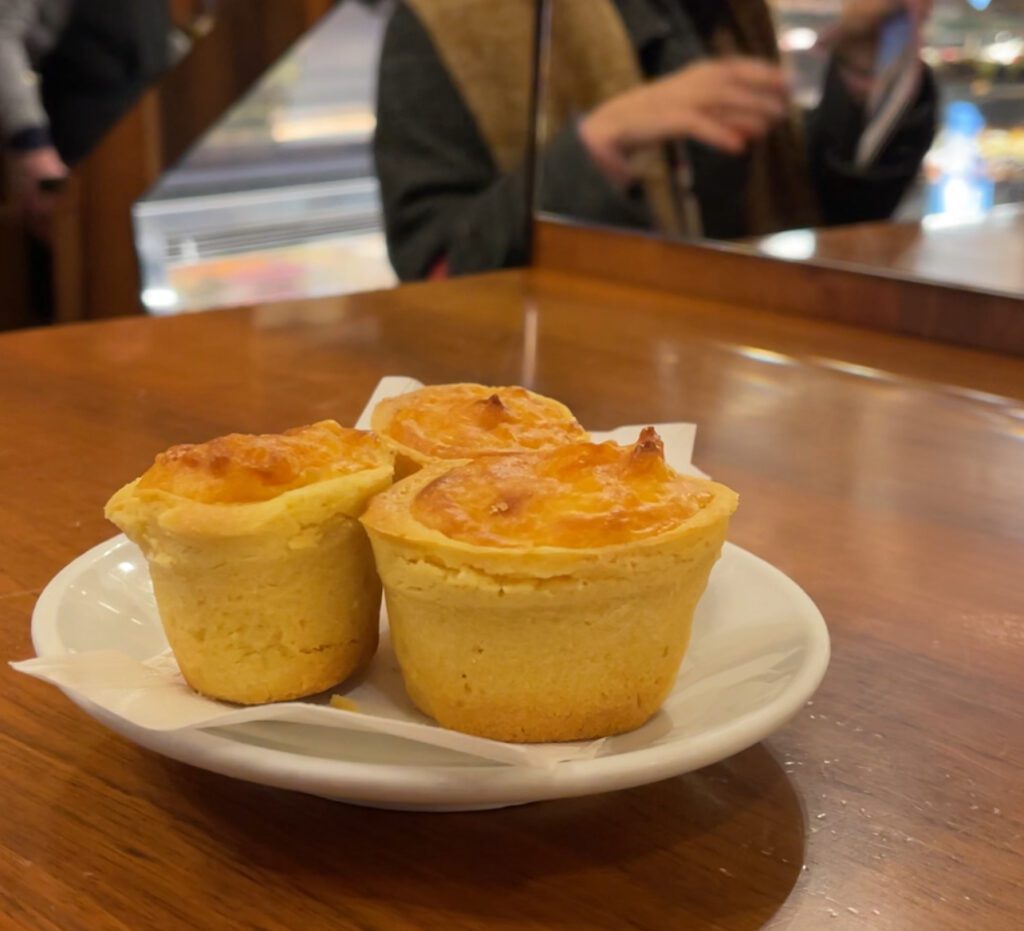
- Cafe Carducci– This was such a great breakfast option; they have a wonderful breakfast menu that would satisfy any traveler’s appetite in the morning. The omelette was incredible here, and the staff were friendly and beyond hospitable.
Major Events in Verona
Verona is alive with events year-round, but the most iconic include the world-famous Arena di Verona Opera Festival (June–August), where you can enjoy stunning opera performances in the ancient Roman Arena under the stars.
If you’re a Shakespeare lover, the Shakespeare Festival in the summer brings Romeo and Juliet to life with outdoor performances and special events.
Verona’s Vinitaly Wine Festival celebrates Italian wine, attracting connoisseurs from around the world to taste the best of the Valpolicella region and beyond.
And during Christmas, the Mercatini di Natale (Christmas Markets) fill Piazza delle Erbe and Piazza dei Signori with holiday cheer, offering handmade gifts, local treats, and festive performances. Although don’t hold me to the locations because they changed it up on us last year, and it wasn’t quite the same!
No matter when you visit, Verona’s rich cultural calendar ensures there’s always something to experience!
Budget Breakdown: How Much Does It Cost to Visit Verona?
- Accommodation: €60-€300 per night (budget to luxury hotels)
- Food: €5-€10 for street food, €15-€30 for a sit-down meal
- Attractions: €5-€15 per site; Verona Card (€20-€25) includes major sites
- Transport: Public buses cost ~€1.50; walking is the best way to explore
Verona is a Must-Visit City
I honestly hope this helps you understand how to visit Verona. It’s a city that I absolutely love, and the sunsets are something different. It’s a gateway to the Dolomites, Garda, and two beautiful wine regions.
If you need more convincing, head on over to my other blog post about the best places to stay in Verona and my itineraries.
FAQ about Visiting Verona
You can see the highlights in a day, but I recommend two to three days to really soak in the charm, enjoy a wine tasting, and explore at a relaxed pace. I love a relaxed pace
Spring (April–June) and early fall (September–October) are ideal for pleasant weather and fewer crowds. Summer brings opera season, but it can be very hot and busy. Winter is great for Christmas markets and a quieter, more romantic atmosphere.
Verona is super walkable, and most attractions are close together. For longer distances, you can use local buses, rent a bike, or take a taxi. If you’re planning day trips to Valpolicella wine country, Soave or Lake Garda, consider renting a car.
For major sites like the Arena di Verona (especially during opera season) and Juliet’s House, it’s a good idea to book ahead. For smaller museums and churches, you can usually buy tickets on arrival.
It depends! If you’re a Shakespeare fan, you might love it, but be aware it’s a modern tourist attraction rather than a true historical site. The crowds can be intense, and the whole “rubbing Juliet’s statue for luck” tradition is a bit… odd. But hey, it’s your trip—decide for yourself!
You can’t leave without trying:
Risotto all’Amarone – A creamy risotto made with Valpolicella’s famous Amarone wine.
Bigoli pasta – A thick, hand-rolled pasta often served with duck ragù.
Pandoro – A delicious sweet bread (especially during Christmas).
Horse meat stew (Pastissada de Caval) – A traditional dish, but only for the adventurous!
For the most stunning views, head to:
Ponte Pietra – A historic Roman bridge with dreamy golden hour light.
Castel San Pietro – Hike up for panoramic views of Verona’s rooftops and the Adige River.
Take a trip to the Valpolicella, Soave, and Gambellara for wine tasting! I personally love Tenuta Sant’Antonio—their Scaia label is one of my favorites. Remember that most wineries require reservations, so book in advance!
Absolutely! Some great options are:
Dolomites: take a quick day trip to Alpe Di Susi, Bolzano, Kastelruth
Lake Garda – Visit Sirmione, Bardolino, or Riva del Garda for lakeside beauty.
Valpolicella Wine Country – Perfect for Amarone wine lovers.
Venice – Just an hour by train if you want a quick Venetian escape.
Soave – A charming medieval town famous for its white wine.
Visit the Roman Theater and its archaeological museum—less crowded than the Arena, but just as fascinating!
Walk along the Adige River for hidden gems and quieter moments away from the crowds.
Check out Piazza dei Signori—it’s less touristy than Piazza delle Erbe but packed with history.
All My Verona Related Posts ⬇️
Have any questions? Get in touch below or follow me on Pinterest or Instagram for more inspiration.

Make a guide for Verona! I’d love to download it!
I plan on it! Thanks for leaving a comment on this!
Are there any great hiking spots around Verona?
Hi Timmothy, there are indeed and I have been meaning to make a post about this but gosh it’s tough when you want to get it right and make sure everything is perfect. I highly recommend downloading Komoot to find trails around Verona, you can go wrong with that! You can also go to the Verona Tourism spots and I think they have pamphelts on walks through hamlets you can do!