
Is Jordan Safe for Tourists? A Thoughtful Look at Travel Safety in Jordan
This is unfortunately the number one question people ask me when I talk about my group trips to Jordan or any travel that I do in Jordan.
If you’re researching whether Jordan is safe to visit, you are in the right place. After being there and now organizing group trips to Jordan, I want to help people make sure they are making an informed decision on traveling to Jordan. I want to make sure that you, as a reader, understand that Jordan is a place you’ll end up falling in love with.
Jordan sits in a region the news tends to flatten into one narrative. That alone makes people pause. Add in the fact that MANY Americans and some Europeans have never traveled to the Middle East, and the hesitation makes sense. Plus western media doesn’t help sometimes, when all they choose to focus on is regional instability. You don’t see the good, the community stories, and what organizations are trying to do to make a difference.
But here’s what I can tell you with experience, discernment, and a deep respect for safety planning.
Jordan is widely considered one of the safest and most stable countries in the Middle East for tourism. And yes, I would confidently return and bring a group there, in fact I think it’ll make you more interested in the Middle East as a whole.
Let’s unpack that properly.
This Post Pairs Well With:
An 8 Day Jordan Itinerary: Active Adventures Jordan with GAdventures
What the Headlines Don’t Explain About Jordan
When people search “Is Jordan safe?” they’re usually reacting to regional news, not firsthand experience.
Here’s context that rarely makes it into the headlines: a significant portion of Jordan’s population is of Palestinian origin. Estimates often range from roughly half to over sixty percent. While more than two million people are registered with UNRWA as refugees, the majority of Palestinians in Jordan hold full Jordanian citizenship. They are not a temporary population. They are deeply embedded in the social, economic, and political fabric of the country.
Jordan itself has maintained long-standing political stability, strong internal security, and close diplomatic relationships with Western nations. Tourism is not incidental here. It is a pillar of the economy.
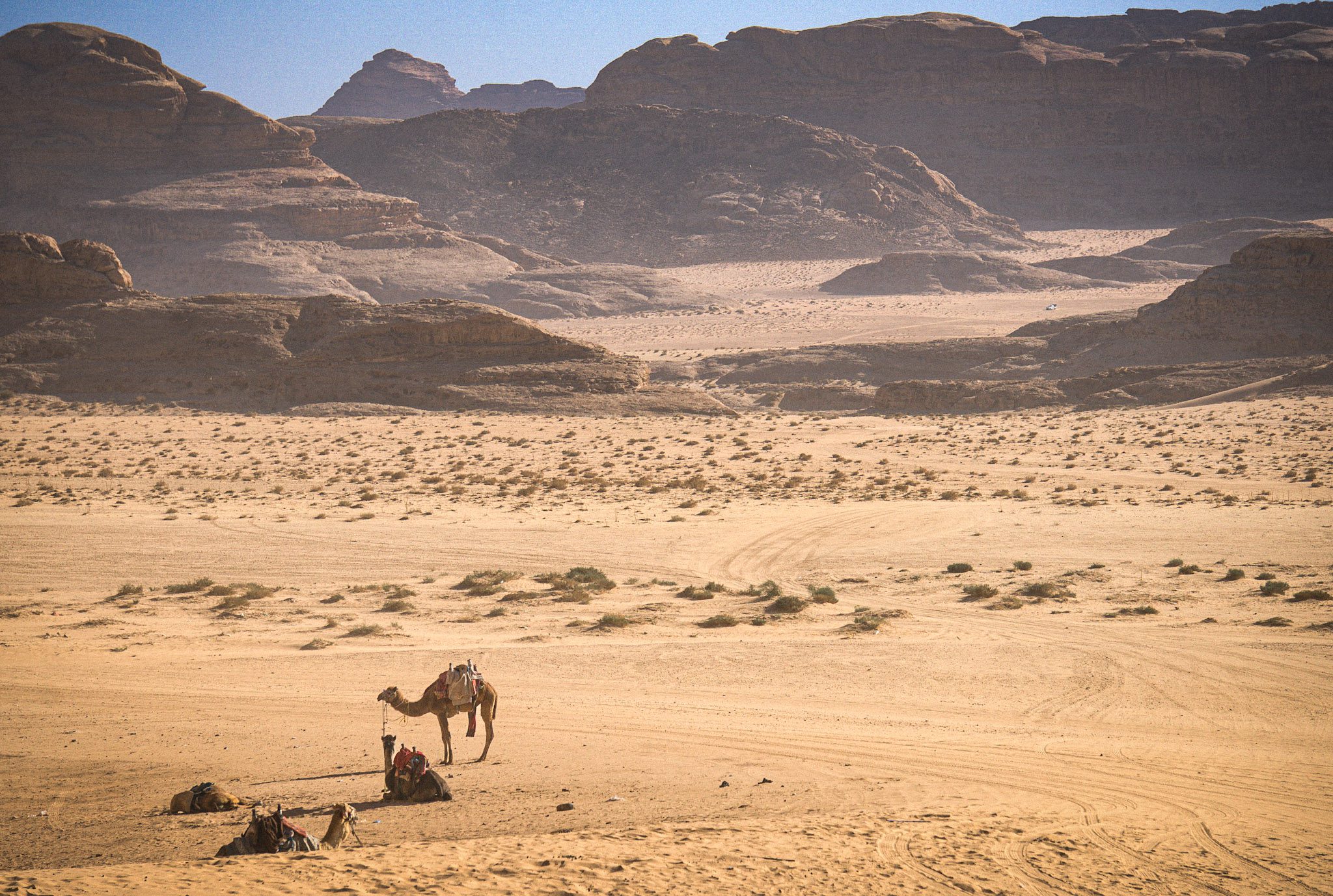
In places like Petra, Wadi Rum, and the Dead Sea, infrastructure is intentional and organized. Visitor flow is managed. Security is present, but it feels structured and preventative rather than tense or alarming.
There is a meaningful difference between geographic proximity and lived reality. Being near a region in conflict is not the same as being in conflict. And that distinction matters.
Kimberly Kephart Jordan Group Trips
Click here to check out my group trips to Jordan
Let’s ground this for a second.
Travel safety in Jordan works the same way it does in Paris, New York City, or Rome. It’s not about blind confidence. It’s about awareness.
- Pay attention to your surroundings.
- Use licensed transportation.
- Keep your valuables secure in crowded areas.
- Skip poorly lit streets late at night.
That’s not a Jordan rule. That’s a travel rule.
No country guarantees safety. Not yours. Not mine. Not Jordan.
What Jordan does offer is stability, structure, and a tourism industry that is clearly taken seriously. When I traveled through the country, I was struck by how established everything felt. In places like Petra and Wadi Rum, security is visible but not aggressive. You’ll see Tourism Police at major sites, and their presence feels practical, not performative. They’re there to support visitors, monitor licensed guides, and keep things running smoothly.
It doesn’t feel tense. It feels organized.
For solo female travelers, especially, that predictability matters. Knowing there is infrastructure in place. Knowing tourism is valued. Knowing you are not navigating chaos.
This is informed travel. And when you approach it with the same awareness you would bring anywhere else in the world, it feels steady, welcoming, and entirely doable.
Kimberly Kephart Jordan Group Trips
Click here to check out my group trips to Jordan
Hospitality Is Cultural, Not Performative
One of the biggest misconceptions about Jordan has nothing to do with safety. It has to do with warmth.
Hospitality here is not a tourism tactic. It is cultural. It is rooted in faith, history, and social norms that long predate modern travel.
Islam is anchored in the Five Pillars: faith, prayer, charity, fasting, and pilgrimage. Those principles shape a communal, ethical lifestyle. Hospitality is often viewed as an extension of that faith. Welcoming a guest is not casual. It carries moral weight.
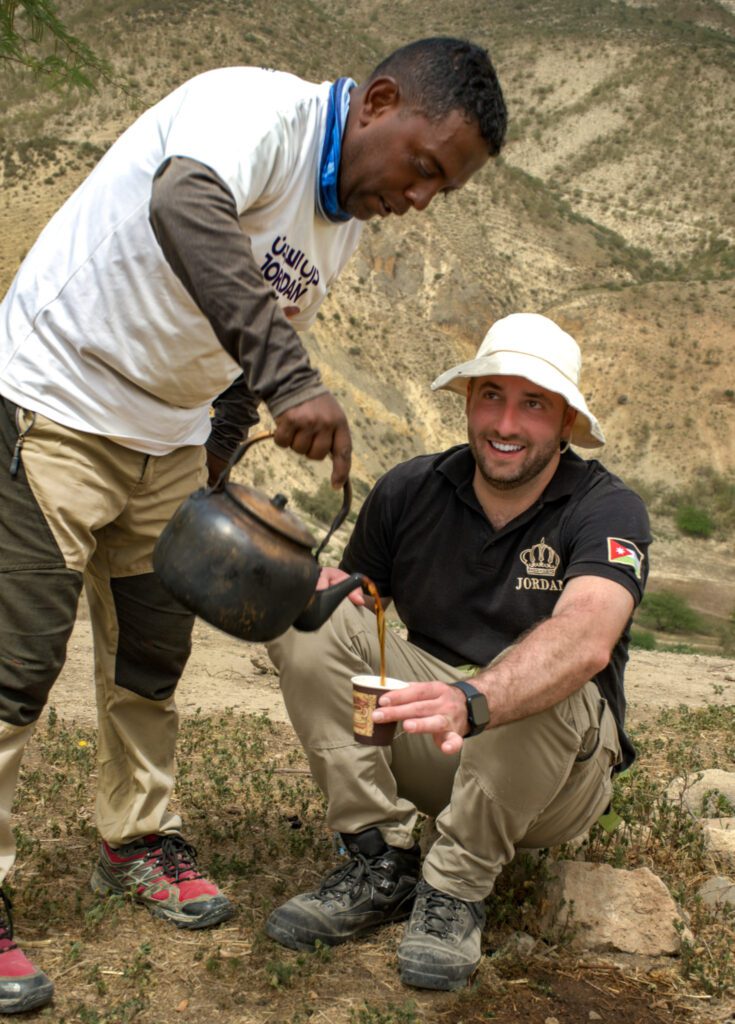
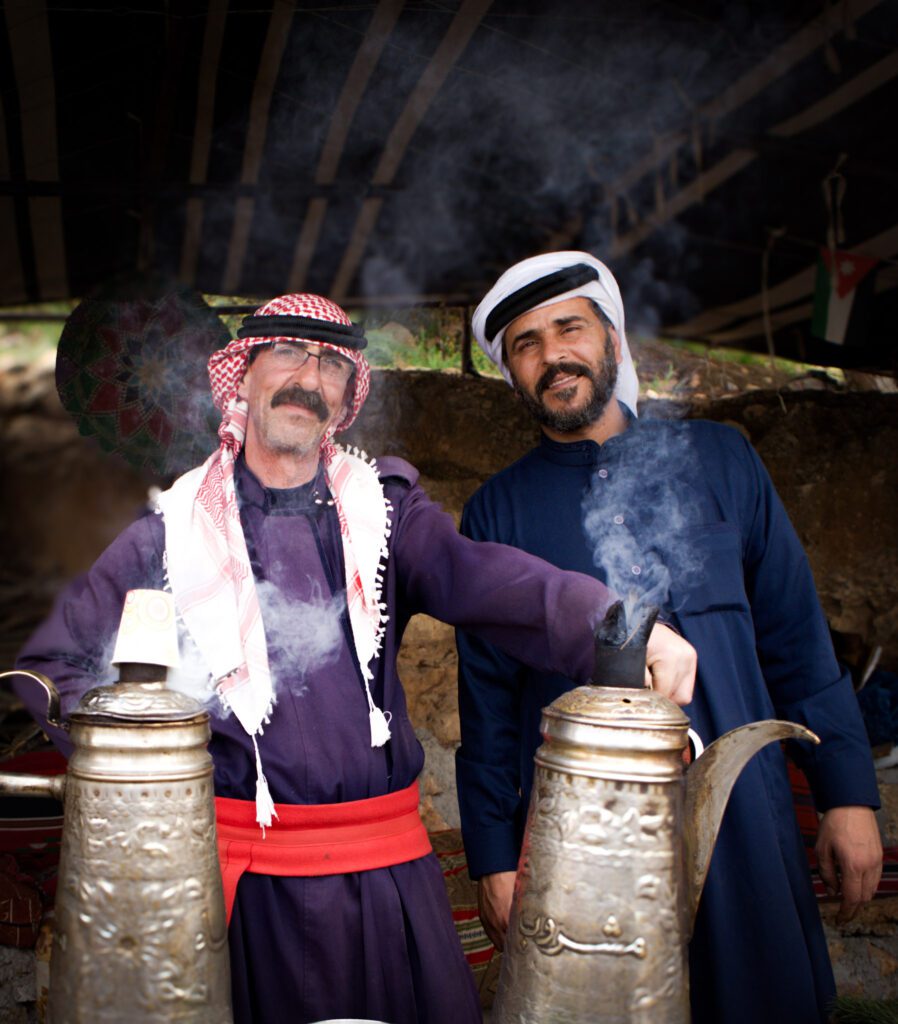
Generosity, or karam, is central. Offering the best food, drink, and comfort to a guest is considered virtuous. Hosts may go beyond their means to make someone feel cared for. Refreshments are offered immediately, often dates, coffee, or tea. Meals are abundant. Conversations are unhurried. A guest is treated with respect and, traditionally, protection.
And you feel that.
When I was in Umm Qais, our group was invited to our hiking guide Farag’s home for dinner. His entire family participated. We sat in his living room sharing one of the best meals of the trip. When we thanked him for welcoming us in, both Farag and our guide Firas explained that this wasn’t extraordinary in their eyes. It was expected. Hospitality is ingrained. It reflects who they are.
That warmth is not theatrical. It is embedded in Jordanian society.
As a traveler, especially a woman, you may feel visible at times in Amman or even in smaller towns near Petra. Visible does not automatically mean unsafe. It means you are somewhere culturally different.
In Amman and major tourist destinations across Jordan, women travel solo regularly. Modest dress is appreciated, particularly outside cosmopolitan areas, but in tourist zones you will see a range of styles. It is not a restrictive environment in the way Western media often implies.
Respect goes a long way here. And it is reciprocated.
Jordan is culturally different from Western countries. That difference can feel unfamiliar at first. But if you approach it with curiosity instead of fear, you quickly realize something powerful. This is a society that places enormous value on community, dignity, and welcoming the stranger.
Do not confuse cultural differences with danger. They are not the same thing.
Proximity to Conflict Does Not Equal Daily Instability
This is where nuance matters.
Jordan sits in a complicated neighborhood. It borders Israel and the West Bank, Syria, Iraq, and Saudi Arabia. On a map, that proximity can look alarming, especially when headlines focus on regional escalation.
But geography is not the same thing as daily lived reality.
Jordan has functioned as one of the region’s most consistent stabilizing forces for decades. It maintains strong border controls, active internal security systems, and close diplomatic ties with Western nations. The country has absorbed waves of refugees over time while still maintaining internal cohesion. That does not happen by accident. It happens through deliberate policy and security structure. Is Jordan perfect? No country is.
Tourist areas are not on the front lines of conflict. When you are walking through Petra at sunrise, camping in Wadi Rum, or floating in the Dead Sea, you are in environments that are tightly managed and economically vital to the country. These regions are built around tourism and supported accordingly.
That said, let’s be adults about this.
During periods of regional escalation, you may see rocket trails crossing high in the sky. Airspace can close temporarily. Flights can be delayed. The country can pause tourism operations out of precaution. That does not mean Jordan is collapsing. It means it shares airspace and borders with active conflict zones.
This is why travel insurance is not optional. It is essential. Political interruption coverage, medical coverage, and evacuation clauses. These are part of responsible international travel anywhere in the world, but especially in geopolitically complex regions.
Understanding geography and political context matters before we jump to conclusions. A country can be near conflict without being consumed by it. Jordan has proven that repeatedly over decades.
Proximity is not the same as instability. And headlines rarely take the time to explain that distinction.
The Infrastructure Is Designed for Visitors
Jordan is not a country that’s “testing out” tourism or building the plane while flying it. But it’s also not a glossy, fully frictionless experience in every corner of the country, and I think that’s where people get tripped up.
What Jordan offers, especially along the main tourism corridor, is a tourism system that’s been built on purpose. It’s structured. It’s regulated. And in the places most travelers actually go, it’s designed to keep visitors moving safely and smoothly.
A few examples of what that looks like in real life:
Petra is managed, not chaotic.
There are clear entry points, ticketing systems, designated routes, and a visible on-site presence that helps with crowd control and visitor support. On busy days, it can still feel crowded (because it’s Petra), but the experience is organized. You’re not wandering into the unknown.
Wadi Rum runs on a licensing system and local coordination.
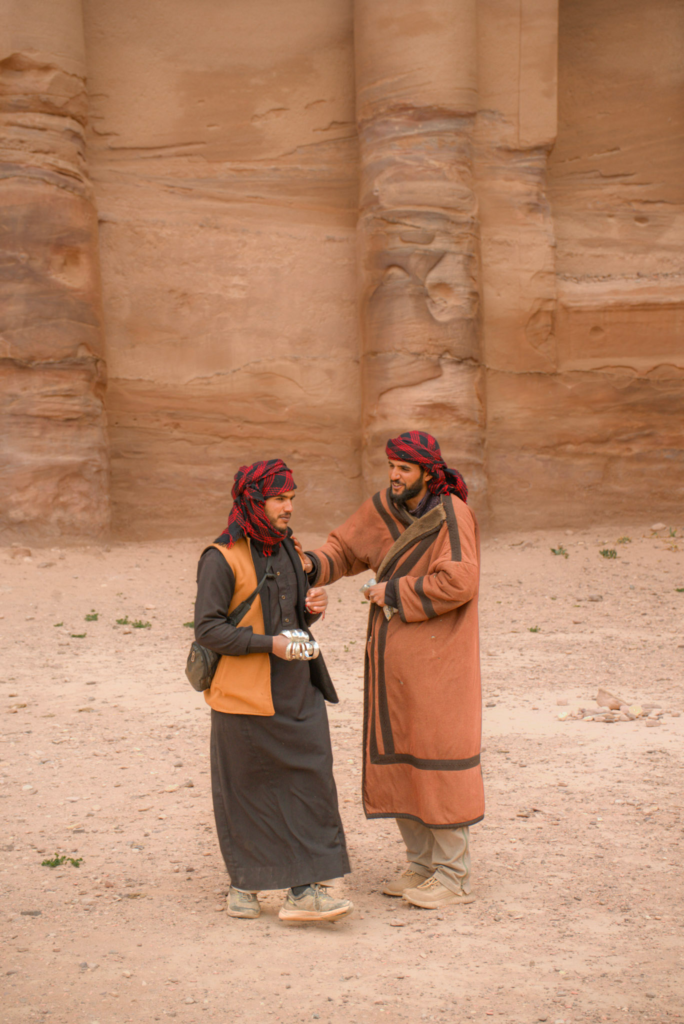
A lot of camps and tours are licensed, and many experiences are coordinated through Bedouin communities who have deep roots in the desert and a real stake in how tourism operates. That doesn’t mean every camp is equal. It does mean there’s a system behind what you’re booking, and you can choose operators who do it responsibly.
The main travel routes are built for tourism reality.
Major highways between Amman, the Dead Sea, Petra, and Aqaba are generally straightforward to navigate, and you’ll often notice checkpoints and monitoring that can feel unfamiliar if you’ve only traveled in Western Europe. In Jordan, that’s part of the broader stability structure, not a sign that something is “wrong.”
Hotels and tourism services often meet international expectations, with variety by budget and ownership.
In Amman and along the Dead Sea you’ll find properties that align with what most international travelers expect in terms of cleanliness, service, and amenities. But if you care about where your money goes, it’s worth seeking out locally owned stays or community-based tourism experiences when you can. Places like Beit Al Baraka are a good example of the kind of lodging that supports people on the ground, not just big brands.
Here’s the nuance I want readers to take with them: Jordan’s tourism infrastructure is strong where tourism is concentrated. That’s not the same as saying every system in the country functions the way it does in London or Milan. It’s simply saying that if your question is, “Will I be supported as a traveler in the places I’m most likely to visit?” the answer is yes, especially in the major destinations.
And for this post, that’s my lane. People have valid questions about other aspects of infrastructure, but here I’m focusing specifically on what tourists experience, and why Jordan feels far more structured on the ground than the headlines suggest.
Solo Female Travel in Jordan
If you are specifically wondering whether Jordan is safe for solo female travelers, here is the grounded answer.
Yes, it is one of the more accessible and manageable countries in the region for women traveling alone.
That does not mean you abandon discernment. It means:
- Choose reputable guides.
- Stay in well-reviewed accommodations.
- Arrange airport transfers in advance.
- Dress with cultural awareness outside major cities.
- Trust your instincts.
In my experience, Jordan feels structured, respectful, and far more welcoming than many assume.
Petty Crime Exists, But It Is Not Rampant
If we’re going to talk about crime in Jordan, let’s do it accurately.
Overall crime levels remain low to moderate. Theft is the most common offense, and property crime makes up the majority of reported incidents. Violent crime targeting tourists is rare.
Petty crime, including pickpocketing or occasional bag snatching, can happen, particularly in crowded areas. Think busy souqs, downtown areas in Amman, or high-traffic tourist sites. That’s not a uniquely Jordanian phenomenon. It’s how tourism hubs function globally.
Some data sources place Jordan’s crime index in the low-to-moderate range. There was a slight overall increase in general crime reported in 2024, but the nature of that crime remains largely property-related rather than violent.
There are also regional nuances. Eastern Amman tends to report higher crime rates than western neighborhoods. Border areas, especially near Syria and Iraq, warrant increased caution and are not places tourists typically wander independently anyway. That’s consistent with travel advisories from multiple governments. (This is all according to the U.S State Department)
For travelers, the practical takeaway is straightforward:
- Avoid carrying large sums of cash.
- Keep valuables secured and close to your body.
- Do not display obvious signs of wealth.
- Exercise extra awareness at night, particularly in less tourist-oriented neighborhoods.
None of that is dramatic. None of that suggests instability.
Jordan is widely considered safe for visitors, especially within its main tourism corridor. But safety anywhere in the world is layered. It includes geography, neighborhood choice, time of day, and personal awareness.
It’s responsible to acknowledge that petty crime exists. It’s equally responsible not to inflate it into something it isn’t.
Guided Travel Also Supports the Communities Who Need It
There’s another layer to this that matters to me deeply.
Bringing groups to Jordan isn’t just about ease. It’s about impact.
Jordan’s tourism industry has taken real hits over the past few years. First COVID. Then regional escalation after October 7. Even when instability is not happening inside Jordan, bookings drop. Cancellations spike. People see a map, assume proximity equals danger, and stay home.
The ripple effect is immediate.
Drivers lose transfers. Guides lose daily wages. Family-run guesthouses sit half full. Desert camps in Wadi Rum feel it. Communities around Petra feel it. Small restaurants in Amman feel it.
Tourism in Jordan is not abstract. It is personal. It directly supports families.
When you travel intentionally, especially through licensed local operators, you’re putting money into real households. You’re supporting guides who have spent years studying history and culture. You’re supporting Bedouin communities that operate camps and desert experiences. You’re supporting women-owned guesthouses and small businesses trying to rebuild after years of unpredictable downturn.
And here’s the hard truth: assumptions hurt.
Jordan is often lumped into a narrative of “the Middle East” without nuance. People assume that because it sits near conflict, daily life must be unstable. It isn’t. But the economic consequences of that assumption are very real.
Travel, when done thoughtfully, becomes an act of solidarity.
It says: I understand geography. I understand context. I am not going to collapse an entire country into a headline.
For me, that’s reason enough to keep going back.
It Is Okay to Feel Stretched
Jordan might stretch you a little.
The language is different.
The rhythm of the day is different.
The call to prayer echoes across cities.
The desert landscape can feel almost surreal the first time you see it.
That stretch is real.
But discomfort is not danger.
Let me say that clearly: discomfort is not danger.
We are so conditioned, especially in Western spaces, to interpret unfamiliarity as a warning sign. Different food. Different dress. Different social cues. Different religious norms. Our nervous systems sometimes register that as risk when it’s simply newness.
Some of the most expansive moments in travel happen in that stretch.
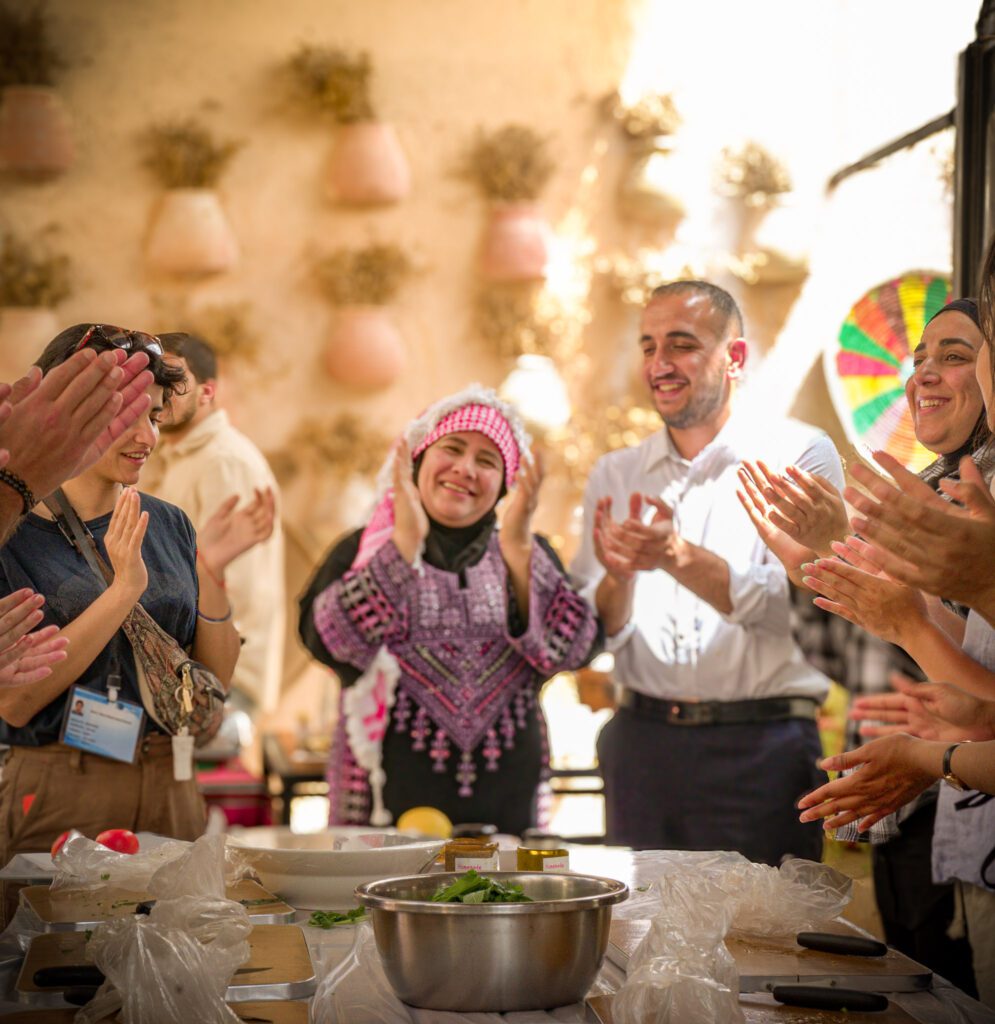
Making maqluba in a community kitchen and realizing food is memory.
Sitting with Bedouin hosts in Wadi Rum and listening to stories about generational desert life.
Standing inside Petra and understanding how displacement reshaped entire communities.
Watching the sun drop behind sandstone cliffs and feeling very small in the best possible way.
Floating in the Dead Sea in complete, mineral-heavy stillness.
Those moments don’t happen when everything feels familiar.
Jordan may nudge you outside your default setting. But that stretch is often where perspective shifts. It’s where empathy deepens. It’s where headlines fall apart and real human connection steps in.
That kind of discomfort is not something to fear. It’s often the beginning of transformation.
So, Is Jordan Safe to Visit?
Jordan is not reckless travel (looking at you dad!)
It is for travelers who want depth. History. Culture. Desert silence. Biblical sites. Nabataean engineering. Bedouin hospitality.
If you are searching “Is Jordan safe to visit?” you are already thinking critically. That is a good thing.
Do your research. Stay aware. Choose reputable partners (Hi! Have you checked our My Group Trips page?)
Then allow yourself to experience a country, a region that is layered, welcoming, and far more nuanced than headlines suggest.
If you are craving a travel experience that feels expansive rather than crowded, and culturally immersive rather than surface-level, Jordan might be exactly what you are looking for.
And I am always happy to guide you there.