2 Day Taipei Itinerary: Jiufen Day Trip, Bike Tour and Night Markets
Last Updated on November 15, 2026 by Kimberly
Planning a 2 day Taipei itinerary and wondering what actually fits? Spend Day 1 on a small-group day trip to Yehliu Geopark, Jiufen and Shifen, then spend Day 2 on a morning bike tour of Taipei, dinner at Din Tai Fung and a walk through Raohe Night Market.
I spent a long weekend in Taipei in March 2023, flying over from Seoul while we were living in South Korea. Two days was enough to see why Taipei belongs on everyone’s list, and booking a couple of good tours is what made a short trip feel full instead of rushed.
Below, you’ll find exactly how I spent my weekend in Taipei, the tours I booked, where I stayed, how to get from Taoyuan Airport into the city and what to know before you go. The experiences are from my own trip, and I’ve refreshed the planning details. A version of this post first ran on United On The Rok in July 2023.
In a Rush?
Where I’d Stay in Taipei
Meander 1948 (Budget, near Taipei Main Station)
Check rates and availability →More Taipei Hotels
See all Taipei hotels on my map →At a Glance
2 Days in Taipei
My March 2023 weekend trip from Seoul
| Day 1 | Yehliu Geopark, Jiufen and Shifen day trip |
| Day 2 | Bike tour, Chiang Kai-shek Memorial Hall, Din Tai Fung, Raohe Night Market |
| Stay | Meander 1948, Datong district |
| Airport | Taoyuan Airport MRT, about 35 minutes |
| Book ahead | Day trip and bike tour |
Map of My 2 Day Taipei Itinerary
I pinned every stop from this 2 day Taipei itinerary on one map, from Yehliu Geopark and Jiufen to Chiang Kai-shek Memorial Hall and Raohe Night Market. I also added a few extra night markets and temples, like Shida Night Market and Lungshan Temple, in case you have more time.
Day 1 of Your 2 Day Taipei Itinerary: Yehliu Geopark, Jiufen and Shifen
On Day 1, get out of the city. I booked a small-group day trip from Taipei that covered Yehliu Geopark, Jiufen and Shifen in one day, which is the easiest way to see all three without piecing together trains and buses on your own. It’s the busiest day of this 2 day Taipei itinerary, so start early.
Day 1 Tour I Booked
Jiufen, Yehliu Geopark and Shifen Day Trip from Taipei
A guide, transportation and all three stops in one day. Viator often shows the lowest price once you’re logged in.
Check Tour Prices on Viator →Morning: The Queen’s Head at Yehliu Geopark
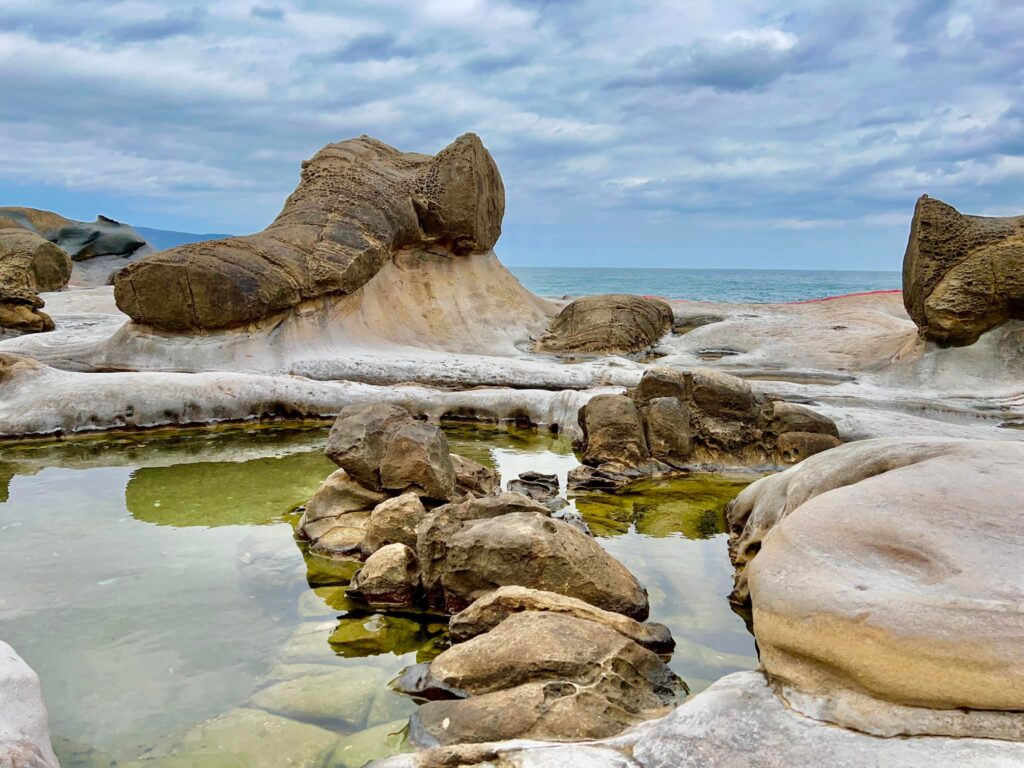
I started my morning early, hopping into a van with my guide, Jackson, as we set off to pick up the other participants. Our first stop? Yehliu Geopark, home to the famous Queen’s Head rock formation, about 45 minutes outside of Taipei.
Since I had booked this tour on a Friday, I assumed the crowds would be manageable. I was so very wrong. There were lines for nearly every stone formation, including a 20-minute wait just to snap a photo of the Queen’s Head.
Kimberly’s Tip
Even on a Friday, Yehliu Geopark had a 20-minute line for the Queen’s Head photo. Skip the line and climb to the higher viewpoint, where you can photograph the Queen’s Head and the coastline without the crowds.
Yehliu Geopark sits on a 1,700-meter-long cape, shaped by the forces of nature over thousands of years. The rock formations are sandstone and limestone, shaped by seaside erosion. While I wasn’t keen on waiting in line, I quickly found a higher vantage point that offered a wide view of the Queen’s Head, the rugged coastline, and the swirling blue sea, all framed by low shrubs that conveniently blocked the crowds below.
If you’re lucky with the weather, the tour includes a stop at Golden Waterfall. This striking cascade gets its name from the heavy metal elements in the riverbed, which turn the water a rich golden hue. The river eventually flows into the Yin Yang Sea, where dark mineral deposits mix with the sea’s light blue waters, creating a striking contrast.

Midday: Jiufen Old Street and Its Teahouses
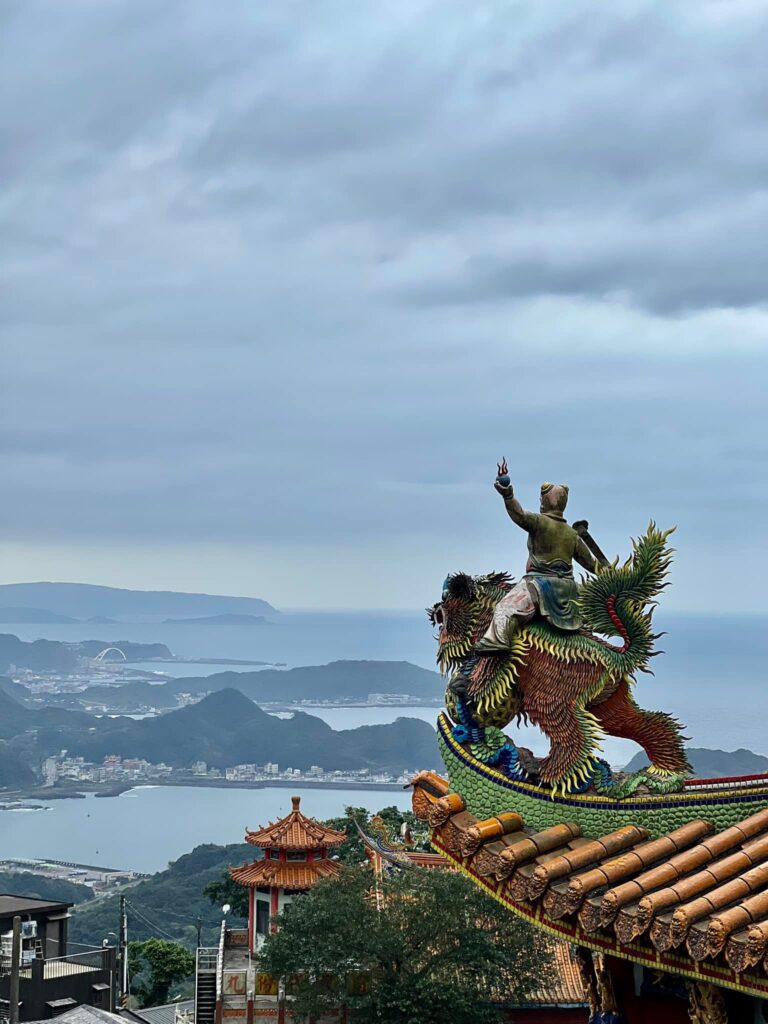
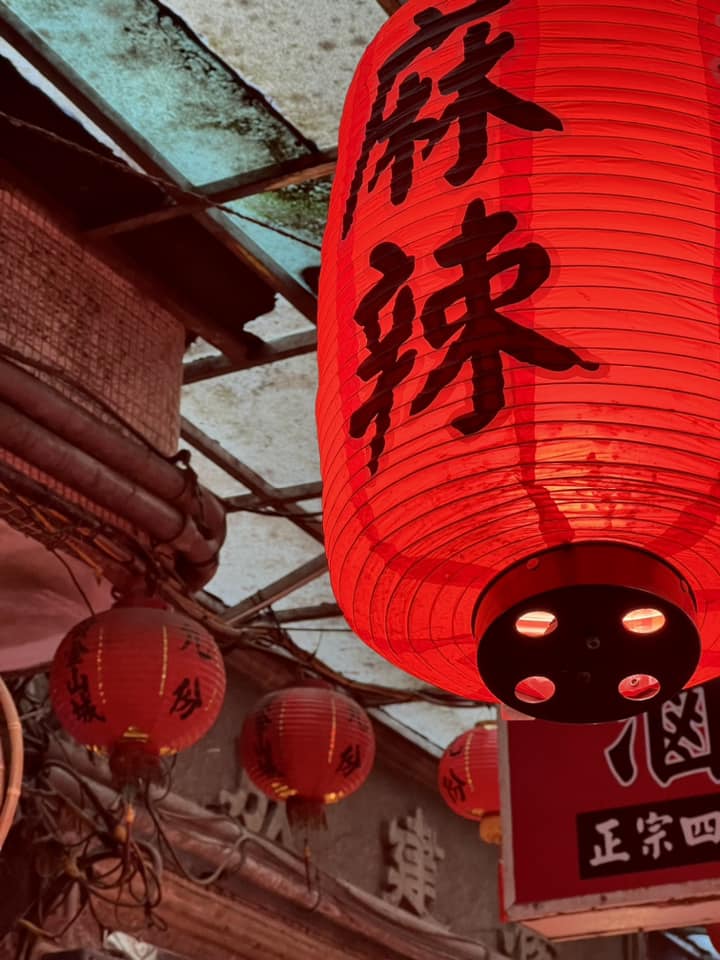
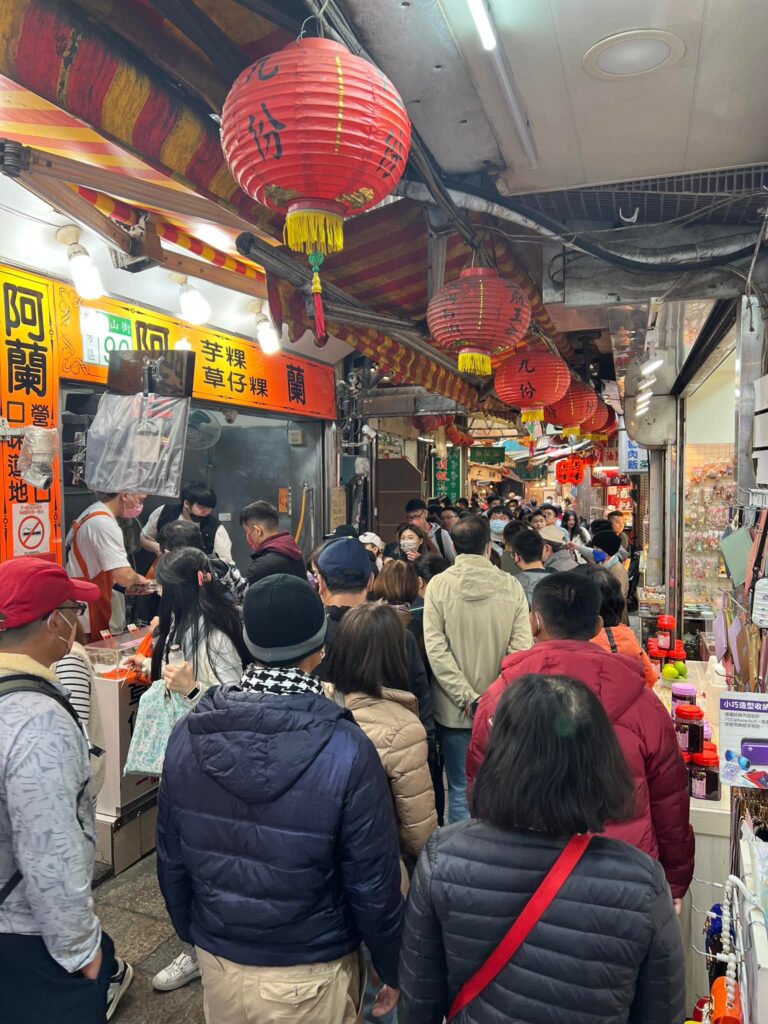
Jiufen was next. This small town lies on a beautiful mountainside and has sweeping views of the coastline. Jiufen boomed after gold was found in the area in the 1890s, and the mining town grew quickly during the Japanese era. When the lanterns light up at night, it may remind you of the popular anime film Spirited Away. My time here was mostly spent walking the winding streets, taking in the sights and smells of the city. You will find vendors selling many things such as Guey (a glutinous snack that can be stuffed with many different things), Stinky Tofu, Tanghulu, leather goods, and trinkets that capitalize on Spirited Away. The crowds were plentiful, and it only overwhelmed me as I was trying to squeeze through the tight alleyways. So, I found the nearest Tea house.
There are two extremely popular tea houses in Jiufen: Ameicharu and Jiufen Chafang. Ameicharu is the iconic tea house you have seen in pictures. It was formerly a blacksmith shop, and it brings in tons of tourists daily. I could not believe my eyes when I saw the tea house. It is beautiful, but the wait time to get in was too long.
Afternoon Tea at Jiufen Chafang
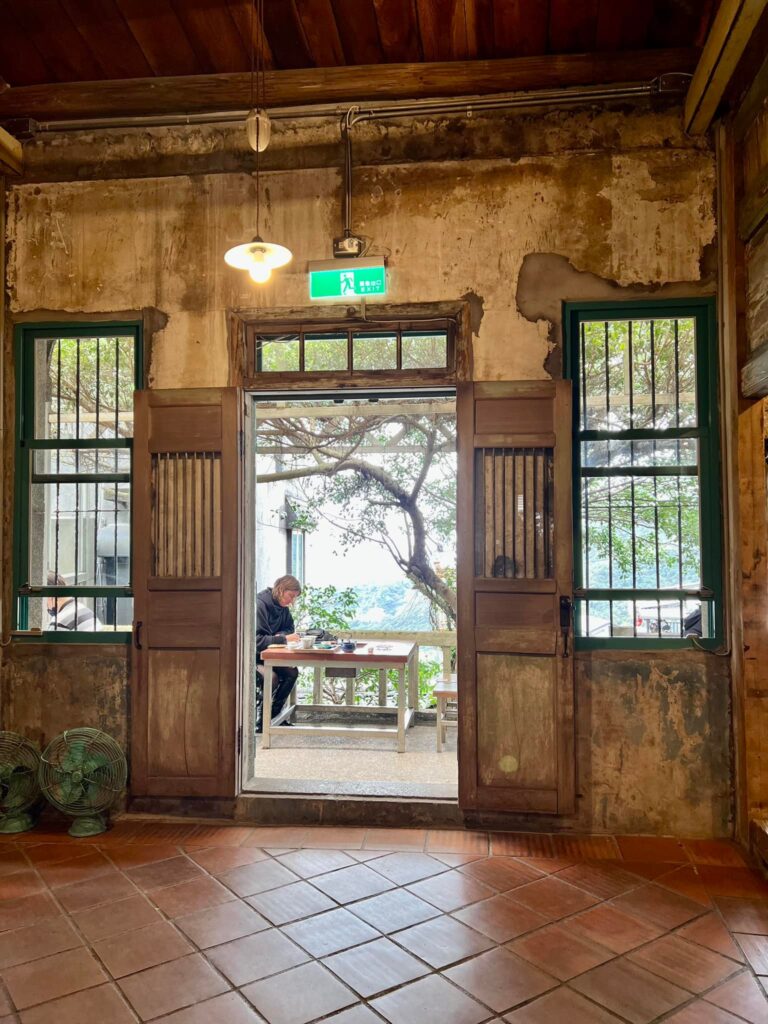
With limited time, I opted for Jiufen Chafang. Conveniently located around the corner, Jiufen Chafang offers a menu and views just as fantastic as Ameicharu. Unlike many other spots, they accept all major credit cards, including American Express.
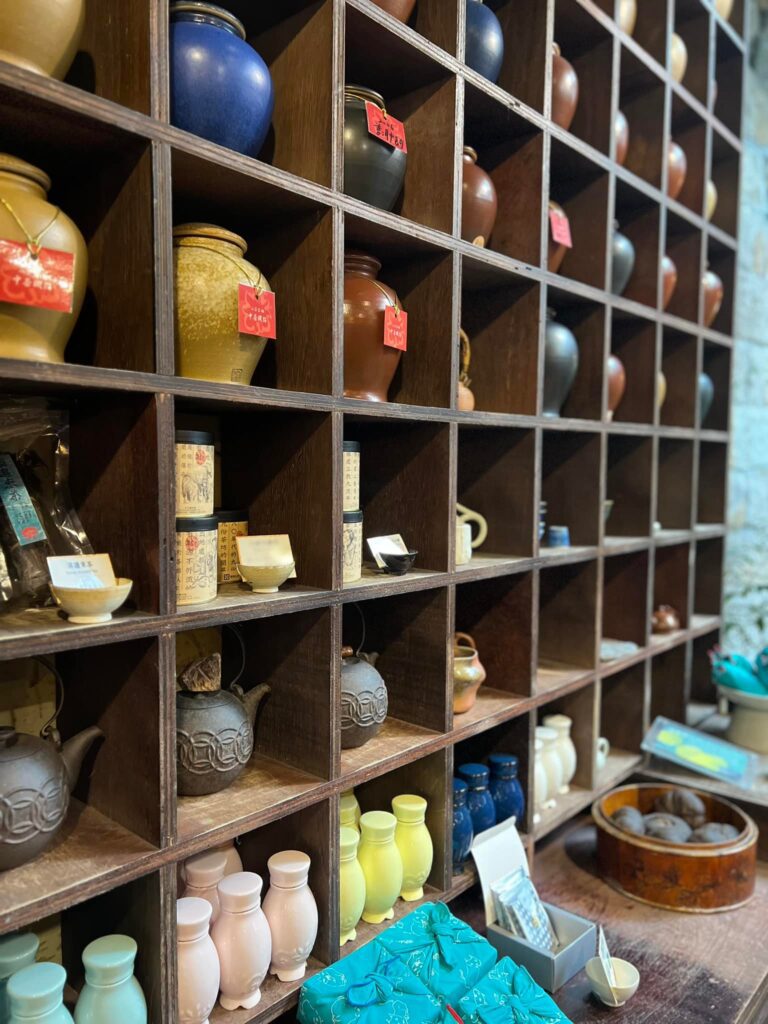
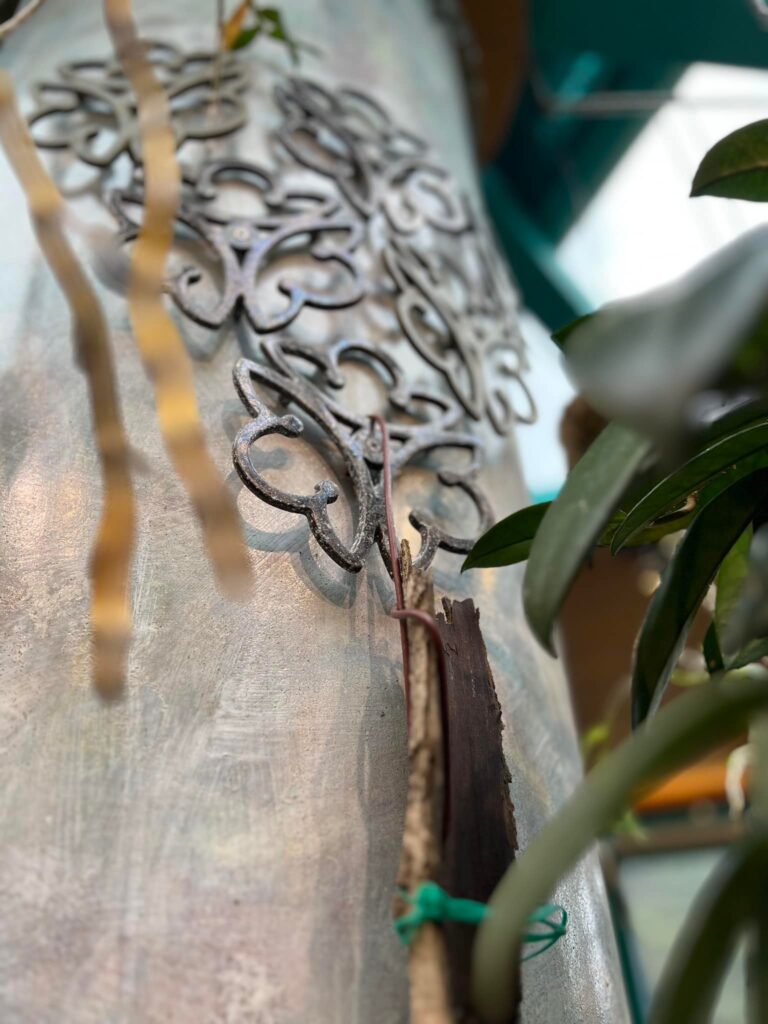
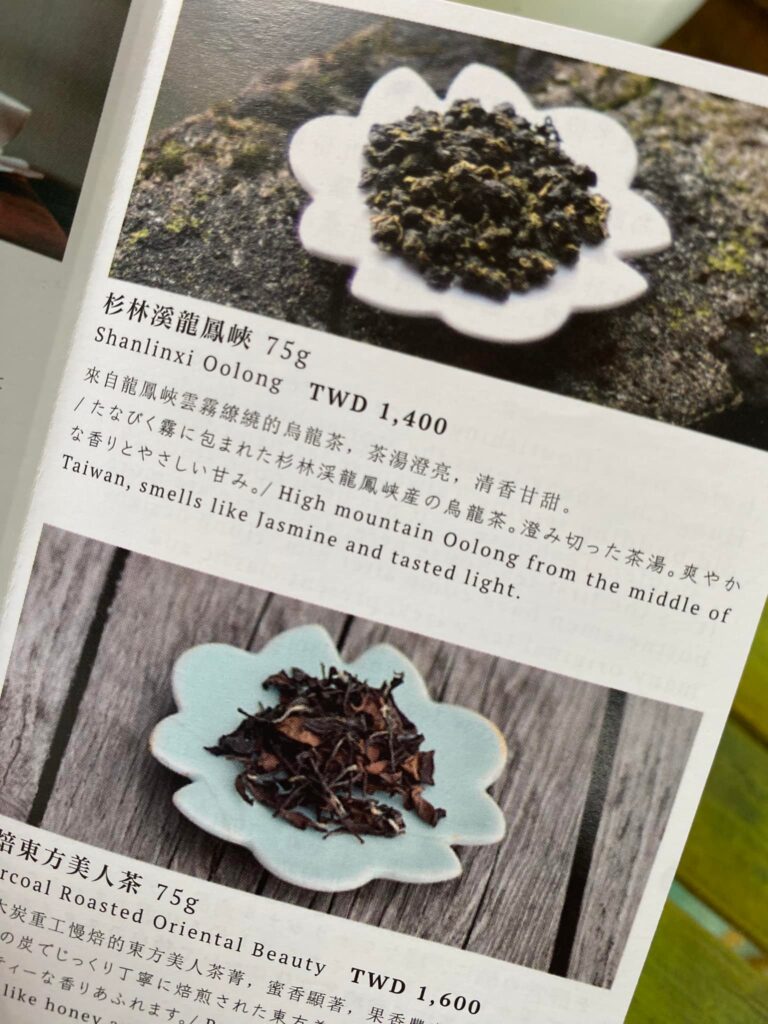
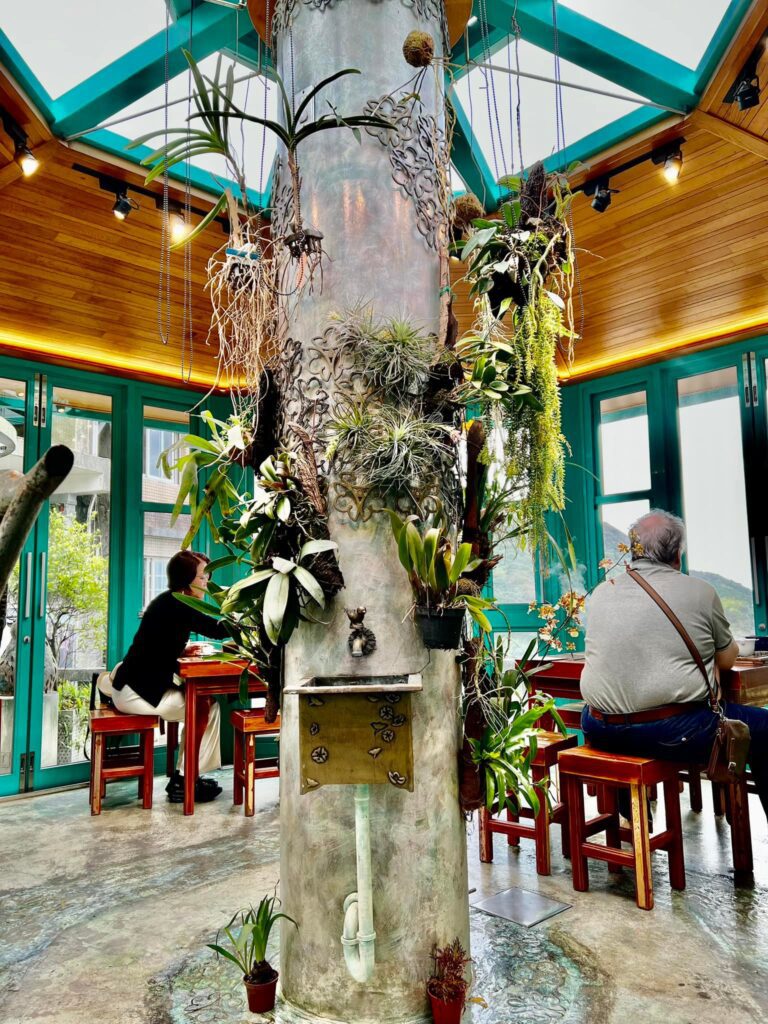
The waitstaff guided me to an unbelievably beautiful greenhouse created by the resident artist. My seat offered a stunning view overlooking the valley below. As soon as I settled in, a young lady appeared with a menu featuring tea choices arranged from light to dark, along with cookies infused with oolong.
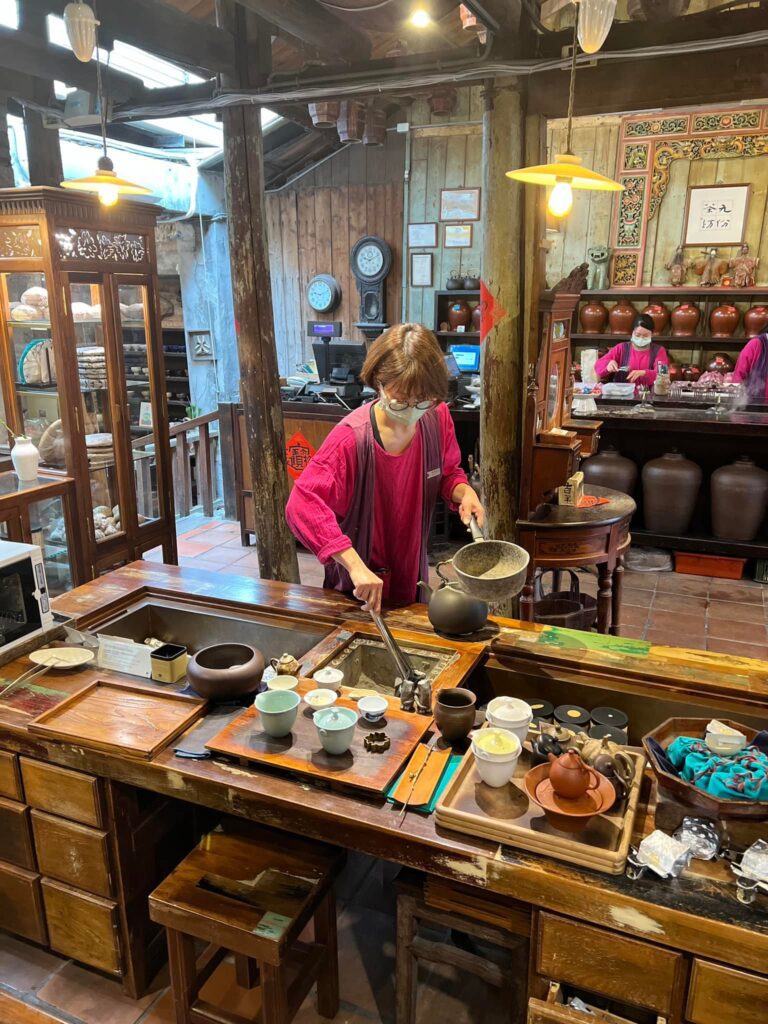
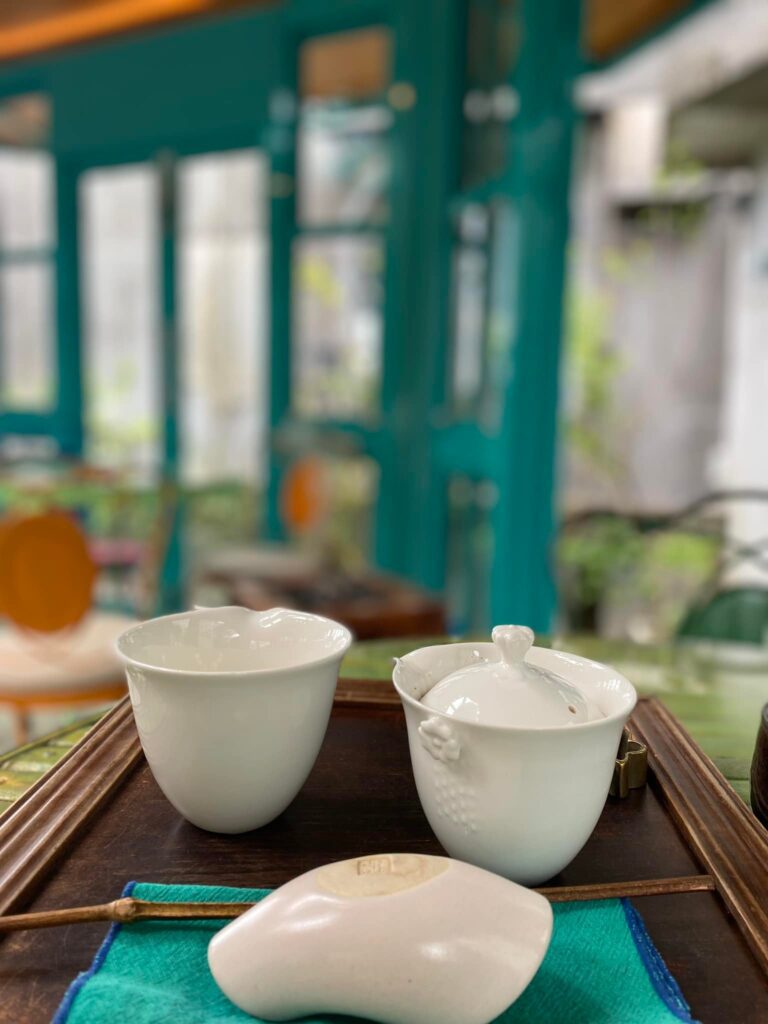
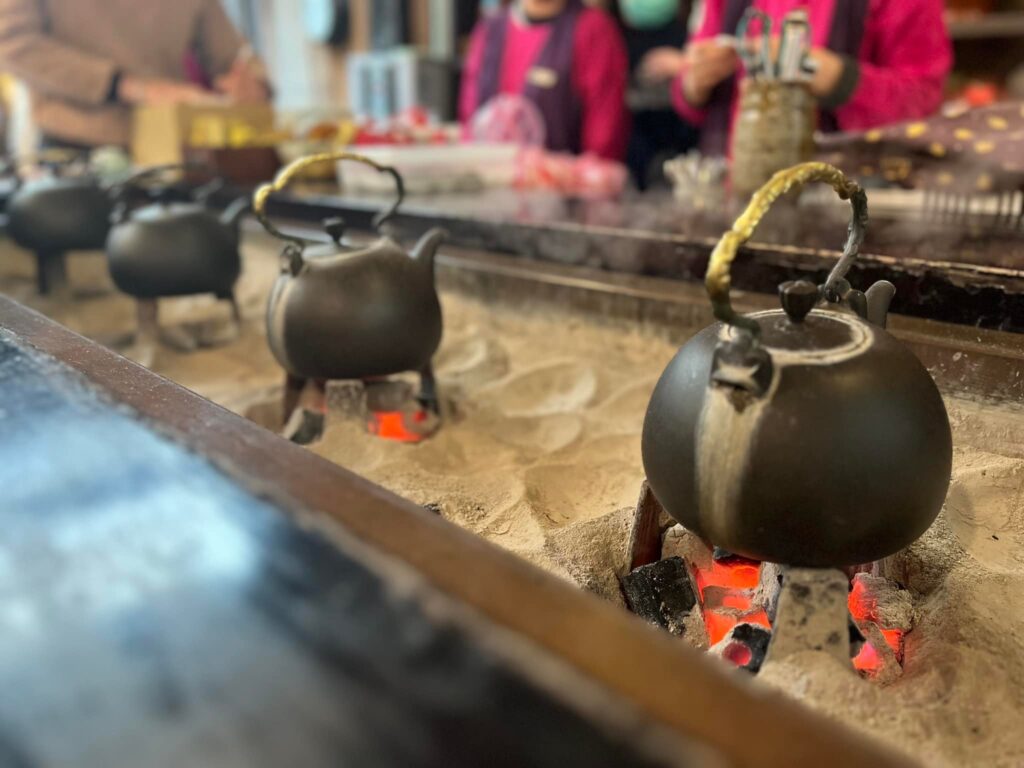
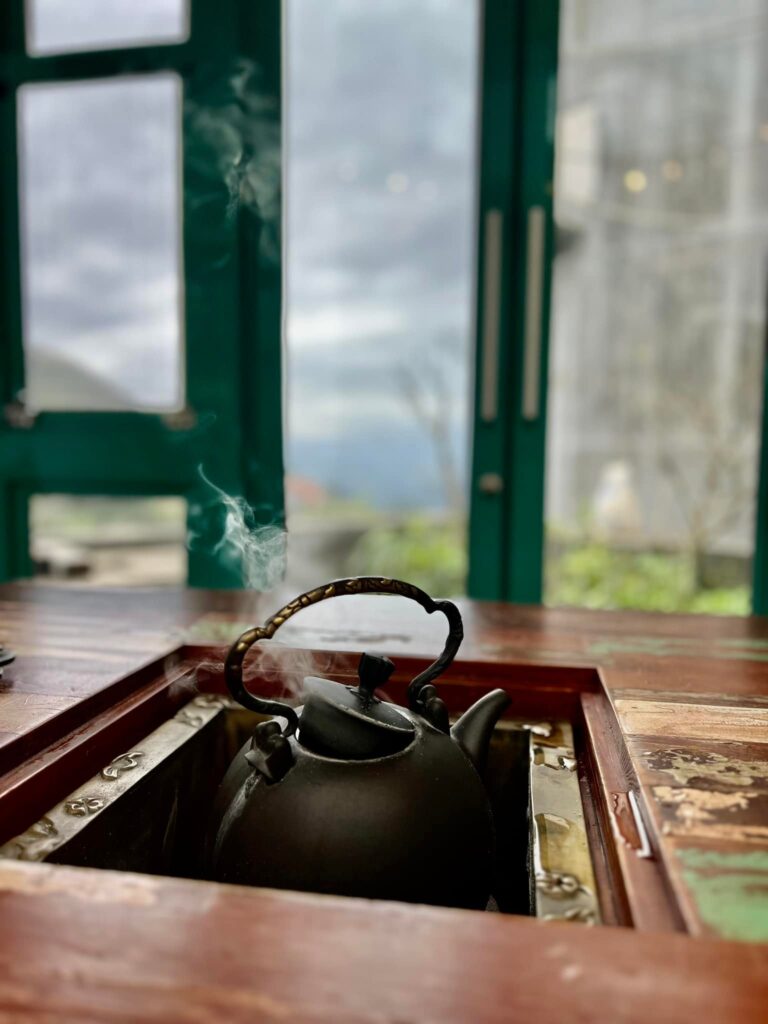
I chose Shanlinxi Oolong, sourced from the high mountains in central Taiwan. The tea had a faint jasmine aroma and a light taste. She explained the steeping process, placing the kettle on charcoal bricks beside me. She cleaned the cup with water, dumped it into a spare bowl, added the loose-leaf tea, poured hot water over the leaves, and instructed me on how long to steep the tea.
Once she finished, she poured the tea into my cup and left me in peace. I sat in silence, enjoying endless cups of tea for about an hour. It was a wonderful way to relax and take in my surroundings. What a way to experience a place!
Afterward, I walked through the winding, twisting streets of Jiufen, lined with beautiful architecture. I can see why people often think this place looks like something out of Spirited Away.
Kimberly’s Tip
If I did this day again, I’d see Jiufen at night, when the lanterns are lit. Check the tour’s return time before you book if evening Jiufen matters to you.
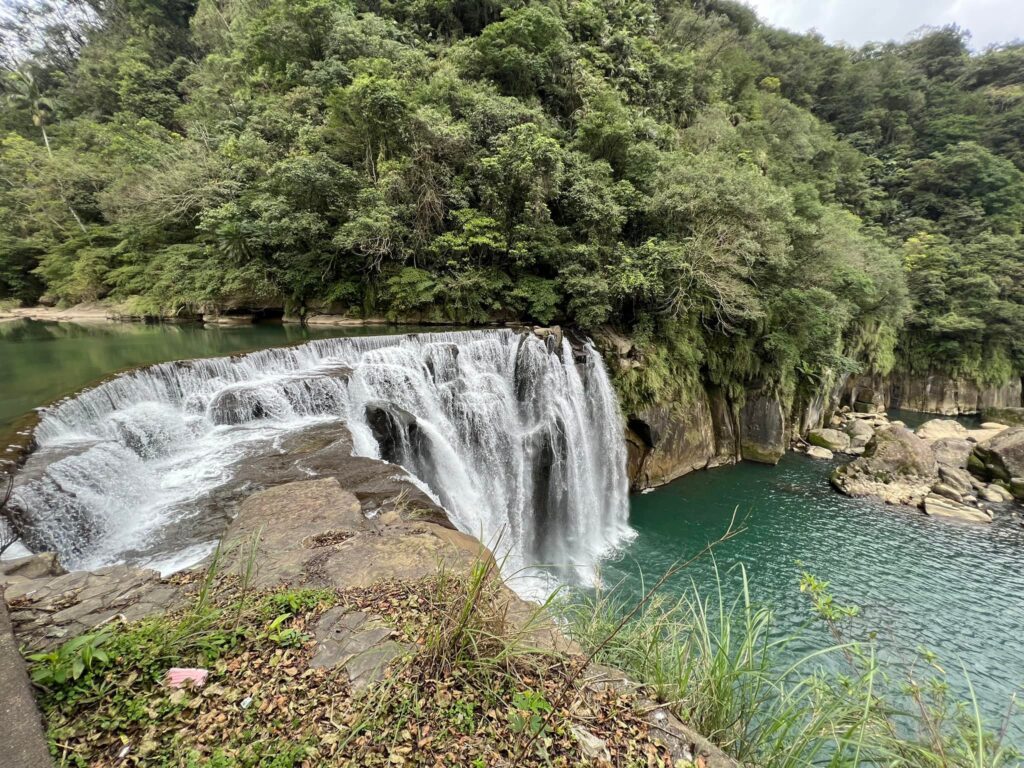
Late Afternoon: Sky Lanterns in Shifen
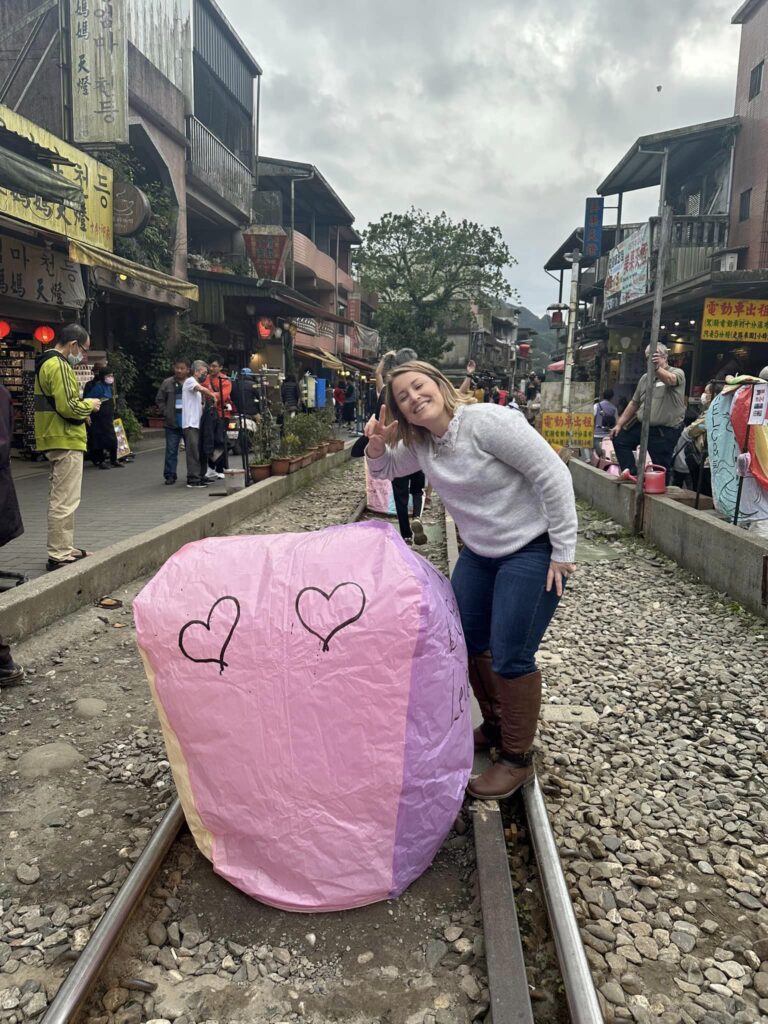
Shifen was next on the list. This small town has a beautiful nature park with hiking trails and a waterfall. A neat activity to participate in here is lantern lighting and setting off your lantern.
The streets of Shifen are lined with small shops and the area still has a small-town feel. You can walk into any of the lantern shops along the railroad tracks and ask to paint wishes on a lantern to set it off.
This was about 250 TWD (less than USD 10 in March 2023) for four colors. It was a fun activity. The shop owners help you set it off and are super fun about it.
If you want, you can even get on the train that passes through to see some more mountain towns scattered throughout the area.
Day 2 of Your 2 Day Taipei Itinerary: Taipei by Bike, Din Tai Fung and Raohe Night Market
Spend Day 2 seeing Taipei itself. A morning bike tour covers a lot of ground, including breakfast with locals and Chiang Kai-shek Memorial Hall, and your evening is for dumplings at Din Tai Fung and street food at Raohe Night Market. This half of the 2 day Taipei itinerary keeps you in the city, so it’s easy to adjust if the weather turns.
Day 2 Tour I Booked
Taipei Morning City Cycling Tour
About 15 km over 4 hours (difficulty: fair), with a local breakfast stop and Chiang Kai-shek Memorial Hall.
Check Bike Tour Prices on Viator →Morning: A City Cycling Tour with Taipei Bike Works
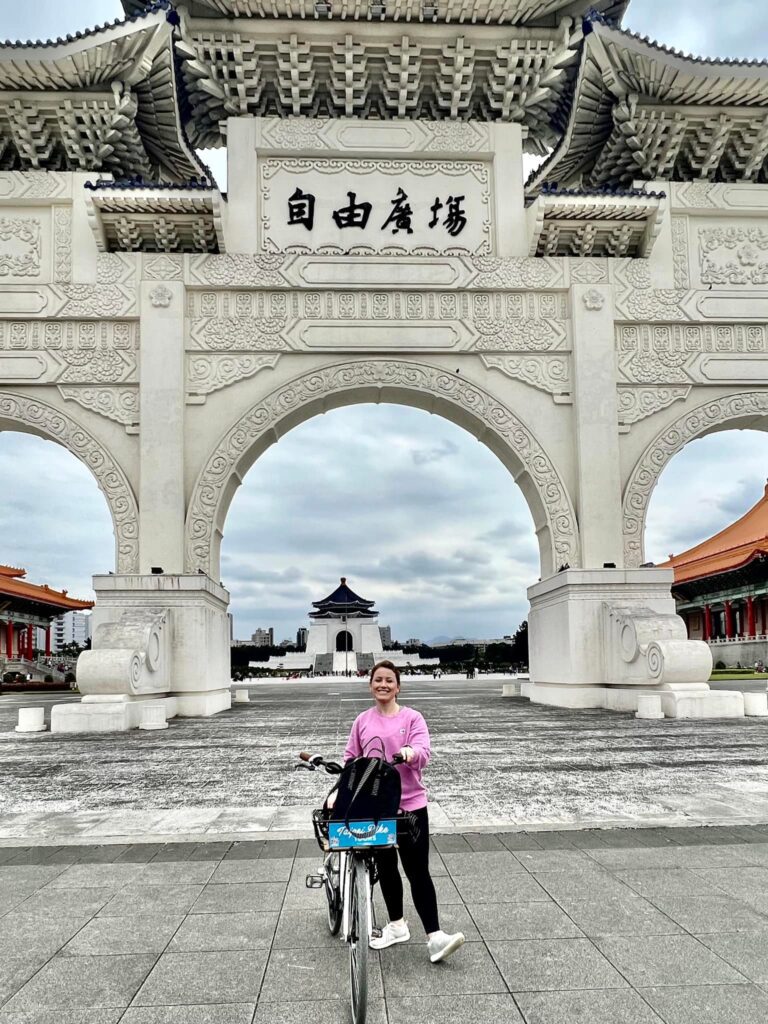
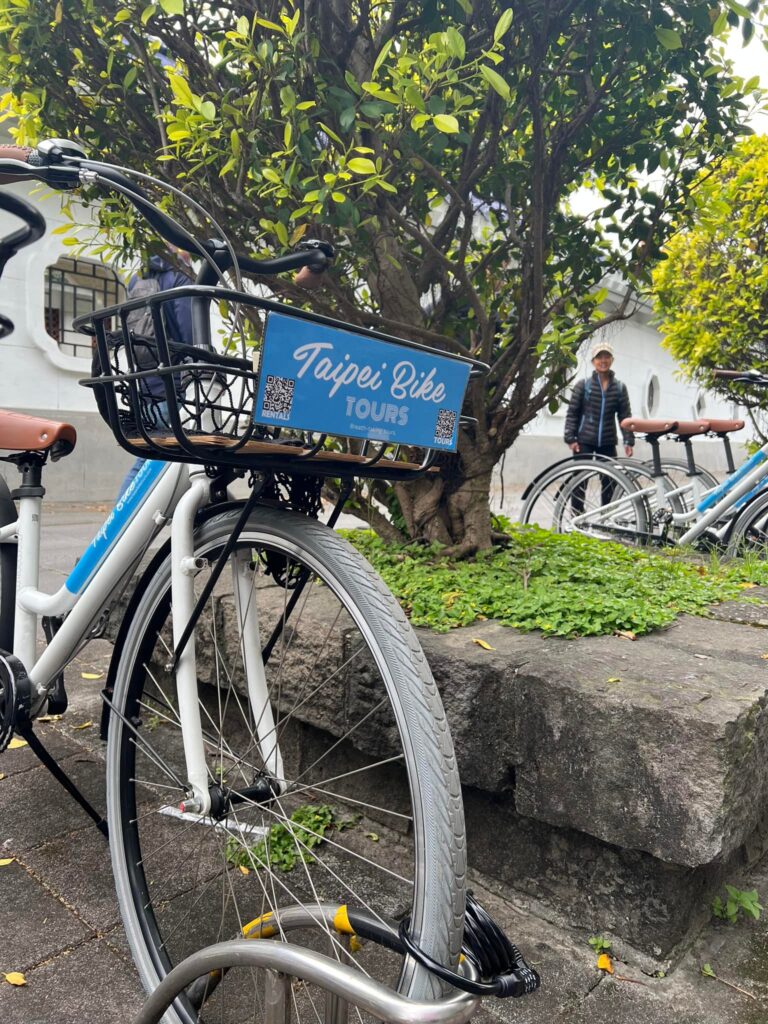
One of the highlights of my time in Taipei was the morning bike tour I took with Taipei Bike Works. I met my guide, Beatrice, at the shop. She was a Taiwanese-American who had returned to Taiwan to reconnect with her roots. What made this tour so special was the chance to explore parts of the city that most visitors might never stumble upon.
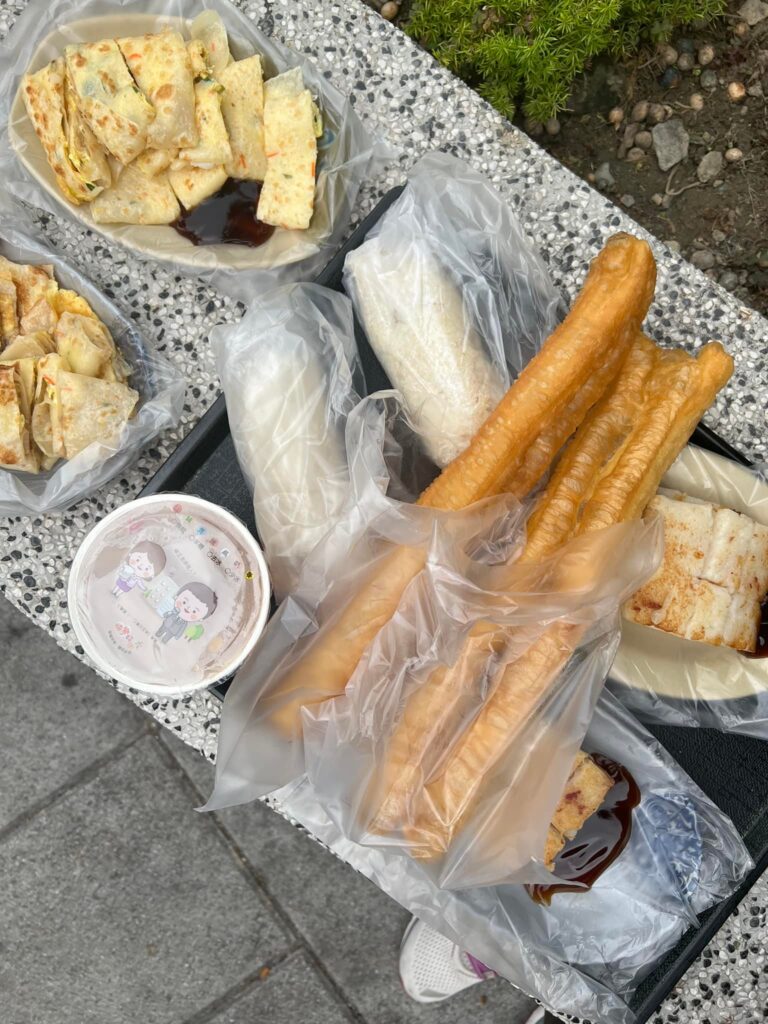
As the other participants arrived, we took some time to get to know one another before selecting our bikes. Our group consisted of six others: five Aussies working in Hong Kong’s tech industry and a solo traveler in the foreign service. Once we were all set, we pedaled into the city, making our first stop for a fantastic local breakfast.
To our surprise, our presence didn’t go unnoticed. Locals began snapping pictures of us enjoying our meal, clearly amused by the sight of a group of foreigners diving into traditional Taiwanese breakfast dishes. One woman was so excited to see tourists that she even asked one of our group members to take a picture with her baby!
Late Morning: Chiang Kai-shek Memorial Hall
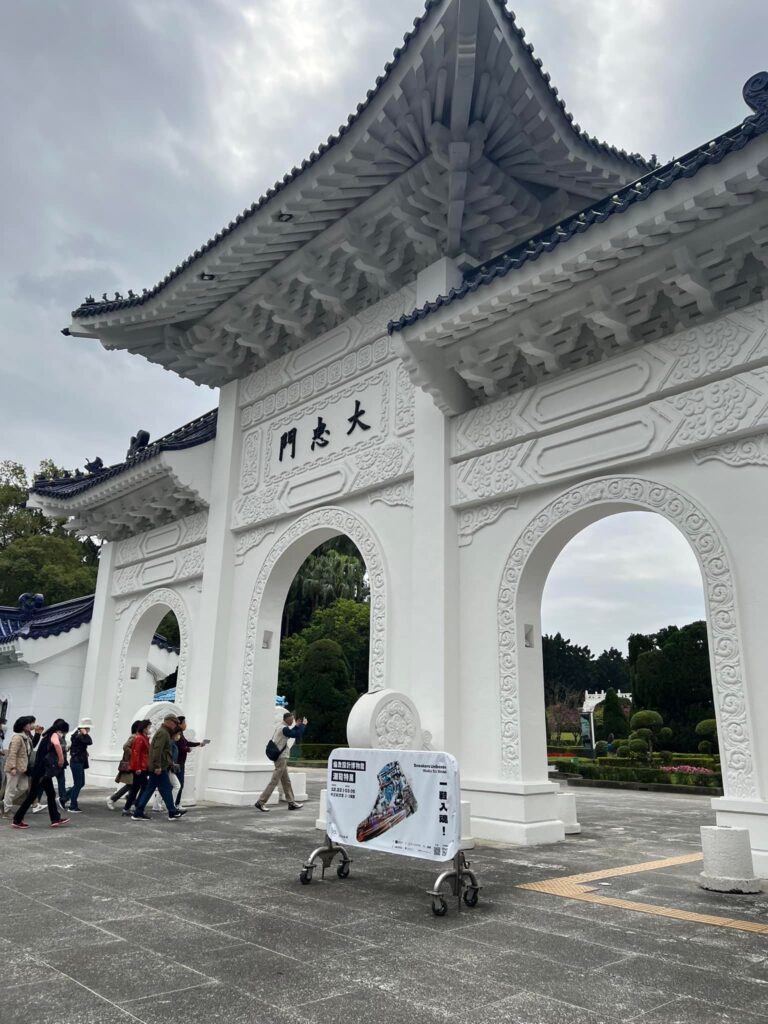
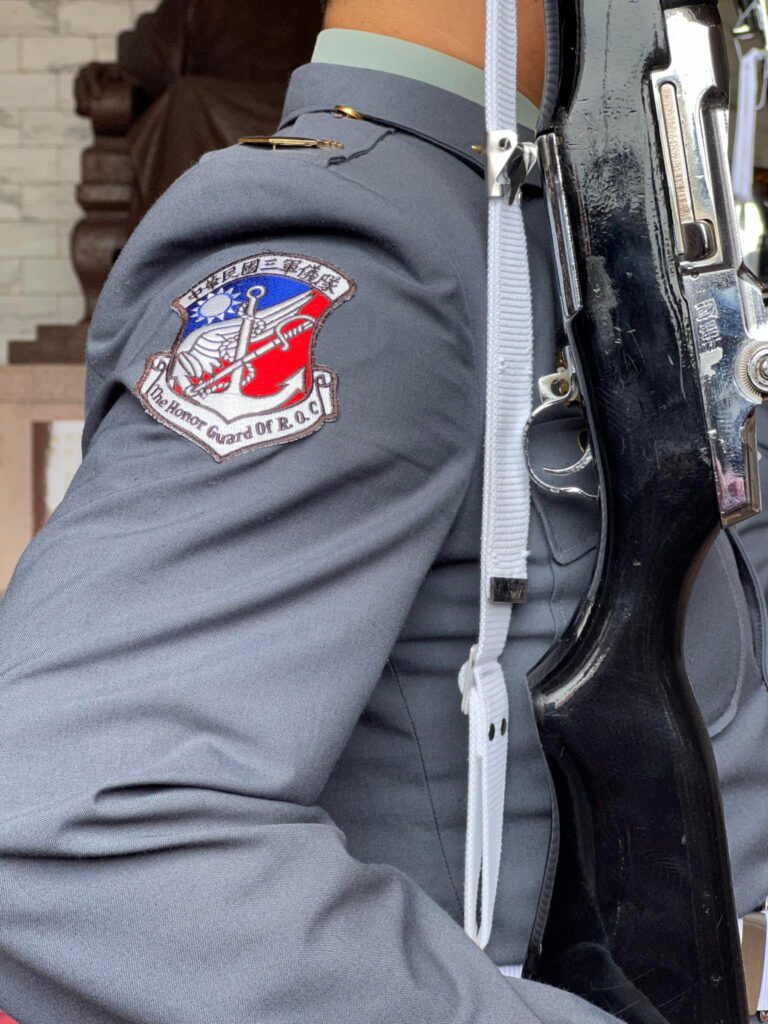
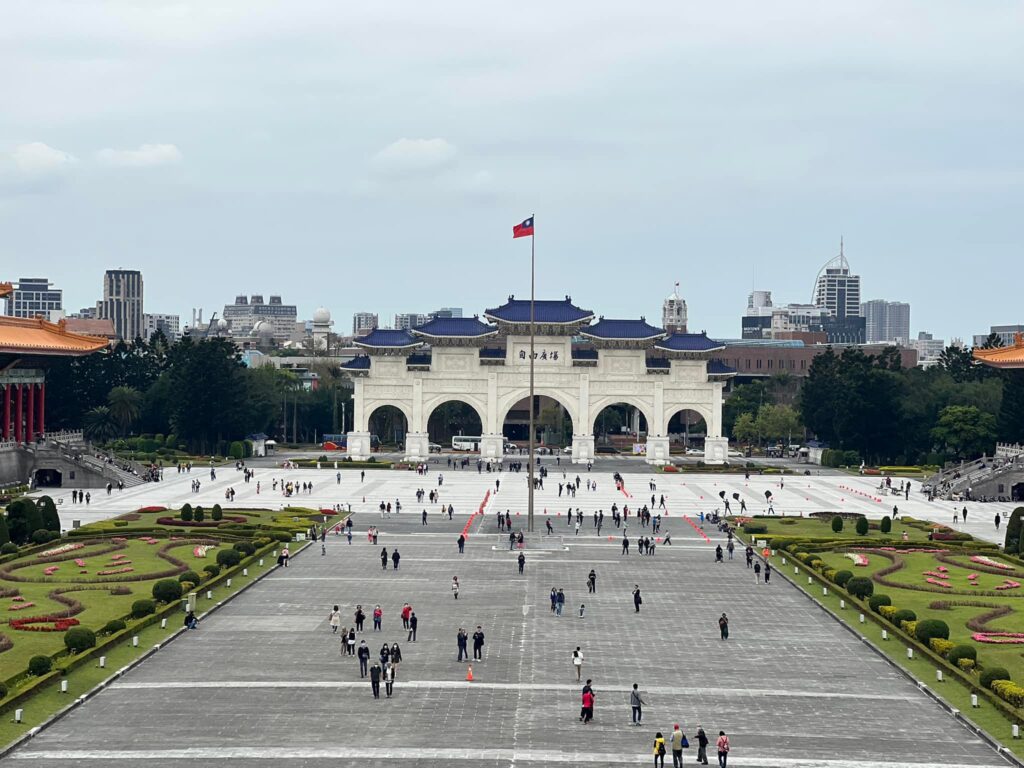
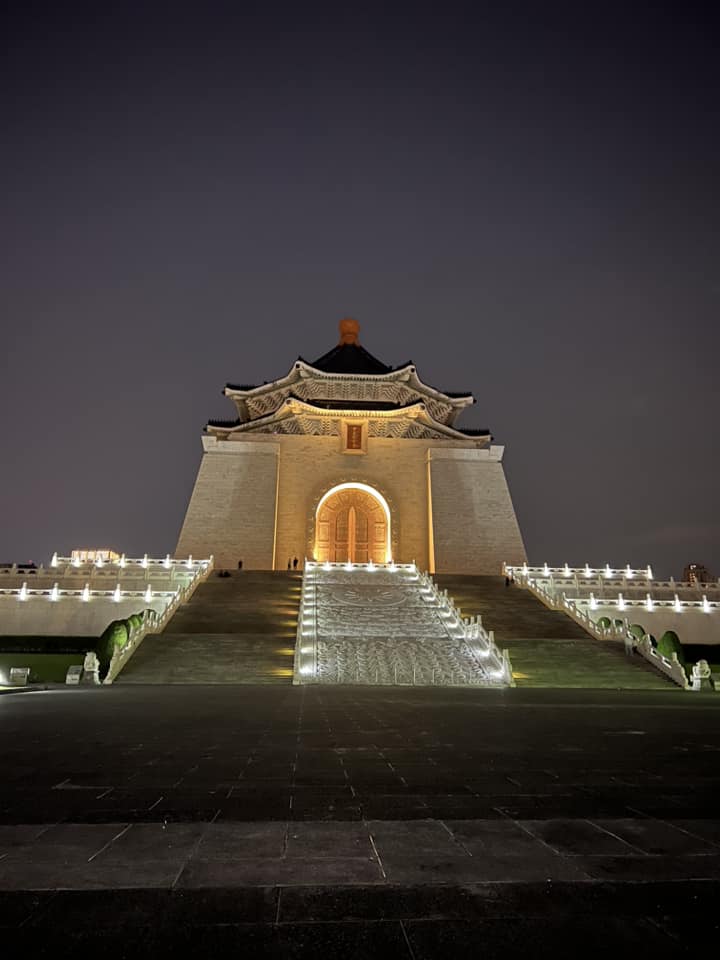
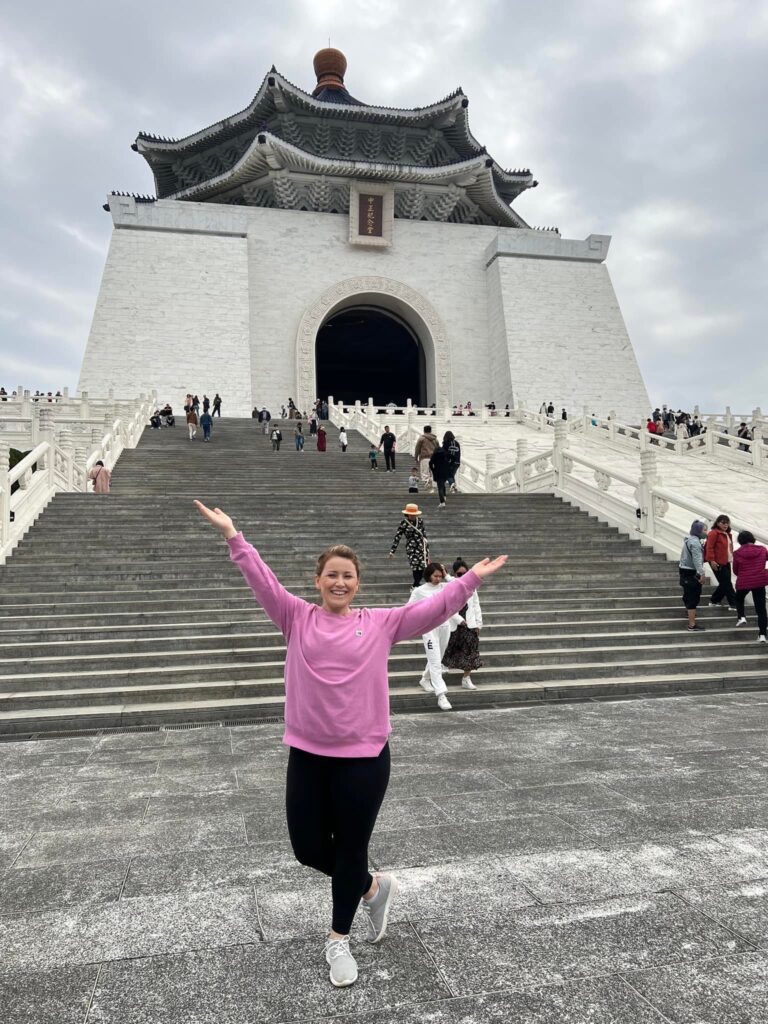
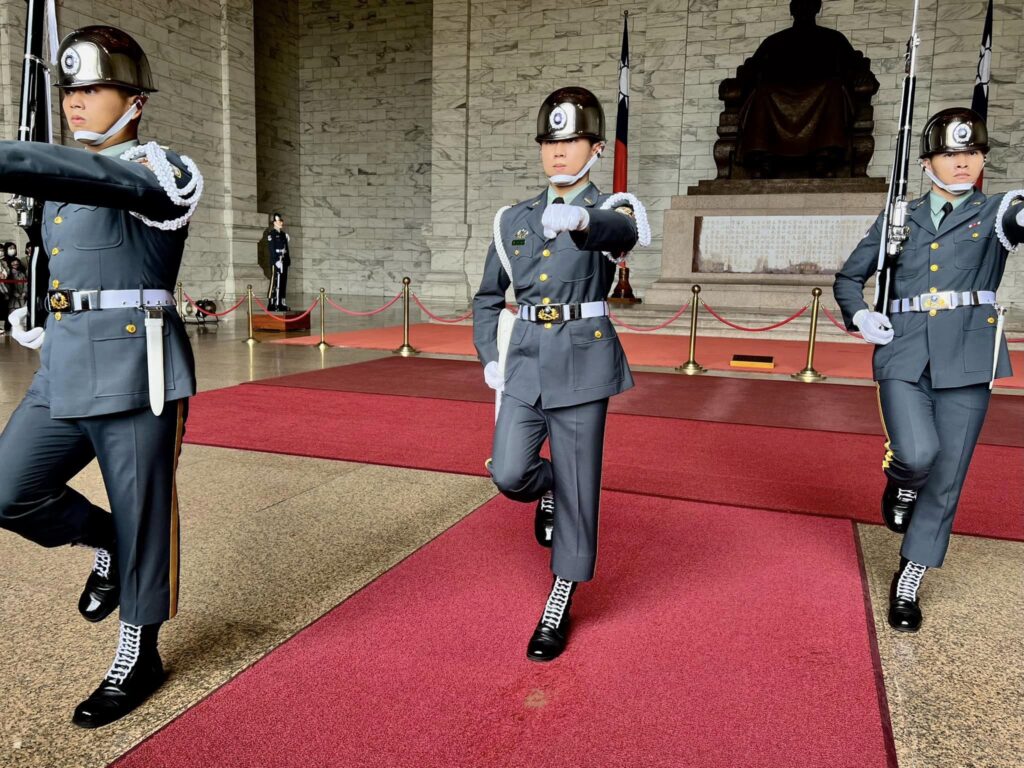
Our ride eventually led us to the Chiang Kai-shek Memorial Hall, where we had the chance to witness the Changing of the Guard. When I visited, the ceremony took place at the beginning of every hour from 9:00 AM to 5:00 PM and it was a display of absolute precision. The soldiers moved in perfect sync, straight-faced, disciplined, and executing each motion with laser-sharp accuracy.
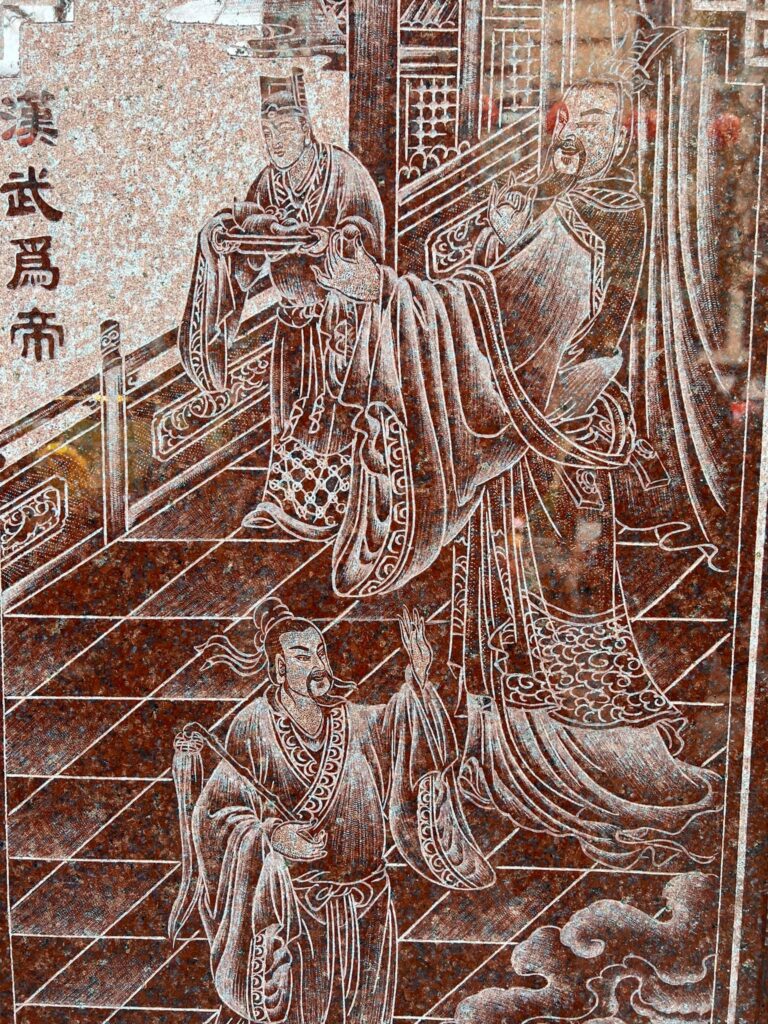
As we walked through the memorial grounds, we took in the beauty of the expansive gardens and the stunning architecture of the National Concert Hall. The blend of history, culture, and grandeur made it a memorable stop on the tour.
Later in the day, while waiting at a stoplight, I had an unexpected encounter. An older man approached me, enthusiastically sharing his love for the U.S. before telling me I was beautiful. Then, in a sweet and slightly surreal moment, he handed me a balloon art flower. Unfortunately, my delicate souvenir didn’t survive the flight home, but the memory of his kindness stayed with me.
Overall, this bike tour is an excellent introduction to Taipei: its sights, its people, and its less-visited corners. I highly recommend it for anyone looking to experience the city beyond the usual tourist spots.
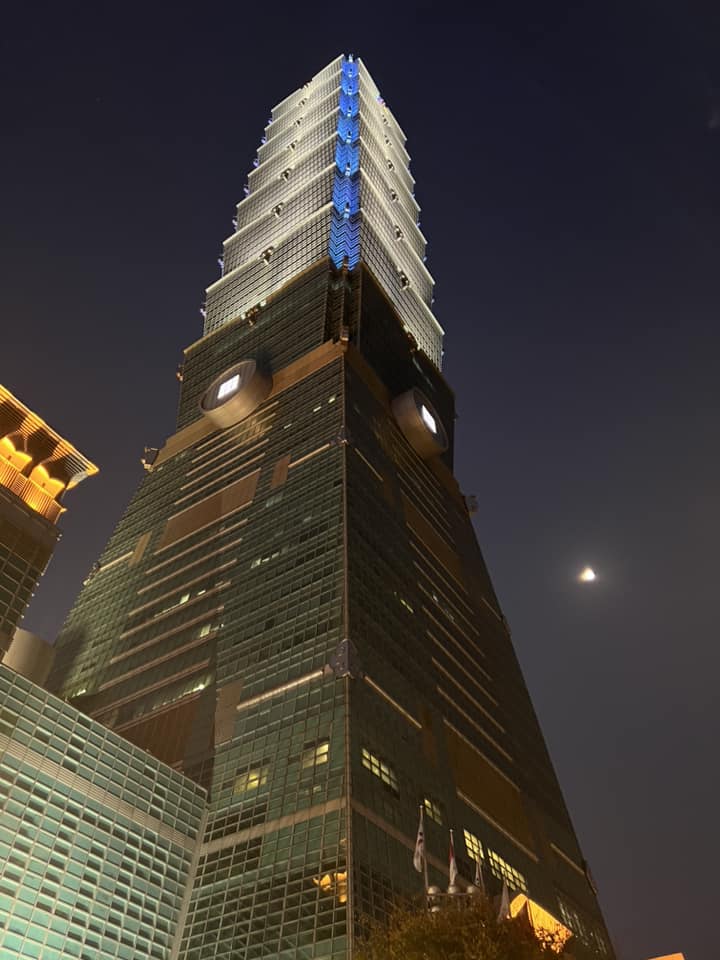
Evening: Din Tai Fung Dinner at Taipei 101
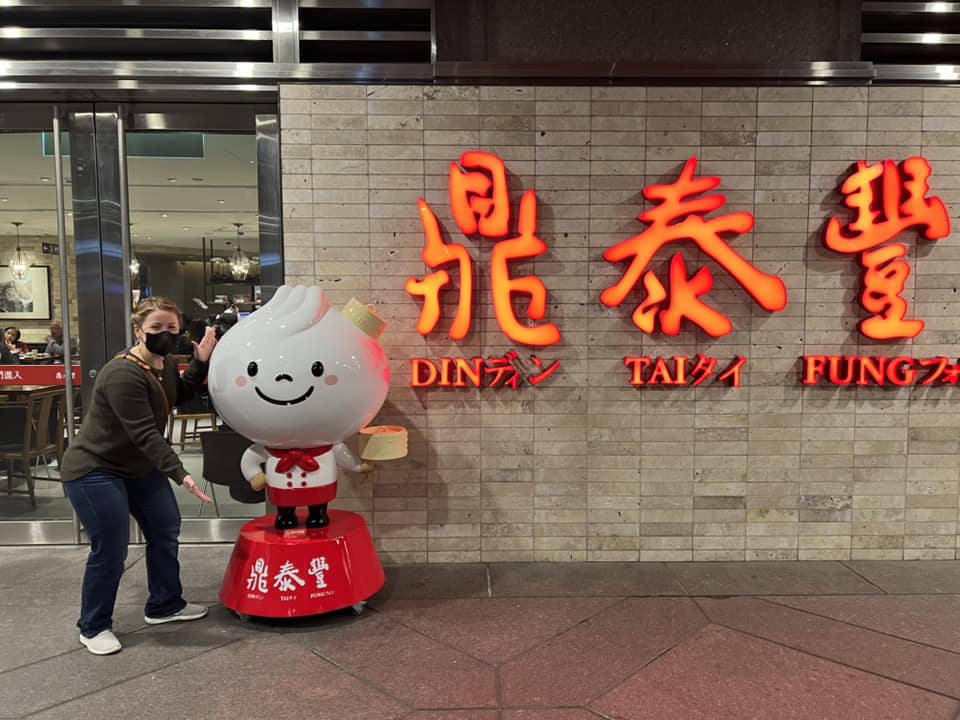
No trip to Taiwan is complete without tasting Xiaolongbao at Din Tai Fung! This renowned Michelin-star restaurant has locations all over the world, and it originated in Taipei, Taiwan.
Naturally, you must put this on your itinerary. I had heard it was a nightmare to get in with long waits, but the trick around it is to join a tour!
The tour guide picked us up at a local metro station and then took us over to Taipei 101, where Xiaolongbao is located. It took about twenty minutes to get us in. I was with a group of people from Japan, and we connected over the tasty food.
Among the highlights for me was the hot and sour soup. It was delicious. Sure, the Xiaolongbao was amazing, but this soup was the best! We ate to our heart’s content for about 40 minutes.
The Story Behind Din Tai Fung
The creator of Din Tai Fung, Mr. Yang, immigrated to Taiwan at twenty years old with twenty dollars in his pocket. He decided to open his shop to sell cooking oil and named it Din Tai Fung. He and his wife dedicated half of their shop to making and selling Xiao Long Bao, steamed pork soup dumplings. The word itself means ‘little dumpling in a basket.’ You can find a variety of these dumplings on the menu. It is fascinating to watch them work in the kitchen. Although I could have gone to Seoul to have dinner at their location in Gangnam, something about this experience in Taiwan was especially fascinating.
Skip the Din Tai Fung Wait
Din Tai Fung Dinner Tour in Taipei
The tour I joined got us seated in about 20 minutes, with a guide who also took us to Songshan Ciyou Temple and Raohe Night Market afterward.
Check Din Tai Fung Tour Prices →Night: Songshan Ciyou Temple and Raohe Night Market
After dinner, we made a beeline for Songshan Ciyou Temple. It was already getting dark outside and the city was lighting up. As we turned the corner to our next destination, the view overtook me. It was Songshan Ciyou Temple lit up at night. Songshan is dedicated to the Goddess Matsu, the Goddess of the Sea. Our guide informed us that her believers think she roams the seas, protecting her believers, so citizens come here to pray to her for a safe journey and protection of the island. I spent much of my time here because it was beautiful with all the deep red hues of the lanterns. The smell of incense wafted through the air, and it was calming to take in. It is a great place to sit and reflect.
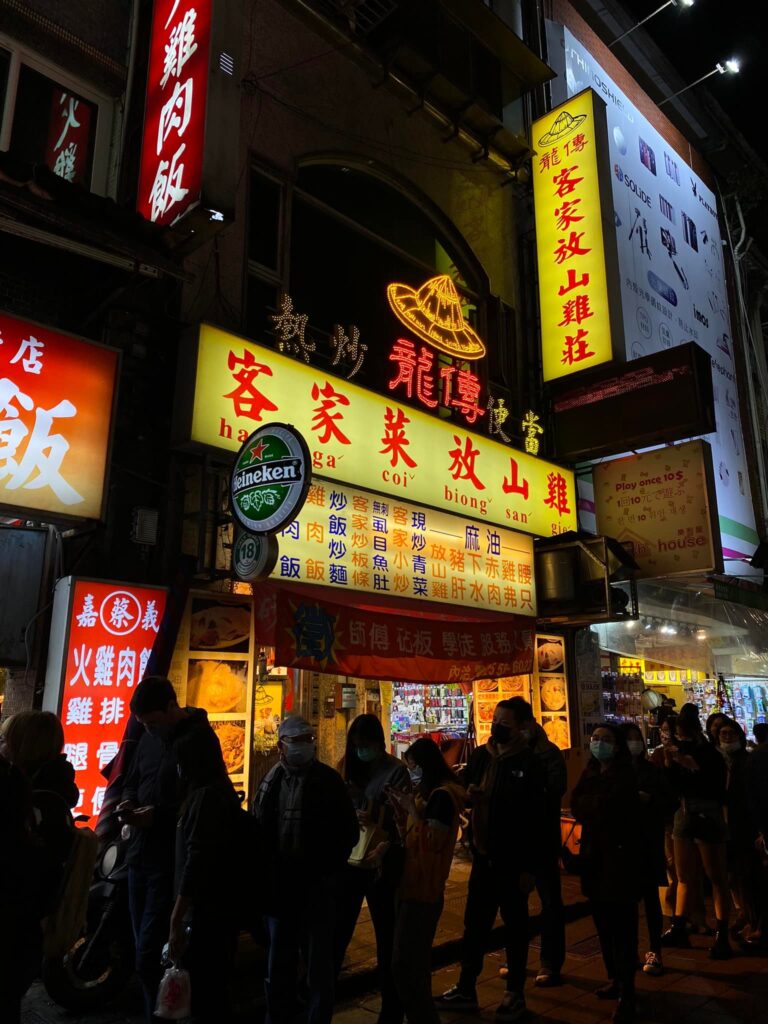
After, don’t miss Raohe Night Market, right next to the temple. I went off to see if I could find anything sweet and that I did. I immediately made a beeline for the Donut man. If you have never had a Chinese donut, you are missing out. I am a firm believer that anything in donut form should be tasted! This melted in my mouth to perfection and it was a beautiful ending to a long day!
Why I Planned a Weekend in Taipei
During our Christmas trip to Vietnam in 2022, my husband and I met a couple who were teaching at an international school in Taipei. Their stories about life in the city intrigued me, and I couldn’t help but dive into some research. To my surprise, I quickly realized that a weekend trip to Taipei from Seoul was totally doable.
Eager to escape the daily grind and seize a last-minute 3-day weekend, I set out to find the best flight deals from Seoul with China Airlines. Keep reading to see how we pulled off this spontaneous Taipei adventure! That flight is what turned into this 2 day Taipei itinerary.
COVID had really messed with my travel plans. Back in 2020, I had to cancel my long-awaited trip to Ukraine, and it made me realize how easily travel plans could fall apart. I didn’t want that to happen again, especially when it came to visiting Taiwan.
Given the political tension between China, Taiwan, and the USA, I was anxious about whether I would even be able to visit. I know, I know, it sounds super anxiety-inducing, but I was determined to see Taiwan for myself and understand what was really going on.
Planning Your 2 Day Taipei Itinerary
Here’s the practical side of a weekend in Taipei: getting in from the airport, moving around the city, where I stayed and what to sort out before you land.
How to Get from Taoyuan Airport to Taipei
Taipei Taiwan is well-connected to major cities worldwide, with Taoyuan International Airport (TPE) serving as the primary gateway for international travelers. Located about 40 kilometers (25 miles) west of Taipei, this modern airport handles flights from Asia, Europe, North America, and beyond.
Major airlines like EVA Air, China Airlines, and Starlux Airlines offer direct long-haul flights, while budget carriers like AirAsia and Scoot provide affordable regional connections.
If you’re flying from the U.S., expect a long-haul journey with layovers in hubs like Tokyo, Seoul, or Hong Kong unless you’re on a nonstop route from cities like Los Angeles or San Francisco. I would definitely add on an additional few days, I don’t think a weekend Itinerary is easy to pull off! HAH!
Once you land at Taoyuan International Airport, getting to Taipei is easy. The Taoyuan Airport MRT is the fastest and most convenient option, whisking travelers into the heart of the city in about 35 minutes. Taxis and ride-sharing services like Uber are also available, though they cost significantly more. Alternatively, long-distance travelers arriving from nearby destinations such as Hong Kong, Macau, or China can take a ferry to Taiwan’s southern ports, but this option is far less common than flying. Whether you arrive by air or sea, Taiwan’s efficient transportation network makes reaching your final destination a seamless experience.
Travel Tip: Download the Taipei MRT App for Effortless Travel
Getting around Taipei is fast, affordable, and incredibly easy with the Taipei MRT (Metro) system, but to make your journey even smoother, download the Taipei MRT app before you arrive!
Why You Need It:
- Get real-time train schedules and route maps
- Easily plan your journey with fare and transfer information
- Check station facilities, exits, and nearby attractions
- Avoid confusion with an English-friendly interface
Kimberly’s Tip
Pair the app with an EasyCard, Taiwan’s reloadable transit card, for seamless, tap-and-go access to the MRT, buses, and even convenience stores!
You can download the app on iOS and Android, just search for “Taipei Metro” or “Go! Taipei Metro” in your app store.
Getting Around Taipei
There are several modes of transportation in Taipei from the airport. It’s important to note, MRT closes at 11pm so be prepared to have your hotel arrange pickup or you can go through Klook to arrange transfers if you land after the MRT closes.
I did this for my departure flight transfer to the airport and it was seamless! Otherwise, you can easily get an MRT pass at a vending machine at any metro station.
Google Maps works like a charm in Taiwan, and you can utilize this to navigate through transportation schedules in real-time. On a 2 day Taipei itinerary, an EasyCard and Google Maps are all you need to get around.
Money in Taiwan: Cash, Cards and ATMs
When traveling to Taiwan, it’s essential to be familiar with the currency in Taiwan. The official currency is the New Taiwan Dollar (TWD). While most places in major cities like Taipei accept credit cards, it’s advisable to carry cash for small transactions, especially in rural areas or markets.
ATMs are readily available in cities, and many international cards are accepted. However, it’s always a good idea to notify your bank before traveling to avoid any issues with international withdrawals. Be sure to exchange money in Taiwan before heading to more remote regions to ensure you have cash on hand.
For a smoother travel experience, consider withdrawing enough New Taiwan Dollars for the duration of your trip or using local exchange services for better rates.
Plugs and Outlets in Taiwan
When traveling to Taiwan, it’s essential to be prepared with the right outlet plug type to ensure your devices are ready to use. Taiwan uses Type A and Type B electrical plugs, which are the same as those in the United States. The voltage is 110V, and the frequency is 60Hz, so if you’re coming from a country with different plugs or voltage (like Europe), make sure to bring a plug adapter and check if your devices are compatible with the voltage.
eSIM and SIM Cards in Taiwan
Staying connected while traveling in Taiwan is relatively easy. There are two main options for getting mobile data: buying a local SIM card or using services like Airalo.
- SIM Cards in Taiwan: Travelers can purchase a SIM card at Taiwan’s main airports, including Taoyuan International Airport, where kiosks offer both prepaid SIM cards and data plans. You can also find SIM cards at convenience stores like 7-Eleven or FamilyMart throughout the city.
- DrimSim: For a hassle-free experience, consider using Drimsim, an eSIM provider that allows you to access mobile data instantly without the need for a physical SIM card. Drimsim offers affordable data plans for Taiwan, and you can easily activate your eSIM upon arrival. It’s a great option for those who want to stay connected on-the-go without the hassle of swapping physical SIM cards, and you can manage your data usage directly from their app. With Drimsim, you get reliable coverage and competitive rates while traveling through Taiwan.
With a local SIM card or DrimSim, you’ll have access to mobile data for navigation, communication, and staying updated on your trip to Taiwan.
Where to Stay in Taipei
As a budget traveler, I opted for a hostel stay with a private room in the Datong district, an area that offers both convenience and character. I stayed at Meander 1948, which has a mix of dormitory-style and private rooms. Its location near the MRT and Taipei Main Station made it the perfect base for exploring the city. For a 2 day Taipei itinerary, staying near Taipei Main Station saves the most time.
If you’d rather stay somewhere more upscale, the area around Taipei 101 and the Xinyi district has the big international hotel brands and the city’s high-end shopping. I haven’t stayed in those, so I’d compare options on the map below.
Use this Stay22 map to compare hotels across Taipei by price and location.
Best Time of Year for a 2 Day Taipei Itinerary
Taiwan is a year-round destination, but the best time to visit largely depends on the type of experience you’re seeking. The best season to visit Taiwan is during the fall (September to November) and spring (March to May). These months offer mild temperatures, ranging from 20°C to 28°C (68°F to 82°F), making them perfect for outdoor activities like hiking or exploring the cities. I did my 2 day Taipei itinerary in March.
If you prefer warm weather, summer (June to August) is the peak season, though it can be hot and humid, with occasional typhoons. For a quieter experience with fewer tourists, consider traveling in the winter (December to February), especially if you want to experience Taiwan’s cherry blossom season or visit the hot springs during cooler months. Keep in mind, Taiwan is a tropical island, so the weather can vary by region, with the east coast being cooler and the west coast experiencing more heat. Regardless of when you visit, Taiwan offers something special every season!
What to Pack for a 2 Day Taipei Itinerary
- Passport and Visa: Check if you need a visa. Many countries have visa-free entry for up to 90 days. For detailed visa information, visit the Taiwan Visa Information page.
- Travel Insurance: Ensure it covers medical emergencies, trip cancellations, and theft. I use World Nomads.
- Copies of Important Documents: Passport, visa, travel insurance, and itinerary.
Electronics
- Plug Types: Taiwan uses Type A and Type B plugs with a standard voltage of 110V and a frequency of 60Hz. North American devices are compatible, but European devices will need an adapter and possibly a voltage converter.
- Universal Travel Adapter: To accommodate different plug types.
- Portable Charger: For keeping your devices charged on the go.
A Quick History of Taiwan Before You Go
Taiwan was home to Indigenous peoples for thousands of years before outside powers arrived. In the 17th century, the Dutch and Spanish both set up colonies on the island, and the Dutch held southern Taiwan from 1624 to 1662. The Qing Dynasty then ruled Taiwan from 1683 to 1895.
In 1895, after China’s defeat in the First Sino-Japanese War, Taiwan was ceded to Japan and remained a Japanese colony until 1945. That era shaped a lot of what you’ll see on this trip, including Jiufen’s gold-mining boom.
After World War II, the Republic of China took control of Taiwan, and in 1949 Chiang Kai-shek’s government retreated to the island after losing the Chinese Civil War. Martial law lasted until 1987. His son, Chiang Ching-kuo, began political reforms, and President Lee Teng-hui, often called Taiwan’s “father of democracy,” oversaw the island’s first direct presidential election in 1996.
If you’re interested in Taiwan’s complex history, it’s worth exploring the lives and influence of key figures such as Chiang Kai-shek, Chiang Ching-kuo, and Lee Teng-hui. Understanding their contributions will provide deeper insight into Taiwan’s path to democracy and its modern-day political environment. It also makes your Day 2 stop at Chiang Kai-shek Memorial Hall far more meaningful.
More Things to Do in Taipei: Tours to Add to Your 2 Day Itinerary
When exploring a new city, I love booking tours to get the most out of my time. I often use Viator, and here are some of my top experiences in Taipei. If you want ideas beyond Taiwan, I keep a running list of the best tours for solo travelers that I’ve taken and would book again. If you have extra time on your 2 day Taipei itinerary, these are worth a look.
2 Day Taipei Itinerary FAQ
Two days is enough to see the highlights if you plan it the way I did: one day trip outside the city and one day in Taipei itself. If you’re flying in from the US, add a few days. A weekend works best when you’re coming from somewhere close, like Seoul.
Yes. I booked a small-group day trip from Taipei that stopped at all three, which saved me from piecing together trains and buses.
The Taoyuan Airport MRT is the fastest option and takes about 35 minutes to Taipei Main Station. If you land late at night, arrange a transfer ahead of time, because the MRT stops running around 11 p.m.
Stay near Taipei Main Station. I stayed at Meander 1948 in the Datong district, and being close to the MRT and the airport train made a short trip much easier.
I went straight for the Chinese donuts, and they were the best way to end Day 2. Raohe Night Market sits right next to Songshan Ciyou Temple, so you can visit both in one evening.
Fall (September to November) and spring (March to May) are the most comfortable, with temperatures around 68°F to 82°F. I visited in March.
Is a 2 Day Taipei Itinerary Worth It? Final Thoughts
A 2 day Taipei itinerary is worth it if you split your time the way I did: one day out at Yehliu Geopark, Jiufen and Shifen, and one day seeing Taipei by bike before dumplings at Din Tai Fung and dessert at Raohe Night Market. Two booked tours carried most of the planning, so the weekend felt full without feeling rushed.
Taipei is an easy weekend trip from South Korea or Japan. If you’re building a bigger Asia trip, start with my things to do in Seoul, and if this is one of your first trips on your own, my guide on how to travel solo walks you through the planning.
Adding Japan to your trip? Check out my Osaka ramen cooking class, where I made ramen from scratch in a real ramen shop.
Research and Sources
The Story Behind Din Tai Fung
- Firsthand: my March 2023 weekend in Taipei, including the Viator day trip to Yehliu Geopark, Jiufen and Shifen, the Taipei Bike Works morning tour, the Din Tai Fung dinner tour and my stay at Meander 1948.
- Taiwan Tourism Administration for planning and seasonal information.
- U.S. Department of State for entry and visa information.