Here’s how you can learn how to row Venetian style in Venice
Last Updated on September 17, 2026 by Kimberly
You’re here because you’re probably planning a trip to Venice, and you want to know what to do in Venice that is truly unique, and there’s probably one question going through your head
Can I learn how to row a Gondola in Venice? Or you might be thinking, “Are there organizations that teach you how to row a Gondola in Venice?” or, better yet, “How can I better understand the tradition of rowing a boat in Venice?”
On my last trip, after what felt like a million visits, I realized I had never really experienced the city beyond the surface. (For the record, I live in Vicenza, so heading to Venice is a normal occurrence)
So I did something different. I learned the art of rowing a gondola, aka the traditional Venetian technique, voga alla veneta. And it completely changed how I see Venice.
While I still think you should take that Gondola ride for 90 euros during the day, this activity will leave you in awe of the tradition, so keep reading to learn more.
My Experience: Trying to Understand Venice Beyond the Surface
I’ll be honest—this wasn’t something I did on my first trip to Venice.
Or my second. Or even after several visits, when I thought I had a pretty good handle on the city.
Because like most people, I did what you’re “supposed” to do in Venice. I walked through St. Mark’s Square and visited St. Mark’s and Doge’s Palace, I wandered the canals during Carnival, went to different Islands, visited gardens, and even ran a half-marathon in Venice.
I took in the views, and yes—I took a gondola ride and have taken a number of Food tours in Venice. While all of those experiences were beautiful and absolutely worth doing, there was always a small part of me that felt like I was only scratching the surface.
It wasn’t until recently, with a move away from Italy coming up, that thisfeeling really caught up with me.
I found myself asking a question that I think a lot of people have at some point when they travel:
Did I actually experience this place… or did I just visit it?
That question led me to seek out experiences like learning to row—and to spend time in places like Redentore Garden, where Venice feels completely different.
And in Venice, that question feels even more important, because the city is so layered, so historic, and so deeply tied to the water that surrounds it. This turned out to be one of the most unique ways to experience rowing in Venice.
What Is Actually Venetian?
Venice isn’t just defined by its landmarks; it’s defined by how people move through it.
For centuries, the city functioned entirely on water. Before motorboats, before modern infrastructure, rowing wasn’t an activity; it was daily life. And that movement depended on voga alla veneta, a standing rowing technique designed specifically for the Venetian lagoon.
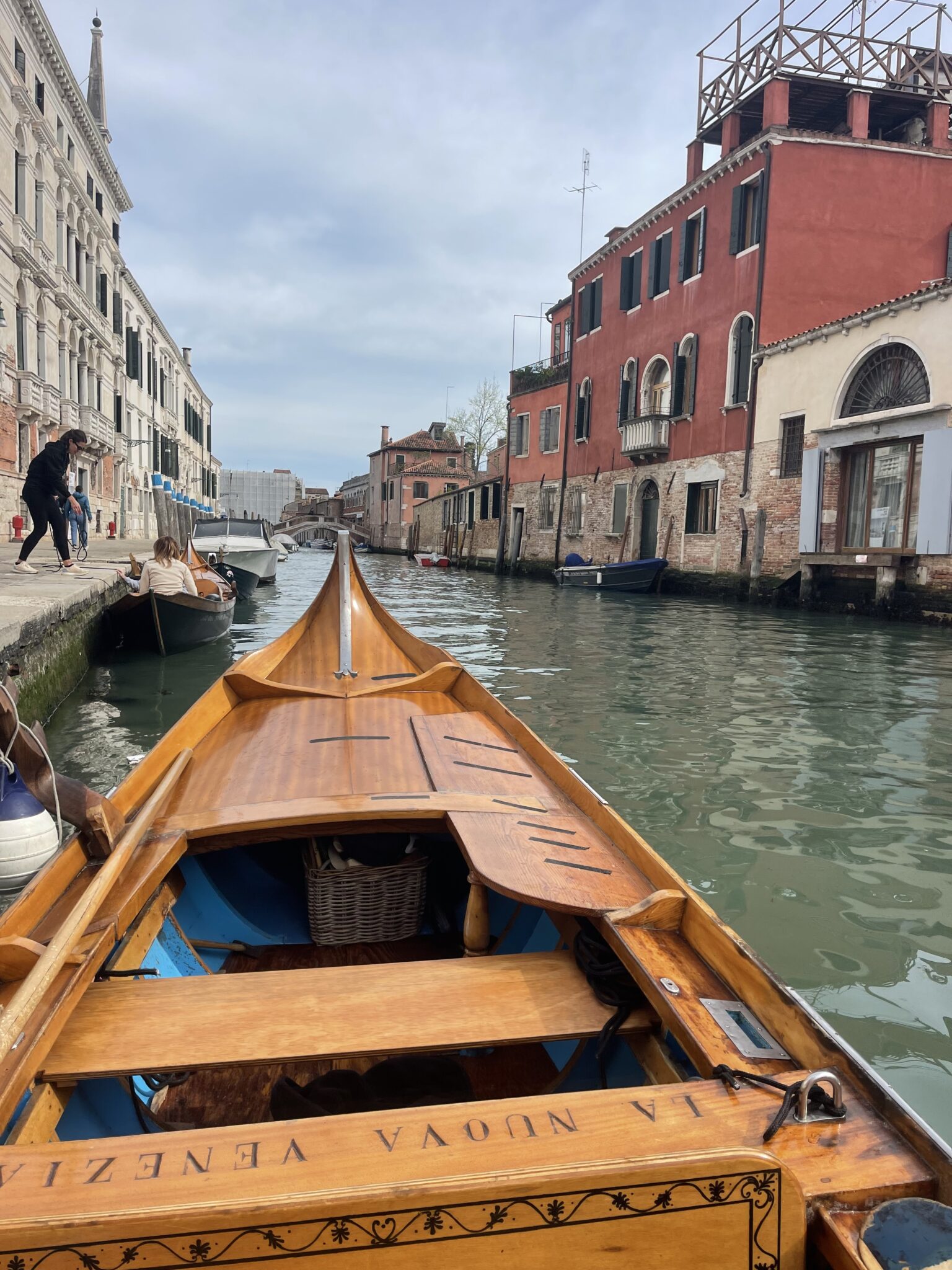
Instead of sitting, you stand facing forward, using a single oar that rests in a carved wooden oarlock called a forcola. That one oar does everything—moving the boat forward, steering, slowing down, and adjusting direction.
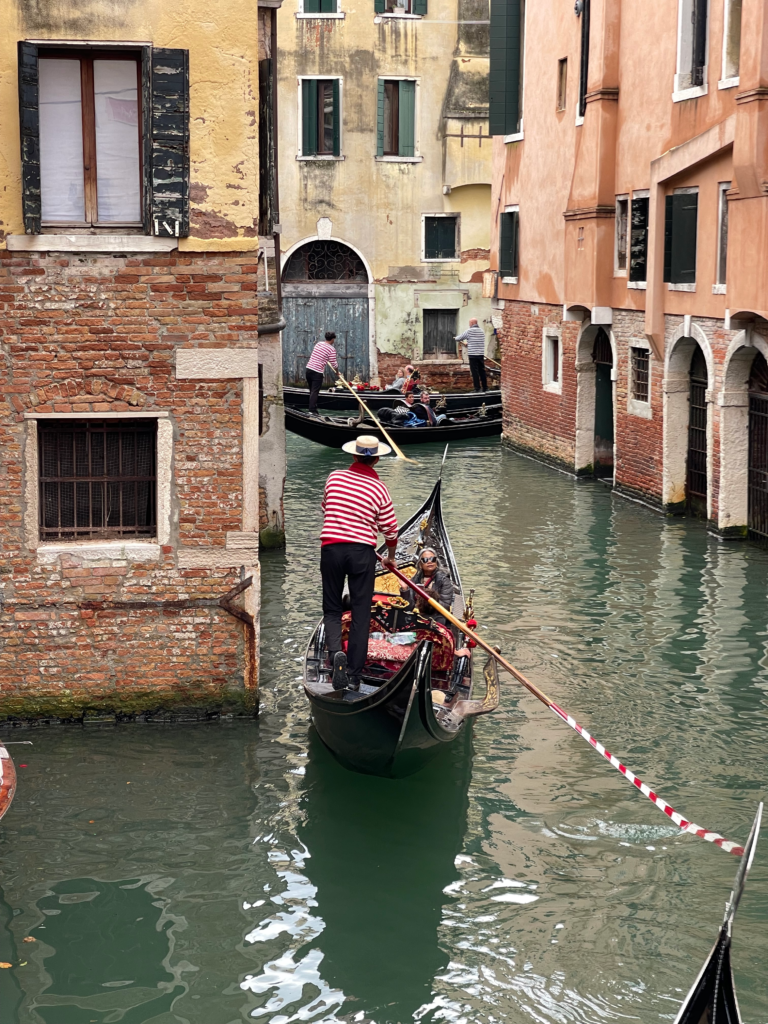
Even the boats are built around this technique. Gondolas, for example, are slightly asymmetrical, so they naturally counterbalance the force of rowing on one side.
And gondolas? They’re just one part of it.
Venice has (and had) dozens of different types of rowing boats, each designed for a specific purpose—from transport to fishing to racing.
Once you understand that, you start to see Venice differently.
This isn’t just a tourist experience—it’s how the city has worked for centuries.
Gondola Ride in Venice or Rowing in Venice?
👉 Do both.
A gondola ride lets you see Venice. A rowing lesson helps you understand it.
These two complement each other.
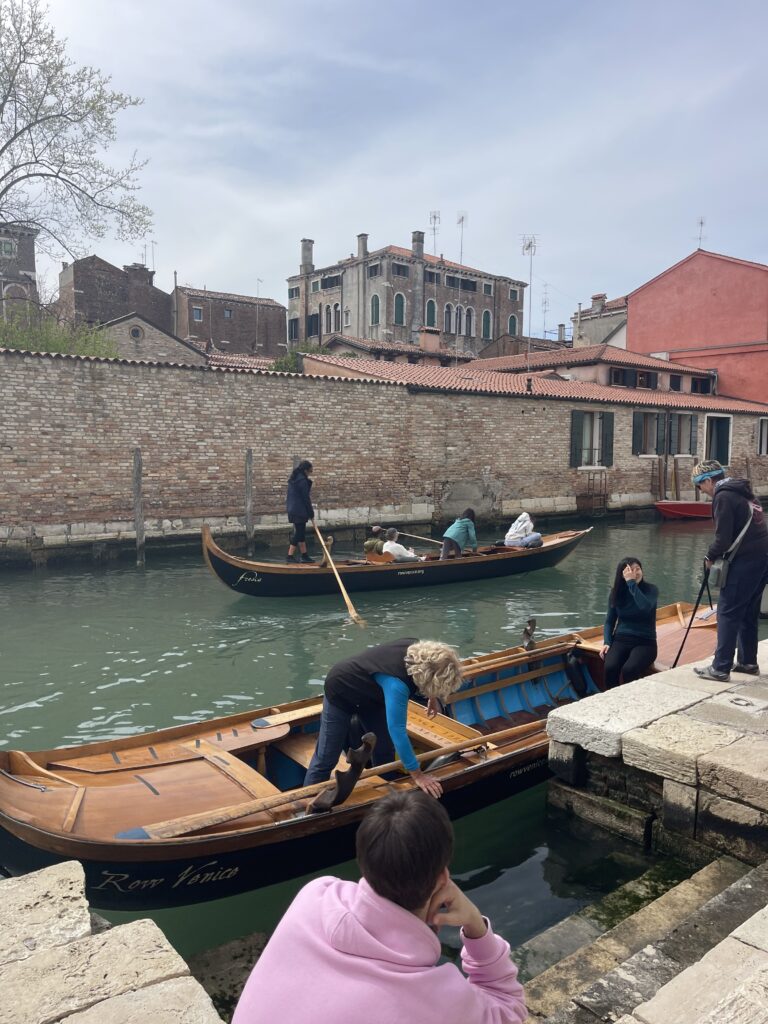
What It’s Like Rowing in Venice (Voga Alla Veneta)
My specific lesson started in Cannaregio, which, if you’ve only experienced Venice around St. Mark’s Square, already feels like a completely different city… and it happens to be one of my favorite areas of the city, so I was already convinced this was gonna be good!
Meeting my Instructor at Row Venice
That’s where I met my instructor, Nan.
Nan McElroy has been rowing in Venice since 2004, not long after she moved to the city, and what started as curiosity turned into something much bigger. She’s rowed all over—from the Venetian lagoon to the Po Delta, and even internationally on rivers like the Loire and the Thames—and in 2010, she co-founded Row Venice to share this tradition with both locals and travelers.
So you’re not just learning from someone who knows the technique—you’re learning from someone who has built a huge part of her life around it.
Before we even got into the boat, she walked me through the basics of the technique, explaining how this style of rowing works and, more importantly, how it should feel. And right away, I realized this was nothing like rowing the way I had done it before.
You’re standing the entire time.
One foot forward, one foot back. Hips facing ahead. Your body leads the movement, not your arms. Split Stance.
It sounds simple when you say it like that.
It did not feel simple. I felt incredibly vulnerable. And for someone who always feels like she’s doing things wrong, and wants to be perfect. It was hard for me to calm my anxieties.
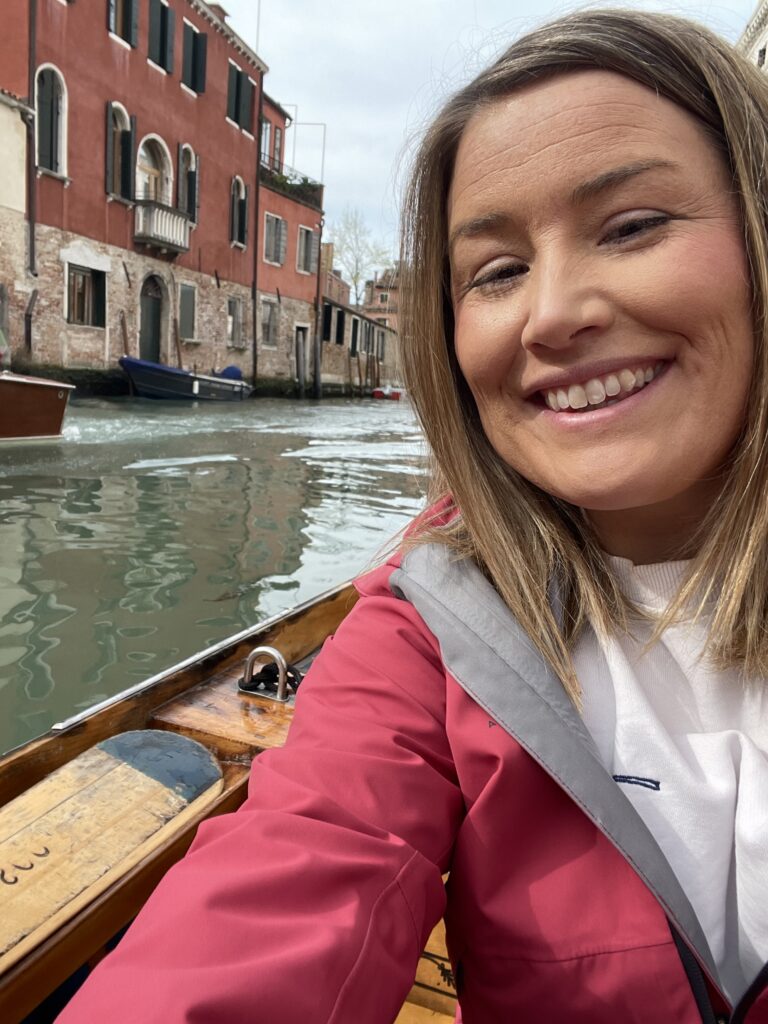
The Reality: I Overthought Everything
The second I stepped into the boat, I became hyper-aware of everything.
My balance. The position of my feet. The way I was holding the oar. The angle of the blade in the water.
I kept looking down, trying to correct every small movement, convinced I was doing something wrong.
And the more I thought about it, the worse it got.
Because this isn’t something you muscle your way through, it’s something you have to settle into.
“Eyes ahead,” Nan kept calling out from behind me. Gently coaching me and leading me through the motions.
Not aggressively, just consistently. Like a reminder to stop trying to control everything and trust the movement. It was incredibly wonderful to have someone be patient with me.
The Moment It Started to Click
We practiced while still in the canal, moving slowly, adjusting, correcting, repeating. When boats would pass us, and it would be too narrow, Nan would ask me to simply bring the oar in.
And then, somewhere around twenty minutes in, something shifted.
I stopped looking down at the oar.
I stopped trying to force every stroke with my arms and just settled in. There’s no way I can describe this to you!
And instead, I just focused on the rhythm, how my body moved, how the oar met the water, how everything worked together instead of against itself.
That’s when it started to feel less like a task and more like a flow.
Rowing Out Into the Lagoon
As we moved out of the smaller canals and into the open lagoon, everything started to feel different in a way I wasn’t expecting.
Up until that point, I had been focused on the technique, where my feet were, what my arms were doing, whether I was completely messing it up, but once we got out there, my attention shifted without me even realizing it.
The space opened up, the water felt less controlled, and for the first time since starting the lesson, I stopped thinking so much about how to row and just… looked around.
Ahead of me, I could see the faint outline of the Dolomites. To my right, planes were coming into Venice Marco Polo, and to my left, the bridge connecting the mainland stretched across the water, with people constantly moving in and out of the city.
And I’m just standing there in the boat, trying to stay balanced, holding the oar steady, realizing that this—this right here—is something most people don’t experience when they’re looking for things to do in Venice.
Because usually, you’re walking it, or sitting in a boat, or watching it from the outside.
You’re not actually part of how it works.
And that’s when it clicked for me—not in some big dramatic way, but just in a very clear, quiet thought:
This is what Venice actually is.
Not just the buildings or the views, but the way everything moves together—the water, the boats, the people—and how this entire city has been built around that for centuries.
And for the first time, I wasn’t just looking at Venice.
I was contributing to a longstanding tradition in Venice.
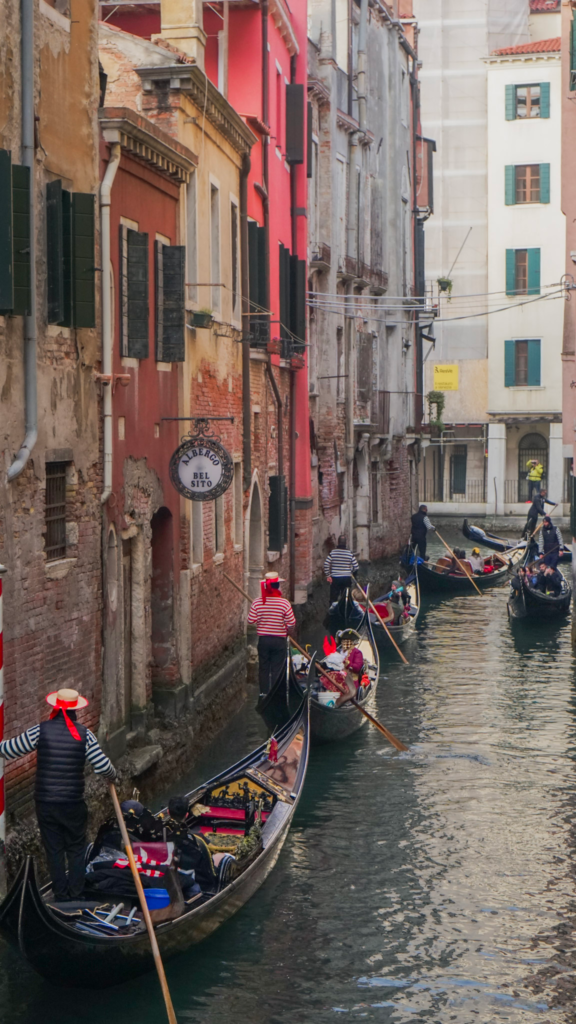
This Is One of the Only Hands-On Things to Do in Venice
Most experiences in Venice are passive. I say this with love. Please don’t think I am poo-poohing on anything in Venice, because I love Venice and all her quirks.
This isn’t a passive experience.
You’re actively moving through the canals using a technique that has existed for centuries, and that alone changes how the city feels. YOU, yes YOU are invited to row and learn the Venetian way.
You’ll Understand How Gondolas Actually Work
After doing this, gondolas make a lot more sense.
You start to notice how the oar is used to steer, how balance affects movement, and why gondoliers move the way they do.
It turns a gondola ride into something you actually understand.
This Experience Helps Preserve a Real Venetian Tradition
Row Venice is a women-led nonprofit, and your booking directly supports the preservation of traditional Venetian rowing.
After WWII, motorboats replaced many traditional boats, and techniques like voga alla veneta became less common in daily life.
Organizations like this are helping keep it alive.
Best Things to Do in Venice for Solo Travelers
I did this solo, and it was one of the easiest experiences to step into.
You’re guided the entire time, and it feels personal without being overwhelming.
Is Row Venice Worth It? Here’s What to Know Before You Book
If you’re hesitating, I get it—I put this off for a long time.
But it’s much more approachable than it looks:
- 80-minute lesson
- Beginner-friendly
- Stable boats
- No experience needed
Pricing is per boat:
- €100 (1–2 people)
- €130 (3 people)
- €150 (4 people)
- €220 (5 people)
👉 Book here: https://rowvenice.org/
Gondola Ride vs Rowing in Venice: Which Should You Choose?
If you’re deciding between the two:
- Gondola ride → classic, iconic experience
- Rowing lesson → more immersive, hands-on
A gondola lets you see Venice.
Rowing lets you understand it. You know what fuck it, do both.
If it’s your first time in Venice, you should take a gondola ride because it’s iconic and part of the experience.
But if you want something more hands-on that actually helps you understand how the city works, learning how to row is a completely different kind of experience.
FAQs About Rowing and Gondola Rides in Venice
Yes, a gondola ride is absolutely worth it—especially if it’s your first time in Venice. It’s one of the most iconic experiences in the city and gives you a unique perspective from the canals. That said, it’s a passive experience, so if you want something more immersive, pairing it with a rowing lesson gives you a much deeper understanding of how Venice works.
If you’re looking for a more unique and hands-on experience, learning to row in Venice is 100% worth it. It’s one of the few activities where you’re not just observing the city—you’re actively participating in a tradition that has existed for centuries. It’s especially great if you’ve already done the main highlights or want something beyond typical tourist activities.
Voga alla veneta is the traditional Venetian rowing style where the rower stands facing forward and uses a single oar to move and steer the boat. Unlike typical rowing, it relies on balance, technique, and body movement rather than strength. It’s been used in Venice for centuries and is still practiced today in racing, recreation, and cultural preservation.
Yes, rowing lessons like the ones offered by Row Venice are designed for beginners. You don’t need any prior experience, and instructors guide you step by step. It can feel awkward at first, but most people start to get the hang of it within the lesson.
Row Venice lessons are priced per boat, not per person. As of now:
€100 for 1–2 people
€130 for 3 people
€150 for 4 people
€220 for 5 people
This makes it a good option whether you’re traveling solo or with a group.
Yes, and it’s actually a great solo activity. You’ll have an instructor guiding you the entire time, and the experience feels very personal. It’s one of the best things to do in Venice if you’re traveling alone and want something more interactive.
Not really. Rowing voga alla veneta is more about balance and coordination than strength. As long as you’re comfortable standing and moving a bit, you should be fine. The instructor adjusts the lesson to your level.
They offer completely different experiences. A gondola ride is relaxing and iconic, while a rowing lesson is active and immersive. If you have time, doing both gives you a much more complete experience of Venice.