
Learn All About Chorok Miso Village: Where I Paid to Be Buried Alive (For Wellness)
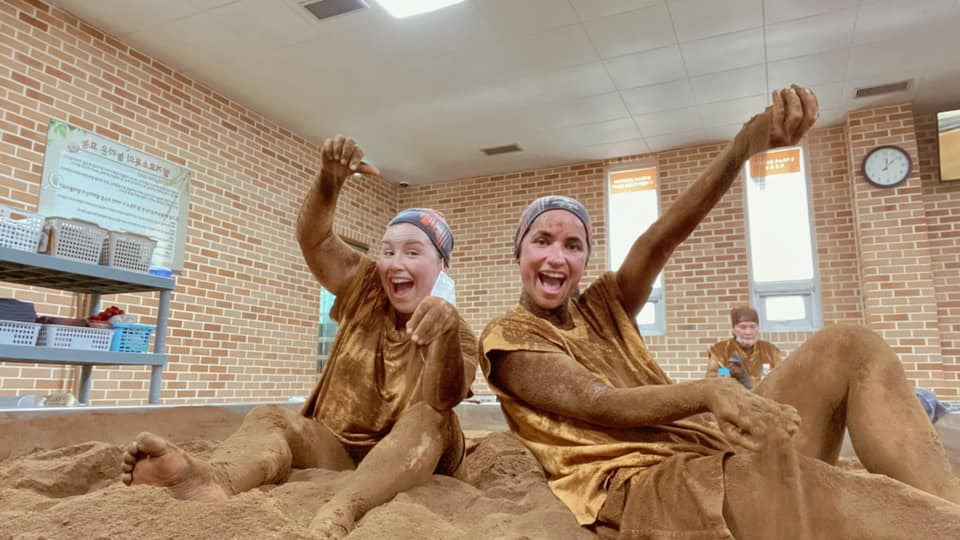
I lived in South Korea long enough to know when an experience is going to be mildly uncomfortable before it’s rewarding. Jjimjilbangs taught me that. So did public bathhouses, silent subway cars….I could go on.
So when I heard about a rice bran enzyme bath in the countryside outside Pyeongtaek — one where you’re buried up to your neck in fermented rice husks and told not to move — I assumed this would fall squarely into the “questionable but character-building” category.
Reader, I was not prepared. Oh lord, I was NOT prepared.
Chorok Miso Village is not a spa in the Instagram sense. There are no mood-lit pools, no whispery flute music (although their website has it!), no cucumber water pretending to be refreshing. Instead, this is a government-recognized rural wellness village tucked into rice fields, where healing is tied to agriculture, fermentation, patience, and a level of trust that requires you to surrender both modesty and dignity.
This Post Pairs Well With:
- Living in Korea as a Military Spouse: My Honest Experience
- The 20+ Best Travel Apps for Solo Female Travelers in 2026
- Boseong Tea Fields in Korea: Stunning Views, Tea Trails, and Travel Tips
- The Magic of Seoul’s Lotus Lantern Festival: A Travel Guide to Light & Culture
- Military Spouse Abroad? Here’s How to Handle Culture Shock
First, You Have to Get to Chorok Miso Village “Golden Therapy” (Which Is Part of the Point)
Chorok Miso Village is firmly rural. Not “cute countryside café”, rural — real countryside. The kind where apartment blocks fade into greenhouses, roads narrow, and you start wondering if your navigation app has quietly decided you’re on your own now (if you’re using Waze, good luck, my friend, just stick to naver)
If you have a car, this part is easy. From Seoul or Camp Humphreys, it’s about an hour. Parking is free, and you’ll know you’re close when rice paddies replace convenience stores.
If you don’t have a car, this is where Korea shines. Take the train to Pyeongtaek Station and grab a taxi the rest of the way. It’s not cheap-cheap, but it’s normal pricing in Korea — especially for places that exist outside the tourist ecosystem.
The Moment You Realize This Is Not a Normal Spa
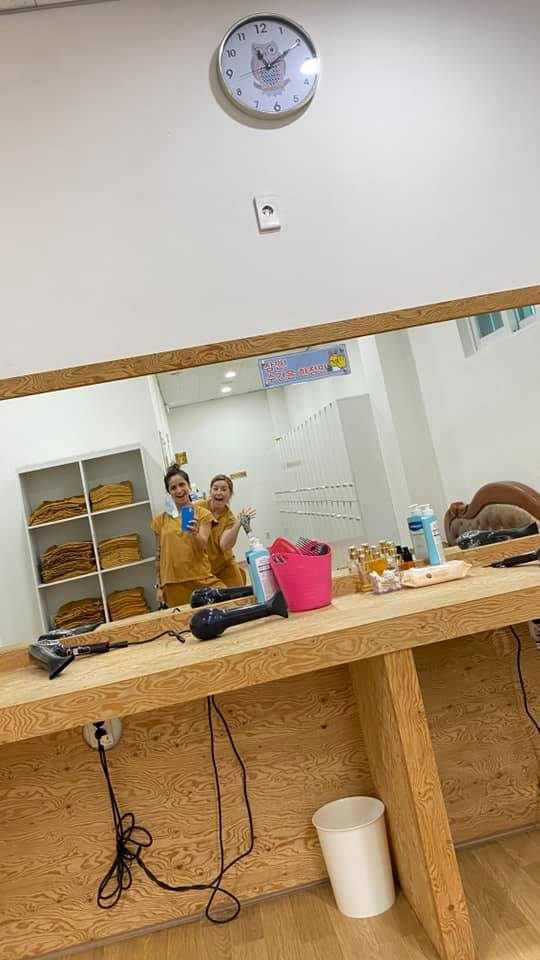
After checking in and paying the ₩35,000 entry fee, you’re shown to the locker room. Everything comes off. Everything.
You’re handed a soft uniform, a head wrap that claims to protect your hair (this is aspirational at best), and a calm explanation of what’s about to happen — delivered with the serene confidence of people who do this every single day and have never once questioned it.
Then you enter the enzyme room.
The air is warm and earthy, like bread dough that has opinions. The rice bran is piled high across the room, quietly generating heat through fermentation. This isn’t artificial warmth — no heaters, no steam vents. Just enzymes doing what enzymes do.
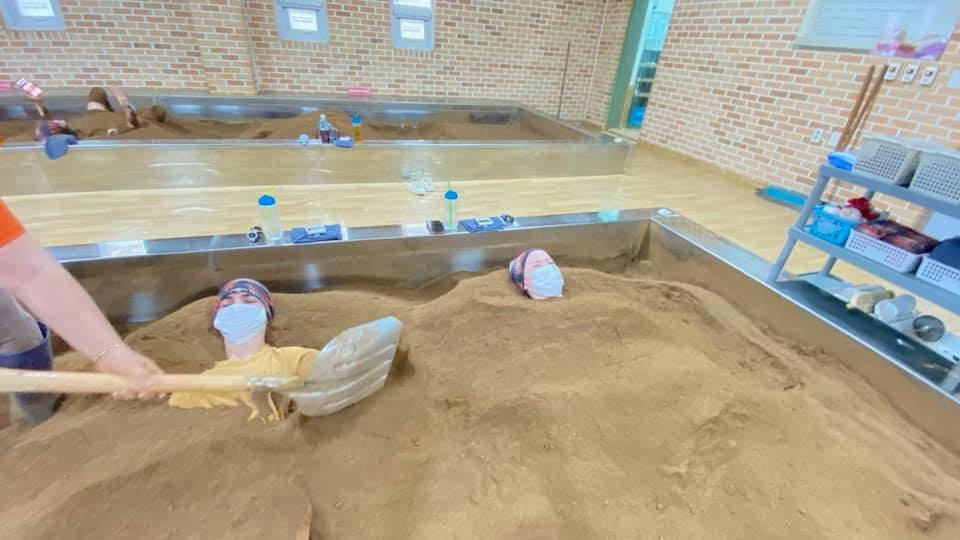
A staff member digs a body-sized hollow in the rice bran like they’re fluffing a pillow and gestures for you to lie down.
This is where your inner monologue gets loud.
You lie back. They gently bury you up to the neck. They pat it down like a weighted blanket. A timer is set for fifteen minutes. And suddenly, you are very aware of your life choices.
It’s hot — but not painful. Alarming on paper, manageable in reality. As long as you don’t move. Even wiggling a finger increases the heat, which you learn very quickly.
You sweat. Immediately. Deeply. Philosophically.
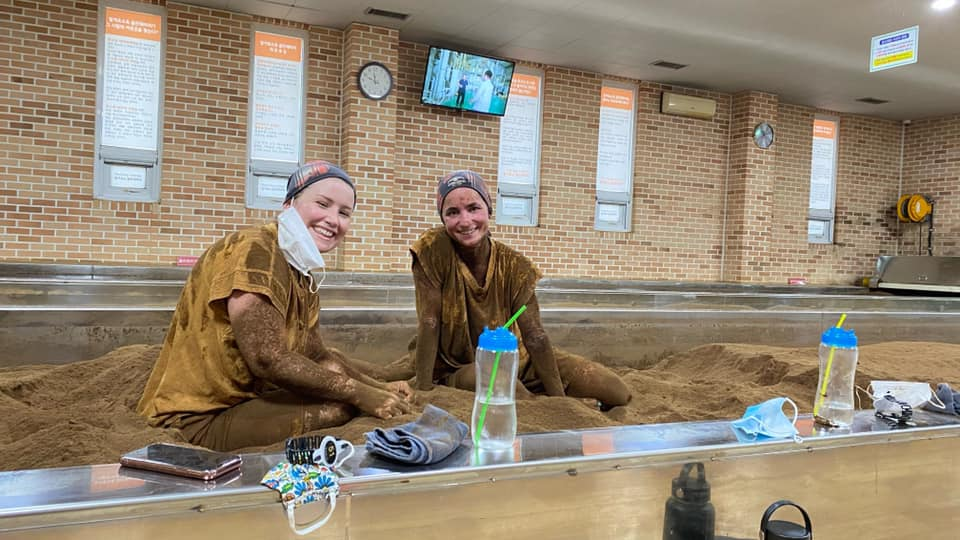
The staff check on you often, wiping your face with cool towels and offering water. My friend Maggie and I started out laughing — mostly at the absurdity of being two fully grown women voluntarily buried in fermented rice — and then, without warning, everything went quiet.
The heat stopped feeling intense. Time slowed. It became meditative in a way I didn’t expect. This wasn’t indulgent relaxation. It was grounding, humbling, and strangely calming.
Emerging, Glowing, and Slightly Confused
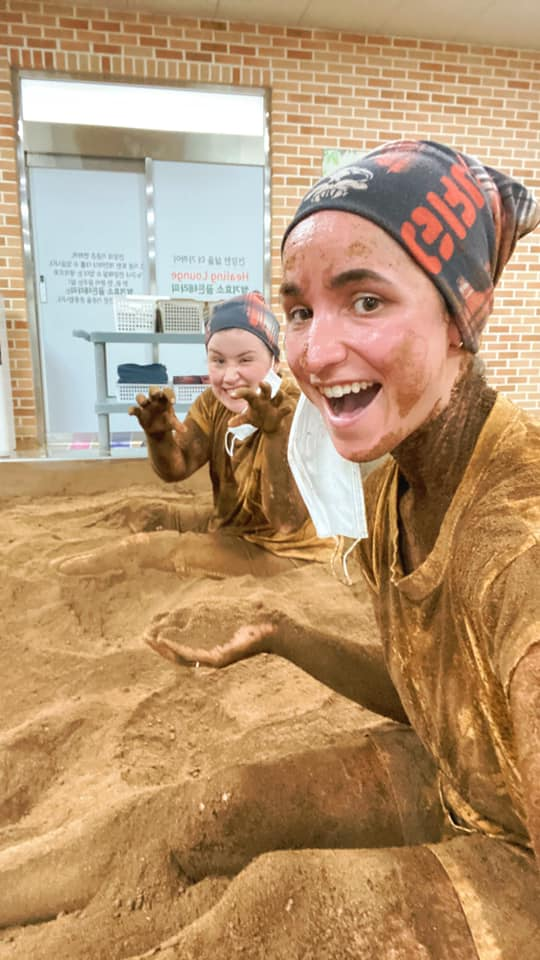
When the timer buzzes, you emerge like a very clean, very sweaty version of yourself. Rice bran clings to places you didn’t know rice bran could reach. You shower thoroughly (separate facilities for men and women), using the rice bran soap provided, and accept that you’ll still find grains later. This is inevitable. Make peace with it now.
Afterward, you’re ushered into the lounge for iced coffee or warm tea and fifteen blissful minutes in a massage chair. At this point, your body feels reset, and your brain feels quieter — the best possible combination.
Pro tip: Bring a Change of Towels and clothing
Bring an extra towel if tiny Korean spa towels aren’t your thing.
Beyond the Bath: Why This Place Feels Special
Chorok Miso Village isn’t just about the enzyme bath. There’s a small healing garden with animals, seasonal rice-based food workshops, and an on-site restaurant serving handmade rice noodles that somehow taste even better after you’ve sweat out every stress hormone in your body.
But what stayed with me most was the hospitality. The patience. The a quiet pride in what they’re preserving here.
As someone who lived in Korea as a foreigner — and now lives abroad again — experiences like this stand out because they aren’t designed for tourists. They’re designed to continue a way of life and simply welcome outsiders who are willing to meet it halfway.
Tips for Solo & First-Time Visitors (혼자 여행 팁):
- Solo Travelers are welcome! Staff are so attentive, and it never felt awkward.
- Don’t fidget in the bath – even wiggling fingers can make the rice bran heat up more.
- Drink water before and after – hydration helps the detox.
- Bring a large towel if you prefer – the ones they offer are tiny.
- Go on a weekday – you’ll likely have the spa room mostly to yourself.
So… Is This Actually Legit? (Yes. Surprisingly So.)
Here’s the part that made everything click for me.
Chorok Miso Village isn’t experimenting on unsuspecting visitors or leaning into some fleeting wellness trend. The rice-bran enzyme bath experience here operates under Golden Therapy, the official wellness program developed within the village itself.
This matters.
The village was designated a Green Rural Experience Village by Korea’s Ministry of Agriculture back in 2009 — a title given to rural communities preserving agricultural traditions while creating meaningful, educational experiences for visitors. Golden Therapy came later, officially opening in 2016, after years of development focused on turning locally sourced rice bran into a sustainable wellness practice rather than agricultural waste.
Even more interesting? The fermentation process used for the enzyme baths isn’t just folk knowledge. Golden Therapy has secured patents related to the rice-bran fermentation method and facility design — a rare crossover of traditional agriculture, modern research, and rural tourism. In other words: this isn’t “heat for heat’s sake.” The warmth comes from active enzymes doing their thing naturally, without artificial heaters.
That context changed how I experienced the bath.
Instead of feeling like I was doing something quirky for the story, it felt like stepping into a wellness practice that had been intentionally built — slowly, locally, and with pride.
If you’re planning to visit (especially on weekends or during peak seasons), it’s worth booking in advance through Golden Therapy’s official reservation system.
Who This Experience Is (and Isn’t) For
If you hate heat, claustrophobic situations, or the idea of communal bathing, this might not be your thing — and that’s okay.
But if you’re curious, open-minded, traveling solo, or craving something slower and more human than a typical spa day, Chorok Miso Village offers a kind of wellness that stays with you.
I left relaxed, slightly amazed, and still brushing rice bran out of my hair hours later — which feels like the perfect metaphor for this place.
You don’t just visit Chorok Miso Village.
You experience it.
It’s female-friendly, solo-travel safe, rooted in Korean agricultural heritage, and—let’s be honest—just an incredibly relaxing way to spend a few hours.
If you’re craving something different, personal, and restorative, this is it.
Why This Backstory Matters (Especially if You’re Traveling Solo)
As someone who’s lived abroad for years — in Korea and beyond — I’ve learned to trust experiences that are rooted in place rather than packaged for tourists. Knowing that Golden Therapy grew out of local agriculture, not luxury branding, made the entire visit feel more grounded.
It also explains the energy of the staff. They aren’t performing wellness; they’re sharing something their community built. That’s a huge difference — and one solo travelers especially feel.
The Kind of Wellness You Don’t Forget
When I first heard about Chorok Miso Village, I thought it would be one of those experiences you try once, laugh about later, and quietly never repeat. The kind of thing that makes for a good story but not much else.
Instead, it ended up being one of those days that lingered.
Not because it was luxurious — it isn’t. Not because it was comfortable the whole time — it definitely wasn’t. But because it forced me to slow down in a way travel rarely does anymore. There was no phone, no itinerary pressure, no rushing to the next highlight. Just heat, stillness, and a very clear reminder that sometimes your body needs rest long before your calendar allows it.
That’s what Chorok Miso Village does best. It doesn’t perform wellness. It practices it — quietly, patiently, and without apology. The rice bran enzyme bath is unusual, yes, but it’s also deeply rooted in Korean agricultural heritage and community care. You don’t leave feeling like you “did” something trendy. You leave feeling reset.
As a solo traveler and someone who’s lived abroad for years, these are the experiences I value most — the ones that don’t exist for spectacle, but for continuity. Places where locals are preserving something meaningful and simply inviting you in, if you’re willing to meet it on its own terms.
If you’re traveling through Pyeongtaek, living nearby, or intentionally seeking out wellness experiences in South Korea that go beyond the usual jjimjilbang circuit, Chorok Miso Village is worth planning around. It’s strange in the best way. Grounding in a way that’s hard to explain until you’ve done it. And somehow both humbling and indulgent at the same time.
Just know this going in:
You will sweat.
You will question your choices.
And hours later, you may still find rice bran in places that defy logic.
That, oddly enough, feels exactly right.
