
Overtourism in the Dolomites: Is Cadini di Misurina Still Worth It?

I stood at the Cadini di Misurina ridge on a grey June day, hoping for a quiet moment among the spiky Dolomite peaks. Instead, I found queues, drones, and an atmosphere that felt more like a theme park than an alpine sanctuary.
The Cadini di Misurina trail, once known only to locals and avid hikers, has become the poster child for overtourism in the Dolomites. What was once an unknown lookout point is now a cautionary tale about how fame, social media, and a lack of regulation can erode even the most breathtaking landscapes.
This Post Pairs Well With:
- Dolomites First-Timers Guide
- 5 Less Busy Hikes Near Cortina Di Ampezzo
- How to Book a Rifugio in the Dolomites
- Dolomites Day Hikes: Val Venegia and Sentiero Marcio
- Fora del Lupo: A WWI Hike in the Dolomites
- Croda Del Lago: A Fall Hike and Stay at Rifugio Croda Da Lago
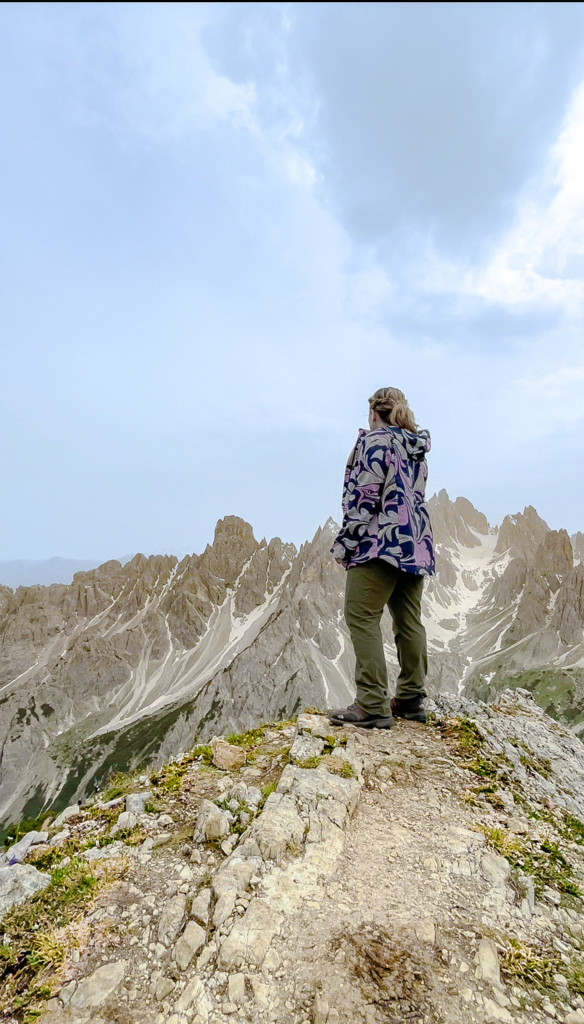
When Beauty of the Dolomites Becomes a Burden
Walking the Cadini trail that morning, I couldn’t ignore the damage. The path is eroded from too many boots. Delicate alpine plants are crushed beneath off-trail footprints. I picked up a handful of snack wrappers and tissues that had been trampled into the mud.
It’s easy to blame influencers, but this isn’t just about social media — it’s about how quickly we consume beauty. A few years ago, this viewpoint was quiet, shared mostly by locals and photographers who hiked at dawn. Now, it’s become a symbol of what happens when destinations go viral without limits.
Still, I don’t believe the answer is to stay home. The answer is to travel better — to choose lesser-known trails, spend more time in local villages, and hike with the awareness that our presence leaves a mark — whether good or bad.
Local tourism boards and governments can help too: instead of simply charging entry fees, they could fund park rangers, produce educational media on fragile ecosystems, and promote drone-free zones to protect both wildlife and rescue flights. Drone interference is a real problem — in 2024, a rescue helicopter near Lago di Sorapis had to delay its mission because a tourist drone hovered over the area. As someone with a background in public administration, I believe agencies can do better: clear communication, visitor education, and local empowerment are what will keep the Dolomites alive for generations.
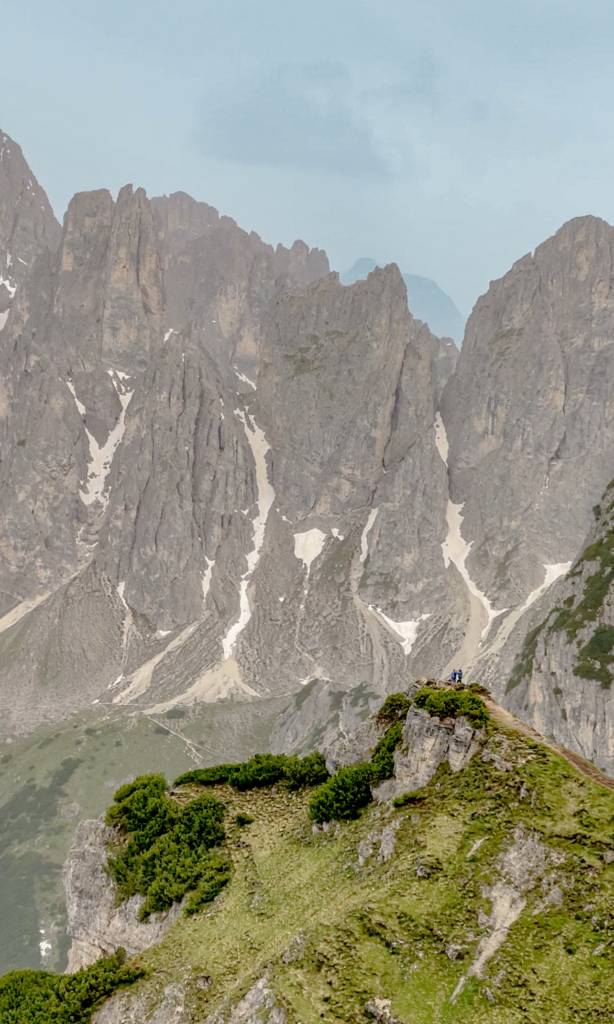
Balancing Hiking and Conservation in the Dolomites
The Dolomite Alps are renowned for their dramatic peaks and wild beauty, but surging visitor numbers are taking a toll. In popular areas like Cadini di Misurina and Seceda, thousands of hikers criss-cross fragile slopes each week. Trails worn deep by heavy traffic show signs of erosion, while alpine flowers are being crushed under off-trail footprints.
Litter, from energy bar wrappers to tissues and cigarette butts, lingers for decades in the cold mountain climate. Every photo op has a footprint.
In summer 2025, record tourism pushed local infrastructure to its limit. Reports from Euronews and SnowBrains noted that some Dolomite valleys saw up to 8,000 hikers per day, and rescues climbed by 20% year over year. Outside Magazine reported that “Roberto Bolza, the vice president of Italy’s national rescue organization, Corpo Nazionale Soccorso Alpino e Speleologico (CNSAS), told Outside that more than 100 people have died in the country’s peaks since June 1—a shocking average of three deaths per-day.”
Italy’s AICS agency and Club Alpino Italiano (CAI) have also partnered to fund trail maintenance, environmental education, and rescue training — an encouraging sign that change is possible when policy meets preservation.
If You Still Want to Hike Cadini di Misurina
I get it. The Cadini di Misurina viewpoint is otherworldly — those jagged spires really do look like something from another planet. If you still want to go, the key is doing it right so your visit doesn’t add to the problem.
Here’s how to hike it responsibly in 2026:
- Book access early. Parking at Rifugio Auronzo now requires an online reservation (around €40). Shuttles run from Dobbiaco/Toblach and Misurina — use them if possible.
- Start before sunrise. Arrive by 6 a.m. for a peaceful experience. By 8 a.m., buses, drones, and tour groups begin crowding the ridge.
- Stick to the trail. The alpine vegetation here is fragile; one misstep leaves scars that take years to heal.
- Ditch the drone. In 2024, a rescue helicopter near Lago di Sorapis was grounded due to drone interference. Flying in protected zones can endanger lives, please also keep in mind GDPR rules and no flyover crowds.
- Skip the queue. Stop at the fork just before the main ledge — the view is almost identical, and you’ll have it to yourself.
- Leave no trace (and then some). Carry a small bag to collect any trash you find.
- Stay local. Overnight in Misurina or Auronzo to enjoy early mornings and quiet evenings away from the chaos.
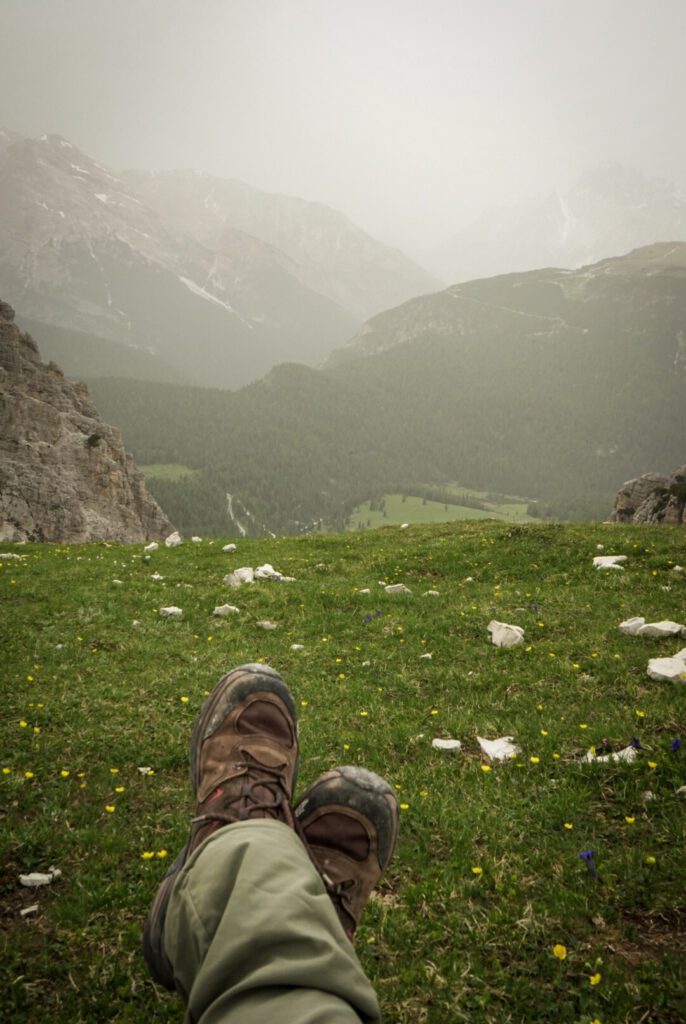
My advice if you do go to the Cadini di Misurina lookout point: There’s a beautiful view right above the madness, and I highly suggest this alternative. I had the whole area to myself, and I could have lunch with a view (when the rain cleared) and just relax.
Safer, Quieter, and More Meaningful Alternatives
If you want the same heart-stopping Dolomites views without the crowds, here are a few trails that still feel wild and authentic:
- Monte Piana – Across the valley from Tre Cime, this open WWI plateau offers vast views and historical trenches. It’s quieter, contemplative, and rich in heritage.
- The MADE Trek (Friulian Dolomites) – A three-day hut-to-hut route through the Carnic Alps that celebrates the legacy of the Carnic Porters, local women who supplied the WWI frontlines. It’s slow travel at its best — and I’ve written a full guide [here → link to MADE Trek post].
- Strada delle 52 Gallerie (Pasubio) – A fascinating WWI trail carved through 52 tunnels above the Vicentine Alps. The hike climbs steadily through history and opens to breathtaking views, with far fewer tourists than Tre Cime.
- Pale di San Martino – This Trentino range rivals Cortina’s fame but sees only a fraction of the visitors. Hike to Cimon della Pala or stay at rifugi Rosetta or Mulaz for quiet alpine nights.
- The Trail of Marco Martalar Sculptures (Alpe Cimbra) – A creative outdoor path featuring wooden wildlife sculptures by artist Marco Martalar, including the famous Drago Vaia, carved from storm-felled timber after the devastating Vaia storm. It’s a walk that celebrates resilience and the bond between nature and art. Read about my experience here
Overtourism in the Dolomites — At a Glance
- 8,000 hikers on the Seceda ridgeline in a single day (Euronews, 2025)
- 37.1 million overnight stays in South Tyrol in 2024 (SnowBrains)
- 466 fatalities and 11,789 rescues in 2024 (CNSAS Annual Report)
- 20% increase in alpine rescue operations year-over-year (SnowBrains)
- €40 toll road now required for access to Rifugio Auronzo (Municipality of Auronzo, 2025)
- Drone interference delayed rescue near Lago di Sorapis (Unione Sarda, 2024)
Final Thoughts: Keep the Dolomites Wild
I’ll never forget standing on that ridge — the peaks glowing pink, the wind rushing past, the hum of drones cutting through it all. For a moment, I closed my eyes and imagined how the Dolomites must have felt before the noise.
Overtourism doesn’t have to be our legacy here. Regulation helps, but what truly matters is behavior: how we hike, where we spend our money, and how we speak about these places online. Will we keep chasing the same selfie spots — or help protect the silence that makes these mountains sacred?
Hike well, tread gently, and help keep the Dolomites wild.
